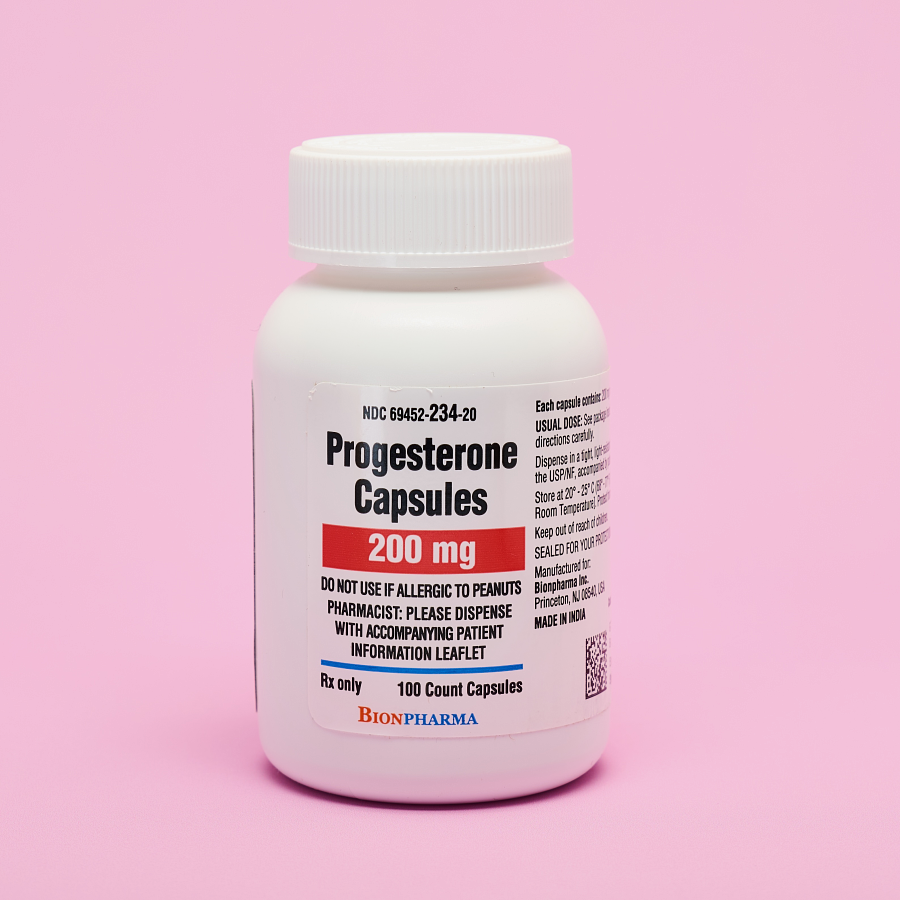
How It Works
Progesterone works by acting as a direct replacement or supplement for the progesterone hormone that naturally occurs in the body.
For women undergoing estrogen therapy, estrogen can cause the lining of the uterus to grow excessively. Without progesterone to counterbalance this growth, the lining can become precancerous, a condition called endometrial hyperplasia. Progesterone capsules are used to get the uterine lining to stop growing and shed, helping prevent irregular thickening and reducing the risk of endometrial cancer.
When used for amenorrhea (lack of periods), progesterone capsules help regulate the menstrual cycle. By taking the progesterone for a set number of days and then stopping, it mimics the natural hormonal drop of a menstrual cycle and triggers a period to start.
| Quick Facts | |
|---|---|
| Common Brands | Prometrium |
| Drug Class | Progestins |
| Generic Status | Generic version of Prometrium |
| Availability | Prescription Only |
Dosing
Note: Dosing information below is educational only. Your prescribing physician will determine your specific dose based on your individual health needs.
The dosing of progesterone capsules depends on what you’re taking it for.
- Preventing Endometrial Hyperplasia – For postmenopausal women receiving estrogen therapy, the recommended dose is 200 mg taken by mouth at bedtime for 12 days per 28-day cycle. Alternatively, your healthcare provider may also describe a continuous daily dose.
- Treating Secondary Amenorrhea – For premenopausal women experiencing irregular or missed periods, the recommended dose is 400 mg taken by mouth at bedtime for 10 days. A withdrawal bleed (period) usually occurs within a few days after the last dose is taken.
Always follow your healthcare provider’s instructions for exact dosing.
Uses
FDA-Approved Uses
Progesterone capsules are FDA-approved to prevent endometrial hyperplasia in postmenopausal women receiving estrogen therapy and to treat secondary amenorrhea (irregular or missed periods).
Off-Label Uses
Progesterone capsules do not have any common off-label uses at this time.
Get Savings Updates for Progesterone Capsules
Join our mailing list for exclusive deals and more.
Side Effects
Like all medications, progesterone capsules can cause side effects. Common side effects may improve as your body adjusts to the medication, but others may be serious and require medical attention.
Common Side Effects
- Headache
- Breast pain or tenderness
- Joint or muscle pain
- Depression
- Dizziness
- Abdominal pain or bloating
- Hot flashes
- Urinary problems
- Vaginal discharge or dryness
- Nausea
- Vomiting
- Worry
- Chest pain
- Diarrhea
- Night sweats
- Swelling of hands and feet
- Constipation
- Fatigue
Serious Side Effects
Serious side effects are rare, but it’s important to know what to look for if they do occur. Stop using progesterone capsules and call your doctor immediately if you experience:
- Severe Allergic Reactions – Swelling of the face, lips, tongue, or throat; difficulty breathing or swallowing; severe rash or itching; fever.
- Blood Clots in the Lungs – Leg or arm pain, difficulty breathing, severe headache, or chest pain.
- Blood Clot in the Eyes (Retinal Thrombosis) – Sudden partial or complete loss of vision, bulging eyes, or double vision.
- Stroke – Sudden numbness on one side of the body, confusion, difficulty speaking or walking, or severe headache.
- Heart Attack – Chest pain or tightness, sweating, difficulty breathing, or pain in the shoulder, neck, arm, or jaw.
- Liver Issues – Yellowing of the skin or eyes (jaundice), dark urine, pale stool, weakness, nausea, or severe upper stomach pain.
- Pneumonia – Fever, night sweats, cough, fatigue, difficulty breathing.
- Breast Lumps – Breast pain, soreness, swelling, rash, dimpling of the skin, or nipple discharge.
Call your doctor immediately if you experience any concerning or prolonged symptoms.
Pharmacist Tips
Take Your Dose Before Bed
Because progesterone can cause significant drowsiness or dizziness, it is recommended to take your dose at bedtime.
Swallow with Water
Progesterone capsules should be swallowed whole with a full glass of water.
Be Careful Driving
Progesterone capsules can cause dizziness, so it’s recommended to avoid driving, operating heavy machinery, or performing dangerous activities until you know how this medication affects you.
Check for Allergies
Many progesterone capsules contain peanut oil. If you have a peanut allergy, alert your pharmacist immediately to verify the ingredients of the specific manufacturer.
Drug Interactions
Progesterone capsules can interact with other medications, potentially altering their effectiveness or increasing side effects. For example:
FAQs
Why should I take progesterone capsules at bedtime?
Progesterone can cause extreme dizziness or drowsiness. Taking it at bedtime helps prevent these issues during the day and may assist with sleep.
Does progesterone cause weight gain?
Some people experience weight changes on progesterone due to fluid retention (bloating) or increased appetite. However, others report weight loss. If you notice rapid weight gain or swelling, contact your healthcare provider.
What is the difference between progesterone and progestin?
“Progesterone” typically refers to a bioidentical hormone medication that is chemically identical to the progesterone the ovaries produce. “Progestin” is a broad term for synthetic hormones that mimic progesterone’s effects but have a slightly different chemical structure. Progesterone capsules (Prometrium) are bioidentical, whereas medications like norethindrone are synthetic progestins.
Is it safe to take progesterone capsules during pregnancy?
Progesterone may be safe to take in certain situations during pregnancy, such as to prevent preterm labor. However, it is generally considered unsafe to use during pregnancy for other purposes unless directed by a specialist. It’s best to consult your OB/GYN before taking progesterone capsules during pregnancy.
Do progesterone capsules contain peanuts?
Yes, progesterone capsules, as well as brand name Prometrium, contain peanut oil. If you have a peanut allergy, contact your pharmacist before taking progesterone capsules to verify the ingredients and see if you need to take an alternative instead.
Does progesterone help with anxiety or sleep?
While not FDA-approved as a sleeping pill or anti-anxiety medication, progesterone can cause drowsiness which may help some people sleep.
Will progesterone capsules stop my period?
If taken cyclically (e.g., for 10-12 days a month), progesterone is designed to regulate the period, not stop it. It’s typical to experience a “withdrawal bleed” (period) within 2 to 3 days after finishing your course of progesterone.
Can progesterone cause dizziness or “drunk” feelings?
Yes, progesterone can cause significant dizziness and lightheadedness. This is why driving or operating machinery after taking a dose is discouraged.
Is bioidentical progesterone safer than synthetic progestins?
Providers and patients may prefer bioidentical progesterone because it replicates the body’s natural hormone structure. Some research suggests it may carry a lower risk profile regarding breast cancer and cardiovascular issues compared to certain synthetic progestins, but all hormone therapy carries some risk.
How does progesterone protect the uterus during hormone replacement therapy (HRT)?
Estrogen stimulates the thickening of the uterine lining. Without a counter-balance, this lining can grow uncontrollably and become precancerous (endometrial hyperplasia). Progesterone acts as the “brakes,” stopping the growth and helping the lining mature and shed properly.
What is the difference between oral and vaginal progesterone?
Oral progesterone capsules are taken by mouth and processed through the liver (systemic absorption). Vaginal progesterone delivers the hormone directly to the uterus, which can result in fewer systemic side effects like drowsiness but may be messier to administer.
Comparable Medications
Progesterone Capsules, Endometrin, Norethindrone, Climara, or Activella?
There are several medications that your doctor can prescribe in place of progesterone capsules. Here are a few possible alternatives below.
Norethindrone
From $24.99
A synthetic form of progesterone that may be used as a birth control pill or to treat endometriosis.
Endometrin
A brand of progesterone designed as a vaginal insert that is used in fertility treatment.
Climara
A patch that delivers estrogen (estradiol) through the skin to treat menopausal symptoms like hot flashes.
Activella
A combination HRT tablet that contains both estradiol (estrogen) and norethindrone (synthetic progestin) in a single pill.
We Have Progesterone Capsules in Stock. Get Yours Today!
Important: Information on this page is for educational purposes only. Prescribing decisions are made by independent, licensed providers. TelyRx operates technology-enabled pharmacies and a telehealth platform that connects patients with board-certified licensed providers. Prescriptions, when provider-approved and issued, are filled and shipped by TelyRx-affiliated pharmacies. We do not employ physicians or make prescribing decisions. Learn more about our editorial standards here.