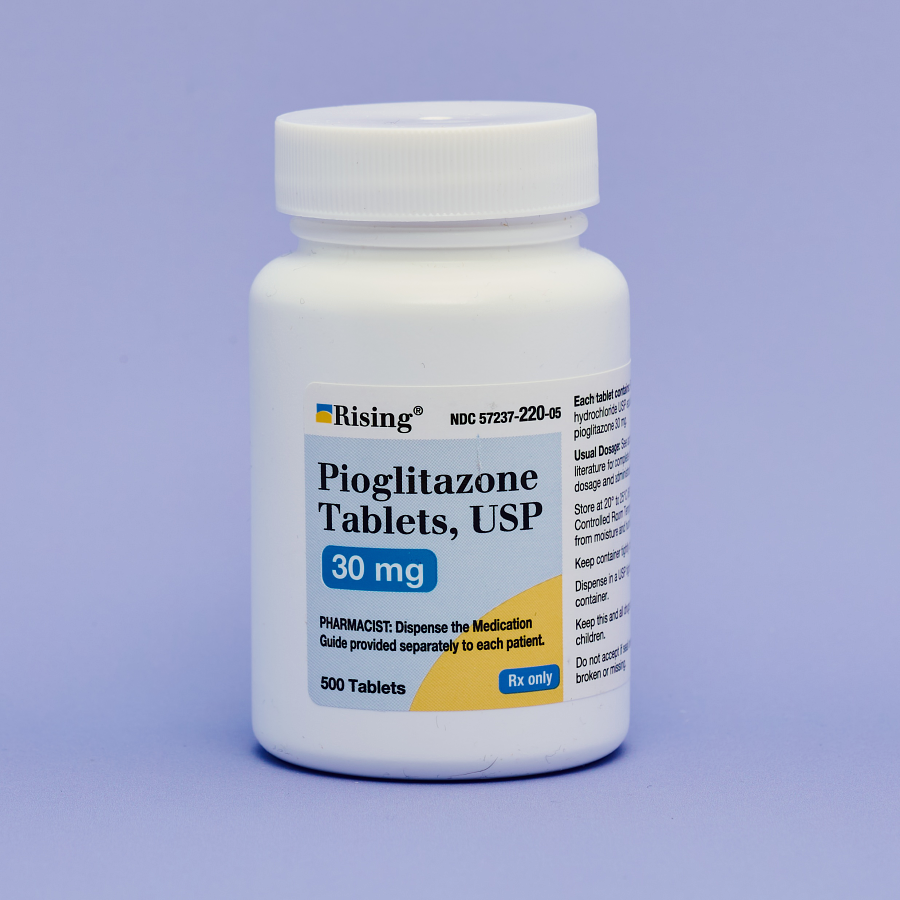
How It Works
Pioglitazone works by targeting and binding to peroxisome proliferator-activated receptor-gamma (PPAR-gamma) located in fat tissues, skeletal muscles, and the liver. This triggers a transcription of genes that regulate glucose and lipid metabolism.
This process increases peripheral glucose uptake, meaning the patient’s muscle and fat cells want more glucose, so sugar travels up the bloodstream and into these cells. Activating the PPAR-gamma receptors also signals to the liver to stop pumping excess sugar into the blood, and it can improve how the body stores and breaks down fat.
| Quick Facts | |
|---|---|
| Common Brands | Actos |
| Drug Class | Thiazolidinedione (TZD)/antidiabetic |
| Generic Status | Generic version available |
| Availability | Prescription only |
Dosing
Pioglitazone dosing is individualized, with many patients starting at a lower introductory dose while their doctor monitors for side effects like fluid retention. This is a maintenance medication that is used for long-term therapy.
- Starting dose: Patients typically begin taking pioglitazone with a daily dose of 15 mg to 30 mg.
- Maintenance adjustments: If the initial dose does not reach desired targets within a few weeks, the doctor may adjust the dosage.
- Maximum dose: Per standard guidelines, the maximum recommended dose of pioglitazone is 45 mg per day.
- Administration: Pioglitazone tablets can be taken with or without food, as meals do not significantly affect the drug’s absorption. It is recommended to take the tablet at the same time each day to maintain consistent levels of the medication in the bloodstream.
Note: Dosing information below is educational only. Your prescribing physician will determine your specific dose based on your individual health needs. Always follow your healthcare provider’s instructions for exact dosing.
Uses
FDA-Approved Uses
Pioglitazone is FDA-approved for the following:
- Type 2 diabetes mellitus: Pioglitazone is indicated as an adjunct to diet and exercise to improve glycemic control in adults.
- Monotherapy or combination therapy: Pioglitazone is approved for use alone or in combination with other drugs, such as metformin, insulin, glipizide, or other sulfonylurea medications.
Off-Label Uses
You may see pioglitazone prescribed for uses that are not “FDA-approved.” This is a common and legal practice called “off-label” prescribing, where a doctor uses their clinical judgment to prescribe a drug for a different (but well-researched) purpose.
Common off-label uses for pioglitazone currently found in clinical research and practice include:
- Non-alcoholic steatohepatitis (NASH): Pioglitazone can be used to treat NASH, commonly known as fatty liver disease, by reducing liver fat and inflammation.
- Polycystic ovary syndrome (PCOS): PCOS is derived from insulin resistance. Providers may recommend pioglitazone to restore ovulation and manage metabolic symptoms.
- Secondary stroke prevention: Clinical trials have explored the use of pioglitazone in people with insulin resistance who have already experienced at least one cardiovascular event. It may help to reduce the risk of recurrent heart attack and stroke.
Get Savings Updates for Pioglitazone
Join our mailing list for exclusive deals and more.
Side Effects
Common Side Effects
Pioglitazone, like other medications that influence metabolism, carries a specific profile of potential side effects ranging from mild to severe. Common side effects from taking pioglitazone include:
- Upper respiratory tract infection
- Headache
- Weight gain
- Mild to moderate swelling in the ankles or legs (edema)
- Muscle or back pain
Serious Side Effects
Serious side effects are rare, but it’s important to know what to look for if they do occur.
Serious side effects from taking pioglitazone can include:
- Congestive heart failure (CHF): Pioglitazone can cause the body to retain fluid, which in turn can strain the heart. The drug carries a significant warning for CHF. It is not recommended for people with advanced heart failure.
- Bladder cancer: Long-term use of pioglitazone could increase the risk of developing bladder cancer. Symptoms include blood in the urine or painful urination.
- Bone fractures: Clinical research has noted an increase in the risk of fractures from taking pioglitazone, particularly in the upper arm, hand, or foot among female patients.
- Liver dysfunction: While rare, the drug can lead to liver dysfunction. Symptoms of liver stress include jaundice (yellowing) of the skin and eyes, dark urine, and abdominal pain concentrated on the right side.
- Macular edema: Pioglitazone can lead to fluid buildup in the retina and a rare eye condition called macular edema, which can cause vision to become blurry or distorted.
Call your doctor immediately if you experience any concerning or prolonged symptoms.
Pharmacist Tips
Monitor Your Weight
Pioglitazone causes fluid retention, so weighing yourself regularly is the best way to check for sudden weight gain. Per standard guidelines, a sudden gain of 3 to 5 pounds may be a sign of edema, and patients are advised to report this to their doctor.
Eye Health Is Key
Regular eye exams are recommended for people who take pioglitazone to check for conditions like macular edema. A consultation with an optometrist or ophthalmologist is recommended if you notice cloudy or dim vision.
Plan For Pregnancy
Pioglitazone can increase the risk of pregnancy. Patients who do not want to become pregnant are advised to discuss birth control options with their provider.
Be Patient With Results
Patients who take pioglitazone may not notice significant results for several weeks. The process of changing gene presentation can take time, so it is not recommended to stop taking the medication if blood sugar levels haven’t dropped in the first few weeks.
Monitor Your Liver
Routine liver enzyme checks are no longer required for pioglitazone patients, but many providers still perform a baseline liver test before recommending this medication. Follow-up appointments may also be recommended.
Drug Interactions
Known interactions with pioglitazone include the following:
- Insulin: Combining insulin and pioglitazone increases the risk of severe edema and heart failure. Since these medications can be used in combination therapy, close monitoring is required to ensure patient safety.
- Gemfibrozil: This medication, which is taken to manage high cholesterol, can elevate pioglitazone levels in the blood and increase the risk of side effects.
- Rifampin: An antibiotic, rifampin can lower levels of pioglitazone in the blood and make the drug less effective.
- Topiramate: An anticonvulsant used to treat seizures and manage migraines, topiramate can decrease pioglitazone levels in the blood.
- Oral contraceptives: There is some evidence that pioglitazone can reduce the effectiveness of birth control pills. Backup barrier methods of birth control are recommended.
Always give your doctor and pharmacist a complete list of all your medications, vitamins, and supplements to check for potential interactions.
FAQs
Can I take pioglitazone if I have a history of heart failure?
Standard guidelines state pioglitazone is not recommended and should not be prescribed to people with active symptomatic heart failure. People with milder heart history are advised to exercise extreme caution when taking the drug due to the high fluid retention. Consult with a provider to see if pioglitazone is safe for you.
How long does it take for pioglitazone to lower my A1C?
Daily glucose readings may improve within 2 to 4 weeks for people taking pioglitazone. Full reduction in hemoglobin A1C (HbA1c) typically takes 5 to 6 months.
Does pioglitazone cause low blood sugar on its own?
Pioglitazone rarely causes low blood sugar on its own because the drug does not force insulin secretion. The risk of hypoglycemia increases when insulin or sulfonylureas are combined with pioglitazone.
Is pioglitazone safe to use for “fatty liver” disease?
Yes, pioglitazone is safe for use for “fatty liver” disease and is commonly prescribed off-label to treat this condition. The drug treats fatty liver disease by reducing fat accumulation.
Does pioglitazone increase the risk of bone fractures in women?
Yes, clinical data suggests pioglitazone can increase the risk of bone fractures in women, particularly in the upper arm, hands, and feet. Patients with a history of osteoporosis are advised to speak to their provider.
Can I take this medication if I am on insulin?
Yes, patients can take pioglitazone while on insulin, but combining these medications can increase the risk of severe edema and heart failure. Close monitoring from a provider is recommended for patients who take both drugs as combination therapy.
Why is this drug considered a “sensitizer” rather than a “stimulator”?
Pioglitazone is a “sensitizer” because it helps existing cells work more efficiently with insulin the body naturally produces. “Stimulator” diabetes medications, like glipizide, force the pancreas to release more insulin.
Is it safe to drink alcohol while taking pioglitazone?
Alcohol can cause sudden shifts in blood sugar. Standard guidelines for pioglitazone recommend limiting alcohol to avoid masking the symptoms of hypoglycemia or adding to the liver’s metabolic load.
Does pioglitazone protect against strokes or heart attacks?
Yes, pioglitazone can protect against strokes or heart attacks in high-risk patients, especially those with insulin resistance, prediabetes, or type 2 diabetes. Studies show the drug can reduce the risk of a second stroke or myocardial infarction.
Does pioglitazone interact with birth control pills?
Yes, pioglitazone can interact with birth control pills and potentially reduce their effectiveness. Patients are advised to discuss backup birth control methods with their provider if they are concerned about becoming pregnant while taking pioglitazone.
Is there a difference between Actos and generic pioglitazone?
There is no significant difference between Actos and generic pioglitazone apart from pricing. Both drugs contain the same active ingredient.
Can I take this medication if I have kidney disease?
Yes, pioglitazone is generally considered a safe medication for people with kidney disease because it is processed through the liver instead of the kidneys. This can make pioglitazone a suitable treatment option for people with renal impairment who want to lower their blood sugar.
Comparable Medications
Pioglitazone, Rosiglitazone, Metformin, Empagliflozin, Semaglutide, or Glipizide?
Pioglitazone is an oral medication that alters gene expression and makes the body less resistant to insulin. Your doctor may recommend this drug, or an alternative to pioglitazone, based on your medical history. Pioglitazone alternatives include:
Rosiglitazone
Like pioglitazone, rosiglitazone is a TZD medication used to treat type 2 diabetes. Providers may prefer pioglitazone because it carries a lower risk of cardiovascular effects than rosiglitazone.
Metformin
From $24.99
Metformin, the generic for Glucophage, is commonly used to treat type 2 diabetes. It targets sugar production in the liver. Pioglitazone may be combined with metformin for patients who can also benefit from lower insulin resistance.
Empagliflozin
The generic for Jardiance, empagliflozin is an SGLT2 inhibitor that flushes out excess sugar through the urine. It can lead to weight loss, and has been shown to help protect the heart and kidneys.
Semaglutide
The generic for Ozempic, semaglutide medications slow digestion and suppress appetite to help patients lose weight. It requires a needle for administration. Pioglitazone does not involve needles, which may be appealing for some patients.
Glipizide ER
From $24.99
Glipizide, the generic for Glucotrol, is a sulfonylurea medication that stimulates the pancreas to lower blood sugar. It carries a high risk of hypoglycemia and can cause wear and tear on the pancreas over time. Pioglitazone isn't as hard on the pancreas, but may take longer to start working.
We Have Pioglitazone in Stock. Get Yours Today!
Important: Information on this page is for educational purposes only. Prescribing decisions are made by independent, licensed providers. TelyRx operates technology-enabled pharmacies and a telehealth platform that connects patients with board-certified licensed providers. Prescriptions, when provider-approved and issued, are filled and shipped by TelyRx-affiliated pharmacies. We do not employ physicians or make prescribing decisions. Learn more about our editorial standards here.