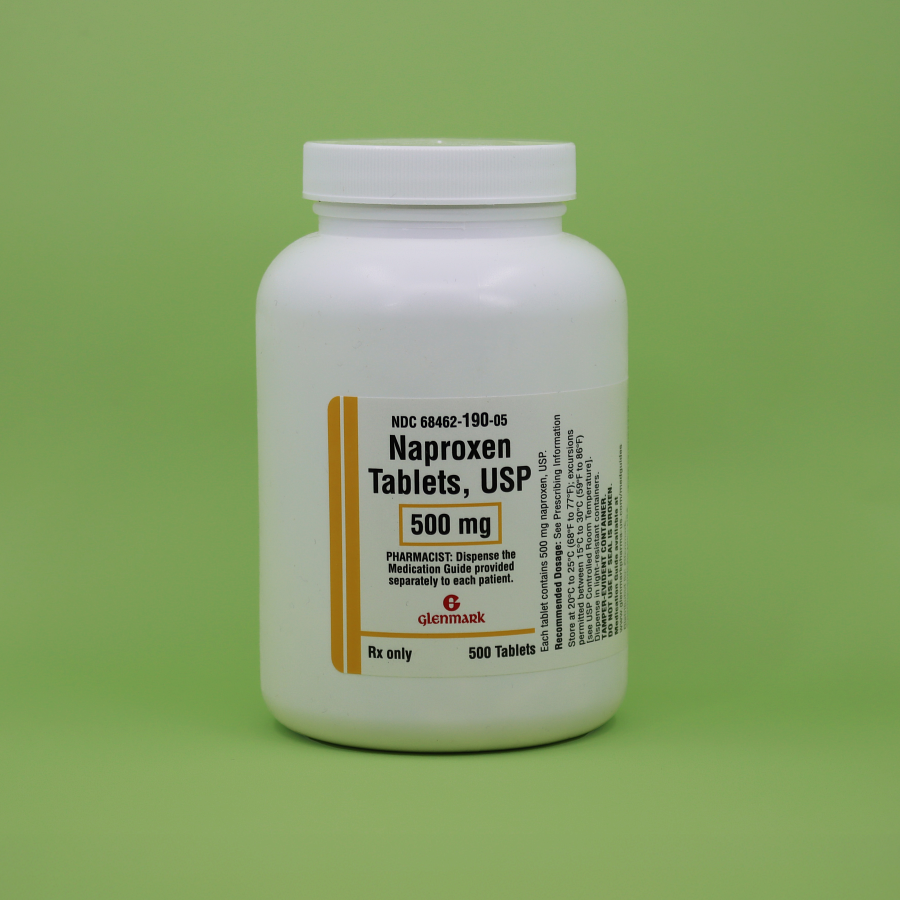
How It Works
Naproxen works by inhibiting two enzymes: cyclooxygenase-1 and cyclooxygenase-2. These enzymes are responsible for prostaglandins, which are lipid compounds responsible for sending pain signals to the brain and adjusting the body’s temperature to induce fever in response to infection, and promote inflammation.
By blocking these enzymes, naproxen cuts off production of prostaglandins. This in turn reduces pain and swelling. Prescription naproxen remains in the bloodstream longer than many other NSAIDs for a longer period of pain relief.
| Quick Facts | |
|---|---|
| Common Brands | Naprosyn, Anaprox DS, EC-Naprosyn, Vimovo |
| Drug Class | Nonsteroidal anti-inflammatory drug |
| Generic Status | Generic version available |
| Availability | Prescription only |
Dosing
Dosing for prescription-strength naproxen is usually aligned with the patient’s severity of symptoms. Unlike over-the-counter pain relievers, which patients typically take every 8 to 12 hours, the timing and frequency of prescription naproxen doses can also be calibrated to match the patient’s needs.
- Rheumatoid arthritis and osteoarthritis: For long-term management of these conditions, providers typically recommend 250 to 500 mg of prescription-strength naproxen to be taken twice daily. Dosage may be adjusted to account for acute flare-ups.
- Acute gout: Standard guidelines for using prescription naproxen to treat gout call for a high initial loading dose of about 750 mg, followed by lower doses of 250 mg every 8 hours until the flare-up subsides.
- Dysmenorrhea: Providers usually recommend a starting dose of 500 mg, followed by smaller doses of 250 mg every 6 to 8 hours as needed to treat dysmenorrhea, or menstrual cramps.
- General pain and tendonitis: For standard management of these conditions, doctors typically prescribe 500 mg of prescription naproxen taken twice daily.
Note: Dosing information below is educational only. Your prescribing physician will determine your specific dose based on your individual health needs. Always follow your healthcare provider’s instructions for exact dosing.
Uses
FDA-Approved Uses
Prescription-strength naproxen is FDA-approved for the following:
- Management of rheumatoid arthritis, osteoarthritis, and ankylosing spondylitis (arthritis of the spine)
- Management of intense pain and swelling associated with acute gout
- Treatment of tendonitis and bursitis
- Relief from painful menstrual cycles
Off-Label Uses
You may see prescription-strength naproxen prescribed for uses that are not “FDA-approved.” This is a common and legal practice called “off-label” prescribing, where a doctor uses their clinical judgment to prescribe a drug for a different (but well-researched) purpose.
Common off-label uses for prescription-strength naproxen currently found in clinical practice and research include:
- Migraine prevention: Some neurologists prescribe extra-strength naproxen as a preventative measure against menstrual migraines and tension headaches.
- Fever reduction: Prescription-strength is a potent antipyretic drug that may reduce fever when other medications are not effective.
- Post-surgical pain: Doctors may recommend prescription naproxen for people with post-surgery pain as part of combination therapy that reduces the need for opioid medications.
Get Savings Updates for Prescription
Join our mailing list for exclusive deals and more.
Side Effects
Common Side Effects
Prescription-strength naproxen is absorbed within the bloodstream and causes systemic changes. While the drug is an effective pain reliever, side effects can occur. These include:
- Heartburn, nausea, and mild stomach pain
- Dizziness and drowsiness
- Constipation or diarrhea
- Tinnitus
Serious Side Effects
Serious side effects are rare, but it’s important to know what to look for if they do occur.
Serious side effects from taking prescription-strength naproxen can include the following:
- Cardiovascular risks: Naproxen and other drugs in the NSAID class can increase the risk of heart attack and stroke. Long-term use of the drug at high doses is thought to further increase this risk.
- Gastrointestinal bleeding: Taking prescription naproxen can lead to serious ulcers or tears in the stomach lining. Symptoms include “coffee ground” vomit and black stools.
- Kidney damage: Long-term use of prescription-strength naproxen can reduce blood flow to the kidneys. Symptoms can include swelling in the ankles and changes in urinary flow or output.
- Severe skin reaction: Prescription-strength naproxen can lead to life-threatening conditions like Stevens-Johnson syndrome, which appears as a red or purple rash with blistering peeling.
- Anemia: Taking extra-strength naproxen can lead to reduction in red blood cell count. Common symptoms include extreme fatigue and pale skin.
Call your doctor immediately if you experience any concerning or prolonged symptoms.
Pharmacist Tips
Protect Your Stomach
It is advised to take prescription-strength naproxen with food or a glass of milk to create a physical barrier that prevents damage to the stomach lining. The risk of side effects increases when you take prescription naproxen on an empty stomach.
Wait to Lie Down
Lying flat after taking prescription-strength naproxen can cause the tablet to irritate the esophagus, increasing the risk of acid reflux. It is recommended to remain upright at least 15 to 30 minutes after ingesting the tablet.
Stay Hydrated
Drinking plenty of water throughout the day can help the kidneys process the medication more efficiently. Hydration can also reduce the risk of fluid retention.
Limit Alcohol
Drinking alcohol while taking prescription-strength naproxen increases the risk of stomach ulcers and bleeding. Doctors typically recommend strict moderation of consuming alcohol while taking this medication.
Read Cold Medicine Labels
Over-the-counter pain relievers commonly contain ibuprofen and other NSAIDs. It is advised to avoid these drugs while taking prescription-strength naproxen, as this can lead to an overdose.
Drug Interactions
Prescription-strength naproxen is absorbed systemically, so it interacts with a wide range of medications. These interactions can increase the risk of toxicity, or make either medication less effective. Known interactions with prescription-strength naproxen include:
- Blood thinners: Prescription naproxen interferes with platelet function, so taking the drug alongside blood thinners like warfarin (Coumadin) and apixaban (Eliquis) can increase the risk of internal bleeding.
- Blood pressure medications: NSAIDs like prescription-strength naproxen can reduce the effectiveness of drugs intended to lower and stabilize blood pressure, increasing the risk of kidney disease. These include many angiotensin-converting enzyme (ACE) inhibitors and beta-blockers prescribed to people with high blood pressure.
- Lithium: Naproxen can slow the excretion of lithium, a mood-stabilizing medication commonly prescribed for treating bipolar disorder. This can lead to a dangerous buildup of lithium in the bloodstream.
- Methotrexate: Methotrexate is an immunosuppressant used for cancer and autoimmune disease. Taking this drug with prescription-strength naproxen can lead to a toxic buildup of methotrexate in the bloodstream.
- Other NSAIDs: Unless your doctor has specifically instructed otherwise, it is advised to avoid other NSAIDs while taking prescription-strength naproxen.
Always give your doctor and pharmacist a complete list of all your medications, vitamins, and supplements to check for potential interactions.
FAQs
Is taking two over-the-counter Aleve (220 mg) the same as taking one prescription naproxen 500 mg?
While two over-the-counter Aleve (440 mg total) and one prescription-strength naproxen (500 mg) might appear to be mathematically comparable, the effects are different. Prescription naproxen is formulated for extended release, meaning it takes more time to act but its effects last longer. Prescription-strength naproxen also requires medical supervision to monitor doses, while Aleve does not necessarily require the same level of doctor oversight.
Do I have to take this medication with food?
Providers typically recommend taking prescription-strength naproxen with food to prevent irritation in the stomach lining and reduce the risk of side effects. This is considered critical for people who are prone to a sensitive or upset stomach.
Can I drink alcohol while taking prescription naproxen?
Standard guidelines for prescription-strength naproxen recommend avoiding or strictly limiting alcohol. The combination of alcohol and prescription-strength naproxen increases the risk of internal bleeding and stomach ulcers.
What does the “EC” stand for in “EC-Naprosyn”?
The “EC” in EC-Naprosyn stands for “enteric-coated,” referring to the thin outer layer intended to prevent the tablet from dissolving in the stomach. This added component can help reduce the risk of stomach irritation.
Does naproxen cause drowsiness?
Drowsiness is not a primary side effect of taking prescription-strength naproxen, but some patients report drowsiness and dizziness. It is recommended to observe your reaction to the drug before driving a vehicle.
Is it safe to take Tylenol (acetaminophen) at the same time as naproxen?
Generally yes, it is accepted as safe to take Tylenol at the same time as naproxen as long as your doctor has approved this regimen. Tylenol (acetaminophen) and naproxen belong to different drug classes and are processed through different organs, so their risk of significant interaction is low.
Can I take this medication if I have high blood pressure?
Naproxen can increase fluid retention and interfere with blood pressure medications. If you have hypertension and plan to take prescription-strength naproxen, your provider may ask you to monitor your blood pressure more closely.
How long does one pill last compared to ibuprofen?
Prescription-strength naproxen is a slow-release medication that typically lasts 8 to 12 hours. This helps ensure a steady level of medication in the bloodstream for patients who follow the twice-daily dosing schedule. Generic ibuprofen typically requires redosing every 4 to 6 hours.
Can I split the 500 mg tablet in half?
Standard prescription naproxen tablets can often be split. However, it is never advised to crush, split, or chew enteric-coated or sustained release naproxen tablets because breaking these medications can interfere with the release mechanism.
Is naproxen safe to take during pregnancy?
Standard guidelines suggest avoiding prescription naproxen when pregnant due to an elevated risk to the unborn baby and complications during delivery. Talk to your OB/GYN about anti-inflammatory alternatives during your pregnancy.
Can I take naproxen for a migraine?
Yes, you can take prescription-strength naproxen for a migraine if your doctor approves. Naproxen is commonly prescribed off-label to prevent menstrual migraines or tension headaches.
What is the maximum amount of naproxen I can take in one day?
For adults, the maximum dose for prescription-strength naproxen is usually limited to 1000 to 1500 mg per day for short periods. A physician must determine the best dose for each patient.
Does naproxen cause fluid retention?
Yes, prescription-strength naproxen can cause fluid retention. NSAIDs can cause the body to hold water and sodium, which may lead to swelling in the ankles and feet.
Why shouldn’t I lie down immediately after taking this pill?
Per standard guidelines, lying down immediately after taking prescription naproxen can cause the tablet to irritate the esophagus and increase the risk of acid reflux. It is recommended to remain upright for at least 15 to 20 minutes after taking naproxen.
Comparable Medications
Prescription-Strength Naproxen, Aleve/Naproxen Sodium (220mg), EC-Naprosyn, Ibuprofen, Meloxicam, Diclofenac, or Celecoxib?
Prescription-strength naproxen is a potent NSAID often used to treat severe inflammation or pain that has not responded to over-the-counter pain relievers. Your doctor may prescribe this drug or an alternative to prescription-strength naproxen depending on factors like your age, medical history, and severity of symptoms. Common prescription naproxen alternatives include:
Aleve
Naproxen is the active ingredient in Aleve, an over-the-counter medication used to relieve pain and inflammation. Prescription-strength naproxen's effects last longer due to the drug's slow-release mechanism, meaning patients should not need to take the medication more than twice a day. Aleve's effects are shorter, so doctors generally recommend taking this drug every 4 to 6 hours as needed.
EC-Naprosyn
EC-Naprosyn is a brand-name version of prescription-strength naproxen that is coated in enteric to prevent the tablet from dissolving too quickly in the stomach. Doctors may specify EC-Naprosyn in their prescription for patients with a sensitive stomach.
Ibuprofen
Ibuprofen is short-acting, meaning it peaks fast and leaves the system quickly. Prescription-strength naproxen has a slow-release mechanism and takes more time to act for longer-lasting relief and fewer doses per day.
Meloxicam
From $19.99
The generic for Mobic, meloxicam is a once-daily medication used to manage chronic arthritis. It may be easier on the stomach than prescription-strength naproxen.
Diclofenac
The generic for Voltaren, diclofenac is used for arthritis flare-ups and other types of acute pain or severe inflammation.
Celecoxib
From $29.99
The generic for Celebrex, celecoxib is a selective cyclooxygenase-2 inhibitor. It provides the same level of anti-inflammatory relief as naproxen and other NSAIDs with lower risks of stomach upset and stomach ulcers.
We Have Prescription in Stock. Get Yours Today!
Important: Information on this page is for educational purposes only. Prescribing decisions are made by independent, licensed providers. TelyRx operates technology-enabled pharmacies and a telehealth platform that connects patients with board-certified licensed providers. Prescriptions, when provider-approved and issued, are filled and shipped by TelyRx-affiliated pharmacies. We do not employ physicians or make prescribing decisions. Learn more about our editorial standards here.