

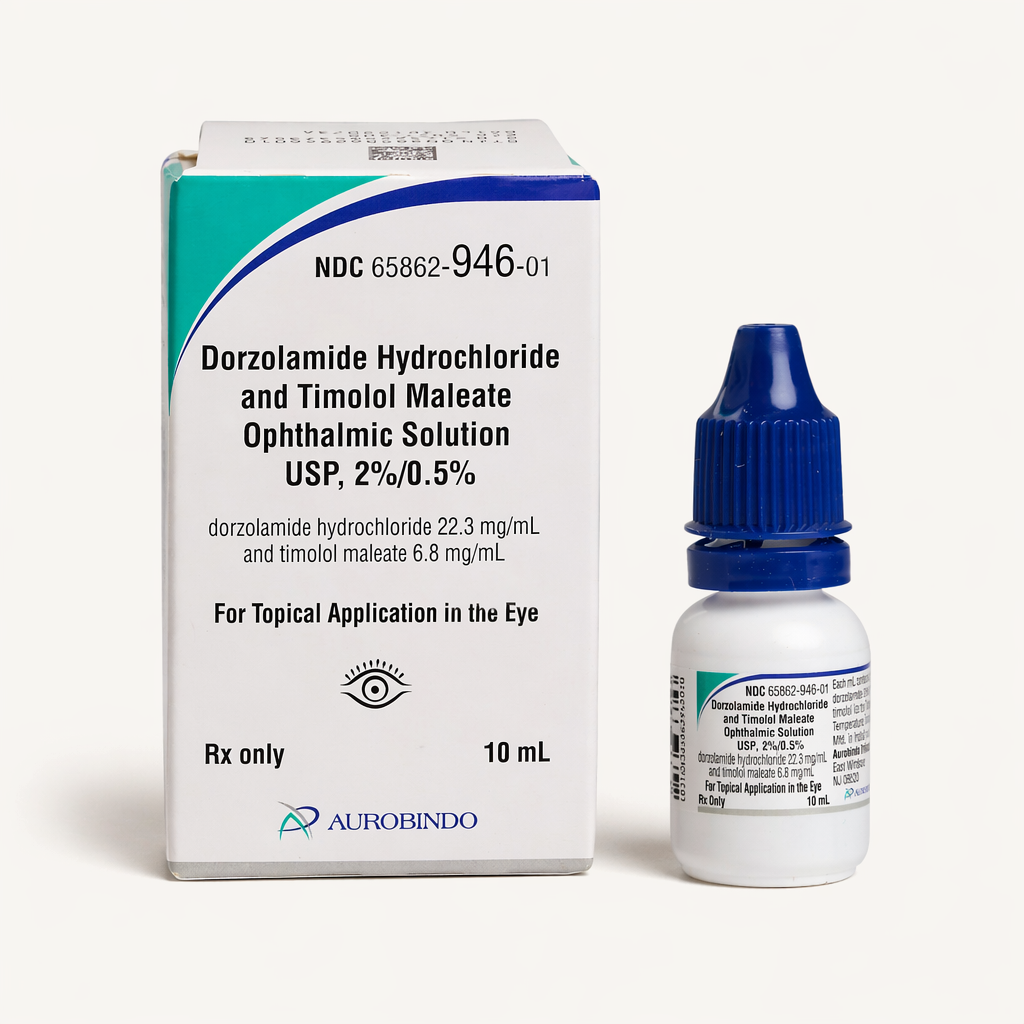
How It Works
Dorzolamide-timolol works through two pathways:
- Dorzolamide: This targets an enzyme called carbonic anhydrase in the ciliary body of the eye. Inhibiting the enzyme slows the chemical reactions that help produce aqueous humor fluid in the eye.
- Timolol: This is a beta-blocker. Timolol’s non-selective formulation blocks receptors that signal the production of fluid. This helps reduce pressure on the eyes and protects the optic nerve.
| Quick Facts | |
|---|---|
| Common Brands | Cosopt, Cosopt PF (preservative-free) |
| Drug Class | Carbonic anhydrase inhibitor/beta-adrenergic blocker (combination medication) |
| Generic Status | Generic version available |
| Availability | Prescription only |
Dosing
For dorzolamide-timolol to be effective, proper administration is crucial. The therapeutic effect diminishes if the drop does not remain in the eye long enough or if the medication enters the patient’s bloodstream too quickly.
- Standard frequency: Per standard guidelines, the typical recommendation is one drop in the affected eye or eyes two times per day. Spacing the doses out by 12 hours is typically advised.
- Wait period: Patients who use dorzolamide-timolol in addition to other eye drops are advised to wait 5 to 10 minutes between drops. Using eye drops too close together can cause the second drop to wash out the first, making it less effective.
- Administration: Standard recommendations advise patients to tilt their head back to create a small pocket with the lower eyelid, then administer the drop without the dropper tip coming into contact with the eye.
Note: Dosing information below is educational only. Your prescribing physician will determine your specific dose based on your individual health needs. Always follow your healthcare provider’s instructions for exact dosing.
Uses
FDA-Approved Uses
Dorzolamide-timolol is FDA-approved to manage the intraocular pressure for people with open-angle glaucoma, for whom the drainage angle of the eye remains open, but fluid will not drain. The drug is also FDA-approved to treat high pressure in the eye for people with ocular hypertension who do not yet show signs of optic nerve damage, but are at high risk of developing this condition.
Off-Label Uses
You may see dorzolamide-timolol prescribed for uses that are not “FDA-approved.” This is a very common and legal practice called “off-label” prescribing, where a doctor uses their clinical judgment to prescribe a drug for a different (but well-researched) purpose.
Common off-label uses for dorzolamide-timolol currently found in clinical research and practice include the following:
- Secondary glaucoma: Dorzolamide-timolol can be used to manage pressure spikes following eye trauma, inflammation, certain pigment disorders, and other conditions that cause secondary glaucoma.
- Post-surgical pressure management: The drug can provide short-term prevention of pressure spikes after cataract surgery, laser procedures, and other eye procedures.
Side Effects
Many people tolerate dorzolamide-timolol well, but the combination of two active medications increases the risk of localized irritation.
Common Side Effects
Common side effects of using dorzolamide-timolol include:
- Burning or stinging immediately after administration
- Bitter or sour taste in the mouth
- Temporarily blurred or cloudy vision
- Mild headache
Serious Side Effects
Serious side effects are rare, but it’s important to know what to look for if they do occur. Serious side effects from using dorzolamide-timolol can include:
- Bronchospasm: Dorzolamide-timolol can cause difficulty breathing, wheezing, or a sudden cough in some people, particularly those with asthma or chronic obstructive pulmonary disease.
- Cardiac changes: The medication can lead to a slower heart rate, dizziness, and fainting.
- Worsening heart failure: People with heart failure who take dorzolamide-timolol may notice their condition worsening. Common symptoms include sudden weight gain and swelling of the hands and feet.
- Severe allergic reaction: Dorzolamide-timolol can cause anaphylaxis in people allergic to any of its ingredients.
Call your doctor immediately if you experience any concerning or prolonged symptoms.
Pharmacist Tips
Proper Occlusion Is Key
When administering the eye drop, standard guidelines state that patients should press firmly on the inner corner of their eye near the nose for at least one minute. This helps close the tear duct and keep the medication in the eye.
Take The Sting Off
Some people who use dorzolamide-timolol find that storing the medication bottle in a cool place can make the drops more soothing to use.
Remove Your Contacts
If you wear soft contact lenses, remove them before you administer the eye drops. The lenses can absorb preservatives from the bottle, causing eye irritation. Wait at least 15 minutes before you put your contact lenses back in.
Practice Proper Hygiene
Patients should never touch the dropper tip to the eye or eyelashes. This helps prevent contamination that can lead to a more serious eye infection.
Watch For White Powder
You may notice a dry white residue on your eyelashes or the tip of the bottle. This is dried medication, and patients can wipe it away with a clean, damp tissue.
Drug Interactions
While the eye drops are technically a topical medication, systemic absorption can still occur, potentially leading to interactions between dorzolamide-timolol and oral medications. Known interactions with dorzolamide-timolol include:
- Oral beta-blockers: Taking oral beta-blockers such as atenolol or metoprolol alongside dorzolamide-timolol eye drops can have an additive effect, slowing the heart rate too much.
- Calcium channel blockers: Diltiazem, verapamil, and other calcium channel blockers can interact with the timolol in the eye drops and affect the patient’s heart rhythm.
- Aspirin: High doses of aspirin can interact with the dorzolamide in the eye drops and potentially affect the body’s acid-base balance.
- Digitalis: Using digitalis heart medication with timolol can increase your risk of a slower heart rate.
Always give your doctor and pharmacist a complete list of all your medications, vitamins, and supplements to check for potential interactions.
FAQs
Why do these eye drops burn so badly right after I put them in?
The burning or stinging you experience immediately after administering the eye drops is due to the slightly acidic pH of dorzolamide. This common reaction normally lasts 30 to 60 seconds. Contact your doctor if the burning is severe or causes lasting redness.
Can I use these drops while wearing my soft contact lenses?
Per standard guidelines, remove your soft contact lenses before you administer the eye drops. The benzalkonium chloride preservative in the drops can discolor lenses and cause irritation. Wait at least 15 minutes after using the eye drops before putting your soft contact lenses back in.
What is the difference between Dorzolamide-Timolol and Cosopt PF?
Generic dorzolamide-timolol and standard brand-name Cosopt medications usually come in a multi-dose bottle that contains preservatives. Cosopt PF, which contains no preservatives, comes in a single-use vial and may suit patients with sensitive eyes or severe dry eye syndrome.
Is it safe to use this medication if I have an allergy to sulfa antibiotics?
Dorzolamide is a sulfonamide medication. Although people with sulfa allergies generally tolerate dorzolamide well, there is still a risk of cross-reactivity. Providers typically tell patients to monitor for signs of allergic reaction, such as rash or irritation.
Does this eye medication actually absorb into my bloodstream?
The eye’s mucous membranes and tear ducts absorb dorzolamide-timolol into your bloodstream. This pathway can cause changes in heart rate and other systemic effects, though these reactions remain rare.
Why are you told to press firmly on the inner corner of your eye after applying the drop?
This technique, known as “punctual occlusion,” blocks the drainage path from the eye to your nose and throat. This helps the medication remain in the eye longer, reducing the risk of systemic absorption, and helping to prevent the bitter-taste side effect.
Will this medication change the color of my eyes?
No, dorzolamide-timolol is not known to change the color of your eyes.
How long should I wait between using dorzolamide-timolol drops and other prescription eye drops?
A wait time of 5 to 10 minutes between administration of different eye drops is recommended. This helps ensure the second drop won’t wash out the first drop or affect its absorption.
How many times a day am I supposed to use these drops?
Per clinical guidelines, the standard dose of dorzolamide-timolol eye drops is two drops per day. These are typically spaced 12 hours apart for morning and evening doses.
Can I use these drops just in one eye, or must I treat both?
Glaucoma can affect the eyes differently, causing symptoms in one eye but not the other. Standard guidelines state that patients should follow their doctor’s advice on which eyes to treat with the eye drops. Only treating one eye is common.
Is it normal for my vision to be slightly blurry or cloudy after using the drops?
Yes, temporary blurriness or cloudiness in the eyes is a normal side effect of using dorzolamide-timolol eye drops. It is advised to avoid driving or operating machinery after using the eye drops until you’ve had time to determine how the medication affect you.
Why does the tip of the dropper bottle have white powder building up on it?
The white powder on the tip of your dropper bottle is most likely medication that has dried and crystallized. This is normal, and you can clean the residue with a warm, damp towel.
Can these drops actually cure my glaucoma, or do I have to use them for the rest of my life?
There is no cure for glaucoma. You cannot restore vision lost to glaucoma, but dorzolamide-timolol eye drops control intraocular pressure to prevent further damage. Patients commonly use the eye drops long-term to protect their remaining vision.
Is it safe to use dorzolamide-timolol if I am pregnant or breastfeeding?
Per standard guidelines, pregnant and breastfeeding patients should discuss dorzolamide-timolol use with their provider before using the eye drops for the first time. Timolol is known to pass into breast milk.
Comparable Medications
Dorzolamide-Timolol, Timolol, Brimonidine/Timolol, Latanoprost, Bimatoprost, or Cosopt PF?
Dorzolamide-timolol is a combination eye drop medication primarily used to reduce intraocular pressure in people with conditions like glaucoma. Based on your medical history and severity of symptoms, your doctor may recommend this drug, a specific form of dorzolamide-timolol, or an alternative medication. Alternatives to dorzolamide-timolol include:
Timolol Eye Drops
From $27.99
Generic timolol, sold under the brand name Timoptic, is a beta-blocker that targets fluid production in the eye via one pathway. It lacks the second component of dorzolamide-timolol.
Brimonidine-Timolol Eye Drops
From $37.99
Sold under the brand name Combigan, brimonidine-timolol is a combination eye drop. Brimonidine is an alpha-2 agonist that reduces aqueous humor production and increases aqueous humor drainage in the eye. This mechanism differs from that of dorzolamide, but both medications can be effective. Providers typically choose one over the other based on their patients' allergies and side-effect profiles.
Latanoprost
From $29.99
Latanoprost, sold under the brand name Xalatan, is a once-daily eye drop intended to increase fluid drainage. It is often the first-line treatment for glaucoma, and dorzolamide-timolol may be added if latanoprost alone is not effective.
Bitamoprost
Like latanoprost, it is a prostaglandin analog that helps increase drainage of aqueous humor. It can cause the color of your eyelashes and eyes to change.
Cosopt PF
Generic dorzolamide-timolol and brand-name Cosopt PF (preservative-free) share the same active ingredients, but Cosopt PF does not contain preservatives. Patients may prefer this form if they have experienced redness or irritation in their eyes from generic dorzolamide-timolol or standard Cosopt eye drops.
We Have Dorzolamide in Stock. Get Yours Today!
Important: Information on this page is for educational purposes only. Prescribing decisions are made by independent, licensed providers. TelyRx operates technology-enabled pharmacies and a telehealth platform that connects patients with licensed providers. Prescriptions, when provider-approved and issued, are filled and shipped by TelyRx-affiliated pharmacies. We do not employ physicians or make prescribing decisions. Learn more about our editorial standards here.