

How It Works
When your skin is irritated, your immune system sends defense cells to the area. These cells release chemicals that widen blood vessels, causing the skin to swell, turn red, and itch.
Desonide stops this cycle through reducing the number of overactive white blood cells in your skin, blocking the body’s itch signals, and narrowing blood vessels to reduce redness and swelling.
By helping to reduce the skin’s overactive immune response, desonide helps the skin barrier to heal and return to a normal state.
| Quick Facts | |
|---|---|
| Common Brands | Desowen, Desonate, Verdeso, Tridesilon |
| Drug Class | Topical corticosteroid (low potency) |
| Generic Status | Generic version available |
| Availability | Prescription only |
Dosing
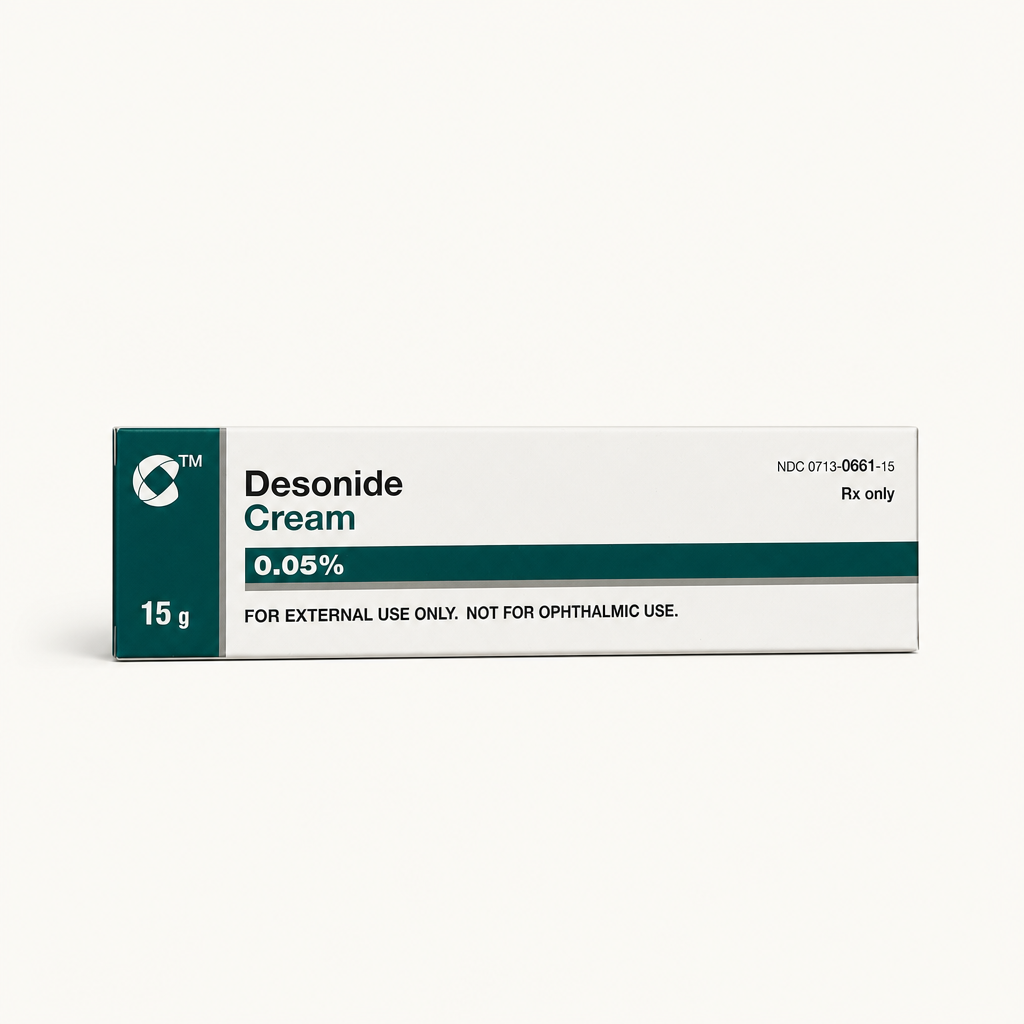
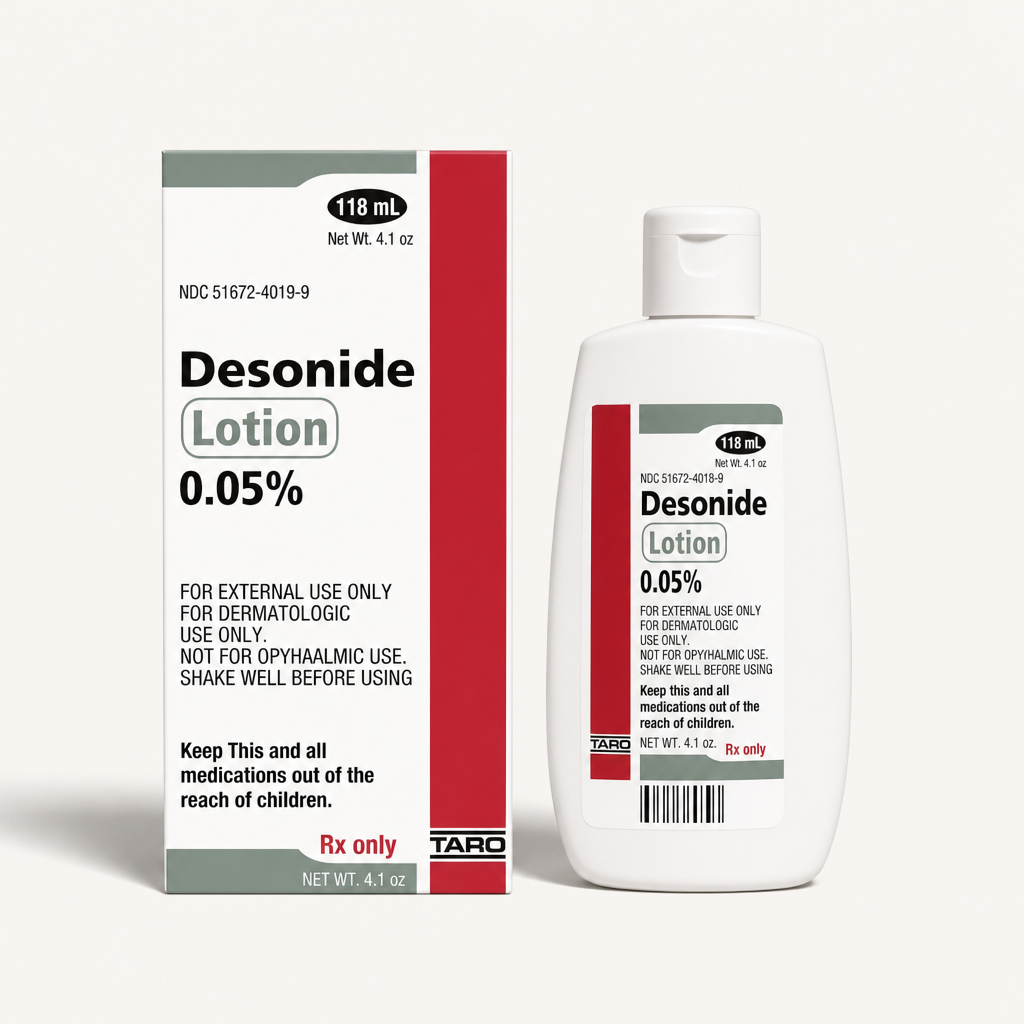
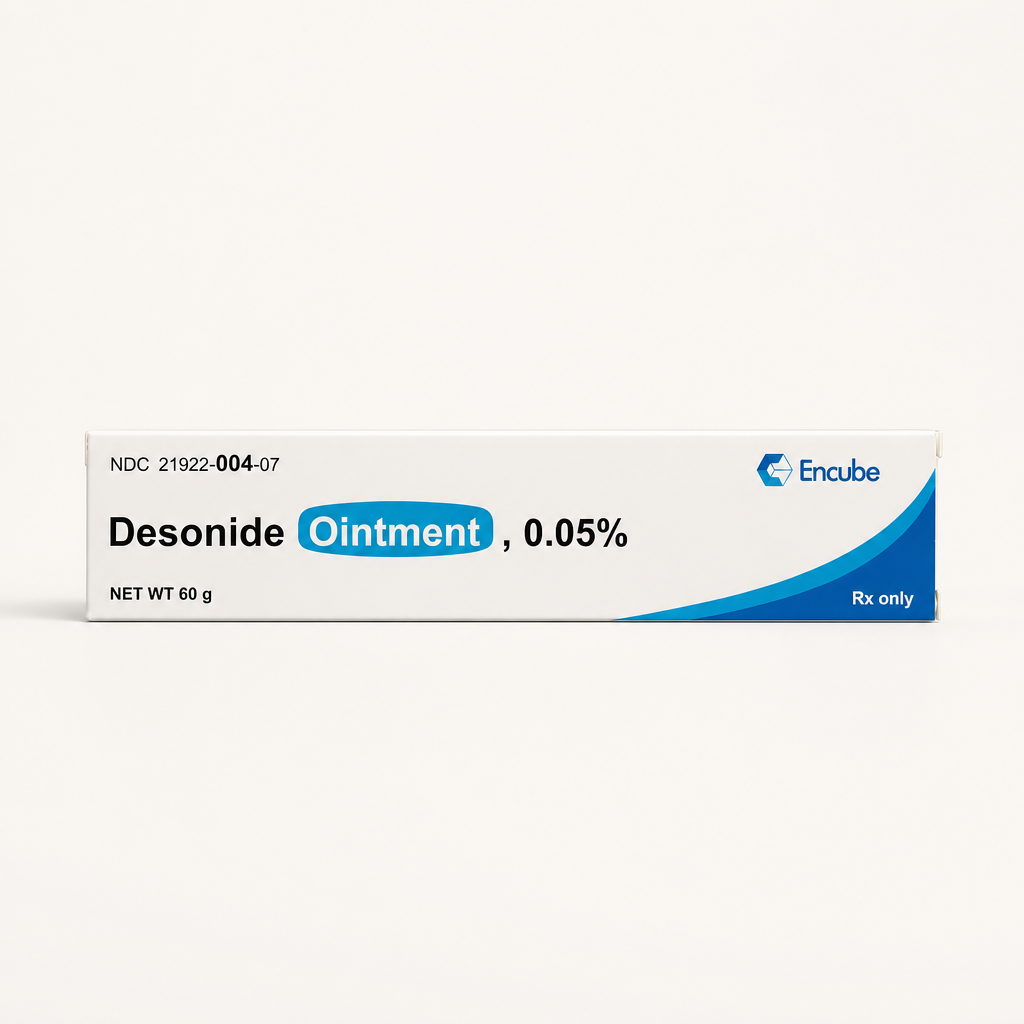
Desonide comes in several forms, including cream, ointment, lotion, and gel. The form your provider prescribes often depends on the rash’s location.
- Application frequency: Providers usually recommend applying a thin layer to the affected area 2 to 4 times a day.
- Duration of use: Standard guidelines suggest using desonide for the shortest time necessary to clear the rash. That treatment should not exceed 2 to 4 consecutive weeks without a doctor’s review.
- Cleaning the area: Before applying, it is generally advisable to gently wash the skin with a mild cleanser and pat it dry.
- Rubbing it in: Providers recommend applying just enough to cover the area, then gently rubbing it in until it disappears.
- The unbroken skin rule: Standard guidelines suggest applying desonide only to skin that is not cut, scraped, or open.
Note: Dosing information below is educational only. Your prescribing physician will determine your specific dose based on your individual health needs. Always follow your healthcare provider’s instructions for exact dosing.
Uses
FDA-Approved Uses
The FDA approves desonide for the relief of inflammatory and pruritic (itchy) symptoms. This covers a range of skin rashes that respond to steroid treatment.
Off-Label Uses
You may see desonide prescribed for uses that are not FDA-approved. This is a common and legal practice called off-label prescribing, where a doctor uses their clinical judgment to prescribe a drug for a different (but well-researched) purpose.
Desonide may be prescribed off-label for the following conditions:
- Lichen sclerosus: In some cases, doctors use desonide to manage this inflammatory skin condition when it affects sensitive areas.
- Bug bite reactions: It may calm severe swelling and itching from non-infected insect bites.
- Sunburn: For painful, blistering sunburns, a short course of desonide may help reduce acute inflammation.
Side Effects
Because desonide is a mild steroid, side effects are less common than with stronger versions, but they can still occur, especially with incorrect use.
Common Side Effects
- Initial stinging: A brief burning or stinging sensation when first applied.
- Dryness: Some users find the cream form makes the skin feel tight or dry.
- Itching or redness: Ironically, the medication can occasionally cause mild irritation at the site of application.
Serious Side Effects
Serious side effects are rare, but it’s important to know what to look for if they do occur. It’s generally accepted that you stop taking the medication and immediately call the doctor if you experience any of the following symptoms:
- Skin thinning (atrophy): Prolonged use can make the skin fragile, lead to easy bruising, or cause permanent stretch marks.
- Hormone changes: If used over large areas for a long time, the medication could affect the adrenal glands (Cushing’s syndrome).
- Skin infections: Steroids can hide or worsen an infection. Seek help if you notice pus, warmth, or spreading redness.
- Pigment changes: The treated skin may temporarily become lighter or darker than the surrounding skin.
Call your doctor immediately if you experience any concerning or prolonged symptoms.
Pharmacist Tips
Moisturizer Timing
If you use a daily moisturizer, standard guidelines recommend applying the desonide first to clean skin. Providers advise waiting about 15 minutes for the medication to absorb before applying your moisturizer.
Skip the Bandages
Standard guidelines advise against wrapping or bandaging the area after applying desonide unless your doctor specifically tells you to do so. Bandaging can cause your skin to absorb too much medication, which raises the risk of side effects.
Wash Your Hands
Wash your hands before and after applying the cream to prevent the medicine. If your hands are the area being treated, do not wash the medication off after application.
Protect Your Eyes
Providers advise not getting the cream inside your eyes or on your eyelids unless directed. Prolonged use near the eyes can increase the risk of glaucoma or cataracts.
Check The Expiration Date
Like all medicines, desonide has an expiration date. It is generally recommended not to use old tubes from previous rashes, as the medication may have lost its strength or become contaminated.
Face And Groin Care
Standard guidelines typically advise you to use desonide on your face or in your groin area only if your provider specifically directs you to do so. These areas are at high risk for skin thinning.
Drug Interactions
Be careful about using other topical products at the same time. Let your doctor know if you use:
- Other steroids: Using desonide along with other steroid creams or oral steroids (like prednisone) can increase the total amount of steroids in your body.
- Topical irritants: It is generally advisable to avoid harsh soaps or alcohol-containing products in the same area, as these can worsen the stinging effect of desonide.
Always give your doctor and pharmacist a complete list of all your medications, vitamins, and supplements to check for potential interactions.
FAQs
Is desonide a strong or weak steroid compared to other prescription creams?
Desonide is considered a low-potency steroid. This treats rashes with a lower risk of side effects than high-strength steroids like clobetasol.
Can I safely put desonide cream on my face or under my eyes?
Desonide is often the preferred steroid for the face because it is mild. You should use it only there under a doctor’s guidance, and never for more than a few consecutive days at a time. Providers advise caution to keep it away from the eyes.
What is the difference between using the cream and the ointment?
The active medicine is the same, but the base is different. Creams are less greasy and better for weeping or oily areas. Ointments are oil-based and greasier, which can help with dry, scaly skin.
Can I use desonide to get rid of acne or rosacea breakouts?
No. Steroids can make acne and rosacea worse. They may cause a rebound effect where the redness looks better for a few hours, but then returns worse than before.
Should I apply my moisturizer before or after applying Desonide?
Standard guidelines recommend applying desonide first. This practice ensures the medication has direct contact with the skin and prevents a layer of moisturizer from blocking it.
Does this medicine work for bug bites or severe sunburn?
Yes, it can help reduce swelling and itching from bug bites or the intense inflammation of a severe sunburn. But it is generally recommended that it be used only for a few days for these off-label purposes.
Can I use this cream on my groin or private areas for an itchy rash?
Because the skin in the groin is thin and prone to folding, use desonide only after a doctor has examined the rash and prescribed it for that specific area.
Will desonide cure a fungal infection like ringworm or jock itch?
No. Desonide is not an antifungal. If you apply a steroid to a fungal infection, the rash may look less red, but the fungus may grow faster because the steroid reduces your skin’s ability to fight against it.
Why does the cream sometimes sting or burn when I first put it on?
This is a common side effect, especially if the skin is raw or cracked. It usually stops after a few minutes. If the burning is severe or persists, wash the cream off and contact your doctor.
Can I apply makeup or sunscreen directly over the desonide cream once it has dried?
Yes. Once the desonide has dried (usually after about 10–15 minutes), you can apply makeup or sunscreen as usual.
How many times a day am I supposed to apply this?
Most providers recommend 2 to 3 times a day. Applying it more often than directed won’t clear the rash faster, but it will increase your risk of side effects.
Will using this medication bleach my skin over time?
Desonide does not bleach the skin like a whitening cream. However, it can cause hypopigmentation, where the treated skin becomes temporarily lighter. This is usually a side effect of using the medication for too long.
Is it safe to use desonide if I am currently pregnant or breastfeeding?
Standard guidelines suggest that patients consult with their doctor before using any steroid medication while pregnant or breastfeeding.
Can I wrap the rash in a bandage after applying the ointment?
No. Unless your doctor specifically told you to use an occlusive dressing, leave the skin uncovered.
Does desonide cream expire?
Yes. Providers recommend always checking the crimp of the tube, the prescription label, or the packaging for the expiration date. Using expired cream can cause skin irritation or fail to work.
How is desonide different from hydrocortisone?
While both are low-strength steroids, desonide is generally considered slightly stronger than over-the-counter hydrocortisone 1%. Desonide requires a prescription, whereas low-strength hydrocortisone does not.
Comparable Medications
Triamcinolone, Mometasone, Elidel, or Hydrocortisone?
Below are some potential alternatives or comparisons to desonide:
Hydrocortisone
From $24.99
A low-potency steroid often available over the counter. It is weaker than desonide and is used for mild rashes or irritations.
Triamcinolone
From $24.99
A medium-potency prescription steroid. It is stronger than desonide and can help with thick skin (like the elbows or knees), but it is generally too strong for long-term use on the face.
Mometasone Cream
From $34.99
It is stronger than desonide and only needs to be applied once a day, but it carries a higher risk of skin thinning if used on sensitive areas.
Pimecrolimus Cream
From $169.99
This is a topical calcineurin inhibitor. It is commonly used for facial eczema as a long-term alternative to desonide because it does not cause skin thinning, though it may cause a warm or burning sensation.
We Have Desonide in Stock. Get Yours Today!
Important: Information on this page is for educational purposes only. Prescribing decisions are made by independent, licensed providers. TelyRx operates technology-enabled pharmacies and a telehealth platform that connects patients with licensed providers. Prescriptions, when provider-approved and issued, are filled and shipped by TelyRx-affiliated pharmacies. We do not employ physicians or make prescribing decisions. Learn more about our editorial standards here.