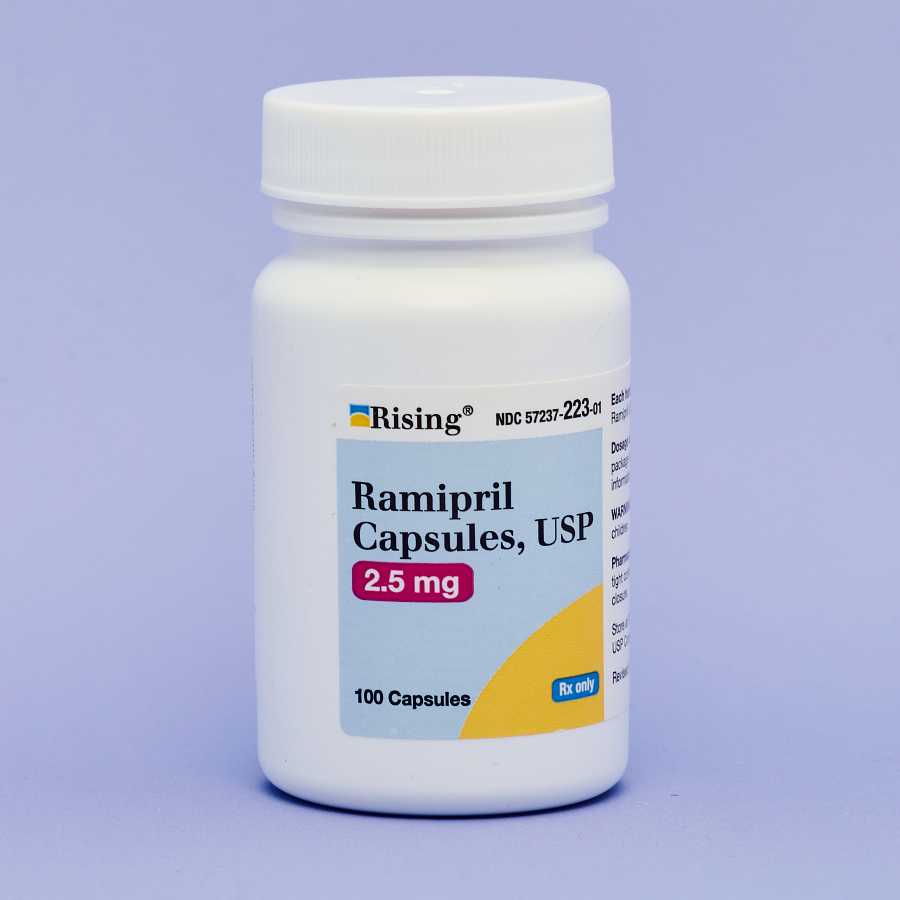
How It Works
Ramipril works by blocking enzymes that convert angiotensin I, a peptide hormone, into angiotensin II, a potent chemical that causes muscles surrounding blood vessels to constrict. When these muscles are tightened, the heart must pump harder to promote proper blood flow, and blood pressure increases as a result.
By inhibiting the production of angiotensin II, ramipril allows blood vessels to relax and widen in a process known as vasodilation. This helps lower systemic blood pressure, decrease cardiac workload, and reduces strain on the kidneys. Additionally, ramipril can help the body retain less water and salt to maintain normal blood pressure and minimize fluid buildup.
| Quick Facts | |
|---|---|
| Common Brands | Altace (discontinued) |
| Drug Class | Angiotensin-converting enzyme (ACE) inhibitor |
| Generic Status | Generic version available |
| Availability | Prescription only |
Dosing
Specific dosing varies by patient and condition.
- Hypertension: For treating high blood pressure with ramipril, standard guidelines suggest a starting dose of 2.5 mg once daily. Intake may increase to a maintenance dose of up to 20 mg per day based on the patient’s blood pressure. Larger doses may be split into two daily doses.
- Heart failure recovery: For a patient whose heart does not pump effectively after a heart attack, providers typically prescribe a starting dose of 2.5 mg twice daily. This may change in the following weeks, potentially increasing to a maintenance dose of 5 mg twice daily.
- Reduction in risk of stroke or myocardial infarction: Doses vary by patients, but doctors commonly prescribe a daily dose of 10 mg to reduce the risk of stroke or myocardial infarction.
- Adjustments: Doctors commonly adjust dosages in patients with significant kidney impairment or those taking “water pills” (diuretics).
Patients can break the ramipril capsule and sprinkle the contents on food or water if they have difficulty swallowing.
Note: Dosing information below is educational only. Your prescribing physician will determine your specific dose based on your individual health needs. Always follow your healthcare provider’s instructions for exact dosing.
Uses
FDA-Approved Uses
The FDA approved ramipril capsules for the following:
- Lowering the blood pressure and reducing the risk of cardiovascular complications for people with hypertension.
- Improving survival in patients who show signs of heart failure within the first few days after a heart attack.
- Reducing the cardiovascular risk for patients 55 and older who are at high risk of a stroke or heart attack due to a history of coronary artery disease, stroke, or diabetes.
Off-Label Uses
You may see ramipril capsules prescribed for uses that are not “FDA-approved.” This is a very common and legal practice called “off-label” prescribing, where a doctor uses their clinical judgment to prescribe a drug for a different (but well-researched) purpose.
Common off-label uses for ramipril capsules currently found in clinical research and practice include:
- Diabetic neuropathy: Some studies suggest ramipril can slow the progression of kidney disease in people with type 2 diabetes and albuminuria (protein in the urine).
- Chronic kidney disease: Ramipril may be used to reduce protein leakage in the urine and preserve kidney function for people with non-diabetic kidney diseases.
- Raynaud syndrome: For some patients with Raynaud’s syndrome, ramipril can improve symptoms by dilating blood vessels and improving blood flow to the extremities.
Get Savings Updates for Ramipril Capsules
Join our mailing list for exclusive deals and more.
Side Effects
Many patients tolerate ramipril capsules well, but the medication’s effect on the renin-angiotensin-aldosterone system (RAAS) can lead to systemic changes and side effects.
Common Side Effects
Common side effects from taking ramipril include:
- Dry, persistent cough
- Dizziness or lightheadedness
- Headache and fatigue
- Nausea
Serious Side Effects
Serious side effects are rare, but it’s important to know what to look for if they do occur.
Serious side effects from using ramipril can include:
- Angioedema: Ramipril can lead to angioedema, a rare but life-threatening condition involving the rapid swelling of the face, lips, tongue, and throat.
- Hyperkalemia: Ramipril reduces aldosterone, which can lead to the kidneys retaining too much potassium.
- Hypotension: While ramipril can lower blood pressure for people with hypertension, people who are dehydrated or those who take high doses of diuretics may experience a severe drop in blood pressure. These individuals are at a higher risk of fainting in response to the medication.
- Kidney dysfunction: Using the drug to treat certain types of arterial blockage can have a detrimental effect and cause a sudden decline in kidney function.
- Liver toxicity: In rare cases, taking ramipril can lead to liver toxicity. Symptoms include elevated liver enzymes and jaundice (yellowing) of the skin and eyes.
Call your doctor immediately if you experience any concerning or prolonged symptoms.
Pharmacist Tips
Take Caution With The First Dose
The initial dose of ramipril can cause a steep drop in blood pressure. For this reason, providers generally recommend taking the first dose right before bedtime.
Maintain Proper Hydration
Dehydration increases the risk of dizziness and fainting for those taking ramipril. People with fluid-restricted heart failure should talk to their doctor about the safest way to manage their fluid intake.
Break The Capsule If Needed
Ramipril can be crushed and sprinkled over food or mixed into water. This can be helpful for people who have difficulty swallowing or who struggle with the capsule’s taste.
Avoid Potassium-Rich Salt Substitutes
Many salt substitutes replace sodium with potassium. Since ramipril increases potassium levels on its own, using one of these salt substitutes while taking the drug can lead to conditions like hyperkalemia.
Be Careful When Standing Up
Ramipril can cause fainting if you stand up too quickly. Doctors advise slowly rising to one’s feet to reduce dizziness and lightheadedness.
Drug Interactions
Ramipril can interact with a wide range of substances, including prescription and over-the-counter medications. Known interactions with ramipril include:
- Nonsteroidal anti-inflammatory drugs (NSAIDs): NSAIDs like naproxen and ibuprofen can counteract ramipril’s ability to lower blood pressure, potentially increasing the risk of kidney damage for patients.
- Potassium supplements: Taking ramipril alongside spironolactone and other potassium-sparing diuretics can lead to dangerously high potassium levels.
- Lithium: Ramipril can increase lithium levels in the blood. This can lead to complications for people who take lithium supplements to manage conditions like bipolar disorder.
- Entresto: Entresto is a prescription medication used to treat chronic heart failure. There is a critical established interaction between ramipril and Entresto, with an advised “washout” period of at least 36 hours between the medications. Following these guidelines can reduce the patient’s risk of developing angioedema.
- Alcohol: Drinking alcohol while taking ramipril can amplify the drug’s blood-pressure-lowering abilities, and potentially lead to dizziness and fainting.
Always give your doctor and pharmacist a complete list of all your medications, vitamins, and supplements to check for potential interactions.
FAQs
Why does ramipril come in capsules instead of solid tablets?
Ramipril comes in capsules because this formulation protects the medication from light and moisture while allowing patients who have difficulty swallowing to sprinkle the capsule’s contents over food or water.
Why do I have a persistent cough since starting ramipril?
The “ACE cough” is a well-established side effect of taking ramipril and other ACE inhibitors. It occurs when bradykinin (a vasodilator) builds up in the respiratory tract. Cough syrup cannot be used to treat the symptoms, so switching to a different class of medication may be necessary for patients with a persistent cough.
Why did my doctor prescribe this after a heart attack, even if my blood pressure is normal?
Ramipril can be used for “cardiac remodeling”, which can prevent the heart from stretching too thin after a heart attack. This medication can help prevent future heart failure.
Can I take over-the-counter pain medications while on this drug?
Per standard guidelines, patients who take ramipril are advised to avoid over-the-counter NSAID pain relievers like naproxen or ibuprofen due to the elevated risk of kidney damage. Acetaminophen may be a safer alternative for pain relief while taking ramipril, but consult with your provider.
Is ramipril safe to take if I am pregnant or planning to become pregnant?
No, ramipril is not considered safe to take for patients who are pregnant or planning to become pregnant. Ramipril carries a “black box” warning for pregnancy, as the drug can cause severe injury or death to a developing fetus. Patients who become pregnant are advised to stop taking the medication and contact their provider immediately.
Should I take my ramipril capsule in the morning?
Because ramipril may cause dizziness, many doctors recommend ingesting it at night. However, those who take diuretics may prefer to take it in the morning. Patients should maintain consistent timing daily.
Why do I feel dizzy or lightheaded when I stand up quickly?
People who take ramipril may feel dizzy or lightheaded when standing up due to orthostatic hypotension. This occurs because the medication lowers blood pressure, and your body needs extra time to adjust blood flow when you change from a seated to a standing position.
Do I need to take ramipril with food?
Per standard guidelines, patients can take ramipril with or without food. Timing the dosage with a meal or a light snack may help reduce the risk of side effects such as nausea.
Is it safe to drink alcohol while taking ramipril?
Patients are advised to limit their alcohol consumption while taking ramipril, especially during the first weeks of treatment.
Does ramipril interact with erectile dysfunction drugs like Viagra or Cialis?
Ramipril and erectile dysfunction drugs like Viagra and Cialis lower blood pressure. Taking either type of drug can lead to a steep drop in blood pressure, potentially resulting in dizziness or fainting. Patients should consult with their doctor before combining these medications.
What is the difference between Altace and generic ramipril?
Altace was a brand-name version of ramipril, but has since been discontinued. Generic versions of ramipril are still available.
Why do I have to wait 36 hours before switching from ramipril to Entresto?
Both ramipril and Entresto have mechanisms that break down bradykinin, a vasodilatory agent. Taking these medications too close together can cause a buildup of bradykinin and increase the risk of angioedema, so a 36-hour “washout” period is generally required.
Comparable Medications
Ramipril, Lisinopril, Enalapril, Losartan, Amlodipine, Metoprolol, or Valsartan?
Ramipril is a prescription medication used to lower blood pressure and stabilize patients after a heart attack. Your doctor may recommend this drug or a ramipril alternative based on factors such as your age, medical history, and symptom severity. Alternatives to ramipril include:
Lisinopril
From $22.99
Lisinopril, sold under the brand name Zestril, is an ACE inhibitor similar to ramipril in terms of function and efficacy. However, lisinopril is typically administered as a tablet and is more likely to be used for basic hypertension management. Ramipril is usually administered as a capsule, and it has been shown to be more effective for high-risk cardiovascular event prevention.
Enalapril Tablets
From $22.99
Sold under the brand name Vasotec, enalapril is an older ACE inhibitor that patients typically take twice a day. Ramipril has a longer half-life than enalapril, meaning it remains in the system longer and usually doesn't need to be administered more than once daily.
Losartan
From $22.99
Losartan is an angiotensin II receptor blocker (ARB) that targets angiotensin II that has already been produced. This is unlike ramipril, which prevents the conversion of angiotensin I to angiotensin II. Losartan typically does not cause the same dry, persistent cough as ramipril, so doctors may switch patients to losartan if they cough excessively while taking ramipril.
Amlodipine
From $24.99
Amlodipine, sold under the brand name Norvasc, is a calcium channel blocker that lowers blood pressure by relaxing the heart muscles and blood vessels. Amlodipine does not provide the same level of kidney protection as ramipril.
Metoprolol Tartrate
From $22.99
Metoprolol is a beta-blocker sold under the brand name Lopressor that can slow heart rate and reduce the force of heart contractions. Both metoprolol and ramipril can be used for patients after a heart attack. Ramipril focuses on hormonal RAAS, while metoprolol targets the heart's electrical and muscular workload.
Valsartan
From $24.99
Valsartan, sold under the brand name Diovan, is an ARB inhibitor medication that works similarly to losartan.
We Have Ramipril Capsules in Stock. Get Yours Today!
Important: Information on this page is for educational purposes only. Prescribing decisions are made by independent, licensed providers. TelyRx operates technology-enabled pharmacies and a telehealth platform that connects patients with board-certified licensed providers. Prescriptions, when provider-approved and issued, are filled and shipped by TelyRx-affiliated pharmacies. We do not employ physicians or make prescribing decisions. Learn more about our editorial standards here.