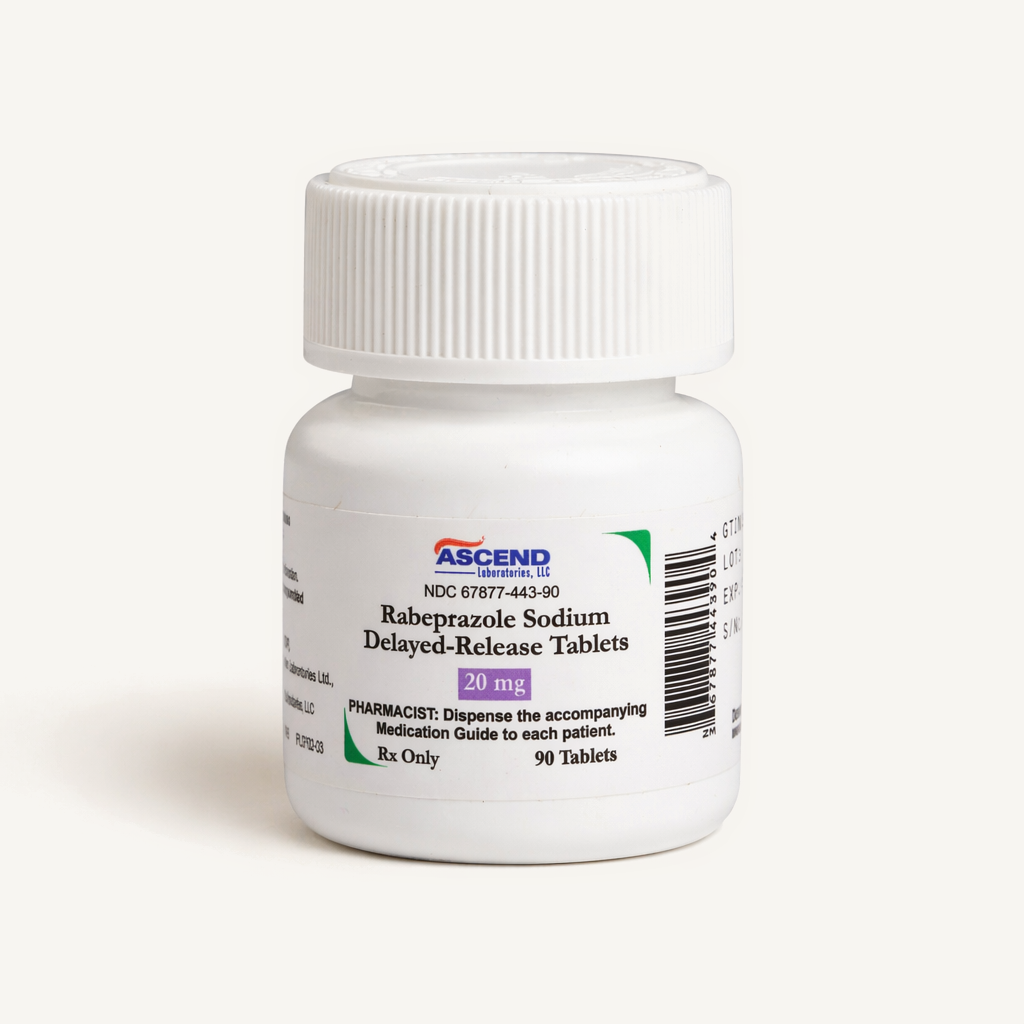
How It Works
Rabeprazole tablets work by reducing the production of stomach acid. This reduction in stomach acid relieves symptoms such as heartburn and helps heal damage to the esophageal or gastric lining.
| Quick Facts | |
|---|---|
| Common Brands | AcipHex, AcipHex Sprinkle |
| Drug Class | Proton pump inhibitor (PPI) |
| Generic Status | Generic is available |
| Availability | Prescription only |
Dosing
Rabeprazole delayed-release tablets are available in a 20 mg strength. The recommended dose depends on what you’re taking rabeprazole to treat:
- Gastroesophageal reflux disease (GERD): The recommended dose is 20 mg taken by mouth once daily for 4 to 8 weeks, or longer if symptoms persist.
- Duodenal ulcers: The recommended dose is 20 mg taken by mouth once daily after the morning meal, for up to 4 weeks.
- Helicobacter pylori (H. pylori) infection: The recommended dose is 20 mg twice daily by mouth for 7 days, usually in combination with antibiotics such as amoxicillin and clarithromycin.
- Conditions like Zollinger-Ellison syndrome: The recommended dose is 60 mg taken by mouth once daily.
Note: Dosing information below is educational only. Your prescribing physician will determine your specific dose based on your individual health needs. Always follow your healthcare provider’s instructions for exact dosing.
Uses
FDA-Approved Uses
Rabeprazole tablets are FDA-approved for:
- Gastroesophageal reflux disease (GERD)
- Erosive esophagitis
- Duodenal ulcers
- Helicobacter pylori (H. pylori) infections
- Conditions characterized by excessive stomach acid production, such as Zollinger-Ellison syndrome
Off-Label Uses
You may see rabeprazole tablets prescribed for uses that are not “FDA-approved.” This is a very common and legal practice called “off-label” prescribing, where a doctor uses their clinical judgment to prescribe a drug for a different (but well-researched) purpose.
There are currently no common off-label uses for rabeprazole.
Side Effects
Like all medications, rabeprazole tablets can cause side effects. Some common side effects may improve over time as your body adjusts to the medication. Other side effects may be serious and require medical attention.
Common Side Effects
- Headache
- Nausea
- Vomiting
- Diarrhea
- Constipation
- Stomach pain or discomfort
- Sore throat
- Flatulence (gas)
- Dry mouth
- Dizziness
- Fatigue
- Mild skin rash or itching
- Joint or muscle pain
Serious Side Effects
Serious side effects are rare, but it’s important to know what to look for if they do occur. Stop using rabeprazole tablets and call your doctor immediately if you experience:
- Severe allergic reactions: Symptoms include swelling of the face, lips, tongue, or throat; difficulty breathing or swallowing; racing heart; severe rash or itching; and/or fever.
- Drug reaction with eosinophilia and systemic symptoms (DRESS): This is a specific type of allergic reaction that affects multiple organs. Symptoms include swollen lymph nodes, shortness of breath, dark-colored urine, rash, fever, yellowing of the skin or eyes (jaundice), and swelling in the feet, ankles, or legs.
- Kidney problems: A sudden type of kidney problem called acute tubulointerstitial nephritis can occur when taking rabeprazole tablets. Symptoms include decreased urine output, blood in the urine, and fever.
- Clostridioides difficile (C. diff) diarrhea: Using PPIs like rabeprazole can increase the risk of this severe bacterial infection. Symptoms include persistent watery diarrhea, severe stomach cramps, blood in the stool, and fever.
- Bone loss or fractures: Long-term use (more than one year) or high doses of rabeprazole may weaken bones and increase the risk of fractures.
- Vitamin B12 deficiency: Long-term use (more than three years) of rabeprazole can lead to low vitamin B12 levels. Symptoms include sore tongue, weakness, and tingling in the hands or feet.
- Low magnesium levels (hypomagnesemia): Prolonged use of rabeprazole can also lead to low magnesium levels. Symptoms include muscle spasms, heart palpitations, seizures, and dizziness.
- Lupus: PPIs like rabeprazole can sometimes cause new or worsening lupus. Symptoms include new or worsening joint pain or a rash on the cheeks or arms.
- Severe skin reactions: Life-threatening reactions like Stevens-Johnson syndrome (SJS) or toxic epidermal necrolysis (TEN) can occur on rabeprazole. Symptoms include red or purple rash, blistering or peeling skin and painful, watery eyes.
Call your doctor immediately if you experience any concerning or prolonged symptoms.
Pharmacist Tips
Dose Timing Is Important
When you take rabeprazole and whether you need to take it with food can depend on what you’re taking it for. For duodenal ulcers, it is best taken in the morning after breakfast. For H. pylori infections, it is usually taken with breakfast and dinner. For everything else, rabeprazole can be taken with or without food.
Swallow The Tablet Whole
Do not cut, crush, or chew rabeprazole tablets, as this will interfere with the delayed-release mechanism and alter absorption.
Be Patient
Rabeprazole is not for immediate heartburn relief. It may take 1 to 4 days for the medication to reach its full effect.
Consider Limiting Alcohol
It’s not known if alcohol interacts directly with rabeprazole, but it can irritate the stomach and increase stomach acid production.
Store At Room Temperature
Rabeprazole tablets should be stored in a cool, dry place away from light.
Tell Your Provider If You’re Pregnant Or Breastfeeding
It is not known if rabeprazole tablets can affect pregnancy or pass into breast milk, so risk cannot be ruled out. Tell your healthcare provider if you are pregnant or breastfeeding so they can advise whether this medication is safe for you to use.
Try To Avoid Missing A Dose
If you miss a dose of rabeprazole tablets, take it as soon as you remember, unless it is almost time for your next dose. In that case, skip the missed dose and take your next dose as scheduled. Do not take double or extra doses to make up for a missed one.
Drug Interactions
Certain medications and substances can interact with rabeprazole tablets, potentially altering how it works or increasing the risk of side effects. For example:
- Warfarin (Coumadin): Taking rabeprazole with this medication can increase the risk of abnormal bleeding.
- HIV/AIDS medications: Rabeprazole should generally not be taken with certain antiretrovirals like rilpivirine, atazanavir, nelfinavir, or saquinavir.
- Methotrexate: Rabeprazole can interact with this medication.
- Digoxin: This medication can interact with rabeprazole.
- Antifungal medications: Rabeprazole may affect the absorption of ketoconazole, itraconazole, or voriconazole.
- Tacrolimus: Rabeprazole may affect the concentration of this medication.
- Diuretics (“Water Pills”): These medications can interact with rabeprazole.
Always give your doctor and pharmacist a complete list of all your medications, vitamins, and supplements to check for potential interactions.
FAQs
What is the absolute best time of day to take my rabeprazole pill?
It depends. For GERD, it can be taken at any time of the day, such as the morning or evening (so long as you are consistent). However, if you are treating a duodenal ulcer, it is recommended to take it in the morning after breakfast. For H. pylori infections, it is taken twice daily with breakfast and dinner.
Do I absolutely have to take this on an empty stomach?
No, it does not strictly need to be taken on an empty stomach for all conditions. It can generally be taken with or without food when treating GERD. However, it should be taken after breakfast for duodenal ulcers and with a meal for H. pylori infections.
Can I safely cut or crush this little tablet if I have a hard time swallowing pills?
No. Rabeprazole tablets must be swallowed whole. Do not cut, crush, or chew them, as doing so can change how the medication is absorbed into your body.
What is the difference between this prescription and omeprazole (Prilosec) at the grocery store?
Both rabeprazole and omeprazole are proton pump inhibitors (PPIs) that work similarly to lower stomach acid levels. Over-the-counter omeprazole (Prilosec OTC) is generally only used for heartburn, while rabeprazole can be used for GERD, duodenal ulcers, and other conditions characterized by too much stomach acid.
How many days does it take for my severe heartburn and chest pain to stop?
Rabeprazole is not for immediate relief. While studies indicate that some people experience relief within the first 24 hours, it generally takes 1 to 4 days for the medicine to take full effect.
Why did my acid reflux come back worse when I stopped taking rabeprazole?
It is advised not to abruptly discontinue this medication unless your care provider tells you to do so, as acid reflux symptoms may return.
Does taking rabeprazole for years cause osteoporosis?
Long-term use of PPIs (typically longer than a year) or taking high doses may increase the risk of bone loss and bone fractures.
Can I safely take Tums, Rolaids, or Pepto-Bismol at the same time as this pill?
Yes, quicker-acting antacids may generally be taken with rabeprazole if needed for immediate symptom relief. However, it’s best to check with your healthcare provider to ensure they won’t interact with any other medications you may be taking.
Can taking this long-term cause a vitamin B12 deficiency?
Yes, taking acid-lowering medications like rabeprazole for a long time (3 years or longer) can reduce your body’s absorption of vitamin B12, potentially leading to a deficiency.
Is it safe to use rabeprazole if I am currently pregnant or breastfeeding?
It is currently not known if rabeprazole can harm an unborn baby or if it passes into breast milk, so risk cannot be ruled out. It generally should not be used while pregnant or breastfeeding.
Will rabeprazole interact badly with my blood thinner?
Rabeprazole can interact with the blood thinner warfarin (Coumadin), which can increase the risk of abnormal bleeding. Providers typically monitor bloodwork closely if you take rabeprazole with a blood thinner medication.
Can I safely drink alcohol or coffee while taking rabeprazole?
Alcohol and coffee are not known to directly interact with rabeprazole. However, both alcohol and coffee can irritate the stomach lining, increase acid production, and worsen reflux symptoms. It may be advisable to limit drinking alcohol or coffee while taking rabeprazole.
Does this pill actually cure my acid reflux, or just treat the symptoms?
Rabeprazole works by lowering the production of stomach acid levels. This relieves symptoms such as heartburn and regurgitation and helps heal the esophageal and gastric lining. It is typically used to control symptoms rather than as a permanent cure.
Comparable Medications
Rabeprazole tablets, omeprazole (Prilosec), esomeprazole (Nexium), pantoprazole (Protonix), famotidine (Pepcid), or sucralfate (Carafate)?
There are several medications your doctor can prescribe instead of rabeprazole tablets. Here are a few possible alternatives below.
Omeprazole
From $19.99
A prescription and over-the-counter proton pump inhibitor used for gastroesophageal reflux disease (GERD), stomach ulcers, and conditions such as Zollinger-Ellison syndrome.
Esomeprazole
From $34.99
A proton pump inhibitor used for gastroesophageal reflux disease (GERD), erosive esophagitis, and conditions such as Zollinger-Ellison syndrome.
Pantoprazole Tablets
From $19.99
A proton pump inhibitor used for gastroesophageal reflux disease (GERD), erosive esophagitis, and conditions such as Zollinger-Ellison syndrome.
Famotidine
From $19.99
A prescription and over-the-counter H2 blocker used for stomach ulcers, gastroesophageal reflux disease (GERD), erosive esophagitis, and conditions such as Zollinger-Ellison syndrome.
Sucralfate
From $41.99
An antiulcer medication used for duodenal ulcers.
We Have Rabeprazole Tablets in Stock. Get Yours Today!
Important: Information on this page is for educational purposes only. Prescribing decisions are made by independent, licensed providers. TelyRx operates technology-enabled pharmacies and a telehealth platform that connects patients with licensed providers. Prescriptions, when provider-approved and issued, are filled and shipped by TelyRx-affiliated pharmacies. We do not employ physicians or make prescribing decisions. Learn more about our editorial standards here.