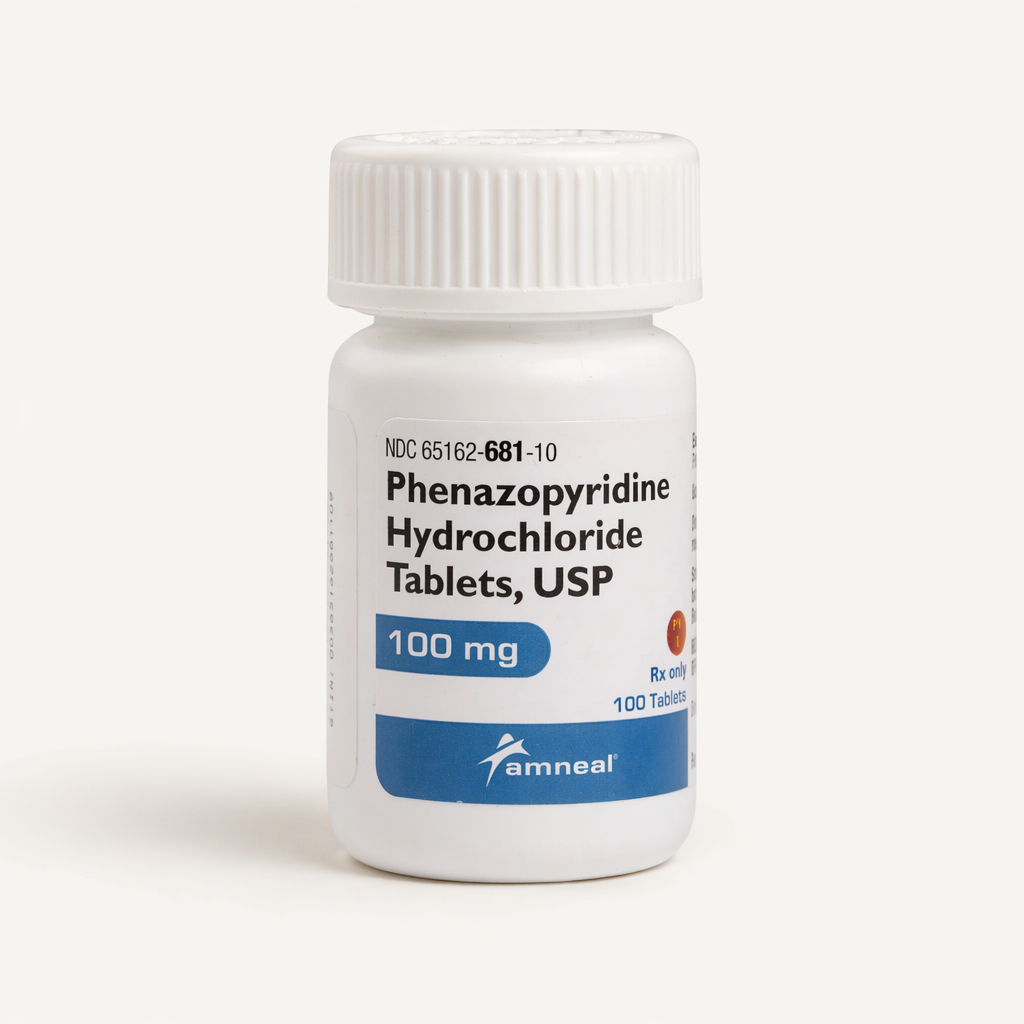
How It Works
Phenazopyridine works through a few steps:
- Targeted delivery: Once you swallow the pill, your body sends the medicine to your kidneys. Your kidneys then flush the medication into your bladder through your urine.
- Direct soothing: As the medicated urine sits in your bladder and passes through, it coats the lining of your urinary tract to soothe irritation.
- Blocking the pain: By numbing irritated tissues, the medication prevents pain and can also help lessen the excessive need to pee.
| Quick Facts | |
|---|---|
| Common Brands | Pyridium, AZO (OTC), Uristat (OTC) |
| Drug Class | Urinary tract analgesic |
| Generic Status | Generic version available |
| Availability | Prescription only |
Dosing
The effectiveness and safety of phenazopyridine depend on strict adherence to a short-term dosing schedule.
- Typical prescription dose: The most common dose is 200 mg tablet taken three times daily.
- Timing: Standard guidelines suggest taking the medication after meals. This is a critical step to prevent stomach upset.
- Duration: Phenazopyridine should not be used for more than two consecutive days when treating a UTI. By the end of the second day, your prescribed antibiotic should have reduced the bacterial load enough to naturally lower pain levels.
- Administration: Swallow the tablets whole with 8 ounces of water. Providers advise against crushing, chewing, or breaking the tablets.
If you miss a dose, standard guidelines recommend taking it as soon as you remember. If it is almost time for your next scheduled dose, you can skip the missed one. Never take a double dose to catch up.
Note: Dosing information below is educational only. Your prescribing physician will determine your specific dose based on your individual health needs. Always follow your healthcare provider’s instructions for exact dosing.
Uses
FDA-Approved Uses
The FDA approves phenazopyridine for:
- Urinary pain: Managing the sharp or dull ache in the bladder or urethra.
- Burning sensations: Reducing the fire often felt during urination when you have an infection.
- Urgent peeing: This action calms the urge to urinate immediately.
- Procedure discomfort: Soothing irritation caused by medical tests or surgery.
Off-Label Uses
You may see phenazopyridine prescribed for uses that are not FDA-approved. This is a common and legal practice called off-label prescribing, where a doctor uses their clinical judgment to prescribe a drug for a different (but well-researched) purpose.
Phenazopyridine tablets may be prescribed for the following conditions:
- Interstitial cystitis: Some doctors prescribe this medication to manage occasional flares of chronic bladder pain.
- Kidney stone irritation: While it does not treat the stone, it may help soothe the urinary tract as the stone passes through.
Get Savings Updates for Phenazopyridine Tablets
Join our mailing list for exclusive deals and more.
Side Effects
Most people tolerate phenazopyridine for the short two-day treatment period. However, side effects are common throughout the duration of taking this medication.
Common Side Effects
- Bright orange or reddish urine
- Stomach upset (nausea or stomach cramps)
- Headache
- Dizziness
Serious Side Effects
Serious side effects are rare, but it’s important to know what to look for if they do occur. It’s generally accepted that you stop taking the medication and immediately call the doctor if you experience any of the following symptoms:
- Methemoglobinemia: A rare blood problem where your blood cannot carry enough oxygen. Symptoms include blue or gray skin or lips and shortness of breath.
- Skin yellowing: If your skin or the whites of your eyes turn yellow, stop the medication. This discoloration could be a sign that the medicine is building up in your body.
- Severe allergic reactions: Providers advise seeking immediate medical attention for hives, facial or throat swelling, or difficulty breathing.
- Blood problems: This is more common in people with G6PD deficiency.
Call your doctor immediately if you experience any concerning or prolonged symptoms.
Pharmacist Tips
Eat Before Taking
Taking this medication with food can help avoid nausea.
Protect Your Clothes
The orange dye in your urine can stain underwear, towels, or bed sheets. Providers typically recommend wearing a pantyliner or using older undergarments while taking this medication.
Switch To Glasses
Phenazopyridine can also get into your tears and permanently stain soft contact lenses a reddish color. Avoid wearing contacts until you have finished the medication.
Stick To The Two-Day Limit
Standard guidelines do not recommend taking this for longer than 48 hours unless your doctor specifically tells you to do so. Because it numbs pain, it can mask symptoms if your infection is worsening or your antibiotic isn’t working.
Hydrate With Water
Drink plenty of water over the next two days to help flush the dye from your system and keep your kidneys healthy.
Check Your G6PD Status
If you have a known history of G6PD deficiency, providers advise against taking this medication.
Drug Interactions
Phenazopyridine has few known drug interactions, but you should still inform your doctor of everything you are taking.
It is best to notify your doctor if you take any of the following medications:
- Numbing creams: Take caution if you are also using other local numbing medicines like lidocaine or prilocaine, as this can increase the risk of certain blood side effects.
- Alcohol: Avoid alcohol, as it can dehydrate you and make dizziness worse.
Always give your doctor and pharmacist a complete list of all your medications, vitamins, and supplements to check for potential interactions.
FAQs
How long does it take for prescription phenazopyridine (Pyridium) to stop the burning?
Most people begin to feel a reduction in pain and burning within 20 minutes to an hour after taking their first dose.
Does phenazopyridine cure my UTI, or does it just mask the symptoms?
No. It only masks the symptoms. Finish a full course of antibiotics to treat the UTI, even if the phenazopyridine makes you feel better.
Why does this medication turn my urine bright orange?
The medication is a dye. As your kidneys filter it out, it colors your urine. This is a normal, harmless, and temporary side effect.
Can I take Pyridium at the same time as my antibiotic?
Yes. Taking them together is standard practice so that you are treating the cause of the infection and the pain at the same time.
Why must you stop taking this after two days?
If your pain lasts longer than 48 hours, it might mean your antibiotic isn’t working, or the infection is spreading. Continuing to take phenazopyridine could hide these important warning signs from you and your doctor.
Should I take phenazopyridine with food to avoid an upset stomach?
Yes. Taking it on an empty stomach is a common reason people feel sick or nauseous while using this drug.
What is the actual difference between prescription phenazopyridine and over-the-counter Azo?
The main difference is the strength. Over-the-counter versions usually contain about 95-99 mg per pill, while prescription-strength pills typically contain 200 mg.
Can I take this medication for kidney stone pain?
It may help soothe the urethra, but it is usually not strong enough to stop the intense back or side pain caused by a kidney stone.
Does phenazopyridine make you have to pee more often?
No. Usually, the UTI makes you feel that way. By numbing the bladder, the medication often helps reduce that constant, false urge to pee.
Can I drink alcohol or cranberry juice while taking Pyridium?
It is generally recommended that you avoid alcohol because it can dehydrate you. Cranberry juice is fine, but plain water is the best choice for flushing your system.
Can phenazopyridine permanently stain my soft contact lenses?
Yes. The dye can get into your tear film. If you wear soft contacts, they can turn orange, and the color will not come out. Providers generally advise wearing your glasses instead.
Can I safely take ibuprofen or acetaminophen for a fever while taking this?
Yes. Standard guidelines indicate that there are no known direct interactions between phenazopyridine and common over-the-counter pain relievers such as ibuprofen (Advil, Motrin) or acetaminophen (Tylenol).
What should I do if my UTI still burns terribly after the two days of Pyridium are up?
Standard guidelines advise stopping the phenazopyridine and calling your doctor. This is a sign that your antibiotic might need to be changed.
Is it safe to take phenazopyridine if I am pregnant or breastfeeding?
Standard guidelines recommend using it during pregnancy only when clearly necessary. Avoid it while breastfeeding. Discuss usage with your doctor.
Can men take Pyridium for urinary pain, or is it strictly prescribed for women?
Yes. While UTIs are more common in women, men can experience urinary irritation from procedures or infections and can safely use this medication.
Is it safe to take phenazopyridine if I have a history of kidney disease?
No. Because the kidneys are responsible for removing this dye from your body, people with kidney disease may experience a dangerous buildup of the drug.
Comparable Medications
Azo Standard, Nitrofurantoin, Bactrim, or Oxybutynin?
Below are possible alternatives to phenazopyridine tablets:
Azo Standard / Uristat
These are the over-the-counter versions of phenazopyridine. They contain about half the dose of the prescription tablets (95–99 mg vs. 200 mg). While they help with mild discomfort, prescription-strength medications are often better for severe UTI pain.
Nitrofurantoin
From $34.99
This antibiotic kills the bacteria that can cause a UTI. It does not provide immediate pain relief like phenazopyridine does, which is why providers often use them together.
Sulfamethoxazole / Trimethoprim DS
From $29.99
Another common antibiotic used to treat a UTI. Like Macrobid, it treats the underlying cause of the problem, while phenazopyridine addresses the symptoms.
Oxybutynin
This medication is an antispasmodic. While phenazopyridine numbs the bladder lining, oxybutynin relaxes the bladder muscles. It is usually used for an overactive bladder rather than temporary UTI relief.
We Have Phenazopyridine Tablets in Stock. Get Yours Today!
Important: Information on this page is for educational purposes only. Prescribing decisions are made by independent, licensed providers. TelyRx operates technology-enabled pharmacies and a telehealth platform that connects patients with board-certified licensed providers. Prescriptions, when provider-approved and issued, are filled and shipped by TelyRx-affiliated pharmacies. We do not employ physicians or make prescribing decisions. Learn more about our editorial standards here.