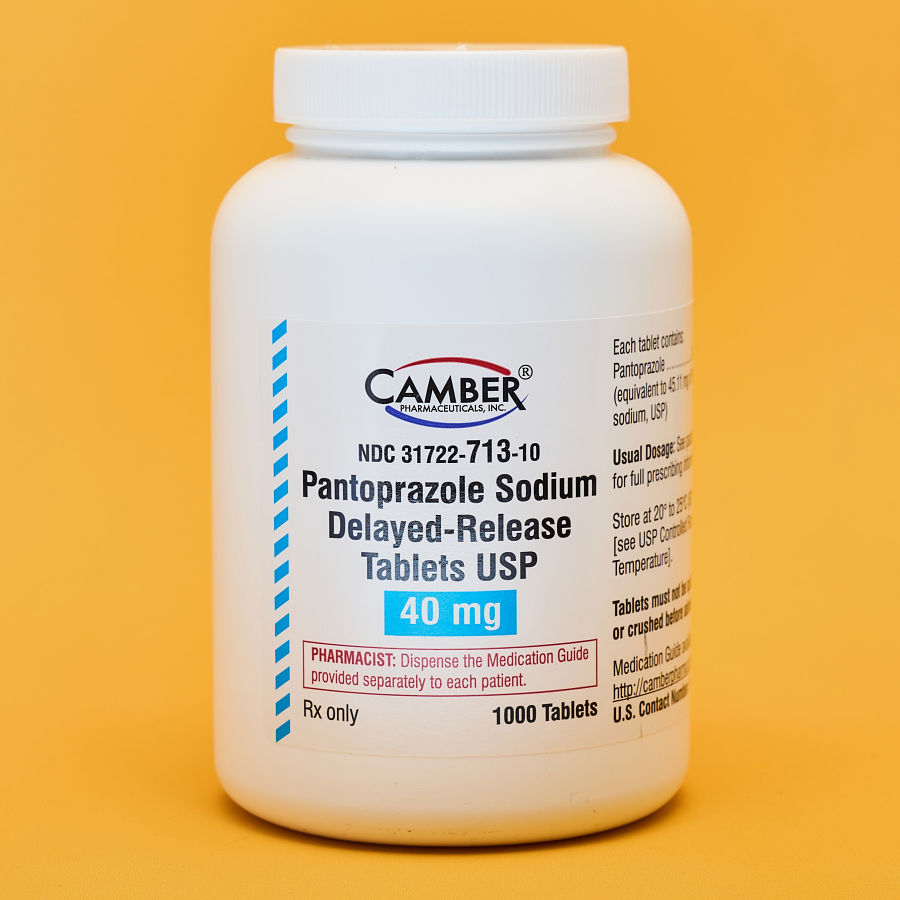
How It Works
Pantoprazole works by reducing the amount of acid your stomach produces.
| Quick Facts | |
|---|---|
| Common Brands | Protonix, Protonix IV |
| Drug Class | Proton pump inhibitor (PPI) |
| Generic Status | Generic for Protonix, Protonix IV |
| Availability | Prescription only |
Dosing
Pantoprazole is available in 20 mg and 40 mg delayed-release tablets. The dosage depends on why you are taking the medication.
- Gastroesophageal reflux disease (GERD): The recommended dose is 40 mg taken orally once daily for up to 8 weeks. However, some individuals may require a longer treatment course.
- Erosive esophagitis: The recommended dose is 40 mg taken orally once daily.
- Zollinger-Ellison (ZE) syndrome and other conditions: The recommended initial dosing is 40 mg taken orally twice daily.
Pantoprazole tablets should be swallowed whole and never crushed or chewed, as this can affect the delayed-release mechanism designed to protect the medication from stomach acid until it is absorbed.
Note: Dosing information is educational only. Your prescribing physician will determine your specific dose based on your individual health needs. Always follow your healthcare provider’s instructions for exact dosing.
Uses
FDA-Approved Uses
Pantoprazole tablets are FDA-approved for:
- Short-term treatment of severe acid reflux (GERD)
- Erosive esophagitis (EE)
- Other conditions where the stomach makes too much acid, such as Zollinger-Ellison syndrome
Off-Label Uses
You may see pantoprazole tablets prescribed for uses that are not “FDA-approved.” This is a common and legal practice called “off-label” prescribing, where a doctor uses their clinical judgment to prescribe a drug for a different, but well-researched, purpose.
Health providers may prescribe pantoprazole tablets for off-label use to:
- Prevent gastric ulcers from long-term use of NSAIDs (non-steroidal anti-inflammatory drugs)
- Prevent stress ulcers in critically ill people
- Eradicate Helicobacter pylori bacteria, in combination with antibiotics
Get Savings Updates for Pantoprazole
Join our mailing list for exclusive deals and more.
Side Effects
Like all medications, pantoprazole tablets can cause side effects. Some common side effects may improve over time as your body adjusts to the medication. Other side effects may be serious and require medical attention.
Common Side Effects
- Headache
- Diarrhea
- Upset stomach
- Stomach pain
- Gas
- Nausea
- Vomiting
- Dry mouth
- Dizziness
- Joint pain
Serious Side Effects
Serious side effects are rare, but it’s important to know what to look for if they do occur. Stop using pantoprazole tablets and call your doctor immediately if you experience:
- Severe allergic reactions: Symptoms include swelling of the face, lips, tongue, or throat; difficulty breathing or swallowing; racing heart; severe rash or itching; and/or fever.
- Drug reaction with eosinophilia and systemic symptoms (DRESS): This is a specific type of allergic reaction that affects multiple organs. Symptoms include swollen lymph nodes, shortness of breath, dark-colored urine, rash, fever, yellowing of the skin or eyes (jaundice), and swelling in the feet, ankles, or legs.
- Clostridioides difficile (C. diff) diarrhea: Pantoprazole can change the bacterial balance in the gut, increasing the risk of this severe bacterial infection. Symptoms include persistent or watery diarrhea, fever, blood in the stool, and severe stomach cramping.
- Vitamin B12 deficiency: Long-term use (3+ years) of pantoprazole can lead to low vitamin B12 levels. Symptoms include sore tongue, weakness, and tingling in the hands or feet.
- Low magnesium levels (hypomagnesemia): The risk is higher in people who take pantoprazole long-term or take other medications that can also cause low magnesium levels. Symptoms include muscle spasms, heart palpitations, dizziness, and seizures.
- Kidney problems: Acute tubulointerstitial nephritis, a type of kidney inflammation, can occur when using pantoprazole. Symptoms include blood in the urine or less urine.
- Lupus: New or worsening lupus symptoms can occur on pantoprazole. Symptoms include new or worsening joint pain or a rash on the cheeks or arms.
- Bone fractures: High doses of pantoprazole, long-term use (1+ years), or being an older adult may increase your risk of bone loss or fractures.
- Severe skin reactions: Life-threatening skin conditions such as toxic epidermal necrolysis (TEN) or Stevens-Johnson syndrome (SJS) can occur. Symptoms include purple or red rash, blistering or peeling skin, and painful, watery eyes.
Call your doctor immediately if you experience any concerning or prolonged symptoms.
Pharmacist Tips
Take Before Eating
Pantoprazole tablets can be taken with or without food, but it is recommended to take your dose 30 to 60 minutes before a meal.
Swallow Tablets Whole
Pantoprazole delayed-release tablets are designed to pass through stomach acid intact. Crushing or chewing them can destroy the coating, making the medicine less effective.
Monitor Long-Term Use
If you are taking this medication for more than a year, talk to your doctor about monitoring your B12 and magnesium levels.
Be Aware Of Potential Inaccurate Lab Results
Pantoprazole can interfere with certain drug or cancer screenings. Tell your provider before any scheduled testing in case they recommend temporarily stopping pantoprazole beforehand.
Follow Protocol If You Miss A Dose
If you miss a dose of pantoprazole, take it as soon as you remember unless it’s almost time for your next dose. In that case, skip the missed dose and take your next dose as scheduled. Do not double up on doses of pantoprazole tablets.
Drug Interactions
Certain medications and substances can interact with pantoprazole tablets, potentially altering how it works or increasing the risk of side effects. For example:
- Warfarin (Coumadin): Taking pantoprazole with this blood thinner may increase the risk of bleeding. Your doctor may need to monitor you more frequently.
- Methotrexate: Combining pantoprazole with this medication can lead to higher, potentially toxic levels of methotrexate in the blood.
- Antiretrovirals: Pantoprazole can reduce the effectiveness of HIV medications like rilpivirine, atazanavir, and nelfinavir.
- Drugs dependent on stomach acid: Medications like oral ketoconazole (an antifungal), iron salts, and certain cancer therapies may not be absorbed as well when stomach acid is suppressed by pantoprazole.
Always give your doctor and pharmacist a complete list of all your medications, vitamins, and supplements to check for potential interactions.
FAQs
Why do I have to take pantoprazole 30 to 60 minutes before breakfast?
Proton pump inhibitors like pantoprazole work best when the proton pumps in your stomach are actively secreting acid, which happens when you eat. Taking the medication 30 to 60 minutes before a meal ensures that the drug is absorbed and ready to inhibit these pumps when they are triggered by food.
Can I take pantoprazole at night instead of in the morning?
Providers may recommend taking pantoprazole whenever your symptoms are most severe or based on your eating habits. If you experience symptoms primarily at night, your doctor might suggest taking it before dinner. The important thing is to try to take it at the same time every day.
Does pantoprazole work immediately for heartburn?
No, pantoprazole is not an immediate-relief drug like an antacid (e.g. Tums). Pantoprazole works by reducing acid production and may take several days of consistent use to reach its full effect.
Why did my doctor prescribe pantoprazole instead of omeprazole?
While both pantoprazole and omeprazole are PPIs, they may interact differently with other drugs. This may make one a better fit for you over the other.
Is pantoprazole safe to take every day for years?
Many people may take PPIs for years safely, but long-term use does carry risks, such as Vitamin B12 deficiency, low magnesium levels, and a slightly increased risk of bone fractures. Your doctor can help you weigh these risks against the benefits of managing your acid reflux.
Can I drink alcohol while taking pantoprazole?
Alcohol is not known to interact directly with pantoprazole, but it’s generally recommended to avoid or limit it when you have acid reflux. Alcohol is a known gastric irritant that can increase stomach acid and worsen the reflux symptoms you are trying to treat.
Does pantoprazole cause bone loss or osteoporosis?
Some observational studies suggest a link between high-dose or long-term pantoprazole use and an increased risk of osteoporosis-related bone fractures. This risk is higher in older adults or those with existing bone density issues.
Can I take Tums or Mylanta at the same time as pantoprazole?
Yes. Pantoprazole takes time to work, so it is generally considered safe to take calcium carbonate (Tums) or other liquid antacids for immediate relief of heartburn while you are waiting for the pantoprazole to take effect. Check with your healthcare provider to ensure there aren’t any negative drug interactions.
What is the difference between pantoprazole tablets and the granules?
The active ingredient is the same, but the delivery method differs. Pantoprazole tablets are swallowed whole. Granules are designed for people who have difficulty swallowing pills, so they can be mixed with applesauce or apple juice to make taking the medication easier.
Can pantoprazole cause a false positive on a drug test?
Yes, there have been reports of PPIs, including pantoprazole, causing false-positive results for THC (marijuana) in urine drug screens. If you are being tested, inform the lab that you are taking this medication.
What should I do if I miss a dose?
If you miss a dose of pantoprazole, take it as soon as you remember. However, if it is almost time for your next scheduled dose, skip the missed one and resume your regular schedule. Do not “double up” or take two doses at once to make up for the missed one.
Comparable Medications
Pantoprazole, Omeprazole (Prilosec), Esomeprazole (Nexium), Lansoprazole (Prevacid), Famotidine (Pepcid), or Cimetidine (Tagamet)?
There are several medications that your doctor can prescribe instead of pantoprazole tablets. A few possible alternatives are listed below.
Omeprazole
From $19.99
A proton pump inhibitor used to treat GERD and erosive esophagitis. It’s also available over the counter for heartburn that occurs 2 or more days per week.
Esomeprazole
From $34.99
Also known by the brand name Prilosec. A proton pump inhibitor used to treat GERD, erosive esophagitis, and conditions like Zollinger-Ellison syndrome. It’s also available over the counter for heartburn.
Lansoprazole Capsules
From $29.99
Also known by the brand name Nexium. A proton pump inhibitor used to treat stomach and intestinal ulcers, erosive esophagitis, and conditions like Zollinger-Ellison syndrome. It’s also available over the counter for heartburn that occurs 2 or more days per week.
Famotidine
From $19.99
Also known by the brand name Pepcid. A histamine-2 (H2) receptor antagonist used to treat GERD, stomach and intestinal ulcers, and conditions like Zollinger-Ellison syndrome. It’s also available over the counter for heartburn.
Cimetidine (Tagamet)
A histamine-2 (H2) receptor antagonist used to treat stomach and intestinal ulcers and GERD. It’s also available over the counter for heartburn.
We Have Pantoprazole in Stock. Get Yours Today!
Important: Information on this page is for educational purposes only. Prescribing decisions are made by independent, licensed providers. TelyRx operates technology-enabled pharmacies and a telehealth platform that connects patients with board-certified licensed providers. Prescriptions, when provider-approved and issued, are filled and shipped by TelyRx-affiliated pharmacies. We do not employ physicians or make prescribing decisions. Learn more about our editorial standards here.