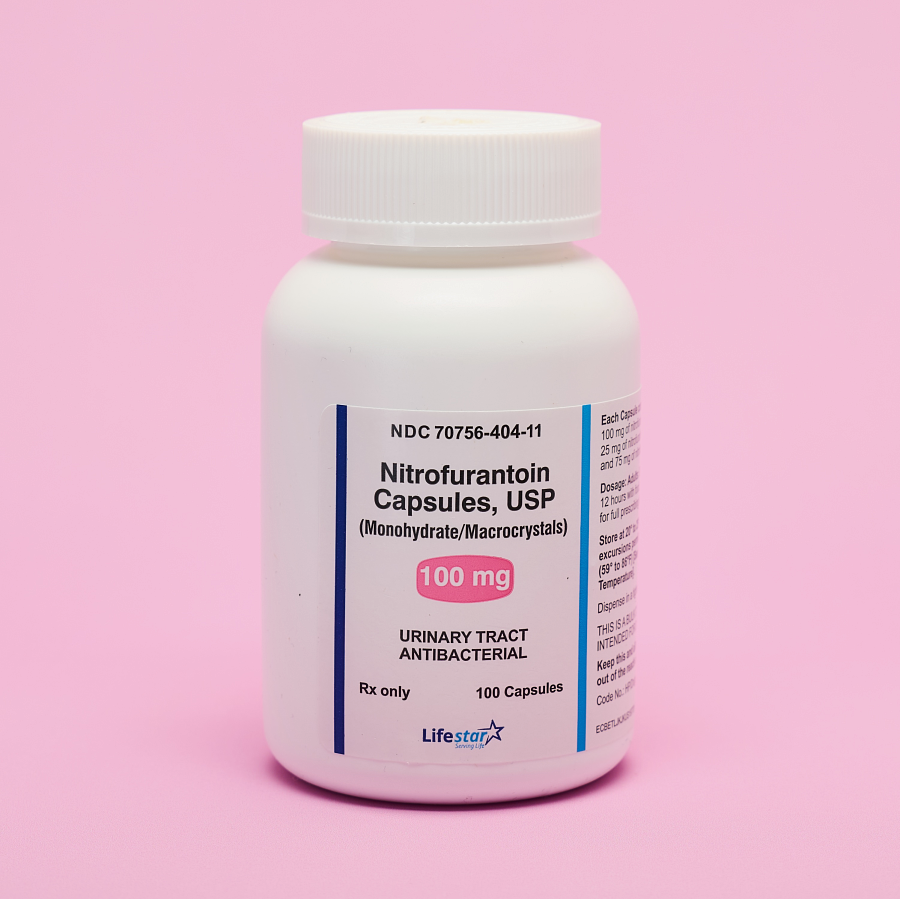
How It Works
Nitrofurantoin works by collecting in your urine blocking the creation of proteins that bacteria causing the UTI need to survive, grow, and reproduce.
| Quick Facts | |
|---|---|
| Common Brands | Macrobid, Macrodantin, Furadantin |
| Drug Class | Antibiotic |
| Generic Status | Generic for Macrobid, Macrodantin, Furadantin |
| Availability | Prescription only |
Dosing
Nitrofurantoin capsules come in three dosage strengths: 25 mg, 50 mg, and 100 mg. The oral suspension comes in 25 mg/5 mL and 50 mg/5 mL.The dosing regimen for nitrofurantoin can vary depending on the formulation prescribed and why you’re taking it:
- Treating acute UTIs: When taking the Macrobid capsules (or their generic equivalent), the recommended dose is 100 mg taken by mouth every 12 hours for 7 days. When taking the Macrodantin capsules or Furadantin solution (or their generic equivalents), the recommended dose is 50 mg to 100 mg taken by mouth four times a day for 7 days.
- Preventing UTIs: The recommended dose is 50 mg to 100 mg taken by mouth once daily at bedtime.
It’s recommended to take nitrofurantoin with food or milk to improve absorption and reduce stomach upset.
Note: Dosing information is educational only. Your prescribing physician will determine your specific dose based on your individual health needs. Always follow your healthcare provider’s instructions for exact dosing.
Uses
FDA-Approved Uses
Nitrofurantoin is FDA-approved to treat urinary tract infections (UTIs).
Off-Label Uses
You may see nitrofurantoin prescribed for uses that are not “FDA-approved.” This is a very common and legal practice called “off-label” prescribing, where a doctor uses their clinical judgment to prescribe a drug for a different (but well-researched) purpose.
Nitrofurantoin may be prescribed off-label for preventing recurrent UTIs.
Get Savings Updates for Nitrofurantoin
Join our mailing list for exclusive deals and more.
Side Effects
Like all medications, nitrofurantoin can cause side effects. Some common side effects may improve over time as your body adjusts to the medication. Other side effects may be serious and require medical attention.
Common Side Effects
- Diarrhea
- Nausea
- Vomiting
- Headache
- Abdominal pain
- Gas
- Dark yellow or brown urine
Serious Side Effects
Serious side effects are rare, but it’s important to know what to look for if they do occur. Stop using nitrofurantoin and call your doctor immediately if you experience:
- Severe allergic reactions: Symptoms include swelling of the face, lips, tongue, or throat; difficulty breathing or swallowing; severe rash or itching; fever.
- Lung problems: In rare cases, especially when taking it for longer than 6 months, nitrofurantoin may cause lung damage. Symptoms include a persistent cough, chest pain, fever, chills, and shortness of breath.
- Liver damage (hepatotoxicity): While rare, severe liver damage (hepatotoxicity) can occur when taking nitrofurantoin. Symptoms include yellowing of the skin or eyes (jaundice), dark urine, pale stools, stomach pain, nausea, vomiting, and fever.
- Nerve damage (peripheral neuropathy): There is a risk of nerve damage with nitrofurantoin, which may present as numbness, tingling, burning, or weakness in the hands, arms, legs, or feet. This risk may be higher in people with kidney problems or diabetes.
- Clostridioides difficile (C. diff) diarrhea: Like many antibiotics, nitrofurantoin can alter gut bacteria, potentially leading to a severe intestinal infection characterized by stomach cramps, fever, and persistent, watery, or bloody diarrhea.
Call your doctor immediately if you experience any concerning or prolonged symptoms.
Pharmacist Tips
Measuring Liquid Doses
If taking the oral suspension, shake the bottle well before each dose and use the specific measuring device recommended by your pharmacist. Household spoons are not accurate enough for this medication.
Store at Room Temperature
Store nitrofurantoin at room temperature in a cool, dry place, away from light and moisture.
Missed Dose
If you miss a dose of nitrofurantoin, take it as soon as you remember. If it’s almost time for your next dose, skip it and take the next dose as scheduled. Do not double up on doses.
Take with Food
It is highly recommended to take nitrofurantoin with a meal or a glass of milk to help your body absorb the medication and reduce stomach upset or nausea.
Complete the Course
Even if your symptoms disappear after a few days, it is vital to finish the entire course of antibiotics prescribed. Stopping early can allow the infection to return and may lead to antibiotic resistance, making future infections harder to treat.
Watch Your Urine Color
Do not be alarmed if your urine turns dark yellow or brown. This is a normal and harmless side effect of the dye in the medication and will disappear once you finish your prescription.
Stay Hydrated
Drink plenty of water while taking nitrofurantoin to prevent dehydration, especially if you experience mild diarrhea.
Consider Probiotics
If you are prone to stomach issues with antibiotics, taking a probiotic supplement may help. However, separate the probiotic from the nitrofurantoin dose by at least 2 hours to ensure the antibiotic does not kill the beneficial bacteria in the supplement.
Drug Interactions
Certain medications and substances can interact with nitrofurantoin, potentially altering how it works or increasing the risk of side effects. For example:
- Antacids and supplements containing magnesium trisilicate: These products can bind to the antibiotic and prevent your body from absorbing the full dose of nitrofurantoin.
- Probenecid or sulfinpyrazone: These gout medications can prevent nitrofurantoin from being released into the urine.
- Fluconazole: Nitrofurantoin may interfere with antifungal medications like fluconazole.
- Live vaccines: Antibiotics can sometimes interfere with the efficacy of live vaccines, such as the Cholera vaccine.
Always give your doctor and pharmacist a complete list of all your medications, vitamins, and supplements to check for potential interactions.
FAQs
What is the difference between Macrobid and Macrodantin?
While both medications contain the active ingredient nitrofurantoin, macrodantin contains nitrofurantoin macrocrystals and is typically taken four times a day. Macrobid, on the other hand, contains a mix of nitrofurantoin monohydrate and macrocrystals that releases the medication more slowly, allowing for twice-daily dosing.
Can I drink alcohol while taking nitrofurantoin?
Alcohol is not known to directly interact with nitrofurantoin. However, alcohol can irritate the bladder and worsen side effects like nausea and dizziness. Your provider may recommend limiting alcohol consumption until you have recovered from the infection.
Why must I take nitrofurantoin with food or milk?
Taking nitrofurantoin with food or milk helps increase the amount of drug absorbed by your body. It also acts as a buffer for your stomach, helping prevent common side effects like nausea and vomiting.
Can I stop taking nitrofurantoin once the burning stops?
No, you should complete the full prescribed course of the antibiotic, even if you feel better. Stopping early can leave some bacteria alive, which can multiply and cause a recurrent infection that is resistant to antibiotics.
Why is nitrofurantoin not recommended for older adults (65+)?
People over the age of 65 are at a higher risk for serious side effects, including lung, liver, and nerve damage. Furthermore, kidney function often declines with age. Since nitrofurantoin relies on the kidneys to filter it into the urine to work, reduced kidney function may make the drug less effective and more toxic.
Does nitrofurantoin cause birth control pills to fail?
No, it is generally considered safe to take nitrofurantoin with birth control pills.
Is it safe to take nitrofurantoin during pregnancy?
It depends on the stage of pregnancy. Nitrofurantoin is generally considered safe during early pregnancy but should not be used during weeks 38 through 42, or during labor and delivery. Taking it during this late window can cause hemolytic anemia (breakdown of red blood cells) in the newborn.
Can I take antacids with nitrofurantoin?
You should avoid antacids that contain magnesium trisilicate, as they reduce the absorption of the antibiotic.
How long does it take for nitrofurantoin to start working?
Most people report symptom relief within a few days of taking nitrofurantoin. However, the full course of antibiotics (usually 5 to 7 days) is required to help ensure the infection is fully treated.
Can men take nitrofurantoin for UTIs?
Yes, but UTIs in men are often considered “complicated” infections. While nitrofurantoin can be used, the treatment duration or dosage might differ from the regimen recommended for women.
Is nitrofurantoin a strong antibiotic?
“Strength” is relative in antibiotics. Nitrofurantoin is generally considered an effective antibiotic at treating UTIs.
Comparable Medications
Macrobid (Nitrofurantoin Monohydrate/Macrocrystals), Macrodantin (Nitrofurantoin Macrocrystals), Sulfamethoxazole/Trimethoprim (Bactrim/Septra), Cephalexin (Keflex), or Ciprofloxacin (Cipro)?
There are several medications that your doctor can prescribe in place of nitrofurantoin. Here are a few possible alternatives below.
Macrobid (Nitrofurantoin Monohydrate/Macrocrystals)
A formulation of nitrofurantoin that uses twice-daily dosing.
Nitrofurantoin Macrocrystals
From $39.99
A formulation of nitrofurantoin that uses twice-daily dosing, also known under the brand name Macrodantin.
Sulfamethoxazole / Trimethoprim DS
From $29.99
A sulfa-combination antibiotic used to treat UTIs, travelers diarrhea, and various bacterial infections.
Cephalexin Capsules (UTI)
From $41.99
An antibiotic used to treat UTIs, respiratory infections, bone infections, and skin infections.
Ciprofloxacin UTI
From $39.99
An antibiotic used to treat UTIs, pneumonia, STIs, and other infections.
We Have Nitrofurantoin in Stock. Get Yours Today!
Important: Information on this page is for educational purposes only. Prescribing decisions are made by independent, licensed providers. TelyRx operates technology-enabled pharmacies and a telehealth platform that connects patients with board-certified licensed providers. Prescriptions, when provider-approved and issued, are filled and shipped by TelyRx-affiliated pharmacies. We do not employ physicians or make prescribing decisions. Learn more about our editorial standards here.