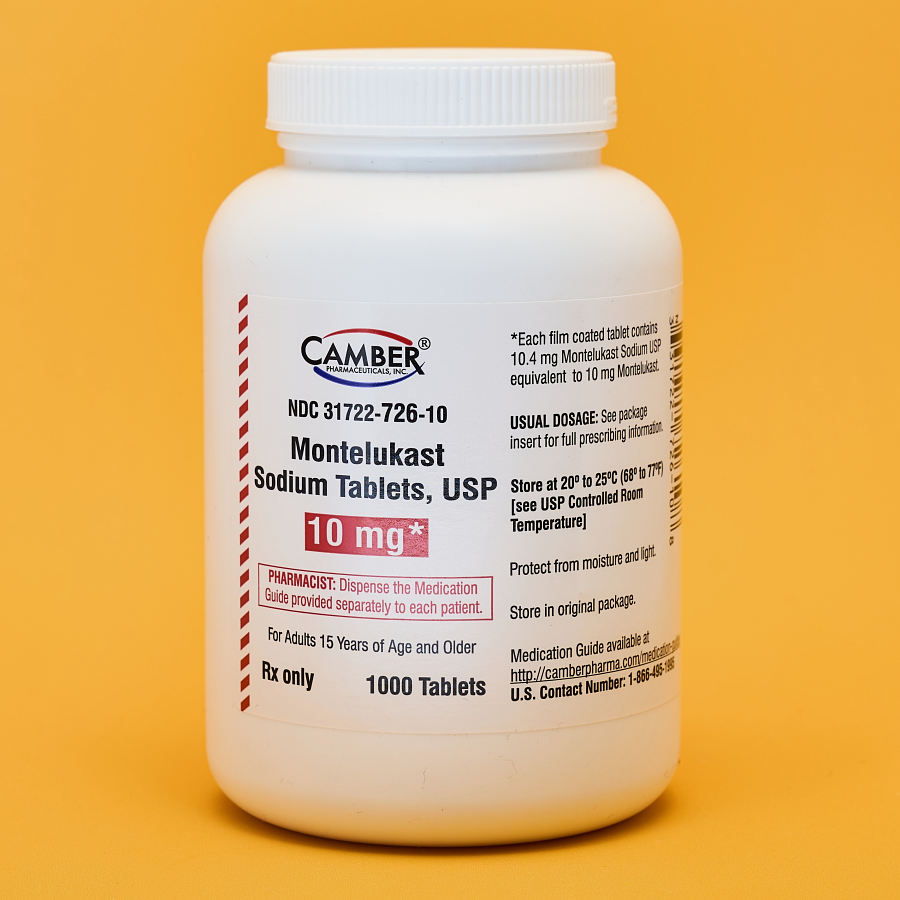
How It Works
As a leukotriene receptor antagonist, montelukast works by blocking leukotriene receptors in the airways.
Leukotrienes are chemicals your body produces during an allergic reaction or an asthma attack. When these chemicals are released, they cause inflammation, swelling in the airways, and tightening of the muscles around the airways, making it difficult to breathe.
By blocking these leukotrienes, montelukast reduces swelling and inflammation in the airways, making it easier to breathe and relieving symptoms like wheezing, coughing, and congestion.
| Quick Facts | |
|---|---|
| Common Brands | Singulair |
| Drug Class | Leukotriene Receptor Antagonist (LTRA) |
| Generic Status | Generic for Singulair |
| Availability | Prescription only |
Dosing
Montelukast is available in several forms, including standard oral tablets, chewable tablets, and oral granules. The timing of the dose depends on what you’re taking montelukast for.
- Asthma – The recommended dose is 10 mg taken by mouth once daily in the evening.
- Exercise-induced bronchoconstriction (EIB): The recommended dose is 10 mg by mouth at least 2 hours before the activity.
Allergies (seasonal and perennial allergic rhinitis) – The recommended dose is 10 mg by mouth once daily.
Note: Dosing information is educational only. Your prescribing physician will determine your specific dose based on your individual health needs. Always follow your healthcare provider’s instructions for exact dosing.
Uses
FDA-Approved Uses
Montelukast is FDA-approved to treat:
- Long-term treatment of asthma
- Prevention of exercise-induced bronchoconstriction (EIB)
- Seasonal allergic rhinitis
- Perennial (year-round) allergic rhinitis
Off-Label Uses
You may see montelukast prescribed for uses that are not “FDA-approved.” This is a very common and legal practice called “off-label” prescribing, where a doctor uses their clinical judgment to prescribe a drug for a different (but well-researched) purpose.
There are currently no common off-label uses for this medication.
Get Savings Updates for Montelukast
Join our mailing list for exclusive deals and more.
Side Effects
Like all medications, montelukast can cause side effects. Some common side effects may improve over time as your body adjusts to the medication. Other side effects may be serious and require medical attention.
Common Side Effects
- Fever
- Headache
- Cough
- Abdominal pain
- Flu
- Congestion
Serious Side Effects
Serious side effects are rare, but it’s important to know what to look for if they do occur. Stop using montelukast and call your doctor immediately if you experience:
- Severe allergic reactions: Symptoms include swelling of the face, lips, tongue, or throat; difficulty breathing or swallowing; racing heart; severe rash or itching; fever.
- Mental health changes: Montelukast carries a boxed warning for serious mood and behavior changes. These can occur in patients with or without a history of mental health problems. Symptoms may include agitation, aggression, anxiety, depression, vivid dreams, hallucinations, insomnia, irritability, restlessness, sleepwalking, tremors, and suicidal thoughts or actions.
- Eosinophilia and systemic vasculitis: Montelukast may increase white blood cells (eosinophils) leading to inflamed blood vessels. Symptoms include flu-like symptoms, numbness or “pins and needles” in the arms or legs, rash, and sinus pain or swelling.
Call your doctor immediately if you experience any concerning or prolonged symptoms.
Pharmacist Tips
Keep Your Inhaler With You
Montelukast will not stop a sudden asthma attack. Always have your rescue inhaler with you.
Timing Your Dose
For asthma, it is recommended to take montelukast close to bedtime, since asthma symptoms tend to be worse at night and in the early morning. For exercise-induced asthma, it is recommended to take the dose at least 2 hours before your workout.
Take With or Without Food
You can take montelukast with or without food, but if it upsets your stomach, taking it with food may help.
Using Granules
The oral granules can be placed directly in the mouth or mixed with a spoonful of cold or room-temperature soft foods like applesauce, carrots, rice, or ice cream.
PKU Precautions
The chewable tablets contain phenylalanine, which can be harmful if you have phenylketonuria (PKU).
Storage
Montelukast should be stored at room temperature in a cool, dry place, protected from light and moisture.
Missed Dose
If you miss a dose of montelukast, take it as soon as you remember, unless it is almost time for your next dose. In that case, skip the missed one and take your next dose as scheduled. Do not take double or extra doses to make up for a missed one.
Drug Interactions
Certain medications and substances can interact with montelukast, potentially altering how it works or increasing the risk of side effects. For example:
- Seizure medications: Drugs such as carbamazepine, phenytoin, and phenobarbital may affect how montelukast works.
- Certain antibiotics: Rifampin and rifabutin can interact with Montelukast.
- Gemfibrozil: This cholesterol medication may increase the risk of side effects when taken with montelukast.
Always give your doctor and pharmacist a complete list of all your medications, vitamins, and supplements to check for potential interactions.
FAQs
Does montelukast treat sudden asthma attacks?
No. Montelukast is a maintenance medication designed to prevent symptoms over time. It does not work fast enough to treat an acute attack. Always carry a fast-acting rescue inhaler for sudden asthma attacks.
Can I take montelukast in the morning instead of at night?
It is recommended to take montelukast in the evening for asthma because asthma symptoms often worsen at night. However, for allergies, it can typically be taken at any time of day. Follow your provider’s instructions.
Is montelukast a steroid?
No, montelukast is not a steroid. It is a leukotriene receptor antagonist (LTRA).
How long does it take for montelukast to start working for allergies?
Studies suggest montelukast can start improving symptoms within 24 hours of the first dose.
Can I stop taking montelukast once allergy season is over?
You should not stop taking montelukast suddenly without consulting your provider, as symptoms may return. However, if you are prescribed the medication strictly for seasonal allergies, your doctor may advise you to stop once the season ends.
Is montelukast safe to take during pregnancy?
It is not fully known if montelukast affects pregnancy or harms an unborn baby. Tell your healthcare provider if you are pregnant or plan to become pregnant so they can weigh the risks and benefits for your situation.
Does montelukast cause weight gain?
Weight gain is not listed as a common side effect of montelukast. If you experience unexpected weight gain while taking montelukast, speak with your provider to investigate other potential causes.
Can I take antihistamines (like Zyrtec or Claritin) with montelukast?
Generally, yes, it is often safe to take Montelukast alongside antihistamines like cetirizine (Zyrtec) to manage different aspects of allergy symptoms. Montelukast blocks leukotrienes, while drugs like Zyrtec block histamine. However, it’s always a good idea to check with your doctor before starting a new medication.
Does montelukast work for eczema or skin rashes?
While FDA-approved for asthma and allergies, leukotrienes are also involved in skin inflammation. Some research has explored off-label uses of montelukast for skin conditions, but it is not approved for this purpose. Severe skin rashes can be a possible side effect of the drug itself.
Is montelukast safe for long-term use?
Montelukast is commonly used for the long-term treatment of asthma. Many people use it for extended periods to maintain symptom control. Your doctor will monitor your progress and side effects to ensure it remains safe for you.
Does montelukast interact with aspirin or ibuprofen?
If you have a known aspirin sensitivity or allergy, you should continue to avoid aspirin and NSAIDs while taking montelukast.
Comparable Medications
Montelukast, Zafirlukast (Accolate), Cetirizine (Zyrtec), Fluticasone (Flovent), Budesonide (Pulmicort), or Symbicort (Budesonide + Formoterol)?
There are several medications that your doctor can prescribe in place of montelukast. Here are a few possible alternatives below.
Zafirlukast
From $59.99
Another leukotriene receptor antagonist used to manage chronic asthma.
Cetirizine (Zyrtec)
An over-the-counter antihistamine used to treat allergies and hives.
Fluticasone Nasal Spray
From $27.99
An inhaled corticosteroid used to treat asthma.
Budesonide (Pulmicort)
Another inhaled corticosteroid used to manage asthma.
Budesonide / Formoterol Inhaler
From $249.99
A combination inhaler used to treat asthma and chronic obstructive pulmonary disease (COPD).
We Have Montelukast in Stock. Get Yours Today!
Important: Information on this page is for educational purposes only. Prescribing decisions are made by independent, licensed providers. TelyRx operates technology-enabled pharmacies and a telehealth platform that connects patients with board-certified licensed providers. Prescriptions, when provider-approved and issued, are filled and shipped by TelyRx-affiliated pharmacies. We do not employ physicians or make prescribing decisions. Learn more about our editorial standards here.