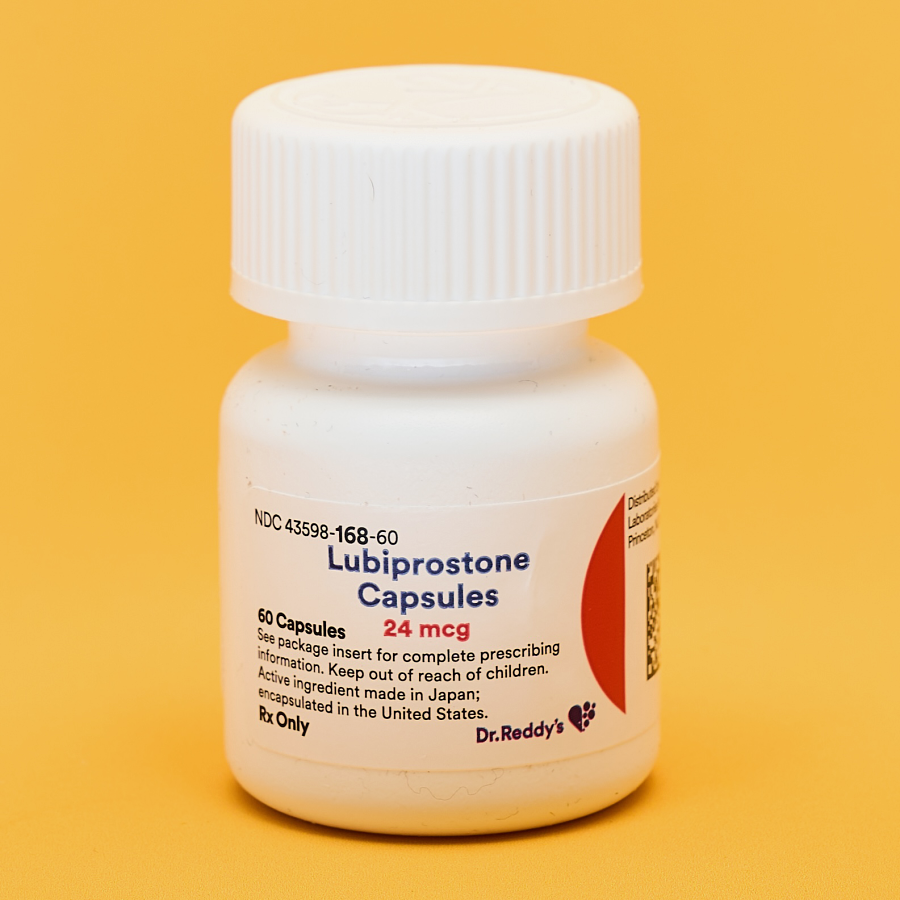
How It Works
Lubiprostone works by targeting type-2 chloride channels in the lining of the gastrointestinal tract. When these channels are activated, they allow chloride ions to flow into the intestinal lumen, a hollow space within the tube of the small and large intestine through which food, stomach acid, and waste pass.
Through the process of osmosis, sodium and water follow the chloride into the intestines. Water increases the volume and density of stool, softening it and making it easier to pass for people with chronic constipation. Increased fluid volume also distends the intestinal walls to help move waste through the digestive system.
By increasing the secretion of fluid without altering levels of sodium and potassium in the bloodstream, lubiprostone improves the ease of bowel movements without the “crash” that can sometimes occur with stimulant laxatives.
| Quick Facts | |
|---|---|
| Common Brands | Amitiza |
| Drug Class | Chloride channel activator |
| Generic Status | Generic version available |
| Availability | Prescription only |
Dosing
Lubiprostone is intended as a maintenance medication, not for “as-needed” usage. Dosing varies by the condition being treated, severity of symptoms, and the patient’s sex.
- Dosage: For people with chronic idiopathic constipation or opioid-induced constipation, the standard recommended dose is 24 mcg twice daily: one in the morning and the other in the evening. The dose may be lowered to 8 mcg twice a day for women with irritable bowel syndrome (IBS) with constipation.
- Timing: Standard guidelines suggest taking each lubiprostone capsule at the same time each day. Consistent dosing helps maintain a steady fluid balance in the gut.
- Administration: Patients are usually advised to take their lubiprostone capsules with a glass of water and food at both dosing times. It is recommended to swallow the capsule whole to ensure proper absorption.
- Special cases: Providers may adjust the dosage for patients with severe liver impairment because the medication can build up in the system more easily when liver function is reduced.
Note: Dosing information below is educational only. Your prescribing physician will determine your specific dose based on your individual health needs. Always follow your healthcare provider’s instructions for exact dosing.
Uses
FDA-Approved Uses
Lubiprostone is FDA-approved for the following:
- Chronic idiopathic constipation: A condition that causes long-term constipation in adults with no known structural or biological cause.
- Opioid-induced constipation: This condition specifically refers to adults with chronic, non-cancer pain whose bowel movements have slowed due to taking opioid medication.
- Irritable bowel syndrome with constipation (IBS-C): Lubiprostone is FDA-approved to manage IBS-C in adult women.
Off-Label Uses
You may see lubiprostone prescribed for uses that are not “FDA-approved.” This is a common and legal practice called “off-label” prescribing, where a doctor uses their clinical judgment to prescribe a drug for a different (but well-researched) purpose.
Common off-label uses for lubiprostone currently found in clinical research and practice include:
- Opioid-induced constipation (OIC) in cancer patients: While lubiprostone is FDA-approved specifically for OIC in patients with non-cancer pain, doctors may also prescribe the drug to cancer patients dealing with constipation from their opioid meds.
- Irritable bowel syndrome with constipation (IBS-C) in men: Clinical trials regarding lubiprostone’s efficacy at treating IBS-C focus on female patients, but doctors may prescribe the drug to men with this condition if other treatments have not been effective.
- Post-surgical constipation: In research settings, lubiprostone has been studied for its ability to restore bowel function after certain types of abdominal surgery.
Get Savings Updates for Lubiprostone
Join our mailing list for exclusive deals and more.
Side Effects
Common Side Effects
Side effects are common for people who take lubiprostone as their body adjusts to the new fluid levels, with most taking the form of gastrointestinal reactions. Common side effects from lubiprostone include:
- Nausea
- Diarrhea
- Headache
- Abdominal gas, pain, and bloating
Serious Side Effects
Serious side effects are rare, but it’s important to know what to look for if they do occur.
Serious side effects from taking lubiprostone can include:
- Dyspnea: Some people experience dyspnea, or shortness of breath, within 30 to 60 minutes of taking their first lubiprostone dose. Although this normally resolves within a few hours, patients are advised to contact their provider immediately if dyspnea occurs.
- Hypotension: People who take lubiprostone and blood pressure medication at the same time may experience a “crash” in blood pressure. Fainting and severe dizziness can occur.
- Severe diarrhea: Diarrhea is a common side effect of taking lubiprostone, but patients are advised to seek medical attention if the diarrhea is prolonged or leads to symptoms of dehydration such as dizziness, dark urine, or extreme thirst.
- Bowel obstruction risk: Taking lubiprostone with a bowel blockage can lead to obstruction. Symptoms include cramping, severe vomiting, and the inability to pass gas.
Call your doctor immediately if you experience any concerning or prolonged symptoms.
Pharmacist Tips
Remember Food and Water
Standard guidelines recommend taking each capsule in the middle of a large meal with 8 ounces of water to decrease the risk of nausea.
Do Not Chew or Crush
Swallowing lubiprostone capsules whole is recommended to ensure proper release and absorption. Chewing or crushing the capsules can affect the medication’s efficacy and increase the risk of side effects.
Check Your Blood Pressure
Lubiprostone can cause blood pressure to drop. Patients are advised to monitor their blood pressure during the early stages of treatment and to be mindful of dizziness or lightheadedness when standing up.
Consistency is Key
Consistent dosing over time can help patients see results within the first week. Take the medication at the same time each day to maintain a steady balance of it in your bloodstream.
Diet and Hydration Can Help
Pairing lubiprostone with high-fiber foods like fruits and vegetables can help improve the drug’s effects. Adequate daily hydration is also key. Patients are advised to use the bathroom whenever they have the urge to go, rather than trying to hold it in. Waiting can lead to stool hardening.
Drug Interactions
Lubiprostone has low potential for interactions with other drugs because it acts locally within the gut. However, interactions can still occur. Known interactions with lubiprostone include:
- Methadone: Methadone, an opioid, may interfere with chloride channel activation and decrease the effectiveness of lubiprostone.
- Anti-diarrheal agents: Medications like loperamide (Imodium) meant to slow bowel movements can counteract the stool-softening effects of lubiprostone.
- Blood pressure medications: Since lubiprostone can cause hypotension (low blood pressure), taking the drug alongside blood pressure medications can increase the risk of fainting or dizziness.
- Other laxatives: Per standard guidelines, people who take lubiprostone are advised to consult their provider before combining the drug with other laxatives like Miralax or Senna to avoid severe diarrhea and electrolyte imbalances.
Always give your doctor and pharmacist a complete list of all your medications, vitamins, and supplements to check for potential interactions.
FAQs
Why must I take lubiprostone with food and water?
Standard guidelines suggest taking lubiprostone with food and a full glass of water to prevent nausea, the drug’s most common side effect. Water helps the medication reach the stomach and provides the fluid necessary for the drug’s mechanism to work.
Is lubiprostone a stimulant laxative like Dulcolax?
No, lubiprostone is not a stimulant laxative like Dulcolax. Stimulant laxatives are designed to force bowel contractions. Lubiprostone uses the body’s natural fluids to soften stool and promote bowel movements, making it more conducive to chronic use.
Can I take lubiprostone if I have a bowel blockage?
No, standard guidelines advise against taking lubiprostone if you have a bowel blockage. If a physical or mechanical obstruction affects the bowels, lubiprostone can increase fluid and pressure to potentially dangerous levels. Providers usually confirm the absence of a bowel blockage before prescribing lubiprostone.
How long does it take for lubiprostone to start working?
Based on clinical studies, more than half of patients who take lubiprostone experience a bowel movement within 24 hours of their first dose. However, it may take several days of consistent, twice-daily dosing before patients see a full therapeutic benefit.
Is lubiprostone safe to take during pregnancy?
The safety of lubiprostone during pregnancy has not been established, so risk cannot be ruled out. People with chronic digestive issues are advised to speak with a healthcare provider to discuss their medication options if they are pregnant or planning to become pregnant.
Why do I have diarrhea after starting this medication?
Diarrhea is a sign lubiprostone is working as intended to move fluid into the gut, but may indicate the volume of fluid is too high. Your provider may adjust your dosage if diarrhea is severe or persistent after taking lubiprostone.
Can men take the 8 mcg dose for IBS-C?
Generally yes, men may take 8 mcg of lubiprostone for IBS-C if their doctor approves this type of treatment. Lubiprostone is prescribed off-label for this specific purpose.
Does lubiprostone interact with methadone or other opioids?
Lubiprostone is formulated and FDA-approved to treat constipation caused by opioid use. However, methadone can interact with lubiprostone and potentially decrease its efficacy.
Can I open the capsule and mix it with applesauce?
No, it is not advised to open the lubiprostone capsule and mix it with applesauce. Standard guidelines state patients should swallow the capsule whole to ensure proper absorption into the body and decrease the risk of side effects.
Is it safe to take lubiprostone every day long term?
Some clinical studies have followed people who take lubiprostone for 6 to 9 months. These studies suggest the drug is generally safe for long-term use under medical supervision.
Can I take Miralax or stool softeners while on lubiprostone?
You can take Miralax or stool softeners while on lubiprostone, but it is advised to only do so with your doctor’s permission. Combining these treatments can lead to side effects, including severe diarrhea.
Does lubiprostone work for opioid-induced constipation?
Yes, lubiprostone works for opioid-induced constipation. The drug is approved to treat this condition in people with non-cancer pain, and has been explored as an off-label medication for people with pain caused by cancer.
Can I drive immediately after taking this medication?
It is advised to monitor your reaction to the drug after the first few doses and gauge the severity of side effects to determine if the medication affects your driving abilities.
Comparable Medications
Lubiprostone, Linaclotide, or Plecanatide?
Your provider may recommend a standard laxative or lubiprostone alternative based on your medical history and severity of symptoms. Alternatives to lubiprostone include:
Linaclotide
The generic for Linzess, linaclotide is used to treat chronic idiopathic constipation and opioid-induced constipation. Linaclotide is a guanylate cyclase-C agonist that works to increase fluid and reduce pain signals on the surface of the intestinal lining. Linzess is usually taken once daily on an empty stomach, while a substantial meal and 8 ounces of water are recommended when taking both daily doses of lubiprostone.
Plecanatide
The generic for Trulance, plecanatide is a guanylate cyclase-C agonist that's similar to linaclotide (Linzess) in terms of mechanism and dosing schedule.
We Have Lubiprostone in Stock. Get Yours Today!
Important: Information on this page is for educational purposes only. Prescribing decisions are made by independent, licensed providers. TelyRx operates technology-enabled pharmacies and a telehealth platform that connects patients with board-certified licensed providers. Prescriptions, when provider-approved and issued, are filled and shipped by TelyRx-affiliated pharmacies. We do not employ physicians or make prescribing decisions. Learn more about our editorial standards here.