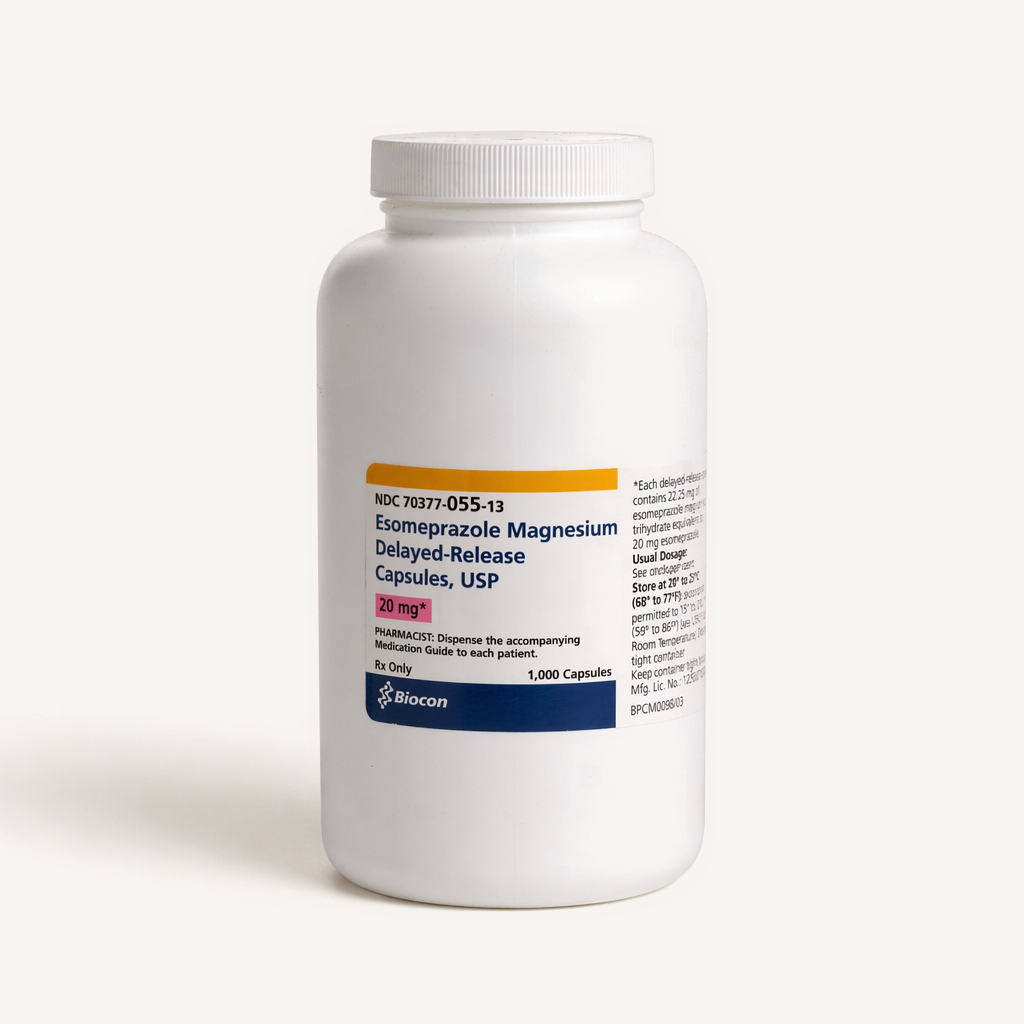
How It Works
Esomeprazole works by reducing the amount of acid the stomach produces. This helps relieve symptoms such as heartburn and allows irritated esophageal tissue to heal.
| Quick Facts | |
|---|---|
| Common Brands | Nexium, Nexium IV, Nexium 24HR |
| Drug Class | Proton pump inhibitor (PPI) |
| Generic Status | Generic is available |
| Availability | Prescription and over-the-counter (OTC) |
Dosing
Esomeprazole comes in 20 mg and 40 mg capsules. The recommended dose depends on what you’re taking it to treat:
- Gastroesophageal reflux disease (GERD): The recommended dose is 20 mg taken by mouth once daily for 4 to 8 weeks.
- Stomach ulcers: The recommended dose is 20 mg or 40 mg taken by mouth once daily for up to 6 months.
- Helicobacter pylori (H. pylori) infection: The recommended dose is 40 mg once daily by mouth for 10 days, usually in combination with antibiotics.
- Erosive esophagitis: The recommended dose is 20 mg or 40 mg taken by mouth daily for 4 to 8 weeks. If symptoms persist, an additional 4 to 8 weeks may be considered.
- Conditions that cause excessive stomach (e.g. Zollinger-Ellison syndrome): The recommended dose is 40 mg taken by mouth twice daily.
Your dose may differ if you have liver problems.
Standard guidelines recommend taking esomeprazole at least 1 hour before meals. This timing allows the medication to take effect before food stimulates acid production.
Note: Dosing information below is educational only. Your prescribing physician will determine your specific dose based on your individual health needs. Always follow your healthcare provider’s instructions for exact dosing.
Uses
FDA-Approved Uses
Esomeprazole is FDA-approved for:
- Gastroesophageal reflux disease (GERD)
- Erosive esophagitis
- Stomach ulcers caused by nonsteroidal anti-inflammatory drugs (NSAIDs)
- Helicobacter pylori (H. pylori) infections
- Conditions characterized by excessive stomach acid production, such as Zollinger-Ellison syndrome
Off-Label Uses
You may see esomeprazole prescribed for uses that are not “FDA-approved.” This is a very common and legal practice called “off-label” prescribing, where a doctor uses their clinical judgment to prescribe a drug for a different (but well-researched) purpose.
There are currently no common off-label uses for esomeprazole.
Side Effects
Like all medications, esomeprazole can cause side effects. Some common side effects may improve over time as your body adjusts to the medication. Other side effects may be serious and require medical attention.
Common Side Effects
- Headache
- Diarrhea
- Nausea
- Gas
- Indigestion
- Stomach pain
- Constipation
- Dry mouth
Serious Side Effects
Serious side effects are rare, but it’s important to know what to look for if they do occur. Stop using esomeprazole and call your doctor immediately if you experience:
- Severe allergic reactions: Symptoms include swelling of the face, lips, tongue, or throat; difficulty breathing or swallowing; racing heart; severe rash or itching; and/or fever.
- Drug reaction with eosinophilia and systemic symptoms (DRESS): This is a specific type of allergic reaction that affects multiple organs. Symptoms include swollen lymph nodes, shortness of breath, dark-colored urine, rash, fever, yellowing of the skin or eyes (jaundice), and swelling in the feet, ankles, or legs.
- Kidney problems: Acute tubulointerstitial nephritis can occur when taking esomeprazole. Symptoms include decreased urine output, blood in the urine, and fever.
- Clostridioides difficile (C. diff) diarrhea: PPI medications like esomeprazole can increase the risk of this severe bacterial infection. Symptoms include persistent watery diarrhea, severe stomach cramps, blood in the stool, and fever.
- Vitamin B12 deficiency: Long-term use (3+ years) of esomeprazole can lead to low vitamin B12 levels. Symptoms include sore tongue, weakness, and tingling in the hands or feet.
- Low magnesium levels (hypomagnesemia): Long-term esomeprazole use can lead to low magnesium levels. Symptoms include muscle spasms, heart palpitations, seizures, and dizziness.
- Bone loss or fractures: Long-term use (1+ year) or taking high doses of esomeprazole may weaken bones and increase the risk of fractures.
- Lupus: PPIs like esomeprazole can sometimes cause new or worsening lupus. Symptoms include new or worsening joint pain or a rash on the cheeks or arms that worsens in sunlight.
- Severe skin reactions: Life-threatening reactions like Stevens-Johnson syndrome (SJS) or toxic epidermal necrolysis (TEN) can occur with esomeprazole. Symptoms include red or purple rash, blistering or peeling skin, and painful, watery eyes.
Call your doctor immediately if you experience any concerning or prolonged symptoms.
Pharmacist Tips
Dose Timing Is Important
Esomeprazole should be taken at least 1 hour before a meal so the medication can kick in before you eat.
Do Not Chew, Crush, Or Cut The Capsules
Esomeprazole capsules should be swallowed whole. Altering the capsule can negatively impact how the body absorbs the medication. If you have trouble swallowing the capsule, you can open it and sprinkle the pellets onto one tablespoon of applesauce. Swallow the mixture immediately without chewing, and drink some water afterward to ensure you’ve swallowed the entire dose.
Be Patient
Esomeprazole is not for immediate heartburn relief. It generally takes 1 to 4 days for the medication to reach its full effect. While waiting for esomeprazole to kick in, your healthcare provider may recommend taking antacids for quick symptom relief.
Consider Limiting Alcohol
It’s not known if alcohol interacts directly with esomeprazole, but it can irritate the stomach and worsen symptoms of GERD.
Store At Room Temperature
Esomeprazole should be stored at 68°F to 77°F (20°C to 25°C) in a cool, dry place away from light.
Tell Your Provider If You’re Pregnant Or Breastfeeding
It is not known if esomeprazole can affect pregnancy, but the medication does pass into breast milk. Tell your healthcare provider if you are pregnant, breastfeeding, or planning to be, so they can advise whether this medication is safe for you to use.
Try To Avoid Missing A Dose
If you miss a dose of esomeprazole, take it as soon as you remember, unless it is almost time for your next dose. In that case, skip the missed dose and take your next dose as scheduled with a meal. Do not take double or extra doses of esomeprazole to make up for a missed one.
Drug Interactions
Certain medications and substances can interact with esomeprazole, potentially altering how it works or increasing the risk of side effects. For example:
- Blood thinners: Esomeprazole should not be taken with clopidogrel (Plavix) or warfarin (Coumadin) as it can increase the risk of bleeding and serious side effects.
- Cilostazol (Pletal): This medication can interact with esomeprazole and may require dose adjustments.
- Citalopram: This medication may need dosing adjustments when taken with esomeprazole.
- Digoxin: This medication may need dosing adjustments when taken with esomeprazole.
- HIV/AIDS medications: Certain antiretroviral medications should not be taken with esomeprazole, as esomeprazole can stop the medication from working as well as it should.
- Methotrexate: When taken together, esomeprazole can lead to toxic levels of methotrexate in the body.
- Rifampin: This medication can lower esomeprazole levels in the body.
- St. John’s wort: This supplement can lower esomeprazole levels in the body.
Always give your doctor and pharmacist a complete list of all your medications, vitamins, and supplements to check for potential interactions.
FAQs
What is the best time of day to take my Nexium pill?
Providers typically recommend taking the medication 60 minutes before a meal. If you are prescribed a once-daily dose, taking it an hour before breakfast is generally the best approach.
Do I strictly have to take this on an empty stomach?
Yes, it is highly recommended to take the medication on an empty stomach at least one hour before eating a meal.
Is there a difference between prescription Nexium and the Nexium 24HR I can buy at the grocery store?
While both contain the same active ingredient, over-the-counter Nexium 24HR is strictly intended for 14-day treatment courses to manage frequent heartburn. Prescription Nexium is available in different forms and doses to treat more severe, long-term conditions like stomach ulcers or erosive esophagitis.
What is the real difference between esomeprazole (Nexium) and omeprazole (Prilosec)?
Both esomeprazole and omeprazole are in the same drug class (proton pump inhibitors) and work similarly to treat gastroesophageal reflux disease (GERD) and other conditions characterized by excess stomach acid. But they have different active ingredients. A provider may use their discretion to prescribe one over the other for a particular person.
Can I safely take Tums, Rolaids, or Pepto-Bismol at the same time as this pill?
Yes, it is generally accepted that fast-acting antacids can be used safely alongside esomeprazole to provide immediate comfort while waiting for the esomeprazole to take full effect. It’s best to check with your doctor first so they can check for interactions with any other medications you’re taking.
How long does it take to reduce acid reflux symptoms on esomeprazole?
Esomeprazole is not designed for instant relief. It usually takes between 1 and 4 days of consistent dosing for the medication’s full effects to kick in.
Is it true that taking this long-term can cause a severe Vitamin B12 deficiency?
Yes, long-term use (3+ years) can lower your vitamin B12 levels. This can happen because the stomach requires a certain amount of acid to effectively absorb vitamin B12 from the food you eat.
Is it safe to use esomeprazole if I am currently pregnant or breastfeeding?
It is not known if esomeprazole can harm an unborn baby, but the medication can pass into breast milk. It is important to discuss your pregnancy or breastfeeding plans with a healthcare provider so they can prescribe a safer option.
Can I safely drink alcohol, coffee, or soda while taking esomeprazole?
It is unknown if alcohol directly interacts with esomeprazole. However, beverages like alcohol, coffee, and carbonated sodas are known triggers for acid reflux. It may be advisable to avoid or limit their consumption while taking esomeprazole.
What happens if I completely forget one of my pills?
If you miss a dose of esomeprazole, take it as soon as you remember. However, if it is almost time for your next dose, skip the missed dose and resume your normal schedule. Do not take double doses to make up for a missed pill.
Does this medication cure my GERD?
Esomeprazole reduces stomach acid, which relieves heartburn symptoms and helps esophageal tissues heal. However, it generally manages the symptoms rather than permanently curing the underlying causes of GERD.
Will I really have to take esomeprazole indefinitely?
In most situations, esomeprazole is meant to be a short-term treatment. However, some people with chronic GERD or other conditions may be advised to take it for longer periods of time. Ask your healthcare provider about how long they think you’ll need to take esomeprazole.
Comparable Medications
Esomeprazole, omeprazole (Prilosec), pantoprazole (Protonix), famotidine (Pepcid), or sucralfate (Carafate)?
There are several medications that your doctor can prescribe in place of esomeprazole. Here are a few possible alternatives below.
Omeprazole
From $19.99
A prescription and over-the-counter proton pump inhibitor used for gastroesophageal reflux disease (GERD), stomach ulcers, and conditions like Zollinger-Ellison syndrome.
Pantoprazole Tablets
From $19.99
A proton pump inhibitor used for gastroesophageal reflux disease (GERD), erosive esophagitis, and conditions like Zollinger-Ellison syndrome.
Famotidine
From $19.99
A prescription and over-the-counter H2 blocker used for stomach ulcers, gastroesophageal reflux disease (GERD), erosive esophagitis, and conditions like Zollinger-Ellison syndrome.
Sucralfate
From $41.99
An antiulcer medication used for stomach ulcers.
We Have Esomeprazole in Stock. Get Yours Today!
Important: Information on this page is for educational purposes only. Prescribing decisions are made by independent, licensed providers. TelyRx operates technology-enabled pharmacies and a telehealth platform that connects patients with licensed providers. Prescriptions, when provider-approved and issued, are filled and shipped by TelyRx-affiliated pharmacies. We do not employ physicians or make prescribing decisions. Learn more about our editorial standards here.