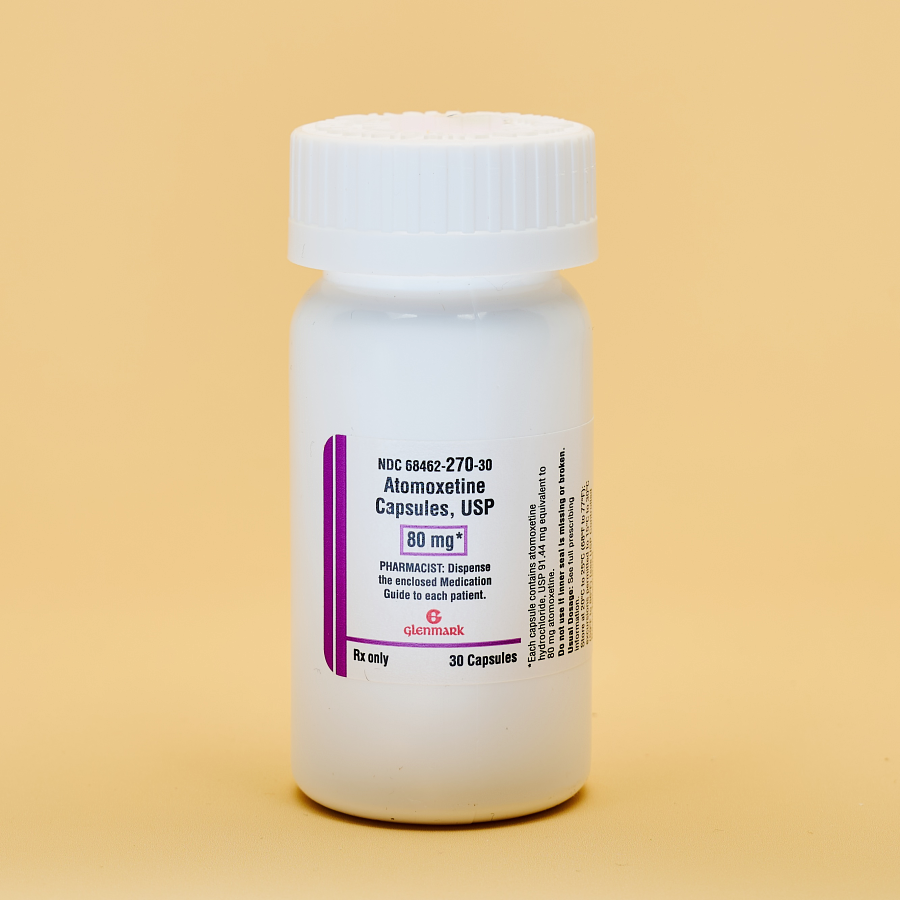
How It Works
Atomoxetine works by targeting the prefrontal cortex, the area of the brain responsible for planning, focus, impulse control, and other executive functions. The drug’s therapeutic effect is centered on the synaptic cleft, the space between nerve cells in the brain.
In a typical ADHD brain, the chemical messenger norepinephrine gets reabsorbed too quickly by the sending neuron and “recycled” back into circulation for future use. This process is known as norepinephrine reuptake. Atomoxetine blocks, or inhibits, the reuptake and helps maintain a higher concentration of norepinephrine within the synaptic cleft. This in turn strengthens signals sent to the prefrontal cortex, which helps improve attention span and reduce hyperactivity and impulsivity.
| Quick Facts | |
|---|---|
| Common Brands | Strattera |
| Drug Class | Selective Norepinephrine Reuptake Inhibitor (SNRI) |
| Generic Status | Generic for Strattera |
| Availability | Prescription only |
Dosing
Atomoxetine requires a titration period, during which the provider starts their patient on a lower dose that gradually increases as their body adjusts to the new medication.
- Initial dose (titration): Most patients begin their atomoxetine titration phase at a daily dose of 40 milligrams (mg).
- Target dose: The target dose for most adults is 80 mg, and their dosage is increased after 3 days of titration.
- Maximum dose: The maximum daily recommended dose for atomoxetine is 100 mg.
- Frequency: Atomoxetine is somewhat flexible, in that patients can take the entire dose once per day or divided into two equal doses for morning and afternoon. The latter may help reduce side effects like nausea.
When taking atomoxetine, never open, crush, or chew the capsules. This can affect how they are absorbed into your body. Atomoxetine powder contains a chemical that can irritate the eyes. If the powder enters your eyes, it is advised to immediately rinse them with water and contact your provider. The powder can also cause irritation if it comes into contact with your skin, but you can wash the affected area with soap and water if this occurs.
Note: Dosing information is educational only. Your prescribing physician will determine your specific dose based on your individual health needs. Always follow your healthcare provider’s instructions for exact dosing.
Uses
FDA-Approved Uses
Atomoxetine is FDA-approved for use in patients with attention-deficit/hyperactivity disorder (ADHD). It was the first non-stimulant ADHD medication to earn FDA approval.
Off-Label Uses
You may see atomoxetine prescribed for uses that are not “FDA-approved.” This is a very common and legal practice called “off-label” prescribing, where a doctor uses their clinical judgment to prescribe a drug for a different (but well-researched) purpose.
Common off-label uses for atomoxetine currently found in clinical practice and research include:
- Treatment-resistant depression: Atomoxetine may be used as an augmenting agent for people with depression who have not had success with standard antidepressants.
- Binge eating disorder: Research suggests atomoxetine’s ability to rein in impulse control can extend to food cravings for people with binge eating disorder.
- Narcolepsy: Doctors may prescribe atomoxetine off-label to help people with narcolepsy stay awake and alert during the day.
Get Savings Updates for Atomoxetine
Join our mailing list for exclusive deals and more.
Side Effects
Atomoxetine’s mechanisms affect brain chemistry and the autonomic nervous system, so side effects can occur – especially during the first few weeks as the patient’s body adjusts to the medication.
Common Side Effects
- Nausea and vomiting
- Decreased appetite
- Dry mouth
- Fatigue or sleepiness
- Dizziness
- Insomnia
Serious Side Effects
Serious side effects are rare, but it’s important to know what to look for if they do occur. Serious side effects of taking atomoxetine can include:
- Suicidal ideation: Atomoxetine carries a “Black Box” warning that the drug may increase the risk of suicidal thinking. This type of ideation may present as extreme agitation, hostility, or social withdrawal.
- Hepatotoxicity: Standard guidelines for atomoxetine advise to watch for signs of liver distress, such as jaundice of the eyes and skin, dark urine, or abdominal pain concentrated on the upper right side.
- Cardiovascular event: Atonoxetine can increase heart rate and blood pressure, so the drug can increase the risk of cardiovascular events for people with known heart defects or hypertension.
- Priapism: In rare cases, atomoxetine can cause a painful, prolonged erection in men. Priapism requires emergency medical attention to prevent permanent nerve damage.
- Urinary retention: Some patients who take atomoxetine report difficulty initiating a urinary stream or completely emptying their bladder.
- Psychotic or manic symptoms: Atomoxetine may trigger hallucinations or mania in individuals with underlying bipolar tendencies.
Call your doctor immediately if you experience any concerning or prolonged symptoms.
Pharmacist Tips
Try Taking With Food
Standard guidelines for atomoxetine state patients can take the capsule with or without food. However, taking with a meal or light snack can help reduce nausea and other gastrointestinal side effects.
Protect Your Eyes
It is advised to never open an atomoxetine capsule, as the powder is a known eye irritant that can cause severe redness and pain. If the capsule breaks, it is recommended to wash your face and hands immediately and contact your provider.
Stay Consistent With Dosing
Atomoxetine must remain at consistent levels in your system in order to be effective. It is advised to take your atomoxetine capsules at the same time(s)each day.
Stay Hydrated
Atomoxetine and other selective norepinephrine reuptake inhibitors are known to cause dry mouth. In addition to drinking water, you can reduce dry mouth symptoms with sugar-free gum or lozenges.
Drug Interactions
Atomoxetine is mostly metabolized by a specific liver enzyme called CYP2D6. Anything that interferes with this enzyme can cause a potentially dangerous increase in atomoxetine levels. Known interactions with atomoxetine include:
- Monoamine oxidase inhibitors (MAOIs): Standard guidelines state that taking atomoxetine within 14 days of taking an MAOI can cause a “hypertensive crisis” or potentially fatal reaction.
- CYP2D6 inhibitors: Common antidepressants like fluoxetine (Prozac) and paroxetine (Paxil) can increase the amount of atomoxetine in your system to up to three times the normal level. For patients who take CYP2D6 inhibitors, providers typically prescribe atomoxetine at a lower dose.
- Albuterol and decongestants: Using atomoxetine alongside sympathomimetic drugs such as albuterol (in asthma inhalers) or Sudafed (pseudoephedrine) can cause serious side effects like a racing heart and elevated blood pressure.
- Quinidine: This medication is used to treat heart rhythms, and can also increase the amount of atomoxetine in your system.
- Alcohol: While there is not a known direct interaction between alcohol and atomoxetine, drinking can exacerbate the dizziness and drowsiness caused by the medication.
Always give your doctor and pharmacist a complete list of all your medications, vitamins, and supplements to check for potential interactions.
FAQs
Is atomoxetine a stimulant like Adderall or Ritalin?
No, atomoxetine is not a stimulant like Adderall or Ritalin that works quickly to increase dopamine and norepinephrine levels. Instead, atomoxetine is a non-stimulant that boosts norepinephrine levels by inhibiting its reuptake. Atomoxetine is not a controlled substance, and patients should not experience feelings of euphoria after taking it.
How long does it take for atomoxetine to start working?
Some patients who take atomoxetine may notice the drug taking effect within 1 to 2 weeks, but it typically takes 4 to 8 weeks of daily dosage for patients to reach full therapeutic benefit.
Can I open the capsule and sprinkle it on food if I can’t swallow pills?
No, it is never advised to open the atomoxetine capsule and sprinkle the powder on food if you can’t swallow. Atomoxetine must be swallowed whole because the powder inside the capsule is a known irritant.
Is atomoxetine addictive or a controlled substance?
No, atomoxetine is not addictive or classified as a controlled substance. It does not have a high potential for abuse or addiction, and patients generally do not develop cravings for it.
Does atomoxetine affect sexual function or libido?
Adults who take atomoxetine may notice sexual side effects such as erectile dysfunction, change in libido, or painful menstruation. Talk to your doctor if these symptoms persist, as a change in dosage may be advised.
Is it better to take atomoxetine in the morning or at night?
Most patients take atomoxetine in the morning to maximize attention and concentration during the day. However, since the medication can cause daytime sleepiness, your doctor may recommend taking it at night before bed.
Can I drink alcohol while taking atomoxetine?
It is advised to avoid or limit alcohol intake while using atomoxetine. Since both substances cause dizziness and sleepiness, combining them may impair your judgment and motor skills more than usual.
Does atomoxetine help with anxiety as well as ADHD?
Since atomoxetine is an SNRI, some patients may find the drug has a calming effect on co-occurring anxiety. However, anxiety is not one of atomoxetine’s primary indications and other people find the drug increases their anxiety due to the extra boost of norepinephrine.
Comparable Medications
Atomoxetine, Viloxazine, Methylphenidate, Amphetamine/Dextroamphetamine, Bupropion, or Venlafaxine?
Atomoxetine is a non-stimulant medication used by patients with attention-deficit/hyperactivity disorder (ADHD). Alternatives to atomoxetine are available, including stimulants that are classified as controlled substances, and your doctor will make their recommendation based on your age, medical history, and severity of symptoms. Common atomoxetine alternatives include:
Qelbree®
From $499.99
Sold under the brand name Qelbree, viloxazine is another non-stimulant selective norepinephrine reuptake inhibitor (SNRI). The primary difference is administration, as viloxazine capsules can be opened and sprinkled on food for people who have difficulty swallowing.
Methylphenidate
This drug, which is available under the brand name Ritalin, is a stimulant medication for ADHD. It is highly effective, but also a controlled substance – atomoxetine is often used as a "backup" medication if Ritalin's side effects are too severe or disruptive.
Amphetamine/Dextroamphetamine
Known for the brand name Adderall, this stimulant ADHD drug acts quickly but can cause a "crashing" effect as it wears off and may lead to dependency. Atomoxetine, on the other hand, does not act as quickly but is not a stimulant, nor does it carry a high risk of potential abuse or addiction.
Bupropion
Sold under the brand name Wellbutrin, bupropion is an antidepressant prescribed off-label to treat ADHD. Since Wellbutrin also affects dopamine, it may be the preferred medication for people with ADHD and depression.
Venlafaxine
Sold under the brand name Effexor, venlafaxine is a standard SNRI used to treat anxiety and depression. The drug is not usually prescribed for ADHD because it does not target the prefrontal cortex like atomoxetine does.
We Have Atomoxetine in Stock. Get Yours Today!
Important: Information on this page is for educational purposes only. Prescribing decisions are made by independent, licensed providers. TelyRx operates technology-enabled pharmacies and a telehealth platform that connects patients with board-certified licensed providers. Prescriptions, when provider-approved and issued, are filled and shipped by TelyRx-affiliated pharmacies. We do not employ physicians or make prescribing decisions. Learn more about our editorial standards here.