

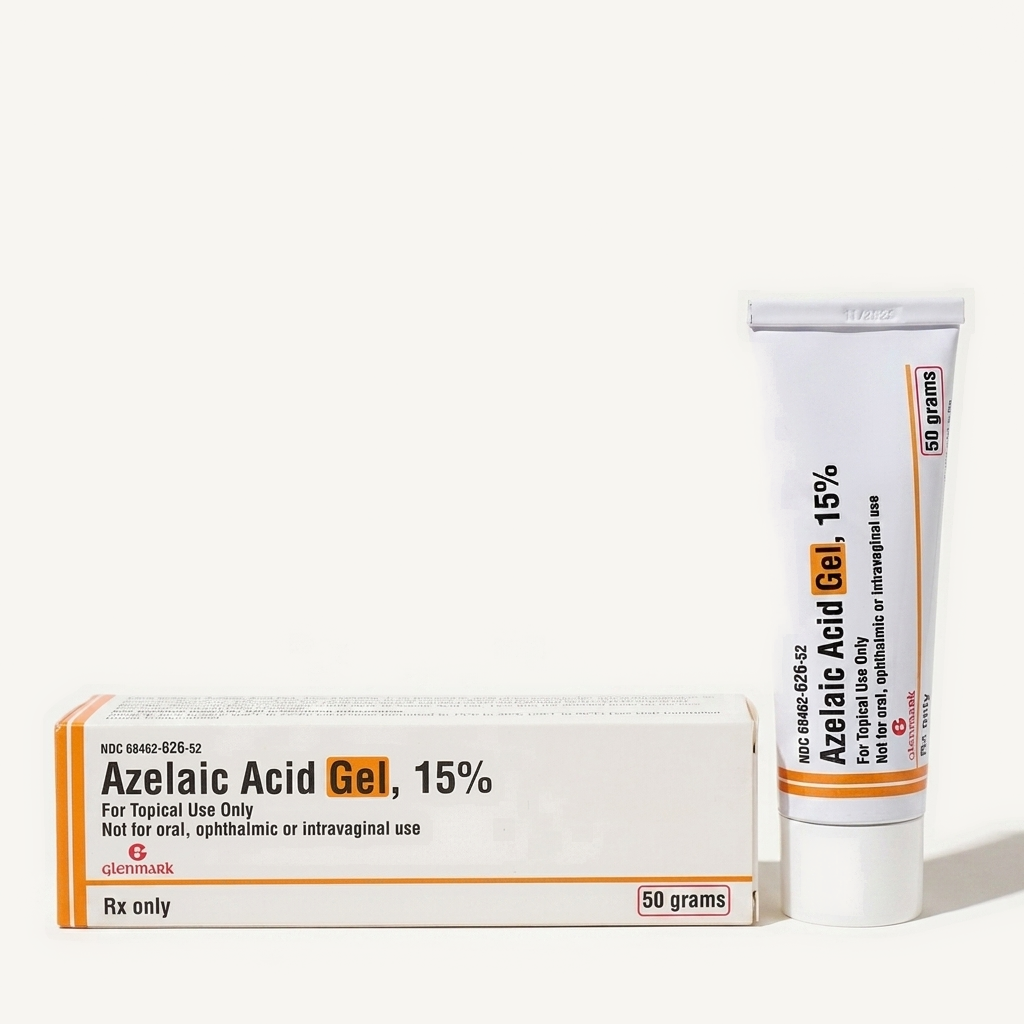
How It Works
Azelaic acid works by reducing the growth of bacteria on the skin, which helps prevent the formation of pus-filled pimples and bumps. It also reduces keratin production, as excessive keratin can lead to clogged pores.
Azelaic acid’s anti-inflammatory properties also reduce the redness and swelling associated with rosacea and acne, leading to improvements in the skin’s overall appearance.
| Quick Facts | |
|---|---|
| Common Brands | Azelex, Finacea |
| Drug Class | Dicarboxylic acid |
| Generic Status | Generic is available |
| Availability | Prescription only |
Dosing
Azelaic acid is designed for external use on the skin only. It’s typically applied in a thin layer to the affected skin once or twice daily. The affected skin should be clean and dry before applying the medication.
Note: Dosing information below is educational only. Your prescribing physician will determine your specific dose based on your individual health needs. Always follow your healthcare provider’s instructions for exact dosing.
Uses
FDA-Approved Uses
Azelaic acid is FDA-approved to treat:
- Rosacea (15% foam and gel)
- Acne vulgaris (20% cream)
Off-Label Uses
You may see the azelaic acid prescribed for uses that are not “FDA-approved.” This is a common and legal practice called “off-label” prescribing, where a doctor uses their clinical judgment to prescribe a drug for a different (but well-researched) purpose.
Azelaic acid may be prescribed for off-label use to treat other skin conditions like hyperpigmentation.
Side Effects
Most common side effects are localized to the area where you apply azelaic acid. Other side effects may be serious and require medical attention.
Common Side Effects
- Skin burning, tingling, or stinging
- Skin discoloration
- Skin irritation
- Itchiness
- Scaly or dry skin
Serious Side Effects
Serious side effects are rare, but it’s important to know what to look for if they do occur. Stop using azelaic acid and call your doctor immediately if you experience:
- Severe allergic reactions: Symptoms include swelling of the face, lips, tongue, or throat; difficulty breathing or swallowing; racing heart; severe rash or itching; and/or fever.
- Skin color lightening (hypopigmentation): Azelaic acid can cause skin color to get lighter.
- Worsening asthma: Although rare, azelaic acid gel may worsen asthma.
- Severe skin irritation: Azelaic acid may cause severe skin reactions, such as burning or stinging.
Call your doctor immediately if you experience any concerning or prolonged symptoms.
Pharmacist Tips
Avoid Harsh Cleansers
When washing your face before application, do not use alcohol-based cleansers, abrasives, or peeling agents, as these can be too drying and harsh when combined with azelaic acid.
Apply Externally Only
Keep the medication away from sensitive areas like the eyes, mouth, and inside of your nose. If accidental contact occurs, flush the area with water immediately.
Wait to Apply Cosmetics
You can apply cosmetics once the azelaic acid gel or foam has dried completely. Applying them too soon may affect absorption.
Don’t Bandage the Area
Avoid covering the treated area with bandages, dressings, or wraps, as this can change how much medication is absorbed by the body.
Practice Fire Safety
The foam azelaic acid formulation is flammable. Shake the container well before use, and avoid smoking or being near an open flame before, during, and shortly after application.
Store at Room Temperature
Store azelaic acid at room temperature, between 68°F to 77°F (20°C to 25°C).
Know the Missed Dose Protocol
If you miss a dose of azelaic acid, apply it as soon as you remember, unless it is almost time for your next dose. In that case, skip it and apply the next dose at the regular time.
Drug Interactions
Certain medications and substances can interact with azelaic acid, potentially altering how it works or increasing the risk of side effects.
Azelaic acid is not known to interact with other medicines, foods, or alcohol. However, using certain topical products at the same time can cause or worsen skin irritation. Products containing alcohol, astringents, or abrasive ingredients should be avoided to prevent excessive dryness and discomfort.
Share your current skincare and makeup routine with your doctor so they can advise you if you need to make any changes or avoid any ingredients.
Always give your doctor and pharmacist a complete list of all your medications, vitamins, and supplements to check for potential interactions.
FAQs
Why does my face itch or sting immediately after applying azelaic acid?
It is common to experience skin reactions such as burning, stinging, or itching after applying azelaic acid, particularly during the first few weeks of treatment. These sensations are typically temporary and may subside as your skin gets used to the medication.
Does azelaic acid cause a “purge” before it gets better?
Generally, yes. Skin irritation (burning, stinging, dryness) can be more common during the first few weeks of treatment with azelaic acid.
Can I use vitamin C and azelaic acid together in the same routine?
While vitamin C is not known to interact with azelaic acid, using multiple active ingredients can sometimes increase irritation. It is generally advised to avoid products that are harsh or drying.
Be sure to tell your dermatologist of all skin products you are considering using. They may recommend applying certain products at different times of day or using alternate products instead.
Is azelaic acid safe to use during pregnancy or breastfeeding?
Azelaic acid is generally considered a pregnancy-safe treatment. The topical is minimally absorbed by the body and is not expected to reach the baby or pass into breastmilk, but risk cannot be ruled out. Exercise caution and tell your healthcare provider if you are pregnant or breastfeeding so they can confirm if azelaic acid is safe for you.
What is the difference between prescription Finacea (15%) and OTC 10% azelaic acid?
Prescription formulations like Finacea contain 15% azelaic acid and are FDA-approved for treating rosacea. The over-the-counter (OTC) formulations are weaker. Prescription-strength may be required for managing mild-to-moderate rosacea and acne.
Does azelaic acid bleach clothes or towels?
While azelaic acid may lighten skin pigment, it generally doesn’t bleach clothes or towels.
Can I use azelaic acid every day?
Yes. The typical dosing schedule involves applying the medication twice daily, in the morning and evening.
Does azelaic acid help with acne scars and dark spots?
Azelaic acid prevents the skin from making melanin, the pigment responsible for skin color. As a result, it can cause skin lightening and may be used off-label to treat dark spots or hyperpigmentation. If you notice any abnormal skin changes while using azelaic acid, tell your doctor.
Can I use retinol or tretinoin at the same time as azelaic acid?
Using certain products with azelaic acid can worsen skin irritation. Retinoids can be drying, so your provider may recommend using a different product or adjusting when you apply them.
Should I apply azelaic acid before or after my moisturizer?
You should apply azelaic acid to skin that has been cleansed and patted dry. Cosmetic products (which may include moisturizers) can be applied after the azelaic acid has dried completely.
Is azelaic acid better for rosacea or acne?
It is effective for both, but the formulation matters. Finacea (15% foam and gel) is FDA-approved for rosacea, while Azelex (20% cream) is approved for acne.
How long does it take to see results for redness?
Visible improvement is often seen within 4 weeks of consistent use. However, it might take months to see improvement in some cases. It’s recommended to evaluate your progress with your doctor after 3 months.
Can I put makeup on over azelaic acid gel/cream?
Yes. You can apply cosmetics over the medication once it has fully dried.
Can I use azelaic acid on damp skin?
Generally, no. You should clean the affected area and pat it dry with a soft towel before application.
Can I use salicylic acid (BHA) with azelaic acid?
It is generally considered safe to use salicylic acid (BHA) with azelaic acid, but it’s best to consult your healthcare provider. They can advise how you should layer them to avoid dryness or irritation.
Comparable Medications
Azelaic Acid, Azelex (20% Cream), Benzoyl Peroxide (PanOxyl), Salicylic Acid (Stridex), Tretinoin (Retin-A), Metronidazole (MetroGel), Ivermectin (Soolantra), or Hydroquinone?
There are several medications that your doctor can prescribe in place of azelaic acid. Here are a few possible alternatives below.
Azelex
The brand-name version of azelaic acid that is approved to treat mild-to-moderate acne vulgaris
Benzoyl Peroxide Topical Wash
From $34.99
An over-the-counter topical used to treat acne vulgaris
Salicylic Acid Topical Solution
From $99.99
A topical scrub used to treat acne
Tretinoin
From $47.99
A topical retinoid used to treat acne vulgaris
Metronidazole
From $22.99
A topical gel used to treat rosacea
Ivermectin Cream
From $199.99
A topical cream used to treat rosacea
We Have Azelaic Acid in Stock. Get Yours Today!
Important: Information on this page is for educational purposes only. Prescribing decisions are made by independent, licensed providers. TelyRx operates technology-enabled pharmacies and a telehealth platform that connects patients with licensed providers. Prescriptions, when provider-approved and issued, are filled and shipped by TelyRx-affiliated pharmacies. We do not employ physicians or make prescribing decisions. Learn more about our editorial standards here.