

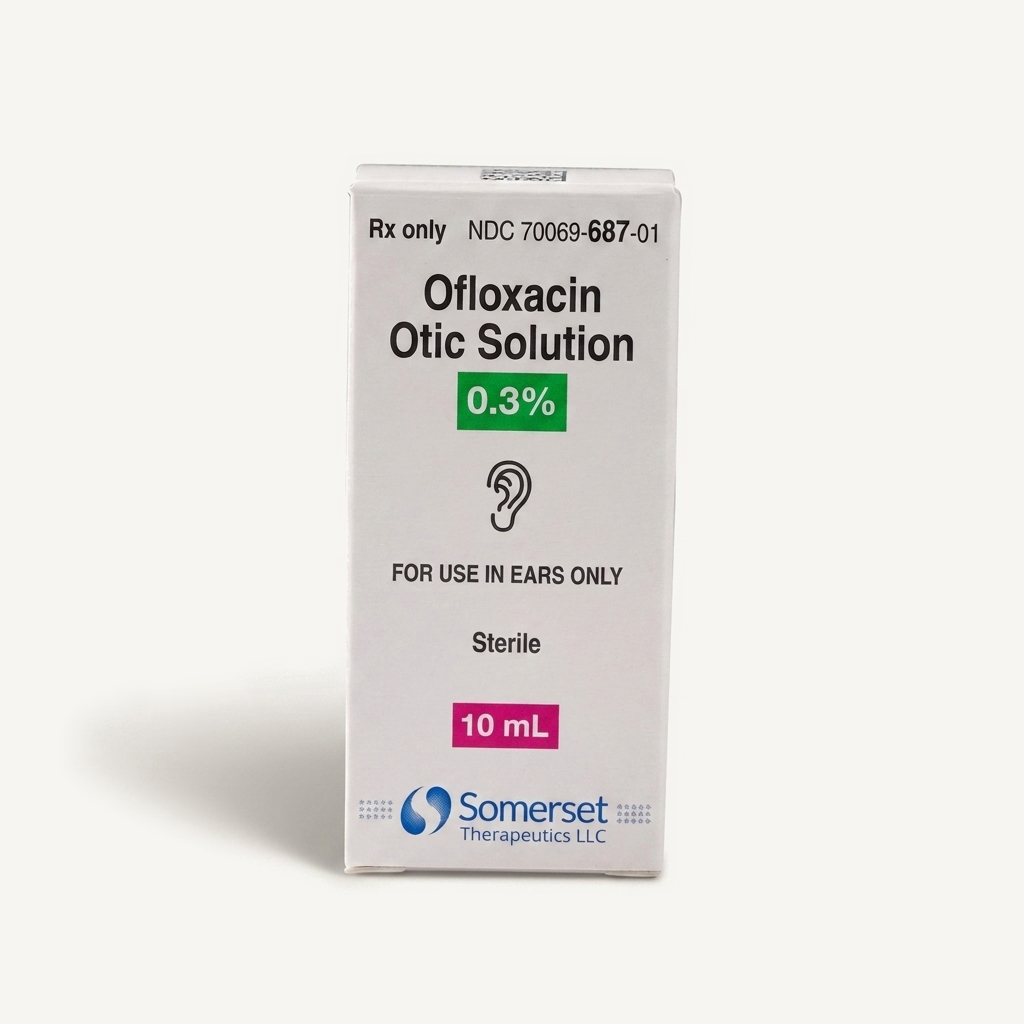
How It Works
Ofloxacin is a bactericidal agent that inhibits essential bacterial enzymes, DNA gyrase, and topoisomerase IV within bacterial cells. This damages the bacterial DNA, leading the cell to eventually rupture and prevents further bacterial replication.
| Quick Facts | |
|---|---|
| Common Brands | Floxin Otic (Note: many brand versions have been discontinued in favor of generics) |
| Drug Class | Fluoroquinolone Antibiotic |
| Generic Status | Generic version of Floxin Otic |
| Availability | Prescription only |
Dosing
Ofloxacin dosing varies based on patient age and the site of infection (outer ear vs. middle ear). Standard guidelines suggest the following educational protocols:
- Swimmer’s ear (otitis externa): Typically 10 drops in the affected ear(s) once daily for 7 days.
- Middle ear infections (with tubes or perforation): Standard guidelines suggest 5 drops into the affected ear(s) twice daily (every 12 hours) for 10 days.
Note: Dosing information is educational only. Your prescribing physician will determine your specific dose based on your individual health needs. Always follow your healthcare provider’s instructions for exact dosing.
Uses
FDA-Approved Uses
Ofloxacin is FDA-approved for the treatment of:
- Otitis externa: Bacterial infections of the outer ear canal
- Chronic suppurative otitis media: Persistent infection of the middle ear in patients with perforated eardrums
Off-Label Uses
You may see ofloxacin prescribed for uses that are not “FDA-approved.” This is a common and legal practice called “off-label” prescribing, where a doctor uses their clinical judgment to prescribe a drug for a different (but well-researched) purpose.
Ofloxacin is commonly prescribed for the following off-label uses:
- Prevention of infection: Providers may recommend a short course of ofloxacin after a foreign body has been removed from the ear or after a minor ear procedure to prevent secondary bacterial growth.
- Granulation tissue: Occasionally used in conjunction with other treatments to manage inflammatory tissue growth within the ear canal.
Side Effects
While ofloxacin ear drops are generally well-tolerated because they act locally, some patients may experience mild reactions.
Common Side Effects
- Ear discomfort: A brief stinging or burning sensation immediately after application
- Pruritus: Itching in the ear canal
- Taste perversion: A bitter or unusual taste in the mouth, which happens if the drops travel through the middle ear and down the Eustachian tube
- Dizziness: Usually caused by instilling drops that are too cold
- Local rash: Mild irritation around the outer ear
Serious Side Effects
Serious side effects are rare, but it’s important to know what to look for if they do occur. Notify your doctor immediately if you experience any of the following:
- evere allergic reaction: Watch for hives, swelling of the face or throat, or difficulty breathing.
- Otomychosis: Prolonged use of antibiotic drops can sometimes allow fungi (yeast) to overgrow.
- Worsening pain or discharge: If pain or discharge increases significantly after starting the drops, contact your provider.
Call your doctor immediately if you experience any concerning or prolonged symptoms.
Pharmacist Tips
Warm it Up
Generally, it’s advised that you never skip the hand-warming step. Cold liquid hitting the inner ear’s balance centers can make the room spin.
Keep it Clean
Providers advise against letting the dropper tip touch your ear, fingers, or any other surface.
Finish the Course
Even if the pain stops after 2 days, standard guidelines suggest completing the full 7 or 10-day course as prescribed. Stopping early may develop antibiotic-resistant bacteria.
Stay Dry
During treatment, it’s generally advised that you avoid getting water in the ear. Providers recommend using a cotton ball coated in petroleum jelly during showers, and avoiding swimming until your doctor gives the all-clear.
No Earplugs
It’s generally advised that you avoid using cotton or earplugs to “plug” the medicine in unless specifically told to do so. The ear needs air to heal and a plug can trap moisture and bacteria.
Check the Solution
Ofloxacin should be a clear, pale yellow liquid. If it is cloudy or contains particles, contact your pharmacist for a replacement.
Drug Interactions
Systemic interactions (where the drug affects other medications you take by mouth) are extremely rare with ear drops because very little of the medication enters the bloodstream.
Potential ofloxacin drug interactions include:
- Other ear products: Providers typically recommend not using other ear drops, oils, or cleaners at the same time as ofloxacin unless specifically instructed.
- Ophthalmic vs. otic: While ofloxacin is available as an eye drop, it’s generally advised that you never use ear drops in your eyes. Ophthalmic (eye) drops are sometimes used in the ear, but the reverse is not safe.
Always give your doctor and pharmacist a complete list of all your medications, vitamins, and supplements to check for potential interactions.
FAQs
Why is ofloxacin preferred over other ear drops for a ruptured eardrum?
Many other ear drops (like Cortisporin) contain ingredients that can be toxic to the delicate hair cells of the inner ear if they pass through a hole in the eardrum. Ofloxacin is “non-ototoxic,” meaning it is generally safe to use even if the eardrum is not intact.
Do I need to warm the bottle before using it?
Yes. Holding the bottle in your hand for a minute or two brings the liquid closer to body temperature. This helps prevent dizziness caused by cold liquid entering the ear canal.
Does ofloxacin treat swimmer’s ear?
Yes, it is one of the treatments for bacterial otitis externa. However, it will not treat swimmer’s ear if the cause is a fungus rather than bacteria.
Is it safe to use if I have ear tubes?
Standard guidelines consider the medication safe for use in ear tubes. The “tragus pump” method helps the medicine get through the tube to your ear.
Can I stop using the drops once the ear pain goes away?
No. To prevent antibiotic resistance and ensure the infection is resolved, providers recommend you complete the full course.
Does ofloxacin relieve pain, or does it just kill bacteria?
Ofloxacin is only an antibiotic. It kills the bacteria causing the inflammation. As the infection clears, the pain should naturally subside, but the drops themselves do not contain a numbing agent or pain reliever.
Can I use these drops for a middle ear infection?
Yes, but only if you have a hole in your eardrum or ear tubes. If your eardrum is intact, the drops cannot reach the middle ear and your provider will likely prescribe an oral antibiotic instead.
Is ofloxacin safe to use during pregnancy?
Ofloxacin is generally considered lower risk than oral antibiotics. However, you should always consult your obstetrician before starting any new medication if you are or are planning to become pregnant.
Can I use cotton or an earplug to keep the medicine in?
Standard guidelines suggest avoiding this. Keeping the ear open helps it dry out and heal faster.
What is the difference between ofloxacin and Ciprodex?
Ciprodex contains both an antibiotic (ciprofloxacin) and a steroid (dexamethasone). Ofloxacin is an antibiotic only.
Does ofloxacin treat fungal ear infections?
No. It is an antibacterial medication. If your infection is fungal, ofloxacin will not work and could potentially make it worse by killing competing bacteria.
How many drops go into the ear?
Standard guidelines recommend 10 drops per application. However, your prescribing physician will determine the exact count based on the severity of the infection and the size of the ear canal.
Comparable Medications
Ofloxacin, Ciprofloxacin, Ciprodex, or Cortisporin?
Below are some potential alternatives to ofloxacin:
Ciprofloxacin
From $29.99
A brand-name fluoroquinolone antibiotic similar to ofloxacin.
Ciprodex
A brand-name combination drop that pairs an antibiotic with a steroid. The added steroid helps reduce swelling and itching more quickly than an antibiotic alone, but it may not be necessary for every patient.
Cortisporin
A traditional multi-ingredient ear drop. While effective for simple swimmer's ear, it contains neomycin, which can be toxic to the inner ear if the eardrum is ruptured. Ofloxacin may be the safer alternative if there is any concern about a hole in the eardrum.
Isopropyl Alcohol / Glycerin
These are over-the-counter drying agents used strictly for the prevention of swimmer's ear by removing trapped water. They contain no antibiotics and should not be used if an active infection or a ruptured eardrum is present, as the alcohol can cause intense pain and potential damage.
We Have Ofloxacin in Stock. Get Yours Today!
Important: Information on this page is for educational purposes only. Prescribing decisions are made by independent, licensed providers. TelyRx operates technology-enabled pharmacies and a telehealth platform that connects patients with licensed providers. Prescriptions, when provider-approved and issued, are filled and shipped by TelyRx-affiliated pharmacies. We do not employ physicians or make prescribing decisions. Learn more about our editorial standards here.