

How It Works
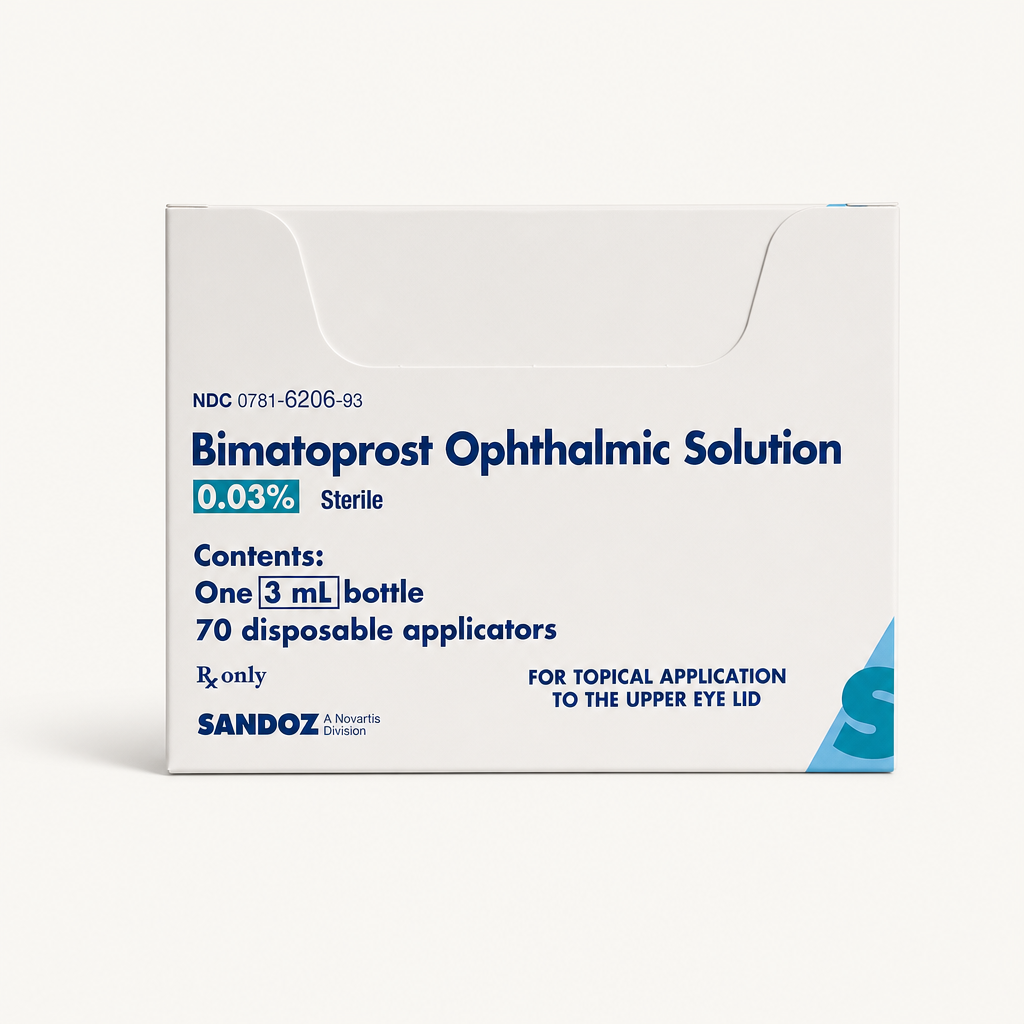
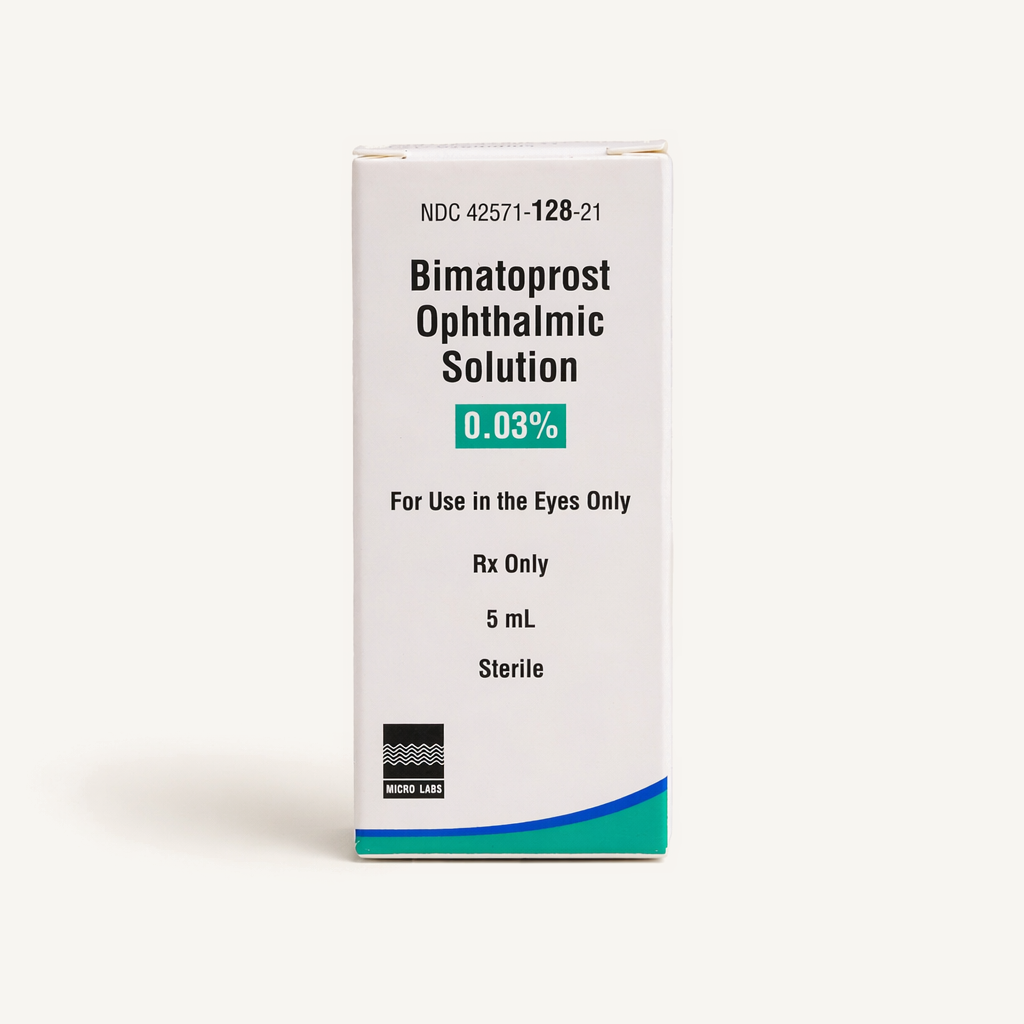
Bimatoprost belongs to a class of medications known as prostaglandin analogs. While its exact mechanism of action is not fully understood, bimatoprost may work by extending the growth phase of eyelash hair, allowing the lashes to grow for a longer period before shedding. Clinical data suggests that significant improvement in length, thickness, and darkness can be seen after 16 weeks of consistent use.
| Quick Facts | |
|---|---|
| Common Brands | Latisse |
| Drug Class | Prostaglandin agonist |
| Generic Status | Generic for Latisse |
| Availability | Prescription only |
Dosing
The recommended dose is one drop of bimatoprost 0.03% solution applied to each eyelid once daily in the evening. The application steps are as follows:
- Ensure the face is clean, makeup is removed, and contact lenses are taken out.
- Place one drop of the solution onto a new, sterile applicator.
- Draw the applicator across the skin of the upper eyelid at the base of the eyelashes (where the lashes meet the skin), moving from the inner part of the lash line to the outer part.
- Blot any excess solution that runs beyond the eyelid margin with a tissue to prevent hair growth on surrounding skin.
- Discard the applicator after treating one eye. Use a fresh, new applicator for the second eye and repeat the steps above.
Note: Dosing information is educational only. Your prescribing physician will determine your specific dose based on your individual health needs. Always follow your healthcare provider’s instructions for exact dosing.
Uses
FDA-Approved Uses
Bimatoprost is FDA-approved to increase the length, thickness, and darkness of eyelashes in people with inadequate lash growth (hypotrichosis).
Off-Label Uses
You may see the bimatoprost prescribed for uses that are not “FDA-approved.” This is a very common and legal practice called “off-label” prescribing, where a doctor uses their clinical judgment to prescribe a drug for a different (but well-researched) purpose.
Some providers may prescribe bimatoprost off-label to help enhance sparse or thinning eyebrows.
Side Effects
Like all medications, bimatoprost can cause side effects. Some common side effects may improve over time as your body adjusts to the medication. Other side effects may be serious and require medical attention.
Common Side Effects
- Eye irritation or itching
- Dry eye
- Headache
- Darkening of the eyelid skin
- Watery eyes or increased tears right after use
Serious Side Effects
Serious side effects are rare, but it’s important to know what to look for if they do occur. Stop using bimatoprost and call your doctor immediately if you experience:
- Severe allergic reactions: Symptoms include swelling of the face, lips, tongue, or throat; difficulty breathing or swallowing; racing heart; severe rash or itching; fever.
- Darker eyes, eyelids, or eyelash color: Bimatoprost may cause the colored part of the eye (iris) to become brown permanently, an effect which may not be noticeable for months or years. The skin around the eyelids and eyelashes may also become darker, but these changes usually go away after you stop using bimatoprost.
- Macular edema: Bimatoprost may cause swelling of the retina (macula) that can affect vision. This is more commonly associated with Lumigan (a different brand of bimatoprost used for glaucoma) but there is still a potential risk for Latisse and generic bimatoprost users.
- Eye inflammation: Bimatoprost can cause eye inflammation and worsen conditions such as uveitis or iritis, especially in people with a torn or missing lens.
Call your doctor immediately if you experience any concerning or prolonged symptoms.
Pharmacist Tips
Remove Contacts Before Applying
Bimatoprost contains benzalkonium chloride, a preservative that can be absorbed by soft contact lenses and cause discoloration. Always remove lenses before application and wait at least 15 minutes before reinserting them.
Avoid Contamination
Never touch the tip of the bottle or applicator to any surface (including your fingertips). This helps prevent contamination that could lead to serious eye infections. Always use a new applicator for each eye.
Avoid the Lower Lid
Do not apply the solution to the lower lash line. Gravity allows the solution to spread naturally to the lower lashes when you blink. Direct application to the lower lid increases the risk of hair growth on the cheek or skin darkening in that area.
Missed Dose
If you miss a dose of bimatoprost, skip it and take your next dose as scheduled the following evening.
Be Patient
Results are gradual. You may start seeing changes in as little as 1 week, but full results typically appear after 16 weeks of daily use.
Drug Interactions
Certain medications and substances can interact with bimatoprost, potentially altering how it works or increasing the risk of side effects. For example:
- Other prostaglandin analogs: If you are already taking eye drops for glaucoma or ocular hypertension (such as Lumigan, Xalatan, or Travatan Z), using bimatoprost for eyelashes may interfere with the desired reduction of eye pressure. It’s recommended to monitor eye pressure closely if using both medications at the same time.
Always give your doctor and pharmacist a complete list of all your medications, vitamins, and supplements to check for potential interactions.
FAQs
What is the difference between Latisse and Lumigan?
Both medications contain the same active ingredient, bimatoprost. However, they are branded and FDA-approved for different purposes. Lumigan is prescribed as eye drops to lower eye pressure in people with glaucoma, often at a concentration of 0.01%. Latisse is a 0.03% solution approved for application to the eyelid margin to promote eyelash growth.
If I stop using Latisse, will my eyelashes fall out?
Your eyelashes will not fall out en masse, but they will gradually return to their original appearance. The enhanced length, thickness, and darkness achieved with bimatoprost are maintained only with continued use. Once you stop, the normal hair growth cycle resumes, and new lashes will grow in at their natural length and thickness over several weeks to months.
Can I use bimatoprost on my eyebrows?
While bimatoprost is FDA-approved only for eyelashes, clinical reports suggest it may help with eyebrow growth. Some healthcare providers may prescribe bimatoprost off-label for eyebrow thinning.
Can I use bimatoprost if I wear contact lenses?
Yes, but precautions are necessary. The solution contains a preservative that can discolor soft contact lenses. You must remove your contacts before applying the solution and wait at least 15 minutes before putting them back in.
How long does it take to see results for eyelash growth?
Results vary by individual. Some people may see changes after the first week. Full results are typically achieved after 16 weeks (4 months) of daily application.
Is it dangerous if bimatoprost solution accidentally gets inside my eye?
Generally, no. Bimatoprost is an ophthalmic solution originally designed to be dropped into the eye for glaucoma. If a small amount gets into the eye during application, it is not expected to cause harm, and you do not typically need to rinse the eye. However, you should try to keep the application strictly to the eyelid margin to minimize side effects.
Can I use Latisse if I am already using glaucoma drops?
Using Latisse alongside glaucoma medications (like Lumigan or Xalatan) can affect your eye pressure. It’s recommended to consult your ophthalmologist or prescribing physician if you are being treated for glaucoma so they can monitor your eye pressure.
Is bimatoprost safe to use during pregnancy?
It’s not known if or how bimatoprost affects pregnancy or if it passes into breast milk. Inform your healthcare provider if you are pregnant, planning to become pregnant, or breastfeeding so they can advise you on whether the benefits outweigh the potential risks.
Can I apply bimatoprost to the lower lash line?
No. It is recommended to apply the solution only to the base of the upper eyelashes. Applying it to the lower lid increases the likelihood of the solution spreading to the skin on the cheeks, which can lead to unwanted hair growth or skin darkening in those areas.
Can I wear mascara or eyeliner while using bimatoprost?
Yes, you can use mascara and other eye makeup while using bimatoprost. However, it’s recommended to remove all makeup and clean your face thoroughly before applying the medication in the evening to ensure it is absorbed properly.
Why is this medication sold by prescription only?
Bimatoprost is a potent medication that affects eye physiology. A prescription is required because it carries potential risks such as changes in eye pressure, permanent iris pigmentation, and inflammation. A licensed healthcare provider can determine if it’s safe for you to use and monitor you for potentially serious side effects.
Comparable Medications
Bimatoprost, Latisse (Bimatoprost 0.03%), Lumigan (Bimatoprost 0.01% or 0.03%), or Latanoprost (Xalatan)?
There are several medications that your doctor can prescribe in place of bimatoprost. Here are a few possible alternatives below.
Latisse®
From $199.99
Bimatoprost 0.03%, and the brand-name version of bimatoprost approved for eyelash growth.
Lumigan
Bimatoprost 0.01% or 0.03%, and a brand-name eye drop formulation of bimatoprost prescribed for glaucoma or ocular hypertension.
Latanoprost
From $29.99
Prescription eye drops used to relieve eye pressure from glaucoma or ocular hypertension.
We Have Bimatoprost in Stock. Get Yours Today!
Important: Information on this page is for educational purposes only. Prescribing decisions are made by independent, licensed providers. TelyRx operates technology-enabled pharmacies and a telehealth platform that connects patients with licensed providers. Prescriptions, when provider-approved and issued, are filled and shipped by TelyRx-affiliated pharmacies. We do not employ physicians or make prescribing decisions. Learn more about our editorial standards here.