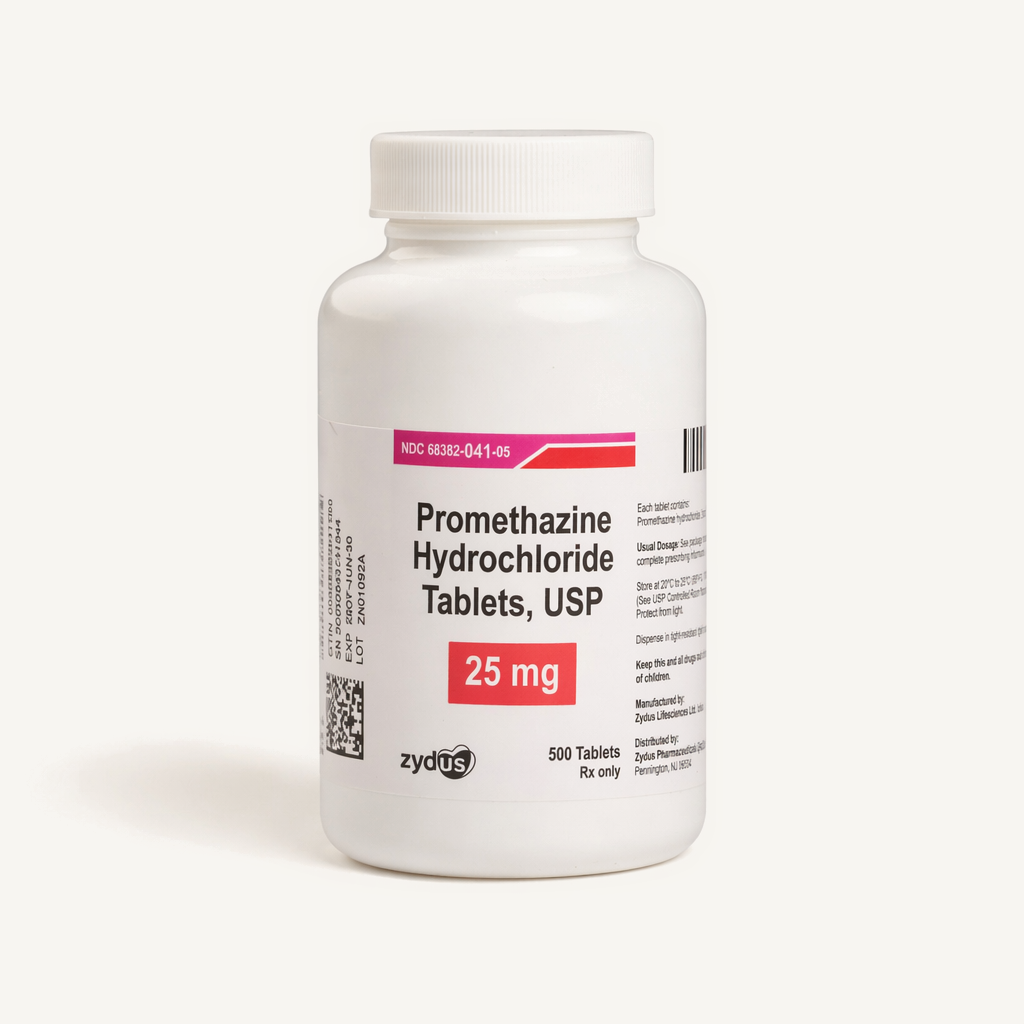
How It Works
Promethazine works for allergies by blocking histamine receptors. Histamine is a substance released by the body’s immune system during an allergic reaction. By blocking it, promethazine helps reduce symptoms like sneezing, itching, watery eyes, and skin irritation.
For motion sickness and post-operative care, promethazine works on the vomiting center of the brain by blocking dopamine and acetylcholine — chemicals that can trigger the sensation of nausea and the act of vomiting.
| Quick Facts | |
|---|---|
| Common Brands | Phenergan, Promethegan |
| Drug Class | Phenothiazine, Antihistamine, Antiemetic |
| Generic Status | Generic for Phenergan |
| Availability | Prescription only |
Dosing
The dosage of promethazine depends on what you’re taking it for. It comes in several forms, including oral tablets, syrups, rectal suppositories, and an injection (usually administered in a hospital setting).
- Allergies: The recommended dose is 25 mg by mouth daily at bedtime. Alternatively, smaller doses of 6.25 mg to 12.5 mg may be taken up to three times daily, usually before meals and at bedtime.
- Motion sickness: The recommended dose is 25 mg by mouth twice daily. The first dose should be taken 30 to 60 minutes before travel.
- Nausea and vomiting: The recommended dose is 12.5 mg to 25 mg every 4 to 6 hours as needed.
- Sedation (pre-procedure): A single dose of 25 mg to 50 mg for adults is recommended the night before a procedure to promote sleep and relaxation.
Note: Dosing information is educational only. Your prescribing physician will determine your specific dose based on your individual health needs. Always follow your healthcare provider’s instructions for exact dosing.
Uses
FDA-Approved Uses
Promethazine is FDA-approved to treat:
- Allergic conditions, such as seasonal allergic rhinitis, vasomotor rhinitis, allergic conjunctivitis, and uncomplicated skin manifestations of hives
- Motion sickness
- Nausea and vomiting
- Sedation for preoperative, postoperative, or obstetric to relieve apprehension and produce light sleep before a procedure
- Pain control in combination with other medications
Off-Label Uses
You may see promethazine prescribed for uses that are not “FDA-approved.” This is a very common and legal practice called “off-label” prescribing, where a doctor uses their clinical judgment to prescribe a drug for a different (but well-researched) purpose.
Promethazine may be prescribed off-label for managing nausea during pregnancy.
Side Effects
Like all medications, promethazine can cause side effects. Some common side effects may improve over time as your body adjusts to the medication. Other side effects may be serious and require medical attention.
Common Side Effects
- Fatigue
- Blurred vision
- Dry mouth
- Nausea
- Vomiting
- Trouble sleeping
- Constipation
- Urinary retention (inability to completely empty the bladder when peeing)
- Dizziness
- Drowsiness
Serious Side Effects
Serious side effects are rare, but it’s important to know what to look for if they do occur. Stop using promethazine and call your doctor immediately if you experience:
- Severe allergic reactions: Symptoms include swelling of the face, lips, tongue, or throat; difficulty breathing or swallowing; severe rash or itching; fever.
- Breathing problems: This medication can cause slow or shallow breathing, which can be life-threatening. Other symptoms include changes in skin or nail color, confusion, lightheadedness, shortness of breath, and abnormal heartbeat.
- Neuroleptic malignant syndrome (NMS): Promethazine can cause this rare but potentially fatal condition. Symptoms include high fever, muscle stiffness, confusion, increased sweating, and abnormal heartbeat.
- Seizures: Promethazine may cause seizures, especially if you already have them. Symptoms include losing consciousness, uncontrolled muscle spasms or twitching, anxiousness, and stiffening of the arms or legs.
- Bone marrow suppression: Promethazine may reduce the production of blood cells, leading to increased risk of infection or bleeding. Symptoms include fever, shortness of breath, easy bruising or bleeding, unusual weakness, headache, abnormal heartbeat, lightheadedness, and pale skin.
- Movement disorders: Involuntary muscle movements may occur when taking promethazine. Symptoms include muscle tremors, stiffness, or jerks.
- Jaundice: Symptoms include yellowing eyes or skin, clay-colored stool, dark urine, and itchiness.
- Severe tissue injury (injection): If given by injection, promethazine can cause severe chemical irritation and tissue damage, including gangrene, if it seeps into surrounding tissue or is injected into an artery. Symptoms include pain and burning at the injection site.
Call your doctor immediately if you experience any concerning or prolonged symptoms.
Pharmacist Tips
Avoid Alcohol
Do not drink alcohol while taking promethazine. The combination can dangerously slow down your brain activity and breathing, leading to excessive sleepiness or more severe complications.
Use Sun Protection
Promethazine can make your skin more sensitive to sunlight (photosensitivity). Wear protective clothing, use sunscreen, and avoid tanning beds to prevent severe sunburns.
Be Careful Driving
Because promethazine causes marked drowsiness, do not drive or operate heavy machinery until you know exactly how the drug affects you.
Syrup Measurement
If you are taking the liquid syrup form, always use a proper medication dose cup or syringe. Household spoons are not accurate and can lead to incorrect dosing.
Suppository Use
If using the rectal suppository, remember to remove the foil wrapper before insertion. It may be helpful to wet the tip with cold water for easier use.
Missed Dose
If you miss a dose of promethazine, take it as soon as you remember. However, if it is almost time for your next dose, skip the missed one and continue your regular schedule. Do not take double or extra doses to make up for a missed one.
False Lab Test Results
Promethazine may affect the results of blood sugar and pregnancy tests. Talk to your healthcare provider if you need to take a lab test while using promethazine.
Drug Interactions
Certain medications and substances can interact with promethazine, potentially altering how it works or increasing the risk of side effects. For example:
- CNS depressants: Combining promethazine with other drugs that cause sleepiness — such as opioids (oxycodone, morphine), sleep aids, benzodiazepines (alprazolam), or muscle relaxers — can increase the risk of sedation and breathing problems.
- Anticholinergics: Medications used for overactive bladder or stomach problems can interact with promethazine, amplifying side effects like dry mouth and constipation.
- MAO inhibitors: Taking promethazine with or within 14 days of stopping a monoamine oxidase inhibitor (MAOI), a drug used for depression or Parkinson’s, can lead to serious reactions, including uncontrolled body movements.
- Epinephrine: Promethazine may interact with epinephrine, which is used for severe allergic reactions.
- Antidepressants: Certain antidepressants, such as amitriptyline or fluoxetine, may interact with promethazine.
Always give your doctor and pharmacist a complete list of all your medications, vitamins, and supplements to check for potential interactions.
FAQs
Can I drive after taking promethazine?
It’s recommended to avoid driving after taking promethazine. The medication is known to cause significant drowsiness and dizziness and slow your thinking and movement, which impairs your ability to drive safely.
Why does promethazine make me so sleepy?
Promethazine affects the central nervous system and blocks histamine receptors, which naturally produces a sedative effect. This “calming” of the nervous system is why it is used for sedation but also why sleepiness is a primary side effect, even if it is being used to treat other conditions.
Is promethazine an antihistamine or a sedative?
It’s both. Promethazine acts as an antihistamine by blocking histamine. It is also used as a sedative to induce sleep or relaxation before procedures, due to its effects on the central nervous system.
Does promethazine help with anxiety?
While promethazine can make you feel relaxed and calm, and is sometimes used to relieve apprehension before surgery, it is not designed to be used as an anti-anxiety medication. Consult your healthcare provider for specific anxiety treatments.
Can I take promethazine with opioids (painkillers)?
Taking promethazine with opioids (like hydrocodone or oxycodone) can lead to extreme sedation and slowed breathing. This combination is sometimes used in surgery settings under monitoring. At home, it carries high risks and should only be done under strict doctor supervision.
Is promethazine safe to take during pregnancy (for morning sickness)?
Promethazine is sometimes prescribed off-label for severe nausea in pregnancy when other treatments fail, but the American College of Obstetricians and Gynecologists (ACOG) recommends trying other options first. Check with your OB-GYN before using promethazine.
How long does a dose of promethazine last?
Promethazine usually starts to kick in within 20 minutes. Duration can vary by individual. It may be taken once or multiple times a day depending on what it’s being used for.
Does promethazine work for motion sickness?
Yes, promethazine is FDA-approved for preventing and treating motion sickness. It works by calming the nervous system and blocking signals in the brain that trigger nausea and vomiting.
Can I take promethazine if I have asthma or COPD?
Promethazine is contraindicated for asthma and COPD, which means that it can be dangerous for people with asthma, COPD, or sleep apnea. People with these conditions should not use promethazine.
Can I take Tylenol or Advil with promethazine?
Promethazine is not known to interact with over-the-counter pain relievers like Tylenol (acetaminophen) or Advil (ibuprofen). Check with your health provider before taking new medications or supplements with promethazine.
Does promethazine treat flu symptoms?
Promethazine does not kill the flu virus, but it can treat specific symptoms associated with the flu, such as nausea, vomiting, and runny nose (rhinitis). It is not a cure for the infection itself.
Comparable Medications
Promethazine, Prochlorperazine (Compazine), Chlorpromazine (Thorazine), Ondansetron (Zofran), Scopolamine (Transderm Scop), or Diphenhydramine (Benadryl)?
There are several medications that your doctor can prescribe in place of promethazine. Here are a few possible alternatives below.
Prochlorperazine (Compazine)
An antipsychotic medication used to treat schizophrenia as well as nausea and vomiting in a pre- or post-operative setting.
Chlorpromazine (Thorazine)
An antipsychotic medication that treats schizophrenia, bipolar disorder, and nausea and vomiting.
Ondansetron
From $44.99
A 5-HT3 antagonist used to prevent nausea and vomiting caused by chemotherapy, radiation therapy, and surgery.
Scopolamine Patch
From $24.99
An anticholinergic medication used to treat motion sickness and postoperative nausea and vomiting.
Diphenhydramine (Benadryl)
An over-the-counter antihistamine used to treat allergies and motion sickness.
We Have Promethazine in Stock. Get Yours Today!
Important: Information on this page is for educational purposes only. Prescribing decisions are made by independent, licensed providers. TelyRx operates technology-enabled pharmacies and a telehealth platform that connects patients with licensed providers. Prescriptions, when provider-approved and issued, are filled and shipped by TelyRx-affiliated pharmacies. We do not employ physicians or make prescribing decisions. Learn more about our editorial standards here.