How It Works
Omega-3 fatty acids ethyl esters work through two mechanisms:
- Breaking down existing triglycerides in the bloodstream
- Decreasing the amount of new triglycerides produced by the liver
Together, these actions help reduce overall triglyceride levels.
| Quick Facts | |
|---|---|
| Common Brands | Lovaza, Omacor, Triklo |
| Drug Class | Antilipemic, lipid-regulating agent |
| Generic Status | Generic is available |
| Availability | Prescription only |
Dosing
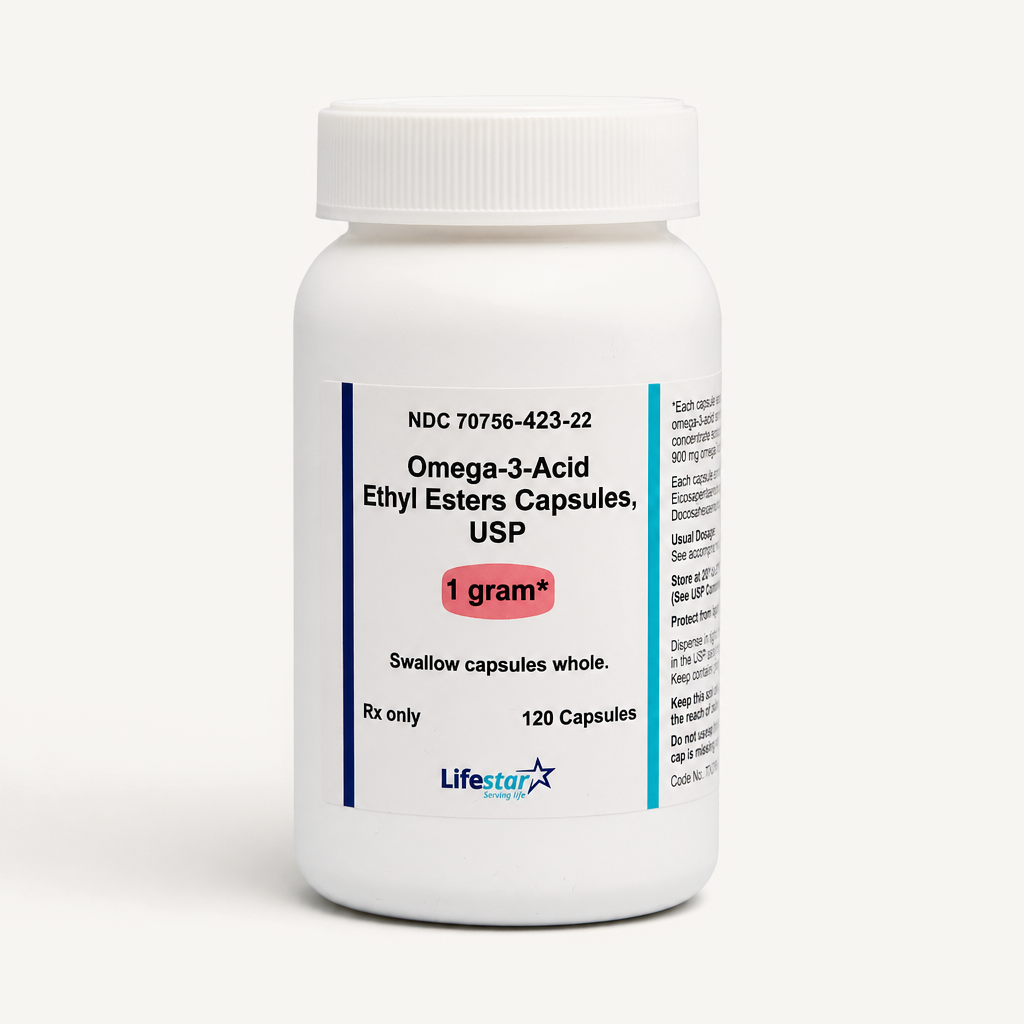
Omega-3 fatty acids ethyl esters come in 1-gram capsules. The recommended dose of omega-3 fatty acids ethyl esters is 4 grams taken by mouth daily, typically with food.
Depending on a person’s preferences and their provider’s guidance, the full 4-gram dose can be taken all at once or divided into two 2-gram doses taken twice daily.
Note: Dosing information below is educational only. Your prescribing physician will determine your specific dose based on your individual health needs. Always follow your healthcare provider’s instructions for exact dosing.
Uses
FDA-Approved Uses
Omega-3 fatty acids ethyl esters are FDA-approved to treat high triglycerides (TG) in adults with TG levels above 500 mg/dL, when combined with dietary changes.
Off-Label Uses
You may see omega-3 fatty acids ethyl esters prescribed for uses that are not “FDA-approved.” This is a very common and legal practice called “off-label” prescribing, where a doctor uses their clinical judgment to prescribe a drug for a different (but well-researched) purpose.
Omega-3 fatty acids ethyl esters may be used off-label to prevent heart disease or to lower triglycerides in adults with TG levels below 500 mg/dL.
Side Effects
Like all medications, omega-3 fatty acids ethyl esters can cause side effects. Some common side effects may improve over time as your body adjusts to the medication. Other side effects may be serious and require medical attention.
Common Side Effects
- Burping
- Fishy aftertaste
- Bad breath
- Nausea
- Vomiting
- Constipation
- Indigestion
- Upset stomach
- Diarrhea
- Prolonged bleeding time
- Increase in LDL (bad cholesterol) levels
- Flu-like symptoms
- Joint pain
- Skin rash
Serious Side Effects
Serious side effects are rare, but it’s important to know what to look for if they do occur. Stop using omega-3 fatty acids ethyl esters and call your doctor immediately if you experience:
- Severe allergic reactions: Because omega-3 fatty acids ethyl esters come from fish oil, people with fish or shellfish allergies may experience an allergic reaction to the medication. Symptoms include swelling of the face, lips, tongue, or throat. Other signs include difficulty breathing or swallowing, a racing heart, a severe rash or itching, and fever.
- Heart rhythm problems (atrial fibrillation or atrial flutter): The medication can increase the risk of irregular heart rhythms, which can be serious. Symptoms include chest pain, dizziness, weakness, or shortness of breath.
- Increased LDL cholesterol: Taking this medication may lead to an increase in low-density (LDL) lipoprotein levels, or “bad cholesterol.” Your provider may recommend regular blood tests to monitor your cholesterol.
- Liver irritation: Some people have experienced higher liver enzyme levels when taking omega-3 fatty acids ethyl esters. Your provider may recommend regular blood tests to monitor your liver health.
Call your doctor immediately if you experience any concerning or prolonged symptoms.
Pharmacist Tips
Take With Food
It’s recommended to take your dose with food to help with absorption and prevent stomach upset.
Swallow The Capsule Whole
The capsules should not be cut, chewed, or crushed. Swallow the entire capsule in one piece.
Keep Up With Blood Work
Your healthcare provider may order routine blood tests to monitor your triglyceride levels, LDL cholesterol, and liver health.
Improve Diet And Exercise
For optimal results, you should use the ethyl ester form of omega-3 fatty acids alongside a balanced, cholesterol-lowering diet and a regular exercise routine. This routine should include both cardio and strength training.
Limit Alcohol
While it’s unknown if alcohol directly interacts with omega-3 fatty acids ethyl esters, drinking large amounts of alcohol can increase triglyceride levels, which counteract the medication’s purpose.
Store At Room Temperature
Omega-3 fatty acids ethyl esters should be stored at 68°F to 77°F (20°C to 25°C) in a cool, dry place away from light.
Tell Your Provider If You’re Pregnant Or Breastfeeding
It is not known whether omega-3 fatty acid ethyl esters affect pregnancy, but they do pass into breast milk. Tell your healthcare provider if you are pregnant, breastfeeding, or planning to be, so they can advise whether this medication is safe for you to use.
Try To Avoid Missing A Dose
If you miss a dose of omega-3 fatty acids ethyl esters, take it as soon as you remember, unless it is almost time for your next dose. In that case, skip the missed dose and take your next dose as scheduled. Do not take double or extra doses to make up for a missed one.
Drug Interactions
Certain medications and substances may have additive effects when taken with omega-3 fatty acid ethyl esters, which can increase the risk of bleeding rather than cause a direct interaction. For example:
- Blood thinners: Medications used to treat or prevent blood clots (e.g., warfarin, heparin, enoxaparin)
- Antiplatelet medicines: Medications used to prevent blood clots (e.g., cilostazol, clopidogrel, ticagrelor, aspirin/dipyridamole) can interact with omega-3 fatty acids ethyl esters.
- Aspirin: Aspirin and similar prescription and over-the-counter pain relievers
- Herbal supplements: Natural products that may affect bleeding, including garlic pills, ginger, ginkgo biloba, willow bark, and horse chestnut.
Always give your doctor and pharmacist a complete list of all your medications, vitamins, and supplements to check for potential interactions.
FAQs
How do I stop the nasty aftertaste after swallowing these?
Taking omega-3 fatty acids ethyl esters with food can be helpful. Additionally, it is important to swallow the capsules whole without chewing, crushing, or breaking them, which helps prevent the fishy oil from being released directly into the mouth.
Do I absolutely need to take this medication with a fatty meal for it to work?
Standard guidelines suggest taking omega-3 fatty acids ethyl esters with food, but do not specifically recommend a high-fat meal. In fact, treatment should ideally be paired with a balanced diet.
Do omega-3 fatty acids ethyl esters raise my “bad” LDL cholesterol?
Yes, clinical data indicate that low-density lipoprotein (LDL) levels may increase during treatment with this medication. Your provider may monitor your LDL levels through regular blood tests.
Can I safely take omega-3 fatty acids ethyl esters at the same time as a statin medication?
Omega-3-acid ethyl esters are not statin medications and work differently. While omega-3s do not lower LDL cholesterol as statin medications do, a provider might prescribe both medications together depending on your cholesterol levels and risk of heart problems.
Why did my pharmacist warn me to watch out for bleeding gums while on this?
Some studies suggest that omega-3 fatty acids can interfere with platelets, making it slightly more difficult for the body to form blood clots. This can cause a prolonged bleeding time.
How many months does it take for my triglyceride numbers to drop on my blood test?
In clinical trials, patients taking this medication saw their triglyceride levels drop within four months.
Do omega-3 fatty acids ethyl esters prevent heart attacks and strokes?
Omega-3 fatty acids ethyl esters are primarily prescribed to lower high triglyceride levels. When used alongside dietary changes, the medication may help improve overall heart health and reduce the risk of cardiovascular complications associated with high triglycerides.
Can I safely drink alcohol or a beer with omega-3 fatty acids ethyl esters?
It is currently unknown if drinking alcohol directly interacts with the medication itself. However, because consuming large amounts of alcohol can significantly increase triglyceride levels, providers typically recommend limiting alcohol intake while taking omega-3 fatty acids ethyl esters.
What happens if I am highly allergic to fish or shellfish – can I still safely take this?
No. Because the medication is made from fish oil, people who are allergic to fish or shellfish (such as shrimp, crab, lobster, or oysters) are at risk for a serious allergic reaction and should not take this medication.
Will this prescription fish oil help joint pain or arthritis?
This medication is not indicated for arthritis. In fact, medical literature lists joint pain as a potential side effect of taking omega-3 fatty acids ethyl esters.
Is there a liquid or chewable version available of omega-3 fatty acids ethyl esters?
The prescription form is available only as 1-gram oral capsules. You must swallow these capsules whole and should not open, crush, chew, or dissolve them.
Can I safely take ibuprofen or aspirin while taking a high dose of omega-3s?
Aspirin and aspirin-like medications, which people often use for pain and fever, can have an additive bleeding effect when taken with omega-3 fatty acids ethyl ester. . Always consult a provider before you combine these medications.
Is there an actual difference between the brand name Lovaza and the generic omega-3 capsules?
No. The generic version (omega-3 fatty acids ethyl esters) contains the same active ingredients as the brand-name Lovaza and is available at a lower cost.
Is it safe to use this high-dose if I am currently pregnant or breastfeeding?
It is not known if or how the medication affects a fetus during pregnancy, so risk cannot be ruled out. However, omega-3 fatty acids ethyl esters do pass into breast milk. Inform your provider if you are pregnant or breastfeeding to discuss the risks and benefits.
What should I do if I completely forget a dose?
If you miss a dose, take it as soon as you remember. However, if it is almost time for your next scheduled dose, skip the missed one and take your next dose as usual.
Comparable Medications
Omega-3 fatty acids ethyl esters, icosapent ethyl (Vascepa), fenofibrate (Tricor), gemfibrozil (Lopid), or atorvastatin (Lipitor)?
There are several medications that your doctor can prescribe in place of omega-3 fatty acids ethyl esters. Here are a few possible alternatives below.
Icosapent Ethyl
From $119.99
An omega-3 fatty acid used to lower triglyceride levels in the blood, in combination with dietary changes.
Fenofibrate
From $24.99
A fibrate used to lower cholesterol and triglyceride levels in the blood, in combination with dietary changes.
Gemfibrozil Tablets
From $29.99
A fibrate used to lower cholesterol and triglyceride levels in the blood, in combination with dietary changes.
Atorvastatin
From $26.99
A statin medication used to lower cholesterol and triglyceride levels in the blood, in combination with dietary changes.
We Have Omega in Stock. Get Yours Today!
Important: Information on this page is for educational purposes only. Prescribing decisions are made by independent, licensed providers. TelyRx operates technology-enabled pharmacies and a telehealth platform that connects patients with licensed providers. Prescriptions, when provider-approved and issued, are filled and shipped by TelyRx-affiliated pharmacies. We do not employ physicians or make prescribing decisions. Learn more about our editorial standards here.