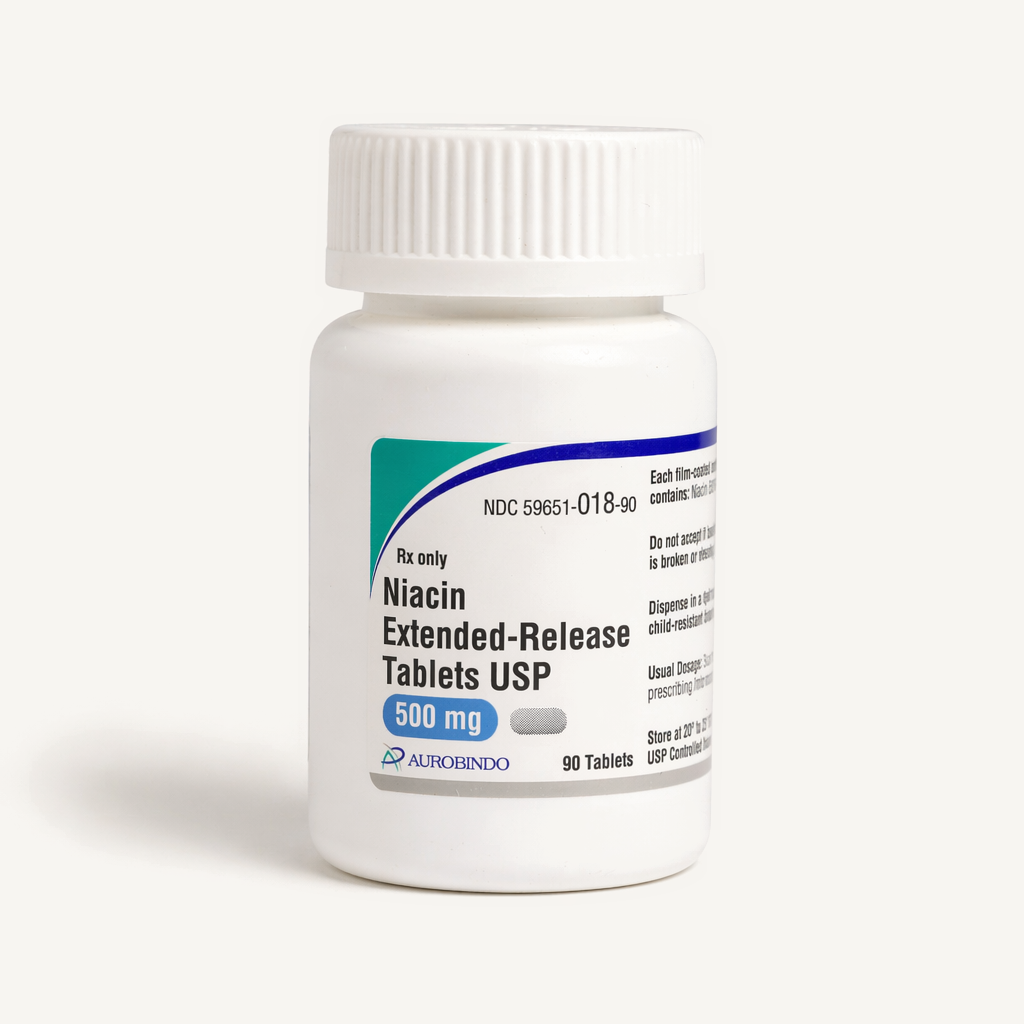
How It Works
Niacin is a form of vitamin B3 that, at prescription doses, can help improve triglyceride and cholesterol levels. It works by:
- Reducing the liver’s production of lipids (fatty compounds)
- Slowing down the release of lipids into the bloodstream
- Increasing the speed at which the body breaks down lipids in the blood
Together, these effects can help lower “bad” LDL (low-density lipoprotein) cholesterol and triglycerides while raising “good” HDL (high-density lipoprotein) cholesterol.
| Quick Facts | |
|---|---|
| Common Brands | Niacor, Niaspan, Nicolar, Slo-Niacin, Wampocap |
| Drug Class | Antilipemic, lipid-lowering agent, B vitamin |
| Generic Status | Generic is available |
| Availability | Prescription and over-the-counter |
Dosing
Niacin ER tablets come in three dosage strengths: 500 mg, 750 mg, and 1,000 mg.
The recommended starting dose is 500 mg taken by mouth at bedtime with a low-fat snack.
After four weeks, your healthcare provider might increase the dose, depending on how your body responds to the medication.
The typical maintenance dose ranges from 1,000 mg to 2,000 mg taken daily at bedtime. The maximum recommended dose of niacin ER tablets is 2,000 mg daily.
Note: Dosing information below is educational only. Your prescribing physician will determine your specific dose based on your individual health needs. Always follow your healthcare provider’s instructions for exact dosing.
Uses
FDA-Approved Uses
Niacin ER tablets are FDA-approved to:
- Lower high cholesterol and triglyceride levels in certain types of hyperlipidemia (high blood fat levels)
- Reduce the risk of another nonfatal heart attack in people with high cholesterol and a history of heart attack
- Slow or help reverse plaque buildup in the arteries in certain people with coronary artery disease (CAD) and high cholesterol when used with a bile acid sequestrant medication
- Further lower cholesterol levels when used together with a bile acid sequestrant medication
- Lower severely high triglyceride levels in adults at risk of pancreatitis who have not responded adequately to dietary changes
Off-Label Uses
You may see niacin ER tablets prescribed for uses that are not “FDA-approved.” This is a very common and legal practice called “off-label” prescribing, where a doctor uses their clinical judgment to prescribe a drug for a different (but well-researched) purpose.
There are currently no common off-label uses for niacin ER tablets.
Side Effects
Like all medications, niacin ER tablets can cause side effects. Some common side effects may improve over time as your body adjusts to the medication. Other side effects may be serious and require medical attention.
Common Side Effects
- Flushing
- Coughing
- Nausea
- Vomiting
- Heartburn
- Gas
- Bloating
- Diarrhea
- Upset stomach
- Itching
- Changes in liver enzyme levels that may require monitoring
Serious Side Effects
Serious side effects are rare, but it’s important to know what to look for if they do occur. Stop using niacin ER tablets and call your doctor immediately if you experience:
- Severe allergic reactions: Symptoms include swelling of the face, lips, tongue, or throat; difficulty breathing or swallowing; racing heart; severe rash or itching; and/or fever.
- Liver damage (hepatotoxicity): Niacin ER tablets may cause liver damage. The risk may be higher in people who have a history of liver problems or drink a lot. Symptoms include belly pain, light-colored stool, dark urine, fever, nausea, vomiting, loss of appetite, or yellowing of the skin and eyes (jaundice).
- Muscle problems: Muscle weakness (myopathy) or muscle breakdown (rhabdomyolysis) can occur when taking niacin ER tablets. Symptoms include unexplained muscle pain, weakness, or tenderness; low energy levels; dark urine; muscle cramps; fever; stomach pain; nausea or vomiting.
- High blood sugar (hyperglycemia): Niacin ER can raise blood sugar levels. Symptoms include increased thirst, increased urination, increased hunger, tiredness, confusion, or fruity-smelling breath.
- Vision problems: Macular edema, caused by a buildup of fluid in the eye, may happen when taking niacin ER tablets. Symptoms include blurry or worsening vision, sensitivity to light, blind spots, or color-tinted vision.
- Low blood pressure (hypotension): Niacin ER can lower blood pressure. Symptoms include dizziness, confusion, fainting, weakness, or tiredness.
Call your doctor immediately if you experience any concerning or prolonged symptoms.
Pharmacist Tips
Swallow Niacin ER Tablets Whole.
Do not crush, chew, or break the tablets. Doing so can release too much medication at once and increase side effects.
Take Your Dose At Bedtime With A Low-Fat Snack
Taking niacin ER before bed with a low-fat snack (e.g. fruit, pretzels, or carrots) can reduce the risk of stomach upset and flushing.
Avoid Consuming Hot Drinks, Spicy Foods, Or Alcohol Right Before Your Dose
These can increase the chance of flushing and itching on niacin ER.
Get Up Slowly During The Night
If you wake up due to flushing, get up slowly to prevent dizziness or falls from low blood pressure.
Manage Flushing
Your body may adjust to this side effect with time. If not, ask your healthcare provider about taking an aspirin 30 minutes before your dose to help minimize flushing.
Do Not Switch Between IR Or ER Forms Of Niacin
The medicines are not equivalent even at the same dose. Switching between immediate-release and extended-release forms of niacin can lead to serious side effects.
Monitor Your Blood Sugar If You Have Diabetes
Niacin ER can affect blood sugar levels, so your provider may recommend more frequent monitoring.
Talk To Your Doctor If You Have Gout
Niacin ER can increase uric acid levels, which might worsen gout.
Store At Room Temperature
Niacin ER tablets should be stored at 68°F to 77°F (20°C to 25°C) in a cool, dry place away from light.
Tell Your Provider If You’re Pregnant Or Breastfeeding
It is unknown if niacin ER can affect pregnancy. Tell your healthcare provider if you are pregnant or planning to be, so they can advise whether you should keep taking the medication. Niacin ER does pass into breast milk and is not recommended to be used while breastfeeding.
Try To Avoid Missing A Dose
If you miss a dose of niacin ER, take it as soon as you remember, unless it is almost time for your next dose. In that case, skip the missed dose and only take your next dose as usual. Do not take double or extra doses of niacin ER to make up for a missed one.
Drug Interactions
Certain medications and substances can interact with niacin ER, potentially altering how it works or increasing the risk of side effects. For example:
- Bile acid sequestrants: Cholesterol-lowering medications such as cholestyramine or colestipol can bind to niacin and reduce its absorption. Niacin ER should generally be taken 4–6 hours apart from these medications.
- Blood thinners: Medications such as warfarin (Coumadin) may increase the risk of bleeding when taken with niacin ER. Closer monitoring may be needed in some people.
- Blood pressure medications: Niacin ER can cause temporary widening of blood vessels (vasodilation), especially shortly after a dose, which may enhance the blood pressure-lowering effects of these medications and increase the risk of dizziness, flushing, or lightheadedness.
- Statin medications: Taking niacin ER with statin medications may increase the risk of muscle problems (myopathy or rhabdomyolysis) and liver-related side effects.
- Alcohol: Drinking alcohol around the time of your dose can worsen flushing. Heavy alcohol use may also increase the risk of liver damage while taking niacin ER.
- Vitamins or supplements containing niacin or nicotinamide: Taking additional vitamin B3 products with niacin ER may increase the risk of side effects due to excessive niacin exposure.
Always give your doctor and pharmacist a complete list of all your medications, vitamins, and supplements to check for potential interactions.
FAQs
Why should you take niacin ER at bedtime?
Taking niacin ER at bedtime may help reduce the impact of flushing by allowing it to occur while you are asleep. Nighttime dosing may also improve the medication’s effects on cholesterol and triglyceride production, since the liver produces more lipids overnight.
How long does the red skin flushing usually last after taking a dose?
Flushing can last for up to 2.5 hours. It typically decreases over time as your body adjusts to the medication.
Why is it sometimes recommended to take an aspirin 30 minutes before taking my Niacin ER?
Providers may recommend aspirin to help reduce the risk of flushing. Talk to your healthcare provider first to see if this is a safe option for you.
What is the difference between prescription niacin ER and over-the-counter vitamin B3 supplements?
Over-the-counter supplements often contain nicotinamide. This is a different form of B3 that does not cause flushing, but it also is not prescribed to treat high cholesterol. Prescription-strength niacin ER is FDA-approved to treat high cholesterol.
Does taking this medication actually clear out the plaque in my arteries?
Niacin ER may help slow the progression of plaque buildup in the arteries, and in some cases may contribute to modest plaque regression when used with other cholesterol-lowering therapies. However, it is not considered a cure for coronary artery disease.
Can niacin ER trigger type 2 diabetes?
The medication can increase blood sugar levels. If you have a history of diabetes or high blood sugar, your healthcare provider may recommend more frequent monitoring while you take niacin ER.
Can I take over-the-counter ibuprofen instead of aspirin to stop the flushing?
While other NSAIDs such as ibuprofen may help reduce niacin-related flushing, aspirin is the option specifically recommended in the prescribing information and has shown the most benefit in studies. Talk with your healthcare provider before using ibuprofen or other NSAIDs to manage flushing.
What should I do if my skin starts itching during a severe niacin flush?
Flushing commonly includes an itchy or warm feeling. However, if itching is accompanied by signs of a severe allergic reaction — such as hives, facial swelling, or breathing problems — it is recommended to stop taking the medication and seek medical help right away.
Does taking niacin ER commonly cause flare-ups of gout or joint pain?
The medication can raise uric acid levels, which has the potential to worsen gout or cause more frequent gout attacks.
Is it safe to take this medication at the same time as statin medications?
Taking niacin ER with statin medications can increase the risk of serious side effects, such as muscle weakness or breakdown. It is generally advised to consult your healthcare provider to see if this combination is appropriate for you.
Are “flush-free” OTC niacin supplements just as effective as this prescription?
“Flush-free” supplements often use nicotinamide instead of niacin. Nicotinamide does not cause flushing, but it also is generally not prescribed (or proven) to treat high cholesterol and triglycerides in the same way.
Does this medication lower bad cholesterol, or raise good cholesterol?
It does both. Niacin ER can help lower LDL (“bad”) cholesterol and triglyceride levels while raising HDL (“good”) cholesterol levels.
Is it safe to continue taking this medication if I am pregnant or actively breastfeeding?
Niacin ER is generally not recommended during pregnancy or breastfeeding. It passes into breast milk, and it is unknown how it may affect a fetus. Consult your healthcare provider if you are pregnant, planning to be, or breastfeeding.
Comparable Medications
Niacin ER tablets, immediate-release niacin, Lipitor, Crestor, fenofibrate (Tricor), or inositol hexanicotinate (flush-free niacin)?
There are several medications that your doctor can prescribe in place of niacin ER tablets. Here are a few possible alternatives below.
Immediate-release niacin
A shorter-acting form of niacin taken multiple times daily. It works similarly to niacin ER but may cause more flushing and is associated with a different side effect profile.
Atorvastatin
From $26.99
A statin medication that lowers LDL (“bad”) cholesterol by reducing cholesterol production in the liver. Statins are generally considered first-line treatment for high cholesterol.
Rosuvastatin
From $19.99
An oral statin medicine used to lower cholesterol and triglycerides.
Ezetimibe
From $24.99
A cholesterol absorption inhibitor that lowers LDL cholesterol by reducing cholesterol absorption in the intestines. It is sometimes used alone or together with a statin.
Fenofibrate
From $24.99
A fibrate medication that is particularly effective at lowering triglyceride levels and may be used in people with severe hypertriglyceridemia.
Inositol hexanicotinate
A dietary supplement marketed as “flush-free niacin.” Unlike prescription niacin, it has not been shown to improve cholesterol and triglyceride levels to the same extent.
We Have Niacin ER Tablets in Stock. Get Yours Today!
Important: Information on this page is for educational purposes only. Prescribing decisions are made by independent, licensed providers. TelyRx operates technology-enabled pharmacies and a telehealth platform that connects patients with licensed providers. Prescriptions, when provider-approved and issued, are filled and shipped by TelyRx-affiliated pharmacies. We do not employ physicians or make prescribing decisions. Learn more about our editorial standards here.