

How It Works
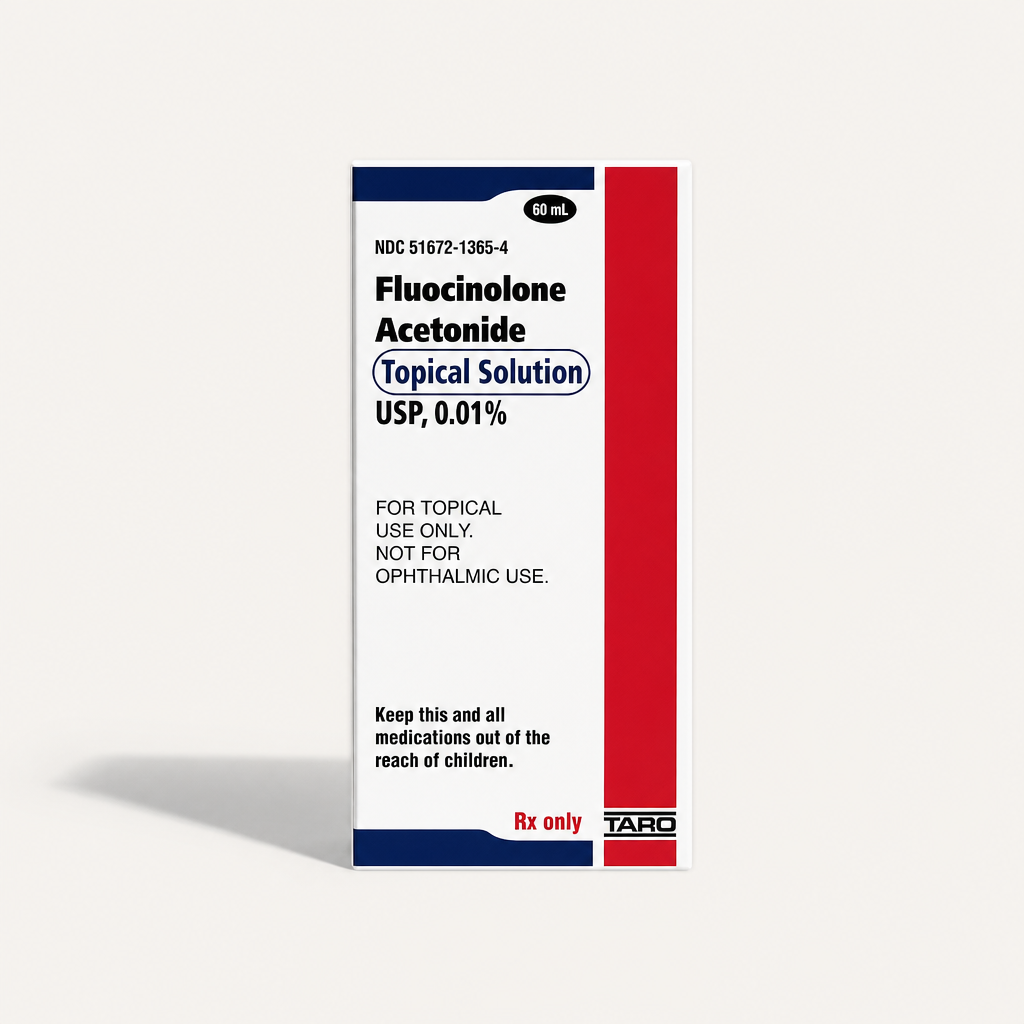
Fluocinolone is a topical corticosteroid that helps reduce inflammation, redness, and itching in the skin. Its exact anti-inflammatory mechanism is not fully understood, but corticosteroids are thought to work by triggering the production of proteins that limit the release of arachidonic acid, which the body uses to make inflammatory chemicals called prostaglandins and leukotrienes.
With less of these chemicals, swelling and redness are reduced. Corticosteroids also reduce the activity of inflammatory immune cells in the treated area.
Another mechanism is vasoconstriction. The medication causes blood vessels in the skin to constrict, which reduces the flush and heat of inflamed skin. By stabilizing the cell membranes and reducing the release of inflammatory signals, fluocinolone breaks the itch-scratch cycle to allow the skin to heal.
| Quick Facts | |
|---|---|
| Common Brands | Synalar, Derma-Smoothe/FS, Capex |
| Drug Class | Topical corticosteroid |
| Generic Status | Generic version available |
| Availability | Prescription only |
Dosing
Dosage for fluocinolone depends on the medication’s formulation and the location of the condition.
- Cream or ointment: Depending on the severity of the flare, providers typically direct their patients to apply fluocinolone cream or ointment two to four times per day.
- Topical solution: Doctors generally recommend using the topical solution two to four times daily
- Body oil (eczema): To treat eczema with fluocinolone body oil, patients usually apply a thin layer of the topical three times per day to the affected area(s).
- Scalp oil (psoriasis): Patients typically apply the scalp oil once daily. Per the product labeling, patients are advised to moisten their hair and scalp, massage the oil in, and cover the scalp with a shower cap for at least 4 hours, or overnight, before washing it out.
Fluocinolone should generally be stopped once the condition is under control. If your skin has not improved within 2 weeks, contact your healthcare provider.
Note: Dosing information below is educational only. Your prescribing physician will determine your specific dose based on your individual health needs. Always follow your healthcare provider’s instructions for exact dosing.
Uses
FDA-Approved Uses
Fluocinolone is FDA-approved for the relief of inflammatory and pruritic (itchy) manifestations of corticosteroid-responsive dermatoses. These conditions include atopic dermatitis (eczema), psoriasis of the body and scalp, and seborrheic dermatitis.
Off-Label Uses
You may see fluocinolone prescribed for uses that are not “FDA-approved.” This is a common and legal practice called “off-label” prescribing, where a doctor uses their clinical judgment to prescribe a drug for a different (but well-researched) purpose.
Common off-label uses for fluocinolone currently found in clinical research and practice include:
- Alopecia areata: In some cases of alopecia areata, topical steroids can be used to reduce the immune attack of hair follicles that can cause patchy hair loss.
- Lichen planus: Fluocinolone may be effective against this condition that produces itchy, purple, flat-topped bumps on the skin and mouth.
- Discoid lupus erythematosus: Fluocinolone can help manage the localized skin inflammation associated with this autoimmune disorder.
Side Effects
Topical steroids like fluocinolone generally cause fewer and milder side effects than oral steroids, but issues can still arise.
Common Side Effects
Common side effects of using fluocinolone include:
- Temporary burning or stinging immediately after application
- Irritation or dryness of the skin
- Small, red, pus-filled bumps around hair follicles (folliculitis)
- Tiny blood vessels, or “spider veins,” appear near the skin surface (telangiectasia)
Serious Side Effects
Serious side effects are rare, but it’s important to know what to look for if they do occur. Serious side effects of using fluocinolone topical medication can include:
- Skin thinning (atrophy): Topical steroid use can make the skin fragile and prone to bruising or stretch marks.
- Adrenal suppression: If used over large surface areas or for extended periods, fluocinolone can be absorbed into the bloodstream and cause the body to produce less natural cortisol. This is generally reversible after the medication is stopped.
- Cushing’s syndrome: With large amounts or prolonged use, enough medication can be absorbed to cause Cushing’s syndrome, which can lead to upper-body weight gain, fatigue, and facial puffiness.
- Vision changes: Fluocinolone exposure to the eyes can increase your risk of glaucoma and cataracts. This is especially true for oil formulations.
Call your doctor immediately if you experience any concerning or prolonged symptoms.
Pharmacist Tips
Peanut Allergies Are Critical
Some fluocinolone oil formulations, including Derma-Smoothe/FS, contain refined peanut oil. In a small safety study, peanut-allergic children had no skin test reactions to the oil, and this warning is precautionary. Still, if you have a known peanut allergy, talk with your provider before your first application.
Less Is More
Patients are recommended to use the smallest amount of medication necessary to cover the affected area. A thin layer means the skin appears somewhat shiny after application, with no excessive residue.
Perform a 2-Week Check
If your skin condition has not improved after 14 days of consistent daily use, contact your provider. Long-term use beyond the prescribed treatment course can increase the risk of skin thinning.
Avoid Occlusion
Per the product labeling, do not cover the treated area with a bandage or tight dressing unless your provider directs you to, as this can increase absorption and the risk of side effects. The shower cap used with the scalp oil is the exception, and it should be used as directed.
Be Careful In Certain Areas
The skin on your face, underarms, and groin is thinner and will absorb fluocinolone more quickly than other areas of the body. It is advised to avoid applying the topical to these areas unless your provider has specifically instructed you to do so.
Hygiene Is Key
After each application, it is advised to wash your hands thoroughly. This helps prevent the steroid from transferring to your eyes, mouth, and other areas of your body.
Drug Interactions
Interactions with topical steroids with fluocinolone are rare, but the medication can still interact with skin treatments. Things to be aware of with fluocinolone include:
- Other topical steroids: Using more than one steroid product at once, including creams, ointments, and combination products that contain a steroid, can increase the amount absorbed into the bloodstream and the risk of side effects. Do not use other steroid-containing products on the same area unless your provider tells you to.
- Untreated infections. Standard guidelines advise patients not to apply fluocinolone to the skin with an active bacterial, fungal, or viral infection. Steroids suppress the body’s immune response, which can make an infection worse.
- Moisturizers: Daily moisturizers can help with eczema symptoms. Fluocinolone labeling does not require a specific wait time between products, but ask your provider or pharmacist whether they recommend a particular order or timing for your regimen.
Always give your doctor and pharmacist a complete list of all your medications, vitamins, and supplements to check for potential interactions.
FAQs
What is the difference in potency between fluocinolone acetonide cream, ointment, and oil?
Fluocinolone cream and ointment are both 0.025% and are considered medium-potency steroids. The 0.01% body and scalp oils are lower in potency. Although the cream and ointment share the same strength and potency class, the ointment base can enhance how well the medication moves into the skin, so it may work more strongly in practice than the cream.
Can fluocinolone be safely applied to areas like the face, groin, or underarms to treat eczema?
Standard guidelines recommend avoiding the face, groin, and underarms when using fluocinolone topical medication unless you are under direct medical supervision. The skin in these areas is thinner and absorbs more medication, which raises the risk of skin thinning and other side effects.
Does applying fluocinolone scalp oil require a shower cap overnight?
To treat scalp psoriasis, doctors typically suggest applying fluocinolone scalp oil before bedtime and wearing a shower cap overnight. The shower cap provided with the medication helps oil penetrate thick scale patches. Standard guidelines recommend waiting at least 4 hours before washing out the oil.
Why is fluocinolone contraindicated for untreated bacterial, fungal, or viral skin infections?
Fluocinolone is a corticosteroid that can suppress your body’s immune response to reduce inflammation. This may make infections such as herpes or ringworm worse. If an infection is present, your provider will typically treat it first or alongside fluocinolone, and may stop the steroid if the infection does not improve promptly.
Does fluocinolone shampoo treat seborrheic dermatitis differently than OTC anti-dandruff shampoos?
Yes, fluocinolone shampoo treats seborrheic dermatitis differently than over-the-counter anti-dandruff shampoo. Fluocinolone suppresses the scalp’s inflammatory response in seborrheic dermatitis, whereas OTC anti-dandruff shampoos typically target the yeast that triggers dandruff.
Is it safe to cover a fluocinolone application site with bandages?
Occlusion, or covering the application area with a tight bandage or gauze, is not recommended. This can cause too much of the topical to be absorbed through your skin, increasing your risk of systemic side effects.
Does fluocinolone interact with moisturizers or cosmetic products?
Yes, in general. Fluocinolone labeling does not require a specific wait time between fluocinolone and moisturizers. If you want to use moisturizers or other skin products on the same area, ask your provider or pharmacist whether they recommend a particular order or timing.
Is fluocinolone acetonide approved for use during pregnancy or while breastfeeding?
As with many topical steroids, the effects of fluocinolone on pregnant and breastfeeding patients are not fully understood, so risk cannot be ruled out. Providers typically will not prescribe the medication to these patients unless the benefits outweigh the risks to maternal and fetal health.
How many times a day should fluocinolone ointment be applied to thick psoriasis plaques on the elbows or knees?
Doctors usually direct their patients to apply fluocinolone ointment (0.025%) to thick plaques of psoriasis on their elbows and knees two to four times a day. Initial control usually requires consistent daily application for 2 to 4 weeks.
Comparable Medications
Fluocinolone, Hydrocortisone, Triamcinolone Acetonide, Clobetasol Propionate, or Ketoconazole?
Fluocinolone is a prescription-strength topical solution used to treat eczema, psoriasis, and other inflammatory skin conditions. This medication has some limitations, so your doctor may prescribe an alternative to fluocinolone depending on factors such as your age, medical history, and the severity of your symptoms. Fluocinolone alternatives include:
Hydrocortisone
From $24.99
Hydrocortisone is a low-potency steroid medication widely available over the counter. Fluocinolone is significantly more potent, so doctors usually recommend it for moderate-to-severe cases where OTC options like hydrocortisone are ineffective. Hydrocortisone is often preferred for the face and skin folds because of its lower potency.
Triamcinolone
From $24.99
Triamcinolone acetonide is available as a cream, ointment, lotion, and spray. Its potency depends on the strength, and it is a medium-potency steroid at 0.1%, similar to fluocinolone 0.025%. Higher strengths, such as 0.5%, are high potency.
Clobetasol Cream
From $23.99
Clobetasol is a super-high-potency steroid typically reserved for severe or resistant conditions such as psoriasis plaques, and it is generally used for short courses. Fluocinolone is lower in potency, which may make it a better fit for moderate symptoms or longer-term use, as directed by a provider.
Ketoconazole
From $39.99
An antifungal medication that patients can use to kill the fungus that causes seborrheic dermatitis. Fluocinolone, on the other hand, treats the inflammation associated with this skin condition. Providers may prescribe both together to address the cause and the symptoms.
We Have Fluocinolone in Stock. Get Yours Today!
Important: Information on this page is for educational purposes only. Prescribing decisions are made by independent, licensed providers. TelyRx operates technology-enabled pharmacies and a telehealth platform that connects patients with licensed providers. Prescriptions, when provider-approved and issued, are filled and shipped by TelyRx-affiliated pharmacies. We do not employ physicians or make prescribing decisions. Learn more about our editorial standards here.