How It Works
Cyclosporine works by targeting T-lymphocytes, or T-cells, which are white blood cells that act as protectors of the immune system. Cyclosporine binds to cyclophilin proteins inside the T-cells, preventing the production of interleukin-2 (IL-2) signaling proteins that are activated during periods of perceived bodily distress.
By stopping this “immune flare” from occurring, cyclosporine reduces the risk of organ rejection and autoimmune tissue damage. The drug targets a specific pathway so it can minimize immune activity without shutting down the body’s ability to fight germs, but cyclosporine can increase the overall risk of infection.
| Quick Facts | |
|---|---|
| Common Brands | Neoral, Gengraf (modified); Sandimmune (unmodified); Restasis (ophthalmic) |
| Drug Class | Immunosuppressant and calcineurin inhibitor |
| Generic Status | Generic version available |
| Availability | Prescription only |
Dosing
Taking cyclosporine requires close therapeutic monitoring and regular blood tests. These measures help ensure the patient’s cyclosporine levels are sufficiently high with minimal risk of toxicity.
- Frequency: Standard guidelines recommend that patients take their cyclosporine dose at the same time each day to maintain consistent levels of the medication in the bloodstream at all times. Guidelines also state food intake should remain consistent when taking the medication, whether the patient eats or does not eat with their dose.
- Administration (oral solution): For the cyclosporine oral liquid solution, it is advised to mix the medication with room-temperature orange juice, apple juice, or chocolate milk. This can help mask the drug’s taste, but per standard guidelines, grapefruit juice should always be avoided (see “Pharmacist Tips” for more information).
- Administration (capsules): It is advised to swallow the oral capsules whole, and to avoid crushing or chewing them. Breaking the capsules can affect systemic absorption.
Note: Dosing information below is educational only. Your prescribing physician will determine your specific dose based on your individual health needs. Always follow your healthcare provider’s instructions for exact dosing.
Uses
FDA-Approved Uses
Cyclosporine is FDA-approved for the following purposes:
- Prevention of rejection in kidney, heart, or liver transplants
- Severe cases of rheumatoid arthritis that have not responded to other forms of treatment
- Treatment of severe, recalcitrant, plaque-type psoriasis
- Increase of tear production in patients with chronic ocular inflammation (dry eye)
Off-Label Uses
You may see cyclosporine prescribed for uses that are not “FDA-approved.” This is a common and legal practice called “off-label” prescribing, where a doctor uses their clinical judgment to prescribe a drug for a different (but well-researched) purpose.
Common off-label uses for cyclosporine currently found in clinical research and practice include:
- Severe atopic dermatitis: Cyclosporine can be used to treat this form of eczema when topical steroids and other types of systemic treatments have not been effective in treating it.
- Nephrotic syndrome: Providers may prescribe cyclosporine off-label to treat certain types of kidney disease that involve protein loss.
- Ulcerative colitis: Doctors may prescribe cyclosporine as part of “rescue therapy” for people who experience pain and flare-ups due to ulcerative colitis.
Get Savings Updates for Cyclosporine
Join our mailing list for exclusive deals and more.
Side Effects
Common Side Effects
Side effects are common when taking cyclosporine. These include:
- Shaking or trembling, especially in the hands
- Increased blood pressure
- Excessive hair growth on the face or body (hirsutism)
- Swelling or overgrowth of the gum tissue (gingival hyperplasia)
- Nausea, diarrhea, and gastrointestinal discomfort
Serious Side Effects
Serious side effects are rare, but it’s important to know what to look for if they do occur.
Serious side effects from taking cyclosporine include:
- Nephrotoxicity: Cyclosporine can increase the risk of kidney toxicity. Symptoms include decrease in urination or swelling of the feet and ankles.
- Liver injury: Cyclosporine can lead to liver injury, which often presents with symptoms like dark urine and jaundice (yellowing) of the eyes and skin.
- Increased risk of infection: By reducing the body’s immune response, cyclosporine increases the overall risk of infection. Symptoms include a fever, persistent sore throat, and wounds that won’t heal.
- Neurotoxicity: Cyclosporine has been linked to a higher risk of neurotoxicity. Symptoms include severe headaches, vision changes, and seizures.
- Increased skin cancer risk: Long-term use of cyclosporine may increase the patient’s sensitivity to UV light and their risk of skin malignancies.
Call your doctor immediately if you experience any concerning or prolonged symptoms.
Pharmacist Tips
Avoid Grapefruit
Grapefruit blocks an enzyme in the body that breaks down cyclosporine, which can lead to dangerously high levels of the medication in the body. For this reason, it is advised to completely avoid grapefruit and grapefruit juice while taking cyclosporine.
Wear Sun Protection
Cyclosporine is known to increase the risk of skin cancer, so it is recommended for people who take the drug to limit sun exposure, use SPF 30+ sunscreen, and wear protective clothing when they are outside.
Monitor Dental Hygiene
Cyclosporine can cause overgrowth and inflammation of the gums. It is advised to maintain meticulous oral hygiene while taking the drug, and to visit your dentist regularly.
Blood Work Required
If you are prescribed cyclosporine, regular blood tests will be needed to monitor your kidney function, liver enzymes, and overall cyclosporine levels.
Hold on Live Vaccines
Standard guidelines for cyclosporine states that vaccines like those for MMR and chickenpox should be avoided because your immune system may not be able to handle the vaccine’s weakened virus.
Drug Interactions
Cyclosporine’s list of drug interactions is extensive because it is processed by the CYP3A4 enzyme system in the liver, where many types of medication are broken down. The most significant known interactions with cyclosporine include:
- Nonsteroidal anti-inflammatory drugs (NSAIDs): Taking NSAIDs like ibuprofen (Advil/Noprin) and naproxen (Tylenol) while on cyclosporine can significantly increase the risk of kidney damage.
- St. John’s wort: This supplement lowers cyclosporine levels in the body, so taking them together increases the risk of organ rejection and disease flare.
- Statin medications: Cyclosporine can amplify the levels of atorvastatin and other statin medications used to control cholesterol, making patients more susceptible to muscle pain.
- Potassium-sparing diuretics: Potassium-sparing diuretics are used to treat hypertension and heart failure by promoting water and sodium loss while retaining potassium levels. Taking these drugs with cyclosporine can lead to dangerously high potassium levels.
Always give your doctor and pharmacist a complete list of all your medications, vitamins, and supplements to check for potential interactions.
FAQs
Why are there two different types of cyclosporine capsules, and can I switch between them?
The two different types of cyclosporine capsules are modified (Neoral and Gengraf) and unmodified (Sandimmune). Your body absorbs each type differently so they are not interchangeable.
Why do I have to avoid grapefruit and grapefruit juice while taking this medication?
Patients who take cyclosporine are advised to avoid grapefruit because it blocks the enzyme that breaks down cyclosporine. Eating grapefruit or drinking grapefruit juice can lead to dangerously high levels of cyclosporine in the bloodstream.
Does cyclosporine cause hair growth?
Yes, cyclosporine can cause hair growth. Hirsutism, or excessive hair growth on the face and body, is a common side effect of taking the drug. The hair growth is considered reversible and will typically resolve once the patient stops taking the medication.
Is cyclosporine safe to take during pregnancy?
Talk to your OB/GYN about cyclosporine and possible alternatives. People who become pregnant are often encouraged to join the Transplant Pregnancy Registry International to track safety data.
Can I get live vaccines (like MMR or Chickenpox) while on cyclosporine?
No, it is advised to avoid live vaccines like MMR and chickenpox while on cyclosporine. Since the drug reduces immune response, your body may not be able to handle the vaccine’s viral load despite the virus’s weakened state.
Can I drink alcohol while taking cyclosporine?
There is no direct contraindication between alcohol and cyclosporine, but drinking can increase the risk of side effects like headaches and confusion. It is generally recommended to limit your alcohol intake while taking the medication.
Is there a difference between the capsules and the eye drops (Restasis)?
Yes, cyclosporine capsules and Restasis eye drops are different in formulation and purpose. Cyclosporine capsules are used to prevent the body from rejecting transplanted organs and minimize damage from conditions where the body attacks its own tissue, such as psoriasis and rheumatoid arthritis. Restasis cyclosporine eye drops increase tear production for people with chronic dry eye.
Can I take ibuprofen or naproxen with cyclosporine?
Per standard guidelines, patients should avoid nonsteroidal anti-inflammatory drugs (NSAIDs) like ibuprofen or naproxen while taking cyclosporine unless otherwise directed by their provider. NSAIDs can significantly increase the patient’s risk of liver toxicity.
Does cyclosporine treat eczema or just psoriasis?
Cyclosporine is FDA-approved to treat plaque-type psoriasis, and may also be prescribed off-label to treat eczema in cases where topical steroids and other types of systemic treatment have not been effective.
Can I take St. John’s wort with cyclosporine?
Per standard guidelines, patients should avoid St. John’s wort while taking cyclosporine unless their doctor instructs them otherwise. St. John’s wort can decrease the levels of cyclosporine in the bloodstream, increasing the risk of transplanted organ rejection and disease flares.
How long does it take for cyclosporine to work for rheumatoid arthritis?
Results vary by patient, but patients commonly begin to feel relief 4 to 8 weeks after beginning their cyclosporine treatment for rheumatoid arthritis. It may take up to 4 months before patients notice a significant improvement in symptoms.
Comparable Medications
Cyclosporine, Tacrolimus, Sirolimus, Restasis, Hydroxychloroquine, or Acitretin?
Your doctor may recommend cyclosporine or an alternative, depending on your medical history, condition, and severity of symptoms. Alternatives to cyclosporine include the following:
Tacrolimus Ointment
From $79.99
The generic for Prograf, tacrolimus is a calcineurin inhibitor used in organ transplants. Doctors may prescribe cyclosporine for people who experience intense tremors and other side effects from tacrolimus.
Sirolimus
Sirolimus is a mechanistic target of rapamycin (mTOR) inhibitor that is also used to slow tumor growth for cancer patients. Side effects like mouth ulcers and high cholesterol are more likely compared to cyclosporine.
Restasis
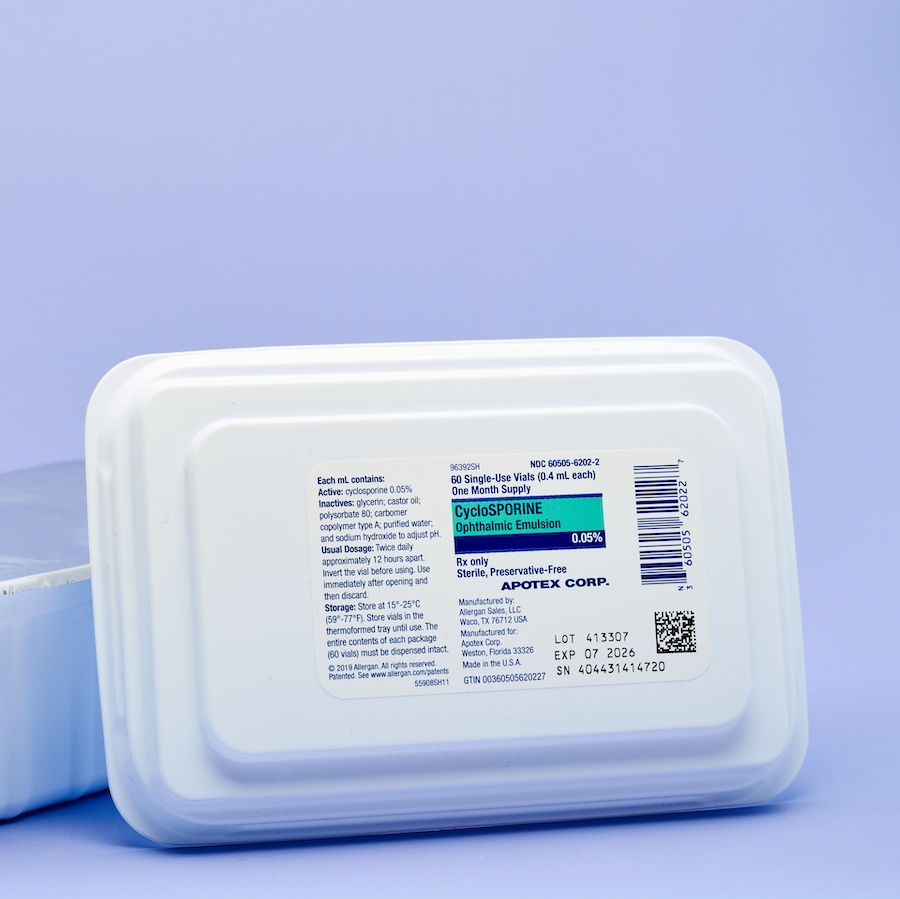
Restasis is an ophthalmic solution administered as an eye drop. Cyclosporine is the active ingredient in Restasis, but the solution does not have the same concentration of the drug and the eye drop is not absorbed at a high systemic rate.
Hydroxychloroquine Tablets
From $59.99
Hydroxychloroquine is the generic for Plaquenil. It is a mild immunomodulator used to manage rheumatoid arthritis and lupus.
Acitretin
Acitretin is a prescription-strength oral retinoid used to treat psoriasis. It reduces skin cell growth and inflammation. Providers may combine cyclosporine and acitretin to control psoriasis flare-ups in the short term and normalize skin growth to prevent inflammation as maintenance. This combination, however, increases the risk of hepatotoxicity and lipid abnormalities, so patients require close monitoring of liver function and cholesterol levels while on both medications.
We Have Cyclosporine in Stock. Get Yours Today!
Important: Information on this page is for educational purposes only. Prescribing decisions are made by independent, licensed providers. TelyRx operates technology-enabled pharmacies and a telehealth platform that connects patients with board-certified licensed providers. Prescriptions, when provider-approved and issued, are filled and shipped by TelyRx-affiliated pharmacies. We do not employ physicians or make prescribing decisions. Learn more about our editorial standards here.