

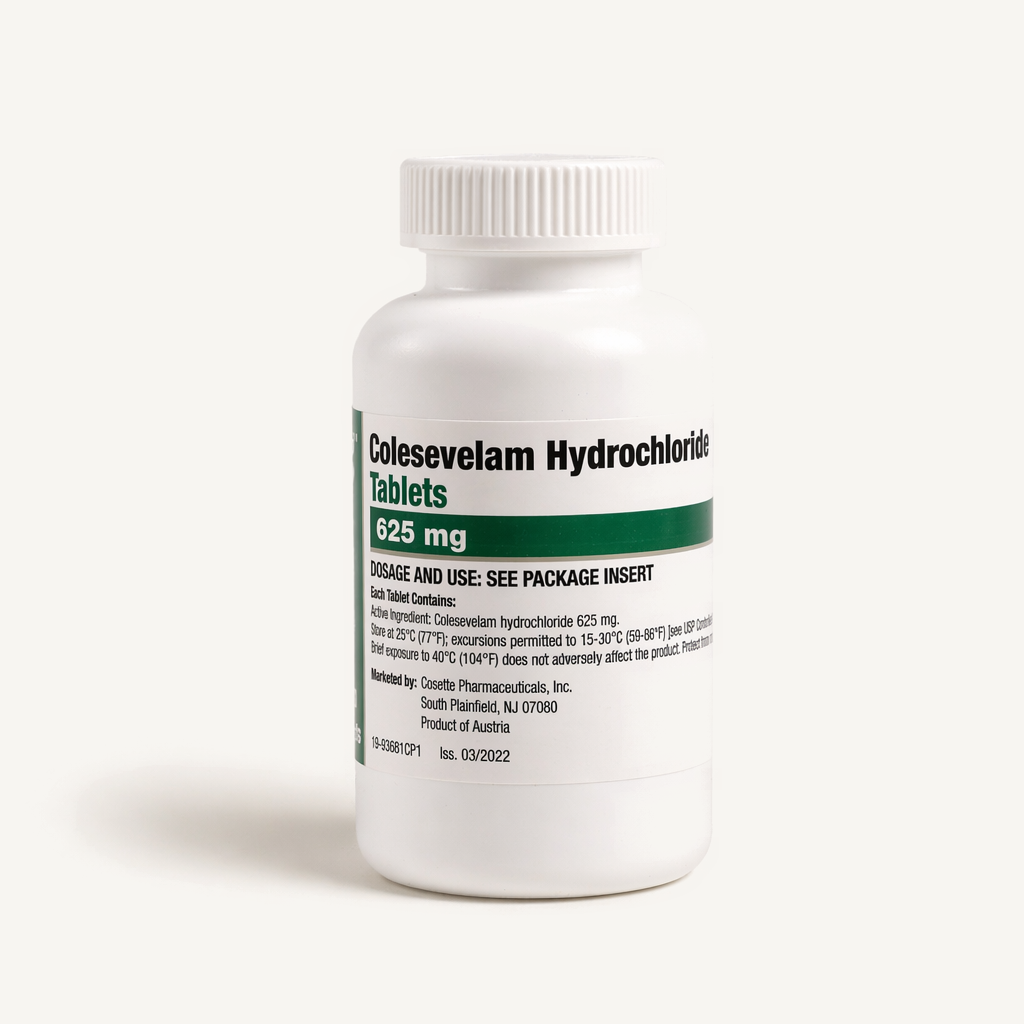
How It Works
Colesevelam works by disrupting the cycle of bile acid production. Bile acids are created in the liver, using cholesterol as a primary building block. The acids are secreted into the intestines to help the body digest and absorb fats from food. Once they have completed their task, bile acids are reabsorbed and returned to the liver for reuse.
By binding to (or sequestering) the bile acids, colesevelam creates a large molecular cluster that is too large for the bloodstream to reabsorb. Instead, the cluster passes through the stool. When the liver senses a shortage in bile acids, cholesterol is pulled out of the bloodstream to produce more acids. This process helps lower the concentration of cholesterol in the patient’s blood.
Colesevelam’s role in managing high blood sugar is less well defined, though current research suggests the drug signals glucagon-like peptide-1 (GLP-1) and other gut peptides. By influencing these pathways, colesevelam helps the body regulate insulin secretion after meals and improves blood sugar levels over time.
| Quick Facts | |
|---|---|
| Common Brands | Welchol |
| Drug Class | Bile acid sequestrant (bile acid resin) |
| Generic Status | Generic version available |
| Availability | Prescription only |
Dosing
Per standard guidelines, colesevelam requires consistency to maintain sufficient levels to sequester bile acid throughout the day. Colesevelam comes as an oral tablet or powder.
- Oral tablets: Standard guidelines suggest a daily dosage of 3.75 grams. Guidelines state that you should swallow the tablets whole.
- Oral suspension: As with the oral tablet, the recommended daily dosage for colesevelam oral suspension is 3.75 grams. Patients can get the dosage they need by mixing one 3.75-gram powder packet once daily. Mix the powder with water, fruit juice, or a diet soft drink.
- Dosage timing: Take each colesevelam dose with a meal and 8 ounces of liquid. This method helps ensure the medication moves through the digestive system and reduces the risk of an upset stomach.
Note: Dosing information below is educational only. Your prescribing physician will determine your specific dose based on your individual health needs. Always follow your healthcare provider’s instructions for exact dosing.
Uses
FDA-Approved Uses
Colesevelam is FDA-approved for the following indications:
- Reducing elevated low-density lipoprotein (LDL) cholesterol in adults with primary hypercholesterolemia as an adjunct to diet and exercise
- Improving glycemic control in adults with type 2 diabetes as an adjunct to diet and exercise
Off-Label Uses
You may see colesevelam prescribed for uses that are not “FDA-approved.” This is a very common and legal practice called “off-label” prescribing, where a doctor uses their clinical judgment to prescribe a drug for a different (but well-researched) purpose.
Common off-label uses for colesevelam currently found in clinical practice and research include:
- Bile acid reabsorption: Doctors may prescribe the drug to patients with chronic diarrhea caused by an excess of bile acids in the colon, which often occurs after gallbladder removal or due to irritable bowel syndrome. The drug can essentially soak up bile acid like a sponge, reducing bowel irritation.
- Post-cholecystectomy syndrome: Colesevelam may be recommended for people who experience frequent, watery stools after having their gallbladder removed.
Side Effects
Colesevelam is not absorbed into the bloodstream, so its side effects are primarily localized within the digestive system.
Common Side Effects
Common side effects from taking include:
- Constipation
- Indigestion and upset stomach
- Nausea
- Runny nose, sore throat, and other respiratory symptoms
- Muscle aches
Serious Side Effects
Serious side effects are rare, but it’s important to know what to look for if they do occur. Serious side effects from taking colesevelam can include:
- Hypertriglyceridemia: In some patients, colesevelam can cause triglyceride levels to increase rather than stabilize. For this reason, providers generally avoid recommending the medication for people whose triglyceride levels are already high.
- Pancreatitis: An excessive spike in triglyceride levels after taking colesevelam can trigger severe pancreatic inflammation. Symptoms include severe abdominal pain that radiates to the back, with or without nausea and vomiting.
- Bowel obstruction: Since the medication creates a bulky mass from binding to bile acid, those with a history of bowel surgery or severe constipation are at a higher risk of developing bowel blockage if they take colesevelam. Symptoms include the inability to pass gas or stool and a hard, swollen abdomen.
- Vitamin deficiency: By binding to bile acids, colesevelam can indirectly interfere with the absorption of fat-soluble vitamins such as vitamins A, D, E, and K.
Call your doctor immediately if you experience any concerning or prolonged symptoms.
Pharmacist Tips
Follow The 4-Hour Rule For Other Medications
Standard guidelines recommend that patients take many other oral medications at least 4 hours before their colesevelam dose. By binding the bile acids in the gut, colesevelam can accidentally trap other medications and prevent them from working properly. Check with your pharmacist or doctor if you are taking other medications.
Hydration Is Key
To reduce the risk of constipation, patients are advised to drink plenty of water throughout the day while taking colesevelam.
Fiber Is Your Friend
Incorporating more fiber into your diet can help your digestive tract functions efficiently while you’re taking colesevelam.
Some Mixers Work Better Than Others
If you are using colesevelam oral powder, mixing with hot liquids or carbonated beverages can produce an unpleasant aftertaste. Many patients find that chilled fruit juice is more palatable because it masks the gritty texture of the powder.
Check the Label
Some forms of colesevelam contain aspartame, which breaks down into the amino acid phenylalanine. People with phenylketonuria are unable to break down phenylalanine, so they should check with their pharmacist to ensure the colesevelam formulation they choose is safe for them to consume.
Drug Interactions
Colesevelam binds to many things it encounters in the intestine. This significantly increases the chances of interaction with other medications. Known interactions with colesevelam include:
- Thyroid medications: Colesevelam can easily bind to levothyroxine and other thyroid hormones. This can lead to hypothyroidism if the doses of these medications are not separated.
- Oral birth control: If taken too close to a colesevelam dose, some oral contraceptives may lose their effectiveness.
- Diabetes medications: Although colesevelam can help manage high blood sugar, it can also interfere with the absorption of diabetes medications like glimepiride and glipizide.
- Blood thinners: Colesevelam can affect levels of blood thinners like warfarin, which may necessitate more frequent blood monitoring from a medical provider.
- Vitamins: Per standard guidelines, you should take multivitamins and supplements containing fat-soluble vitamins at least 4 hours before taking colesevelam. This timing helps your body properly absorb the vitamins.
Always give your doctor and pharmacist a complete list of all your medications, vitamins, and supplements to check for potential interactions.
FAQs
Why did my doctor prescribe a cholesterol drug to help lower my blood sugar for type 2 diabetes?
Colesevelam has a unique dual-action mechanism that makes it effective for both lowering cholesterol and managing high blood sugar in people with type 2 diabetes. The drug’s primary job is to trap bile acids and lower cholesterol, but it also triggers secondary pathways in the gut to help your body manage insulin and glucose more effectively. Colesevelam is FDA-approved for both purposes.
Is there a rule about taking other daily medications apart from colesevelam?
Yes, patients should follow the 4-hour rule when taking colesevelam with other medications. Colesevelam will bind to many different molecules in the gut, including other medications, so waiting 4 hours before taking colesevelam helps ensure that everything is properly absorbed and processed.
Is it true that this drug doesn’t absorb into your bloodstream?
Colesevelam is not absorbed into your bloodstream. The drug is non-systemic and formulated to remain in your digestive tract before being passed in your stool. Because of this, colesevelam does not generally cause side effects like liver or kidney strain.
Do I have to swallow all of these pills at the same time, or can I split them up?
You don’t have to swallow all six colesevelam tablets at once, so splitting them is an option. Many patients choose to take three tablets with their morning meal, then another three with dinner. Consistency from day to day and taking the tablets with food are the two most important factors for colesevelam dosage.
Can I mix the powder packets into hot coffee or a smoothie instead of plain water?
Standard guidelines for mixing colesevelam oral suspension powder call for 8 ounces of water, fruit juice, or a diet soft drink. Smoothies are considered acceptable, but hot coffee — or any hot liquid — could potentially affect the powder’s consistency.
Could colesevelam increase my triglycerides?
Yes, colesevelam can increase triglyceride levels. After prescribing colesevelam, your doctor will monitor your blood work to ensure your triglyceride levels remain within a healthy range.
Does taking this medication cause sudden weight gain?
Weight changes from taking colesevelam are typically negligible. Colesevelam is not associated with the rapid weight gain often seen with steroidal drugs and certain diabetes medications.
Can I still take my daily multivitamins after taking colesevelam?
Per standard guidelines, patients are advised to take their multivitamin at least 4 hours before their colesevelam dose. This helps ensure fat-soluble vitamins are absorbed properly. The “4-hour rule” applies to any other oral medication you take alongside colesevelam.
How long does it actually take for my LDL cholesterol numbers to drop on a blood test?
Colesevelam begins working in the gut immediately, but people generally begin to notice changes to their LDL count after 4 to 6 weeks of continuous use.
Comparable Medications
Colesevelam, Cholestyramine, Atorvastatin, Ezetimibe, or Loperamide?
Colesevelam is a bile acid sequestrant primarily used to lower LDL levels in people with high cholesterol and manage high blood sugar for people with type 2 diabetes. Depending on factors such as your medical history, your doctor may recommend this drug or another medication. Alternatives to colesevelam include:
Cholestyramine
Cholestyramine, sold under the brand name Questran, is a bile acid sequestrant like colesevelam. It typically comes in powder form, and patients have complained about its gritty texture and unpleasant taste. Colesevelam also comes in tablet form for people who dislike taking powder medications. It is also newer than cholestyramine and has a lower risk of drug interactions compared to older bile acid sequestrants.
Atorvastatin
From $26.99
Sold under the brand name Lipitor, atorvastatin is a statin medication that works by blocking the liver from producing cholesterol. Statin medicines like atorvastatin are typically more effective at lowering LDL levels than colesevelam. However, many patients cannot tolerate statin medications due to muscle pain or liver concerns. Colesevelam may be a gentler, non-systemic alternative option.
Ezetimibe
From $24.99
Ezetimibe works by blocking the intestinal absorption of cholesterol from food you eat. Both ezetimibe and colesevelam work in the gut, but the former targets dietary cholesterol while the latter targets bile acids produced within the liver. Due to these differing mechanisms, providers may prescribe both drugs together to attack high cholesterol from two distinct angles.
Loperamide
Loperamide, sold under the brand name Imodium, is an anti-diarrheal medication that works by slowing intestinal motility. Colesevelam may be prescribed off-label for diarrhea because it soaks up irritating bile acids. Loperamide may be recommended more often for diarrhea. Still, providers often prefer colesevelam for diarrhea caused by bile acid malabsorption, which is especially common after a patient has their gallbladder removed.
We Have Colesevelam in Stock. Get Yours Today!
Important: Information on this page is for educational purposes only. Prescribing decisions are made by independent, licensed providers. TelyRx operates technology-enabled pharmacies and a telehealth platform that connects patients with licensed providers. Prescriptions, when provider-approved and issued, are filled and shipped by TelyRx-affiliated pharmacies. We do not employ physicians or make prescribing decisions. Learn more about our editorial standards here.