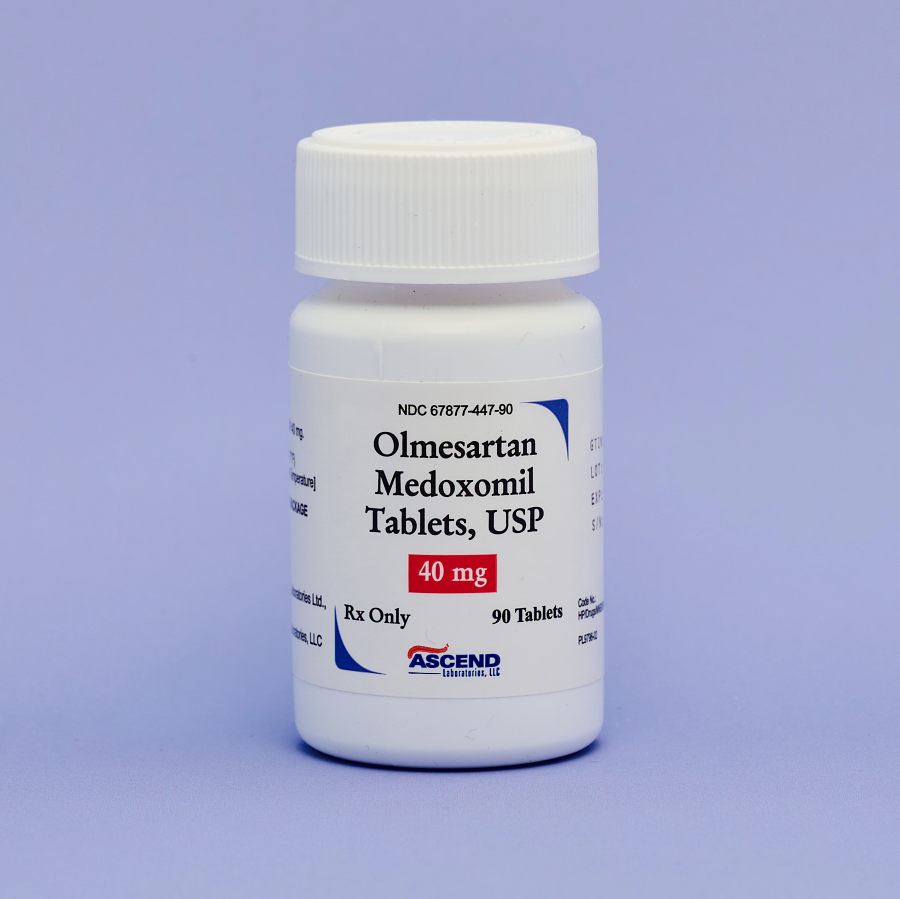
How It Works
Olmesartan works by blocking angiotensin II, a hormone that binds to receptors in the blood vessels and causes them to narrow. By preventing angiotensin II from binding to these receptors, olmesartan helps the blood vessels relax and widen.
This allows blood to flow more freely and decreases the amount of work the heart has to do to pump blood throughout the body.
| Quick Facts | |
|---|---|
| Common Brands | Benicar |
| Drug Class | Angiotensin II receptor blocker (ARB) |
| Generic Status | Generic for Benicar |
| Availability | Prescription only |
Dosing
Olmesartan comes in three dosage strengths:
- 5 mg
- 20 mg
- 40 mg
The recommended starting dose is 20 mg taken by mouth once daily. Your healthcare provider may adjust this dose after two weeks based on your blood pressure response. The maximum recommended dose is 40 mg once daily.
Note: Dosing information is educational only. Your prescribing physician will determine your specific dose based on your individual health needs. Always follow your healthcare provider’s instructions for exact dosing.
Uses
FDA-Approved Uses
Olmesartan is FDA-approved for treating high blood pressure (hypertension).
Off-Label Uses
You may see olmesartan prescribed for uses that are not “FDA approved.” This is a common and legal practice called “off-label” prescribing, where a doctor uses their clinical judgment to prescribe a drug for a different (but well-researched) purpose.
Health providers may prescribe olmesartan tablets for the following off-label uses:
- Heart failure
- Reducing cardiovascular risk after a heart attack
- Managing kidney problems associated with hypertension and type 2 diabetes
Get Savings Updates for Olmesartan
Join our mailing list for exclusive deals and more.
Side Effects
Like all medications, olmesartan can cause side effects. Some common side effects may improve over time as your body adjusts to the medication. Other side effects may be serious and require medical attention.
Common Side Effects
- Dizziness
- Diarrhea
- Vomiting
- Back pain
- Rash
- Stomach pain
- Weakness
- Fever
- Headache
- Decreased urine output
- Facial swelling
- Heartburn
Serious Side Effects
Serious side effects are rare, but it’s important to know what to look for if they do occur. Stop using olmesartan and call your doctor immediately if you experience:
- Severe allergic reactions: Symptoms include swelling of the face, lips, tongue, or throat; difficulty breathing or swallowing; racing heart; severe rash or itching; and/or fever.
- Hypotension (low blood pressure): Olmesartan may cause blood pressure to drop too low. The risk is higher in people who are dehydrated or taking diuretics (water pills). Symptoms include dizziness, fainting, lightheadedness, or weakness.
- Kidney damage: Symptoms include a reduced need to urinate, weakness, shortness of breath, confusion, nausea, seizures, and swelling in the feet, ankles, or legs.
- Hyperkalemia (high potassium levels): Olmesartan may cause high blood potassium levels, which can become life-threatening. Symptoms include muscle weakness, unusual tiredness, slow or irregular heartbeat, nausea, and difficulty breathing.
- Severe diarrhea (sprue-like enteropathy): This rare but serious reaction can occur months or years after starting olmesartan. Symptoms include severe and persistent diarrhea (10-20 times daily), weight loss, weakness, dizziness, and fever.
Call your doctor immediately if you experience any concerning or prolonged symptoms.
Pharmacist Tips
Manage Dizziness
You might feel dizzy when you start taking olmesartan or when your dose is increased. This usually gets better over time as your body gets used to the medication. If you feel faint or dizzy, sit down slowly while holding onto something.
Monitor Blood Pressure At Home
It is recommended to regularly measure and log your blood pressure at home and bring a record to medical appointments.
Keep Up With Bloodwork
Your provider may order blood tests to check your potassium levels and kidney function during treatment.
Stay Hydrated
Olmesartan can cause low blood pressure in people with low levels of fluids.
Adopt A Low-Sodium Diet
Eating a balanced, low-salt diet can help lower blood pressure.
Take Pregnancy Precautions
This medication should not be used during pregnancy because it can cause severe harm or death to the unborn baby. If you plan to become pregnant, discuss safer options with your provider. If you become pregnant while taking olmesartan, contact your health provider immediately.
Know What To Do If You Miss A Dose
If you miss a dose of olmesartan, take it as soon as you remember unless it’s almost time for your next dose. In that case, skip the missed dose and take your next dose as scheduled. Do not double up on doses of olmesartan.
Drug Interactions
Certain medications and substances can interact with olmesartan, potentially altering how it works or increasing the risk of side effects. For example:
- NSAIDs (nonsteroidal anti-inflammatory drugs): Pain relievers like ibuprofen, naproxen, and celecoxib may interact with olmesartan and affect kidney function.
- Diuretics (water pills): Taking diuretics, specifically triamterene, spironolactone, or amiloride, may increase the risk of low blood pressure or electrolyte imbalances.
- Potassium salts or supplements: Olmesartan can raise potassium levels. Combining it with potassium salts, supplements, or salt substitutes increases the risk of dangerously high potassium levels.
- Lithium: This depression medication may interact with olmesartan.
- Aliskiren (Tekturna): This blood pressure medicine should not be taken with olmesartan if you have diabetes.
- Other blood pressure medications: Taking angiotensin-converting enzyme (ACE) inhibitors or angiotensin II receptor blockers (ARBs) alongside olmesartan is generally not recommended.
Always give your doctor and pharmacist a complete list of all your medications, vitamins, and supplements to check for potential interactions.
FAQs
Is olmesartan stronger than Losartan or Valsartan?
Olmesartan, losartan, and valsartan are all angiotensin II receptor blockers (ARBs) used to treat high blood pressure. Studies show that olmesartan can be more effective at lowering blood pressure, but your healthcare provider may prescribe losartan or valsartan instead based on your health situation or other medications you’re taking.
Can I take olmesartan with food, or must it be on an empty stomach?
You can take olmesartan with or without food. If the medication upsets your stomach, taking it with food may help.
Why is olmesartan dangerous to take during pregnancy?
Olmesartan acts on the body’s renin-angiotensin system and can cause death or serious harm to an unborn baby if taken during pregnancy. If you become pregnant, stop taking it immediately and contact your healthcare provider.
Can I take ibuprofen or naproxen with olmesartan?
It is generally recommended to avoid non-steroidal anti-inflammatory drugs (NSAIDs) such as ibuprofen and naproxen while taking olmesartan unless your provider specifically tells you it is safe. Taking them together can lead to kidney issues.
Why do I need to avoid salt substitutes while taking this drug?
Many salt substitutes contain potassium. Olmesartan can raise potassium levels (hyperkalemia), so using these substitutes at the same time can lead to dangerously high potassium levels, which can cause heart rhythm problems.
Is it safe to drink alcohol while taking olmesartan?
It is unknown if drinking alcohol directly affects olmesartan, but alcohol may increase the risk of dizziness while taking this medication.
How long does it take for olmesartan to lower my blood pressure?
You may see an initial effect in hours, but it typically takes about two weeks to see the full benefits of olmesartan. Your provider might adjust your dose if your blood pressure is still too high after two weeks.
What is the difference between Benicar and Benicar HCT?
Benicar contains only olmesartan, while Benicar HCT is a combination medication that contains olmesartan and hydrochlorothiazide. Hydrochlorothiazide is a diuretic (water pill) used to help reduce fluid retention.
Does olmesartan cause a dry cough like lisinopril?
A dry cough is not listed as a common side effect of olmesartan. It is more common with ACE inhibitors like lisinopril.
What happens if I miss a dose?
If you miss a dose of olmesartan, take it as soon as you remember. However, if it is almost time for your next dose, skip the missed dose and take only the next regularly scheduled dose. Do not take double or extra doses of olmesartan.
Is olmesartan safe for people with diabetes?
Olmesartan interacts with the drug aliskiren, and the two should not be taken together if you have diabetes. Share your full medical history with your provider so they can determine if olmesartan is safe for you.
Does olmesartan interact with lithium?
Yes, olmesartan interacts with lithium, a medicine used to treat depression and mental health conditions.
Can I stop taking olmesartan suddenly?
You should not suddenly stop taking the medication without talking to your provider first. Doing so can cause your blood pressure to rise too quickly. Your provider may instead lower the dose slowly over time.
What foods should I avoid with olmesartan?
There are no known interactions between olmesartan and foods or drinks. However, if you eat a lot of potassium-rich foods like bananas, your provider may recommend limiting those foods to avoid high potassium levels.
Comparable Medications
Olmesartan, Losartan (Cozaar), Valsartan (Diovan), Irbesartan (Avapro), Benicar HCT (Olmesartan + Hydrochlorothiazide), Azor (Olmesartan + Amlodipine), Lisinopril (Zestril), or Ramipril (Altace)?
There are several medications that your doctor can prescribe in place of olmesartan. Here are a few possible alternatives below.
Losartan
From $22.99
Also known as the brand name Cozaar. An angiotensin II receptor blocker (ARB) used to treat high blood pressure, reduce the risk of stroke in people with high blood pressure and left ventricular hypertrophy, and slow kidney decline in people with diabetic nephropathy.
Valsartan
From $24.99
Also known as the brand name Diovan. An angiotensin II receptor blocker (ARB) used to treat high blood pressure, reduce the need for hospitalization due to heart failure, and lower the risk of death after a heart attack.
Irbesartan
From $24.99
Also known as the brand name Avapro. An angiotensin II receptor blocker (ARB) used to treat high blood pressure and kidney problems due to type 2 diabetes.
Olmesartan / Hydrochlorothiazide Tablets
From $32.99
Also known as the brand name Benicar HCT. A medication that combines olmesartan with a diuretic (water pill) called hydrochlorothiazide to treat high blood pressure.
Amlodipine/Olmesartan Tablets
From $27.99
Also known as the brand name Azor. This is a combination calcium channel blocker and angiotensin receptor blocker (ARB) used to treat high blood pressure.
Lisinopril
From $22.99
Also known as the brand name Lisinopril. An angiotensin-converting enzyme (ACE) inhibitor used to treat high blood pressure and congestive heart failure. It may also lower the risk of death after a heart attack.
Ramipril Capsules
From $24.99
Also known as the brand name Altace. An angiotensin-converting enzyme (ACE) inhibitor used to treat high blood pressure and congestive heart failure.
We Have Olmesartan in Stock. Get Yours Today!
Important: Information on this page is for educational purposes only. Prescribing decisions are made by independent, licensed providers. TelyRx operates technology-enabled pharmacies and a telehealth platform that connects patients with board-certified licensed providers. Prescriptions, when provider-approved and issued, are filled and shipped by TelyRx-affiliated pharmacies. We do not employ physicians or make prescribing decisions. Learn more about our editorial standards here.