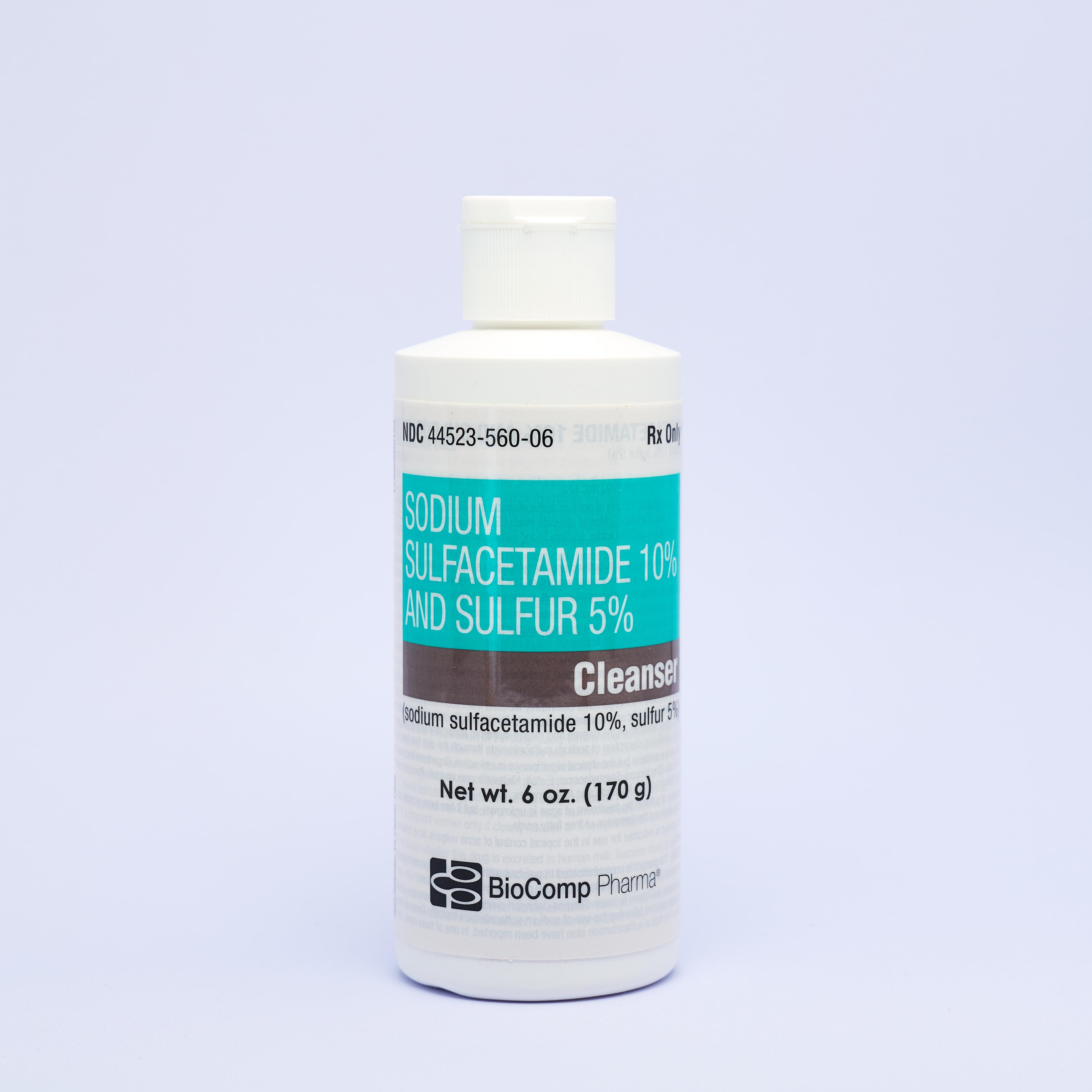
How It Works
Sulfacetamide and sulfur topical cleanser works on two different levels:
- Sulfacetamide sodium: This antibiotic component interferes with bacteria’s ability to produce folic acid, a nutrient bacteria need to grow and multiply. By curbing the growth of Cutibacterium acnes – the bacteria responsible for acne – and other surface-level microbes, the sulfacetamide sodium reduces the infection and subsequent inflammation.
- Sulfur: The sulfur is keratolytic, meaning it breaks down the keratin protein that binds dead skin cells together. This can help skin shed more effectively and prevent clogged pores. Sulfur also has antifungal properties, so the cleanser may help treat conditions like seborrheic dermatitis and pityrosporum folliculitis.
The combination of sulfacetamide and sulfur can also constrict red blood vessels and reduce the flushing associated with rosacea.
| Quick Facts | |
|---|---|
| Common Brands | Plexion, Avar, Sumaxin, Clenia Plus |
| Drug Class | Sulfonamide antibiotic / keratolytic agent |
| Generic Status | Generic for Plexion, Avar, Sumaxin, Clenia Plus |
| Availability | Prescription only |
Dosing
When using sulfacetamide and sulfur topical cleanser, standard guidelines caution that the technique of application is just as crucial as the frequency.
- Preparation: It is advised to vigorously shake the bottle before each application. This helps evenly distribute all of the contents.
- Application: It is recommended to apply the cleanser to damp skin, then gently massage the affected area for 10 to 20 seconds.
- Contact time: Per standard guidelines, patients should leave the cleanser on their skin for 1 to 2 minutes before rinsing it off. This allows the sulfacetamide to penetrate the pores.
- Rinsing: It is advised to rinse off the cleanser with warm water, then pat the skin dry with a soft towel. Rubbing the skin can exacerbate redness for rosacea patients.
- Frequency: Defer to your provider’s instructions, but the cleanser is typically used once or twice a day.
Note: Dosing information is educational only. Your prescribing physician will determine your specific dose based on your individual health needs. Always follow your healthcare provider’s instructions for exact dosing.
Uses
FDA-Approved Uses
Sulfacetamide and sulfur topical cleanser is FDA-approved for the topical control of acne vulgaris, and to reduce the redness, bumps, and pustules associated with rosacea. The medication is also FDA-approved to manage scaling and itching in the face, scalp, and torso caused by seborrheic dermatitis.
Off-Label Uses
You may see sulfacetamide and sulfur topical cleanser prescribed for uses that are not “FDA-approved.” This is a common and legal practice called “off-label” prescribing, where a doctor uses their clinical judgment to prescribe a drug for a different (but well-researched) purpose.
Common off-label uses for sulfacetamide and sulfur topical cleanser currently found in clinical research and practice include:
- Pitysporum folliculitis: Commonly known as “fungal acne,” this condition refers to an overgrowth of yeast in the hair follicles. Sulfacetamide and sulfur topical cleanser has antifungal properties that may help treat the itchy, uniform bumps associated with this condition.
- Perioral dermatitis: When used in a diluted or limited capacity, sulfacetamide and sulfur topical cleanser may be effective at treating perioral dermatitis, which causes rashes to appear around the mouth.
- Tinea versicolor: The antifungal properties of sulfur within sulfacetamide and sulfur topical cleanser can help treat tinea versicolor, a fungal condition that causes skin discolorations.
Get Savings Updates for Sulfacetamide and Sulfur Topical Cleanser
Join our mailing list for exclusive deals and more.
Side Effects
Topical sulfacetamide and sulfur cleanser is generally tolerated well, and most side effects are localized to the treatment area, However, the cleanser’s keratolytic qualities can mean surface-level changes.
Common Side Effects
- Dry, flaking, or peeling skin
- Mild stinging or burning sensation
- Redness in the skin
- Rotten egg smell on the skin
Serious Side Effects
Serious side effects are rare, but it’s important to know what to look for if they do occur. Serious side effects from using sulfacetamide and sulfur topical cleanser can include:
- Stevens-Johnson syndrome (SJS): It is rare for patients to develop SJS from using sulfacetamide and sulfur cleansers and other sulfa topicals. That said, it is advised to contact your doctor if you notice symptoms like a blistering rash or peeling skin.
- Lupus-like syndrome: Sulfacetamide and sulfur topical cleansers may cause lupus-like symptoms, including an unusual fever or a “butterfly” rash across the nose and cheeks. It is advised to contact your doctor immediately if you notice these symptoms after using the cleanser.
- Blood disorders: While designed for surface-level cleansing, this medication could potentially cause a blood disorder if it is absorbed systemically. This can lead to symptoms like bruising and fatigue.
- Severe allergic reaction: Sulfacetamide and sulfur topical cleansers can cause anaphylaxis in people who are allergic to one or more of the drug’s ingredients.
Call your doctor immediately if you experience any concerning or prolonged symptoms.
Pharmacist Tips
Take Off Jewelry
Sulfur reacts with silver and some gold alloys, which can cause metal parts in jewelry to turn black. It is recommended to remove all rings and necklaces before applying the cleanser.
Remember To Shake
Shaking the bottle of sulfacetamide and sulfur cleanser is crucial for distributing all of the contents equally. Not shaking beforehand can leave inactive soap on top and harsher sulfur paste at the bottom.
Take Caution In The Sun
Sulfacetamide and sulfur cleanser won’t cause sun sensitivity to the same extent as some other topicals, but your skin may still be more vulnerable to UV damage. SPF 30+ sun protection is recommended daily.
Double-Check Your Linens
Sulfacetamide and sulfur topical cleanser does not bleach fabric in clothing or bedding, but it can leave behind a yellow residue. This typically washes out in a regular laundry cycle.
Avoid “Over-Cleansing”
The cleanser can cause skin dryness, especially when overused. If this becomes a problem, your provider may recommend applying the cleanser every other day until your skin adjusts.
Drug Interactions
Systemic absorption for sulfacetamide and sulfur topical cleanser is low, but localized skin interactions can occur. Known interactions with the cleanser include:
- Products containing silver: It is advised not to use this cleanser if you already use topical products that contain silver, which interacts with sulfur. This can cause a temporary dark stain on the skin.
- Other skin products: Using sulfacetamide and sulfur topical cleanser with other products such as salicylic acid, glycolic acid, and benzoyl peroxide can cause the skin to become extremely dry or compromise the skin barrier.
- Vitamin C: Using vitamin C serums immediately after applying sulfacetamide and sulfur cleanser can produce a temporary metallic smell or irritation. It is recommended to use these products at different times of the day.
Always give your doctor and pharmacist a complete list of all your medications, vitamins, and supplements to check for potential interactions.
FAQs
Do sulfacetamide and sulfur cleansers bleach towels or clothes like benzoyl peroxide does?
No, sulfacetamide and sulfur cleansers do not bleach towels like benzoyl peroxide does. However, you may notice a yellow residue on your clothing or bedding. This should come out with a normal laundry cycle.
Can I use this cleanser if I am allergic to “sulfa” drugs (like Bactrim)?
Standard guidelines state that people with a known sulfa allergy should avoid this cleanser because cross-reactivity can occur.
Why do I have to shake the bottle vigorously before every use?
Shaking your sulfacetamide and sulfur cleanser bottle vigorously before every use helps to evenly distribute all of the contents.
Are sulfacetamide and sulfur topical cleansers safe to use during pregnancy?
Sulfacetamide and sulfur topical cleansers are classified as “unknown” when it comes to safe use for pregnant people. Systemic absorption is low, but consult with your OB/GYN or healthcare provider before using this cleanser at any stage of your pregnancy.
Does this cleanser work for cystic acne?
Sulfacetamide and sulfur cleansers are less effective for treating cystic acne, which may require oral antibiotics or isotretinoin for systemic treatment.
Can I use a toner or moisturizer with salicylic acid after washing with sulfacetamide/sulfur?
Yes, you can use a toner or moisturizer with salicylic acid after washing with sulfacetamide and sulfur cleanser. However, it is advised to take caution because layering multiple active topicals can increase the risk of dryness and irritation.
Why did my silver/gold jewelry tarnish after I used this wash?
Sulfur is reactive with metals, including silver and some gold alloys commonly used in jewelry. This causes a dark tarnish on the jewelry that may require professional cleaning to remove. You can avoid this problem by removing all jewelry before applying the cleanser.
How long should I leave the lather on my face before rinsing?
Per standard guidelines, patients should rub sulfacetamide and sulfur cleanser into the affected areas of their skin for 10 to 20 seconds, then let the cleanser sit for 1 to 2 minutes before rinsing it off with warm water.
Can I use this wash on my chest and back?
Yes, you can use sulfacetamide and sulfur cleanser on your chest and back. The topical is considered effective against back acne and seborrheic dermatitis on the torso.
Can I use this cleanser every day?
Yes, you can use sulfacetamide and sulfur topical cleanser every day. Your provider may direct you to apply the cleanser once or twice daily, but it is advised to monitor for excessive dryness.
Does this medication kill the “good” bacteria on my skin?
Sulfacetamide and sulfur topical cleanser is a broad-spectrum medication and may affect the skin’s microbiome.
Can I use makeup immediately after washing my face with sulfacetamide/sulfur?
Per standard guidelines, it is not advised to apply makeup immediately after washing sulfacetamide and sulfur cleanser off of your face. The medication needs time to dry and be absorbed into the skin to work properly and makeup may interfere with this process.
Does this help with fungal acne (pityrosporum folliculitis)?
Yes, sulfacetamide and sulfur cleanser can help with fungal acne. Sulfur has antifungal properties and this cleanser is a common treatment for pityrosporum folliculitis.
Comparable Medications
Sulfacetamide and Sulfur Topical Cleanser, Plexion, Sumaxin, Benzoyl Peroxide, Salicylic Acid, Metronidazole, or Ketoconazole?
Sulfacetamide and sulfur topical cleanser uses keratolytic, antibiotic, and antifungal components to target conditions like rosacea, acne vulgaris, and seborrheic dermatitis. Other topical medications are available, and your doctor may recommend an alternative to sulfacetamide and sulfur cleanser based on your symptoms and medical history. These alternatives include:
Plexion and Sumaxin are brand name versions of generic sulfacetamide and sulfur topical cleanser.
Benzoyl Peroxide Topical Wash
From $34.99
Benzoyl peroxide is a medication that is effective at killing bacteria that causes acne, but can also lead to dry skin and bleaching of fabrics.
Salicylic Acid Topical Solution
From $99.99
Salicylic acid is a beta hydroxy acid (BHA) primarily used to remove grease and dissolve oil from the skin. Salicylic acid is also keratolytic, but does not have antifungal properties.
Metronidazole Topical
From $49.99
Metronidazole is an antibiotic and antiprotozoal topical primarily used to treat rosacea. Providers may prescribe a combination of using a sulfacetamide and sulfur cleanser and metronidazole applied as a "leave-on" cream.
Ketoconazole Cream
From $29.89
Ketoconazole is an antifungal medication sold under the brand name Nizoral. It is typically used to treat conditions caused by yeast overgrowth.
We Have Sulfacetamide and Sulfur Topical Cleanser in Stock. Get Yours Today!
Important: Information on this page is for educational purposes only. Prescribing decisions are made by independent, licensed providers. TelyRx operates technology-enabled pharmacies and a telehealth platform that connects patients with board-certified licensed providers. Prescriptions, when provider-approved and issued, are filled and shipped by TelyRx-affiliated pharmacies. We do not employ physicians or make prescribing decisions. Learn more about our editorial standards here.