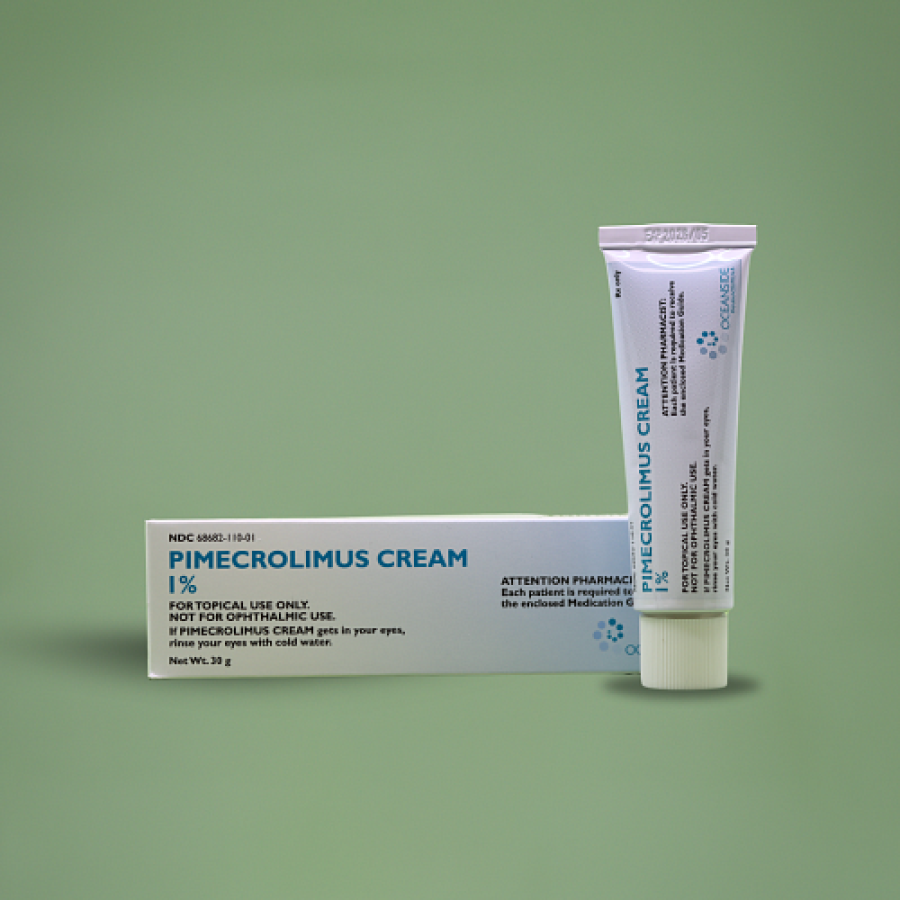
How It Works
Pimecrolimus cream works by suppressing an overactive immune system response on the skin. In people with eczema, immune cells called T-cells become hypersensitive to environmental triggers. These cells then release chemicals that cause the redness, swelling, and intense itching associated with eczema flare-ups.
Within the T-cells, pimecrolimus binds to a protein called macrophilin-12. This inhibits the calcineurin enzymes that direct T-cells to produce inflammatory chemicals. Pimecrolimus generally does not interfere with collagen synthesis or lead to skin atrophy (skin thinning), so it is commonly prescribed to treat eczema in sensitive areas.
| Quick Facts | |
|---|---|
| Common Brands | Elidel |
| Drug Class | Topical calcineurin inhibitor; immunomodulator |
| Generic Status | Generic version available |
| Availability | Prescription only |
Dosing
Pimecrolimus is intended for targeted application. Since this medication works by suppressing an immune system response, the “less is more” rule applies when determining how much cream to use. Providers generally recommend the smallest amount needed to cover the affected area.
- Frequency: Patients typically apply the cream in a thin layer twice daily.
- Duration: Doctors generally recommend continuing therapy until the eczema clears up. If symptoms do not improve after 6 weeks, they may recommend a clinical reassessment.
- Intermittent use: For people with chronic eczema, providers may suggest using the cream any time patients notice redness, itching, and other signs of a flare-up. This can help prevent full breakouts.
- Administration: Standard guidelines state patients should clean and dry the affected area of skin prior to application. It is advised to thoroughly wash hands after using the cream unless the hands are part of the treated area.
Note: Dosing information below is educational only. Your prescribing physician will determine your specific dose based on your individual health needs. Always follow your healthcare provider’s instructions for exact dosing.
Uses
FDA-Approved Uses
Pimecrolimus cream is FDA-approved to treat atopic dermatitis, or eczema. It is approved for mild-to-moderate cases in non-immunocompromised patients.
Off-Label Uses
You may see pimecrolimus cream prescribed for uses that are not “FDA-approved.” This is a common and legal practice called “off-label” prescribing, where a doctor uses clinical judgment to prescribe a drug for an alternative medical purpose.
Common off-label uses for pimecrolimus cream in clinical practice and research include:
- Facial psoriasis: Pimecrolimus is not a primary treatment for plaque psoriasis, but the drug may be used for “inverse psoriasis” in skin folds, on the face, or in other areas where it may not be safe to apply steroidal cream.
- Rosacea: Some research suggests pimecrolimus cream can help reduce the inflammatory bumps and redness associated with rosacea.
- Seborrheic dermatitis: Doctors may prescribe pimecrolimus cream off-label to adults with facial scaling from seborrheic dermatitis.
- Vitiligo: Providers may recommend pimecrolimus cream to treat vitiligo by promoting repigmentation in combination with light therapy.
Get Savings Updates for Pimecrolimus Cream
Join our mailing list for exclusive deals and more.
Side Effects
Common Side Effects
Side effects from using pimecrolimus cream can be localized or systemic in nature. Common side effects include:
- Warm, burning, or stinging sensation at the application site
- Headache
- Sore throat, cough, sinus congestion, and other cold symptoms
- Fever
Serious Side Effects
Serious side effects are rare, but it’s important to know what to look for if they do occur. Serious side effects from using pimecrolimus cream can include:
- Skin cancer and lymphoma: While researchers have not established a direct link, pimecrolimus cream comes with a “black box” warning about the drug’s potential link to skin cancer and lymphoma. Standard guidelines caution against using the cream year-round and advise vigilance about sun protection.
- Lymphadenopathy: Per standard guidelines, patients who use pimecrolimus cream and experience swollen lymph nodes are advised to contact their provider immediately.
- Secondary infection: Pimecrolimus cream localizes the body’s immune response, which can make patients more susceptible to viral infections.
- Severe allergic reaction: As with many types of medication, pimecrolimus cream can trigger anaphylaxis in people who are allergic to one or more of the drug’s ingredients.
Call your doctor immediately if you experience any concerning or prolonged symptoms.
Pharmacist Tips
Expect The Sting
A burning or stinging sensation is one of pimecrolimus cream’s most common side effects, especially during the first 5 days of treatment. This typically subsides as the skin barrier heals. Some patients find that chilling the cream in their refrigerator (per storage instructions) can help with unpleasant sensations.
Layer With Moisturizer
Per standard guidelines, patients are advised to apply a daily moisturizer roughly 15 to 30 minutes after using pimecrolimus cream. This allows sufficient time for your skin to absorb the medication.
Protect Your Skin
Pimecrolimus can increase photosensitivity and risk of sunburn. People who use the cream are advised to avoid tanning beds, limit sun exposure, and wear protective clothing over treated areas when outside.
Be Aware Of The Drinking Flush
Some people who use pimecrolimus cream report that consuming alcohol can make the treated skin red, flushed, or hot. This is a known reaction, but it is generally considered harmless.
Avoid Bandages
Covering the treated areas of skin with a bandage, wrap, or plastic dressing can lead to overabsorption in the skin. It is recommended to let the skin air out after applying the cream.
Drug Interactions
Pimecrolimus cream’s systemic absorption is low, but it may still interact with other medications and topical creams. Known interactions with pimecrolimus cream include:
- Topical steroids: It is not recommended to use pimecrolimus cream and topical steroid medication on the same areas unless instructed to do so by your provider, as this increases the risk of skin irritation.
- CYP3A4 inhibitors: Erythromycin, itraconazole, calcium channel blockers used to treat high blood pressure, and other medications that inhibit CYP3A4 enzymes can interfere with how your body absorbs pimecrolimus cream.
- Light therapy: If you are undergoing UVA or UVB phototherapy, it is recommended to speak to your dermatologist before you start using pimecrolimus cream.
Always give your doctor and pharmacist a complete list of all your medications, vitamins, and supplements to check for potential interactions.
FAQs
Why does this cream burn or sting when I first put it on?
Pimecrolimus cream stings or burns when you first put it on due to a reaction from your inflamed skin barrier. This is a common side effect when treatment begins, and it typically subsides within 3 to 5 days.
Is it safe to use this cream on my eyelids, face, and groin?
Yes, pimecrolimus cream is generally considered safe to use on the eyelids, face, and groin. A primary benefit of this medication is that it can be applied to sensitive areas of skin where topical steroids are usually discouraged.
Can I go out in the sun after applying pimecrolimus?
Per standard guidelines, people who use pimecrolimus cream should limit their sun exposure because the drug can increase photosensitivity. High-SPF sunscreen and protective clothing are recommended.
How is pimecrolimus different from tacrolimus (Protopic)?
Pimecrolimus cream is different from tacrolimus ointment in terms of active ingredient and texture. Pimecrolimus cream tends to be lighter and tacrolimus ointment tends to be greasier. Pimecrolimus is primarily used to treat mild-to-moderate eczema symptoms, while tacrolimus is commonly used for moderate-to-severe cases.
Do I apply my daily moisturizer before or after the pimecrolimus cream?
Standard guidelines advise applying pimecrolimus first, then your daily moisturizer 15 to 30 minutes later. This allows enough time for your skin to absorb the medication.
How long do I have to use it before the burning sensation stops?
Results vary by patient, but people who use pimecrolimus cream typically find that the burning and stinging sensations subside within a week of beginning treatment.
Is it safe to use pimecrolimus every single day for months at a time?
Standard guidelines for pimecrolimus cream advise against daily long-term use. For this reason, providers often suggest using the cream intermittently, beginning when flare-ups start and ending when the skin is clear.
Can I cover the treated area with a bandage or wrap?
Covering the treated area with a bandage or wrap is not advised, as this can cause your skin to absorb too much of the medication and increase your risk of side effects. Leaving the area uncovered is recommended, though patients can use daily moisturizer on treated areas 15 to 30 minutes after pimecrolimus cream has been applied.
Why did my eczema flare up again immediately after I stopped using it?
Eczema flare-ups are common after you stop using pimecrolimus cream because atopic dermatitis is a long-term condition. The cream manages your symptoms, but it does not cure the eczema.
Can I use pimecrolimus if I have an active cold sore or skin infection?
No, it is not advised to use pimecrolimus if you have an active cold sore or skin infection. When pimecrolimus is used, it can suppress the local immune response and allow viruses or bacteria to replicate more easily.
Does this cream work for psoriasis?
Pimecrolimus is not FDA-approved to treat psoriasis. However, the cream is prescribed off-label to treat psoriasis on the face or in skin folds because topical steroids may be too harsh for these areas.
Can I use pimecrolimus while pregnant or breastfeeding?
The effects of pimecrolimus on pregnant patients have not been extensively studied, so risk cannot be ruled out. For breastfeeding patients, it is advised to avoid applying the cream on areas around the breast where an infant could accidentally ingest it. Talk to your provider or OB/GYN about whether pimecrolimus cream is right for you.
Comparable Medications
Pimecrolimus Cream, Tacrolimus, Hydrocortisone, Triamcinolone, or Crisaborole?
Pimecrolimus cream is a topical medication primarily used to treat mild-to-moderate eczema. It does not contain steroids and is gentler on sensitive areas, such as the face and skin folds. However, your doctor may recommend an alternative to pimecrolimus cream based on your medical history and the nature of your symptoms. Pimecrolimus cream alternatives include:
Tacrolimus Ointment
From $79.99
Sold under the brand name Protopic, tacrolimus is a topical ointment that acts as a calcineurin inhibitor. It is stronger than pimecrolimus cream and is primarily used to treat moderate-to-severe eczema symptoms.
Hydrocortisone Ointment
From $23.99
A mild steroid sold under the brand name Cortizone-10, hydrocortisone is an over-the-counter treatment option for skin conditions but is known to cause skin-thinning with long-term use. Doctors commonly prescribe the drug to treat conditions that have not responded to over-the-counter steroidal medications like hydrocortisone.
Triamcinolone
From $24.99
Triamcinolone, available under the brand name Kenalog, is a potent steroid that is used to suppress eczema flare-ups. Due to the drug's strength, patients are not advised to use it for long periods. Providers often recommend pimecrolimus cream as maintenance therapy after triamcinolone has cleared the initial flare-up.
Crisaborole
Crisaborole is a steroidal cream sold under the brand name Eucrisa. It treats skin conditions by inhibiting PDE4 enzymes. This makes crisaborole a potential alternative for patients who can't tolerate pimecrolimus and other calcineurin inhibitors.
We Have Pimecrolimus Cream in Stock. Get Yours Today!
Important: Information on this page is for educational purposes only. Prescribing decisions are made by independent, licensed providers. TelyRx operates technology-enabled pharmacies and a telehealth platform that connects patients with board-certified licensed providers. Prescriptions, when provider-approved and issued, are filled and shipped by TelyRx-affiliated pharmacies. We do not employ physicians or make prescribing decisions. Learn more about our editorial standards here.