How It Works
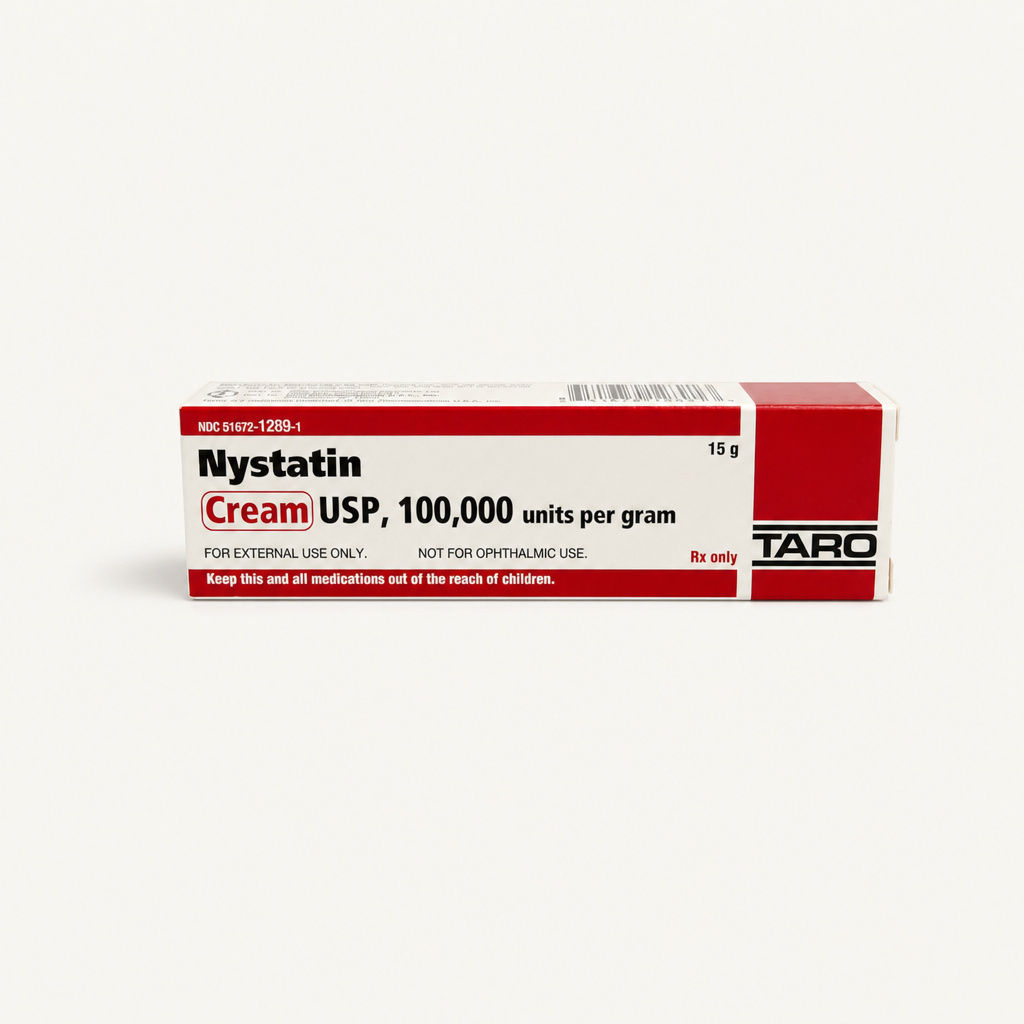
Nystatin binds to a molecule called ergosterol, which is a vital component of the fungal cell membrane. It creates holes in the fungal cell wall, leading to fungal cell death.
Because human cells do not contain ergosterol, nystatin can destroy the fungus without affecting surrounding normal skin cells. This targeted action helps reduce redness, itching, and soreness associated with the infection.
| Quick Facts | |
|---|---|
| Common Brands | Mycostatin, Nystop, Nyamyc |
| Drug Class | Polyene antifungal |
| Generic Status | Generic version available |
| Availability | Prescription only |
Dosing
The success of nystatin treatment depends on consistent application and completing the full course of therapy.
- Typical application: Providers usually recommend applying nystatin cream 2 to 3 times per day.
- Standard technique: Standard guidelines recommend gently washing the affected area and patting it dry before application. Apply enough cream to cover the area and a small margin of healthy skin around it.
- Rubbing it in: Rub the cream in gently until it is mostly absorbed. You do not need to leave a thick, visible layer on the skin.
- Duration: Symptoms often begin to improve within 24 to 72 hours. Patients should continue using the cream for the full time prescribed, even if the rash appears to be gone.
- Dressings: Avoid airtight (occlusive) dressings unless directed by a doctor as yeast thrives in areas without airflow.
Note: Dosing information below is educational only. Your prescribing physician will determine your specific dose based on your individual health needs. Always follow your healthcare provider’s instructions for exact dosing.
Uses
FDA-Approved Uses
The FDA approves nystatin cream for:
- Cutaneous candidiasis: Treating fungal skin infections caused by Candida species.
- Mucocutaneous infections: Managing yeast infections that occur where the skin meets the mucous membranes.
Off-Label Uses
Note: You may see nystatin cream prescribed for uses that are not FDA-approved. This is a common and legal practice called off-label prescribing, where a doctor uses their clinical judgment to prescribe a drug for a different (but well-researched) purpose.
Nystatin cream may be prescribed off-label for the following conditions:
- Yeast-related angular cheilitis: Doctors may prescribe nystatin to treat painful cracks at the corners of the mouth.
- Paronychia: It is sometimes used to treat fungal infections around the fingernails or toenails
Side Effects
Nystatin is typically gentle on the skin, but some mild reactions can occur at the site of application.
Common Side Effects
- Mild skin irritation
- Redness or itching at the application site
- Burning or stinging sensation
- Scaling or peeling of the skin
Serious Side Effects
Serious side effects are rare, but it’s important to know what to look for if they do occur. Stop taking the medication and immediately call the doctor if you experience any of the following symptoms:
- Severe allergic reactions: Providers advise stopping use and seeking medical attention if you experience hives, swelling of the face or throat, or difficulty breathing.
- Stevens-Johnson syndrome: In rare cases, a severe skin reaction can occur. Standard guidelines recommend seeking help for blistering, skin pain, or a widespread red/purple rash.
- Worsening irritation: If the rash becomes redder or more painful, or starts to ooze after application, it’s generally advised to contact your provider.
Call your doctor immediately if you experience any concerning or prolonged symptoms.
Pharmacist Tips
Keep It Dry
Yeast thrives in moist environments. After applying the cream, it’s generally advised to keep the affected area as dry and breathable as possible.
Don’t Skip Doses
Antifungal treatments are a race against the fungus’s growth. Skipping applications gives the yeast a chance to multiply again, making the infection harder to eliminate.
Wash Your Hands
Providers advise washing your hands before and after applying the cream to prevent spreading the infection to other parts of your body or to other people.
Avoid the Eyes
Nystatin cream is for external skin use only. If you accidentally get it in your eyes, rinse them thoroughly with cool tap water.
Consistency In Storage
Standard guidelines recommend keeping the tube at room temperature. It’s generally not advisable to freeze the cream, as it can alter its texture and effectiveness.
Finish the Treatment
Even if the itching stops and the skin looks normal, providers advise finishing the full course. Fungal spores can persist on the skin even after visible symptoms have disappeared.
Drug Interactions
Topical nystatin has few interactions because it is not absorbed systemically. However, you should still exercise caution with other skin products.
Let your doctor know if you take:
- Other topicals: Providers don’t recommend applying other creams, ointments, or lotions to the same area at the same time as nystatin, as they may prevent the medication from reaching the skin.
- Astringents: Products containing high levels of alcohol or drying agents may increase skin irritation when used with nystatin.
Always give your doctor and pharmacist a complete list of all your medications, vitamins, and supplements to check for potential interactions.
FAQs
Can I use nystatin cream to treat athlete’s foot or ringworm?
No. Athlete’s foot and ringworm are caused by a group of fungi called dermatophytes. Nystatin targets yeast and is ineffective against dermatophytes. You would likely need a different antifungal, such as clotrimazole or terbinafine.
What is the difference between nystatin cream, ointment, and powder?
The active medicine is the same, but the base is different. Cream is best for general use and weeping rashes. Ointment is greasier and helps soothe dry, scaly skin. Powder is preferred for moist areas, like between the toes or in deep skin folds, to help absorb moisture.
Does this medication contain a steroid to help with the itching?
Nystatin cream by itself does not contain a steroid. However, there is a combination product called Mycolog-II that contains both nystatin and a steroid (triamcinolone). Pure nystatin cream relieves itching by killing the fungus that causes it.
Can I use this cream to treat a vaginal yeast infection?
No. Nystatin cream is for the skin. It’s generally advised not to put it inside the vagina. If you have an internal yeast infection, your doctor will prescribe a different form of medication, such as a vaginal suppository or an oral tablet.
How long does it usually take for a rash to clear up?
Most people notice their symptoms improve within a few days. However, a full recovery usually takes one to two weeks of consistent use.
Should I rub the cream all the way in or leave a visible layer?
Standard guidelines recommend gently rubbing it in. The medication needs to reach the skin cells where the yeast is living. A visible layer doesn’t speed up healing.
Why is my rash getting redder immediately after applying this?
Some people experience a mild, temporary sting or redness due to skin sensitivity. However, if the redness is severe or doesn’t go away, it could be an allergic reaction to one of the inactive ingredients.
Can I use nystatin to treat thrush inside my mouth?
No. Nystatin cream is for the skin only. Oral thrush is treated with a swish-and-swallow liquid nystatin or oral lozenges.
Is it safe to use this medication if I am pregnant or breastfeeding?
Standard guidelines suggest that nystatin is generally safe because it is not absorbed into the body. However, it’s generally advised to consult your doctor before using any new medication during pregnancy or while nursing.
Can I stop using the cream when the rash disappears?
Providers typically recommend continuing use for at least 48 hours after all symptoms have vanished. This ensures that any microscopic fungal spores are eliminated, preventing the rash from returning.
Will nystatin stain my clothes?
Nystatin cream is usually white and non-staining, but it may leave a slight residue on dark fabrics. Ointment formulations are more likely to leave greasy spots on clothing.
Does nystatin interact with other topical skin care products?
It is best to avoid mixing it with other products. If you use a moisturizer, standard guidelines typically recommend applying nystatin first, waiting for it to absorb, and then applying the moisturizer.
How is this prescription different from over-the-counter clotrimazole (Lotrimin)?
Clotrimazole is a broad-spectrum antifungal that treats both yeast and dermatophytes (like ringworm). Nystatin is a narrower-spectrum antifungal for yeast. Doctors often prescribe nystatin when they are certain the cause is Candida.
Can I use nystatin cream for jock itch?
You can use it for the skin irritation in the groin if the cause is a yeast infection. If the jock itch is caused by other fungus, nystatin will not be effective.
Does nystatin cream expire, and does it need to be kept in the refrigerator?
It does expire. Check the date on the tube. It should be stored at room temperature (under 86°F) and does not need to be refrigerated.
Comparable Medications
Nystatin, Clotrimazole, Terbinafine, or Nystatin/Triamcinolone?
Below are some potential alternatives and how they compare to nystatin cream:
Clotrimazole
This is a broad-spectrum antifungal available over the counter. While it treats yeast like nystatin does, it also treats ringworm and athlete’s foot. Nystatin cream is often preferred for severe or resistant yeast-only infections.
Terbinafine
From $57.49
This medication is effective for athlete's foot and ringworm (dermatophytes). It is generally accepted that terbinafine is not the first choice for yeast infections.
Nystatin / Triamcinolone Topical
From $29.99
This is a combination of the antifungal nystatin and a mid-strength steroid. It is used when a yeast infection is so inflamed and itchy that it requires a steroid to calm the skin while the antifungal kills the yeast.
Nystatin Powder
From $29.99
The same active ingredient as the cream, but in a dry form. It is often preferred for skin-to-skin areas (like the groin or under the breasts) because it treats the fungus while keeping the area dry.
Nystatin Ointment
From $28.99
Contains the same medication as the cream but in a petroleum-based carrier. It is recommended for dry, cracked, or scaly fungal patches where moisture retention is helpful.
We Have Nystatin Cream in Stock. Get Yours Today!
Important: Information on this page is for educational purposes only. Prescribing decisions are made by independent, licensed providers. TelyRx operates technology-enabled pharmacies and a telehealth platform that connects patients with licensed providers. Prescriptions, when provider-approved and issued, are filled and shipped by TelyRx-affiliated pharmacies. We do not employ physicians or make prescribing decisions. Learn more about our editorial standards here.