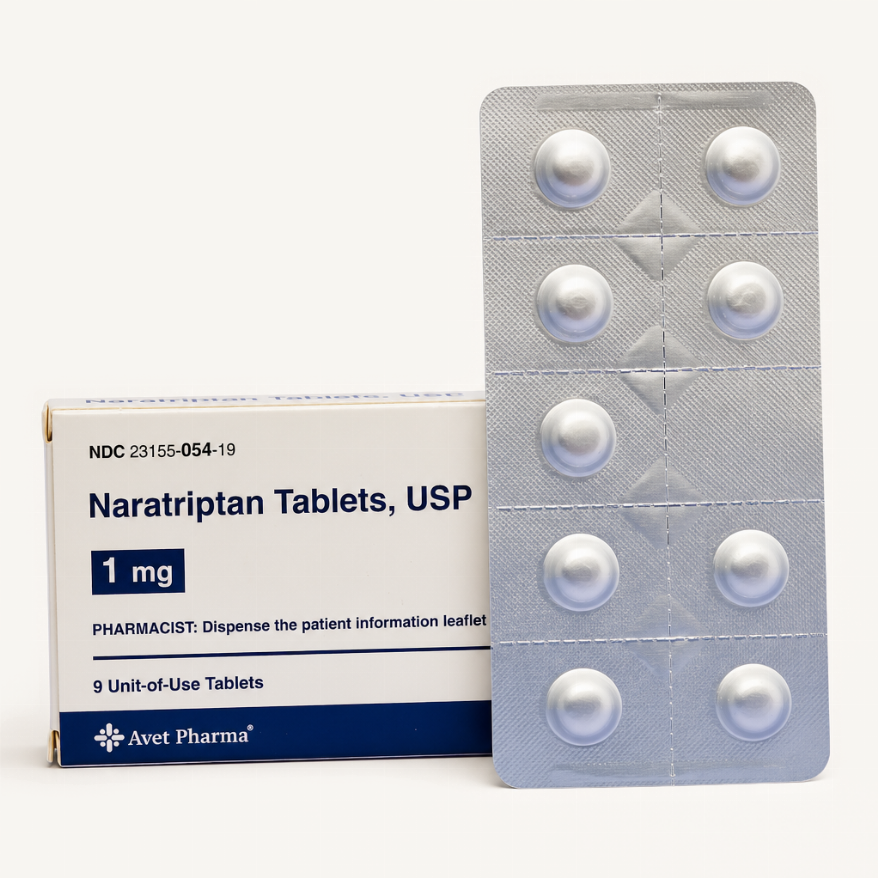
How It Works
Naratriptan treats migraines by targeting physical changes and chemical signals in the brain. During a migraine, blood vessels in the brain temporarily widen, causing painful swelling. Naratriptan reverses this process by mimicking the action of serotonin, a natural chemical in the body that regulates blood vessel size and nerve communication.
The medication binds to serotonin receptors in the nervous system, signaling blood vessels to constrict. Additionally, naratriptan can reduce pain by decreasing inflammatory signals along nerve pathways. By addressing swollen blood vessels and overactive nerves, naratriptan may help alleviate other migraine symptoms like nausea and sensitivity to light and sound.
| Quick Facts | |
|---|---|
| Common Brands | Amerge |
| Drug Class | Triptan (Serotonin 5-HT1 receptor agonist) |
| Generic Status | Generic is available |
| Availability | Prescription only |
Dosing
Naratriptan comes in 1 mg and 2.5 mg oral tablets. Under standard guidelines, the typical dose is 1 mg or 2.5 mg taken once by mouth. The tablet is meant to be swallowed whole with a glass of water. It can be taken with or without food.
Patients may take a second dose 4 hours after the first dose if migraine symptoms persist or recur. Taking a second dose earlier than 4 hours after the first dose may increase the risk of side effects. Guidelines also suggest to not exceed 5 mg per 24 hours. Dose adjustments may be necessary for patients with liver or kidney problems.
Note: Dosing information below is educational only. Your prescribing physician will determine your specific dose based on your individual health needs. Always follow your healthcare provider’s instructions for exact dosing.
Uses
FDA-Approved Uses
Naratriptan is FDA-approved for the acute treatment of migraine attacks, with or without aura, in adults.
Off-Label Uses
You may see naratriptan prescribed for uses that are not “FDA approved.” This is a common and legal practice called “off-label” prescribing, where a doctor uses their clinical judgment to prescribe a drug for a different (but well-researched) purpose.
As an off-label use, health providers may prescribe naratriptan tablets to prevent migraines associated with the menstrual cycle.
Get Savings Updates for Naratriptan Tablets
Join our mailing list for exclusive deals and more.
Side Effects
Like all medications, naratriptan can cause side effects. Some side effects may be serious and require medical attention. This includes:
Common Side Effects
- Nausea
- Dizziness
- Drowsiness
- Tiredness
- Numbness, tingling, or burning in the arms, feet, or face
- Facial flushing
- Neck stiffness or discomfort
- Dry mouth
Serious Side Effects
Serious side effects are rare, but it’s important to know what to look for if they do occur. Seek immediate medical attention if you experience any serious reactions or side effects.
- Heart attack or stroke: This may present as chest pain or pressure, shortness of breath, sudden weakness on one side of the body, slurred speech, or a sudden severe headache.
- Serotonin syndrome: This life-threatening condition is when there is too much serotonin in the body. It causes agitation, hallucinations, rapid heartbeat, muscle stiffness, or tremors.
- Extreme narrowing of blood vessels: Constriction of blood vessels can reduce blood flow to the stomach, leading to severe pain or bloody diarrhea. It can also reduce blood flow to the extremities, causing the fingers or toes to change color or feel numb.
- Severe allergic reactions: Get help immediately for swelling of the face, lips, or throat, trouble breathing, or a widespread skin rash and hives.
- Heart rhythm changes: This may involve a sensation of a pounding, skipping, or otherwise irregular heartbeat and can lead to fainting.
- Dangerously high blood pressure: Naratriptan can cause spikes in blood pressure. Get medical attention if you experience vision changes, severe anxiety, or a buzzing in the ears.
Call your doctor immediately if you experience any concerning or prolonged symptoms.
Pharmacist Tips
Take It Early
Guidelines suggest taking naratriptan at the first sign of a migraine attack or aura.
Swallow Whole
Do not crush, chew, or split the tablet. Swallow the pill whole with water.
Monitor Your Frequency
Using naratriptan for 10 or more days per month can cause medication-overuse headaches that may be more frequent or severe.
Be Mindful Of Alertness
Because this medication can cause sleepiness or dizziness, do not drive or operate machinery until you know how it affects you.
Keep A Journal
Tracking your migraines and when you take your medication can help your provider determine if naratriptan is working well for you.
Check For Interactions
Always tell your pharmacist if you are taking antidepressants, as these can interact with naratriptan and increase the risk of serotonin syndrome.
Storage
Store your tablets at room temperature (68°F to 77°F) in a cool, dry place.
Drug Interactions
Certain medications and substances can interact with naratriptan, potentially altering how it works or increasing the risk of side effects.
- Other triptans: Providers typically recommend against using naratriptan within 24 hours of taking another triptan, such as sumatriptan or rizatriptan, as this can lead to excessive blood vessel constriction.
- Other migraine medications: Taking naratriptan within 24 hours of ergotamine or dihydroergotamine is generally not recommended due to the risk of cumulative effects on blood vessels.
- Antidepressants: Combining naratriptan with selective serotonin reuptake inhibitors (SSRIs) or serotonin and norepinephrine reuptake inhibitors (SNRIs) can increase the likelihood of serotonin syndrome. Tricyclic antidepressants like amitriptyline or nortriptyline may also interact with naratriptan and may require dose monitoring.
- Monoamine oxidase inhibitors (MAOIs): Naratriptan should not be taken if you have used an MAOI, such as selegiline, within the past 14 days.
- Herbal products: Supplements such as St. John’s wort may increase the risk of serotonin-related side effects.
- Alcohol: While there is no direct chemical interaction with naratriptan, alcohol can be a migraine trigger and may worsen dizziness or drowsiness caused by naratriptan.
Always give your doctor and pharmacist a complete list of all your medications, vitamins, and supplements to check for potential interactions.
FAQs
Can I take naratriptan every single day to prevent migraines from happening?
Using migraine medications like naratriptan for 10 or more days per month may make migraines more frequent or severe, a condition known as a rebound or medication-overuse headache.
Does naratriptan help with menstrual migraines?
Doctors may prescribe naratriptan off-label to prevent migraines associated with the menstrual cycle.
Is it safe to take ibuprofen or Excedrin at the same time as naratriptan?
It is usually safe to take naratriptan with nonsteroidal anti-inflammatory drugs (NSAIDs) like ibuprofen. These medications work through different mechanisms to relieve pain and do not appear to interact with each other. However, because NSAIDs carry their own risks, you should speak with your doctor before taking them at the same time as naratriptan.
What should I do if my migraine goes away then comes back the next morning?
If your migraine returns after initial relief, standard guidelines indicate that you may take a second dose of naratriptan. You must wait at least 4 hours after your first dose before taking a second tablet.
Consult your doctor before taking a second dose if the first dose provided no relief.
How many naratriptan tablets can I safely take in a single 24-hour period?
Standard guidelines suggest that you should not take more than 5 mg of naratriptan in a 24-hour period.
Can I split, crush, or chew the tablet if I have trouble swallowing?
Naratriptan is a tablet that is intended to be swallowed whole with water. Talk to your doctor about your medication options if you have difficulty swallowing pills.
Why is there a warning about “serotonin syndrome” if I am also taking an antidepressant?
Serotonin syndrome is a potentially life-threatening condition that occurs when there is too much serotonin in the body. Naratriptan increases serotonin activity, and taking it alongside other medications that also raise serotonin levels, such as SSRI or SNRI antidepressants, may increase the risk of serotonin syndrome.
Will naratriptan help with my severe nausea and light sensitivity, or does it only target the head pain?
Naratriptan may block the nerve signals that cause migraine symptoms like nausea and sensitivity to light and sound.
Can I take naratriptan if I experience visual “auras” before my migraines?
Yes, naratriptan is approved to treat migraine attacks with or without aura. An aura may include seeing flashing lights, zigzag lines, or feeling a tingling sensation.
Is it safe to use this medication if I am pregnant or breastfeeding?
It is not currently known if naratriptan affects pregnancy, harms an unborn baby, or passes into breast milk, so risk cannot be ruled out. If you are pregnant, planning to become pregnant, or breastfeeding, consult your healthcare provider before using this medication.
What is a “rebound headache”, and does taking naratriptan cause it?
A rebound headache, also known as a medication-overuse headache, occurs when migraine medications are taken too often. Using naratriptan too frequently can cause headaches to happen more or become more severe.
Will naratriptan still work if I wait until the migraine is already at its worst to take a pill?
Naratriptan is considered to be more effective when taken at the first sign of an attack. Waiting until the pain is severe may result in the medication taking longer to provide relief.
Can I drink alcohol or coffee shortly after taking a dose?
There are no known direct interactions between naratriptan and specific foods or drinks. However, alcohol can trigger migraines in some people and may increase the risk of dizziness and drowsiness while taking naratriptan.
Does naratriptan interact with oral birth control pills?
Standard medication lists do not indicate an interaction between naratriptan and oral birth control pills.
What is the difference between brand-name Amerge and generic naratriptan?
Amerge was a brand name for naratriptan, but that specific brand is no longer available. The generic version contains the same active ingredient and is available by prescription.
Comparable Medications
Naratriptan, Sumatriptan (Imitrex), Rimegepant (Nurtec), Excedrin Migraine, or Topiramate (Topamax)?
Sumatriptan
From $27.59
A triptan used for acute migraine relief that may work faster than naratriptan but is sometimes associated with more side effects.
Rimegepant
A CGRP receptor antagonist prescribed for both the acute treatment of migraines and for prevention.
Excedrin Migraine
An over-the-counter medication combining acetaminophen, aspirin, and caffeine for the relief of migraine symptoms.
Topiramate
A daily preventative medication used to reduce the frequency of migraine attacks, rather than treating them once they start.
We Have Naratriptan Tablets in Stock. Get Yours Today!
Important: Information on this page is for educational purposes only. Prescribing decisions are made by independent, licensed providers. TelyRx operates technology-enabled pharmacies and a telehealth platform that connects patients with board-certified licensed providers. Prescriptions, when provider-approved and issued, are filled and shipped by TelyRx-affiliated pharmacies. We do not employ physicians or make prescribing decisions. Learn more about our editorial standards here.