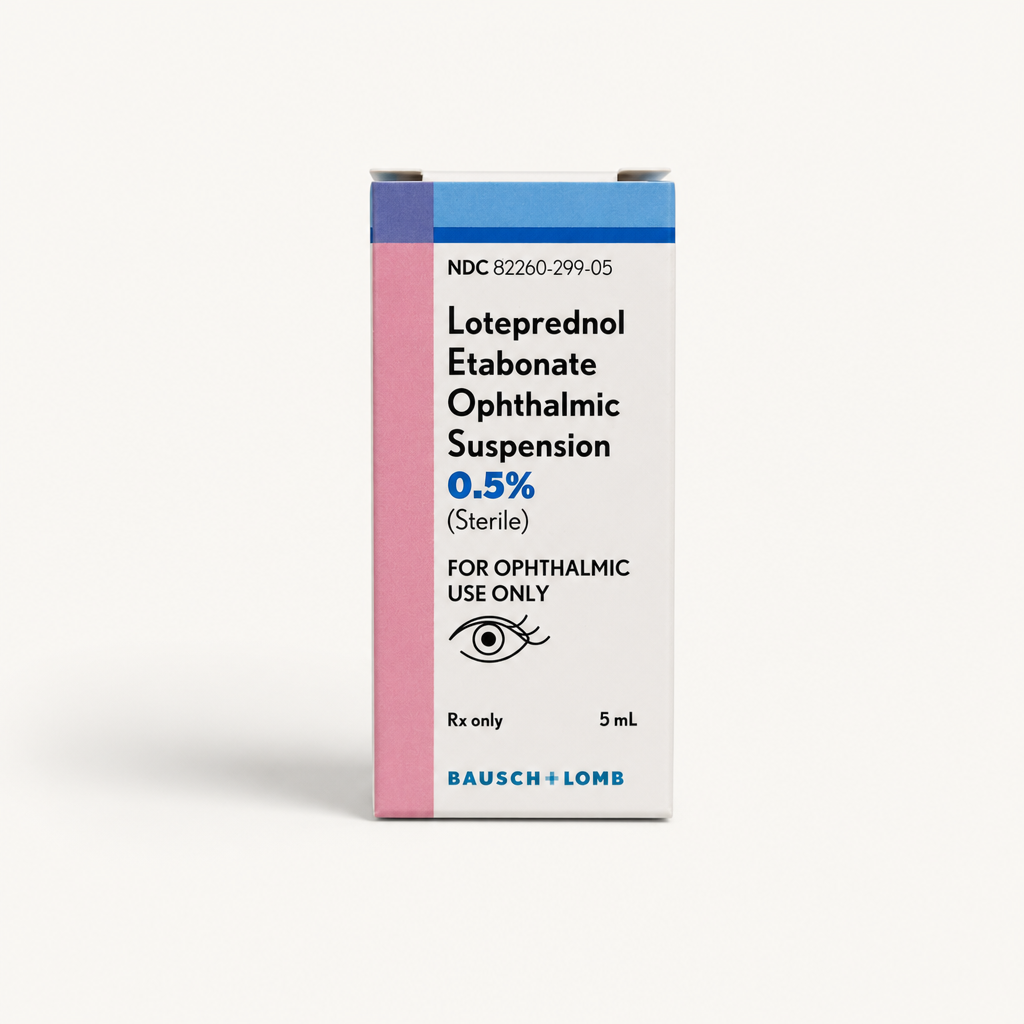
How It Works
Inflammation in the eye is the body’s natural defense mechanism to irritation, but when it becomes excessive, it causes redness, swelling, and pain.
Loteprednol works to calm this overactive response by:
- Blocking inflammatory triggers: It blocks the production of chemicals like prostaglandins and leukotrienes in the body, which are responsible for redness and itchiness.
- Calming the immune system: It reduces the activity of the immune cells that migrate to the eye during an allergic reaction or after surgery.
- Site-specific action: Because loteprednol is a soft steroid, it works locally on the surface of the eye.
Most patients notice an improvement in their symptoms within a few days of starting treatment.
| Quick Facts | |
|---|---|
| Common Brands | Lotemax, Alrex, Eysuvis, Inveltys |
| Drug Class | Ophthalmic corticosteroid |
| Generic Status | Generic version available for some forms (0.5% gel and suspension) |
| Availability | Prescription only |
Dosing
Loteprednol is available in various strengths and forms, each tailored for specific conditions.
- Seasonal allergies: Providers typically recommend the 0.2% strength (Alrex). It’s generally advised to instill 1 drop into the affected eye(s) 4 times daily.
- Dry eye flares: Standard guidelines suggest the 0.25% strength (Eysuvis) for dry eye flares, with 1 to 2 drops in each eye four times daily for up to two weeks.
- General inflammation: The 0.5% suspension or gel is often used for general inflammation. Standard guidelines recommend applying 1 to 2 drops 4 times daily. During the first week of severe inflammation, a doctor may suggest using it every hour.
- Post-surgery: Dosing typically starts 24 hours after surgery and continues for two weeks. The 1% strength (Inveltys) is a specialized, high-strength version typically used only twice daily.
Here are the standard guidelines for using loteprednol:
- Shake the bottle. For suspension forms, it’s generally recommended that you shake the bottle for several seconds to ensure the medicine is mixed evenly.
- Wash your hands. It’s generally advised to always clean your hands before and after use.
- Avoid contact. Providers advise against letting the tip of the dropper come into contact with your eye, eyelashes, or any other surface.
- Pressure. After instilling the drop, it’s generally recommended to close your eye and press lightly on the inner corner (near the nose) for one minute to keep the medicine in the eye.
Note: Dosing information below is educational only. Your prescribing physician will determine your specific dose based on your individual health needs. Always follow your healthcare provider’s instructions for exact dosing.
Uses
FDA-Approved Uses
Loteprednol is FDA-approved for the following ophthalmic conditions:
- Post-operative inflammation: Treating pain and swelling following ocular surgery
- Allergic conjunctivitis: Temporary relief of signs and symptoms of seasonal allergic conjunctivitis
- Dry eye disease: Short-term treatment (up to two weeks) of the signs and symptoms of dry eye
- Uveitis: Managing inflammation in the middle layer of the eye
Off-Label Uses
You may see loteprednol prescribed for uses that are not FDA-approved. This is a common and legal practice called off-label prescribing, where a doctor uses their clinical judgment to prescribe a drug for a different (but well-researched) purpose.
Loteprednol may be prescribed for the following off-label uses:
- Contact lens-related irritation: Doctors may prescribe a short course of loteprednol to treat giant papillary conjunctivitis (GPC), a common condition among long-term contact lens wearers.
- Blepharitis flare-ups: It is sometimes used to help calm severe eyelid inflammation when combined with proper lid hygiene.
Side Effects
Like all steroid medications, loteprednol can cause side effects, though they are usually localized to the eye.
Common Side Effects
- Temporary blurry vision (especially with gels or ointments)
- Mild burning, stinging, or itching when the drop is first applied
- Feeling like something is in your eye (foreign body sensation)
- Dry eyes or watery eyes
- Headache or runny nose
Serious Side Effects
Serious side effects are rare, but it’s important to know what to look for if they do occur.
It’s generally accepted that you stop taking the medication and immediately call the doctor if you experience any of the following symptoms:
- Increased eye pressure (glaucoma): Prolonged use can raise intraocular pressure, potentially damaging the optic nerve. Symptoms may include sudden eye pain or vision loss.
- Secondary cataracts: Steroids can cause the lens of the eye to become cloudy over time.
- Delayed healing: Using steroids after surgery can sometimes slow down the eye’s natural healing process.
- New infections: Steroids suppress the immune system, which may make you more susceptible to viral, fungal, or bacterial eye infections.
Call your doctor immediately if you experience any concerning or prolonged symptoms.
Pharmacist Tips
Wait to Wear Contacts
It’s generally accepted that contact lenses should be removed before using loteprednol. Providers recommend waiting at least 15 minutes after using the drops before putting your contact lenses back into your eye(s).
Don’t Share Bottles
To prevent the spread of infection, providers advise never sharing your eye drops with anyone else.
Space Out Your Drops
If you use other eye drops (like artificial tears), it’s generally recommended to wait at least 5 minutes between loteprednol and the other product to prevent the second medication from washing out the first.
Store at Room Temperature
Standard guidelines recommend keeping the bottle upright and stored between 59°F and 77°F. It’s generally advised not to freeze the medication.
Check the Tip
If you accidentally touch the dropper tip to your eye or skin, providers recommend wiping it with a clean tissue, but do not wash it with soap or water.
Monitor Your Progress
If your symptoms do not improve within two days or if they get worse, it’s generally recommended to contact your eye doctor immediately.
Drug Interactions
While loteprednol stays mostly within the eye, it is important to be aware of potential interactions.
Let your doctor know if you take:
- Other ophthalmic steroids: Using multiple steroid eye drops at once can increase the risk of high eye pressure and cataracts.
- Desmopressin: There is a known interaction in which corticosteroids may enhance desmopressin’s effect, though the risk with eye drops is lower than with oral steroids.
- NSAID eye drops: It’s generally accepted that using steroid eye drops along with non-steroidal anti-inflammatory drops (like ketorolac) after surgery should be done only under a doctor’s direction, as it may slow corneal healing.
Always give your doctor and pharmacist a complete list of all your medications, vitamins, and supplements to check for potential interactions.
FAQs
Why is it so important to shake the bottle before putting the drops in my eye?
Loteprednol eye drops are usually suspensions, meaning the active ingredient particles settle to the bottom of the bottle. Shaking ensures the medicine is mixed evenly so you receive the correct dose in every drop.
Does loteprednol raise my eye pressure?
While all steroids have the potential to raise eye pressure, loteprednol is designed to minimize this risk. However, if you use it for more than 10 days, your provider will likely want to check your eye pressure to be safe.
Can I wear my contact lenses while using this medication?
Providers typically recommend not wearing contact lenses while your eyes are red or inflamed. If you are approved to wear contact lenses, it’s generally advised to remove them before using the eye drops and wait 15 minutes before reinserting the contact lenses.
What is the difference between Lotemax, Alrex, and Eysuvis if they are all loteprednol?
The main difference is the concentration. Alrex (0.2%) is the weakest and is used for allergies. Eysuvis (0.25%) is used for dry eye. Lotemax (0.5%) is stronger and used for post-surgery and general inflammation.
Can I use loteprednol if I have an active viral or bacterial eye infection?
No. Steroids can make an active infection worse by slowing down your body’s immune response. It’s generally accepted that you should not use loteprednol if you have a viral, fungal, or bacterial infection.
Do I need to taper off this medication slowly?
If you have been using loteprednol for a few weeks, your doctor may instruct you to gradually reduce the number of drops you use per day rather than stopping suddenly. This prevents inflammation from rebounding.
Is there a difference between the drops, the gel, and the ointment forms?
Yes. The suspension (drops) is the standard form. The gel stays on the eye longer and may feel more comfortable. The ointment is the thickest and is usually used at night because it can cause significant temporary blurring of vision.
What should I do if the tip of the dropper touches my eyelashes or eyeball?
If this happens, the dropper may become contaminated with bacteria. Providers advise you to be careful to avoid this. If it happens, it’s generally recommended that you wipe the tip with a clean, lint-free tissue.
Can I use artificial tears at the exact same time as loteprednol?
It’s generally recommended that you space them out. Providers typically recommend waiting at least 5 to 10 minutes between using loteprednol and artificial tears to ensure both are absorbed properly.
Can I use loteprednol for seasonal eye allergies or itchy eyes?
Yes, loteprednol can be effective for treating allergy symptoms that do not respond to over-the-counter antihistamines.
Is it normal to feel a mild burning when the drop hits my eye?
A mild, brief stinging sensation is a common side effect. If the burning is severe or lasts a long time, it’s generally advised to contact your doctor.
Should I store the bottle in the refrigerator or at room temperature?
Standard guidelines state that loteprednol should be stored at room temperature. It should not be refrigerated or frozen.
Is this medication safe to use during pregnancy?
It is not known if loteprednol can harm an unborn baby, so risk cannot be ruled out. Ask your doctor for more information about whether loteprednol is safe for you.
Comparable Medications
Lotemax, Alrex, Eysuvis, or Prednisolone?
Below are some potential alternatives or comparisons to loteprednol:
Lotemax (0.5%)
Used for moderate to severe inflammation and recovery after eye surgery.
Alrex (0.2%)
Used for the temporary relief of seasonal eye allergies.
Eysuvis (0.25%)
Used for short-term flares of dry eye disease rather than long-term maintenance.
Prednisolone
From $59.99
A stronger steroid often used for deep internal eye inflammation. It carries a higher risk of elevating eye pressure than loteprednol.
Dexamethasone
A strong steroid that is effective but more likely to cause side effects like cataracts with long-term use.
Cyclosporine
From $154.99
An immune modulator used for chronic dry eye maintenance. Unlike loteprednol, it is not a steroid and does not provide immediate relief from inflammation.
We Have Loteprednol in Stock. Get Yours Today!
Important: Information on this page is for educational purposes only. Prescribing decisions are made by independent, licensed providers. TelyRx operates technology-enabled pharmacies and a telehealth platform that connects patients with licensed providers. Prescriptions, when provider-approved and issued, are filled and shipped by TelyRx-affiliated pharmacies. We do not employ physicians or make prescribing decisions. Learn more about our editorial standards here.