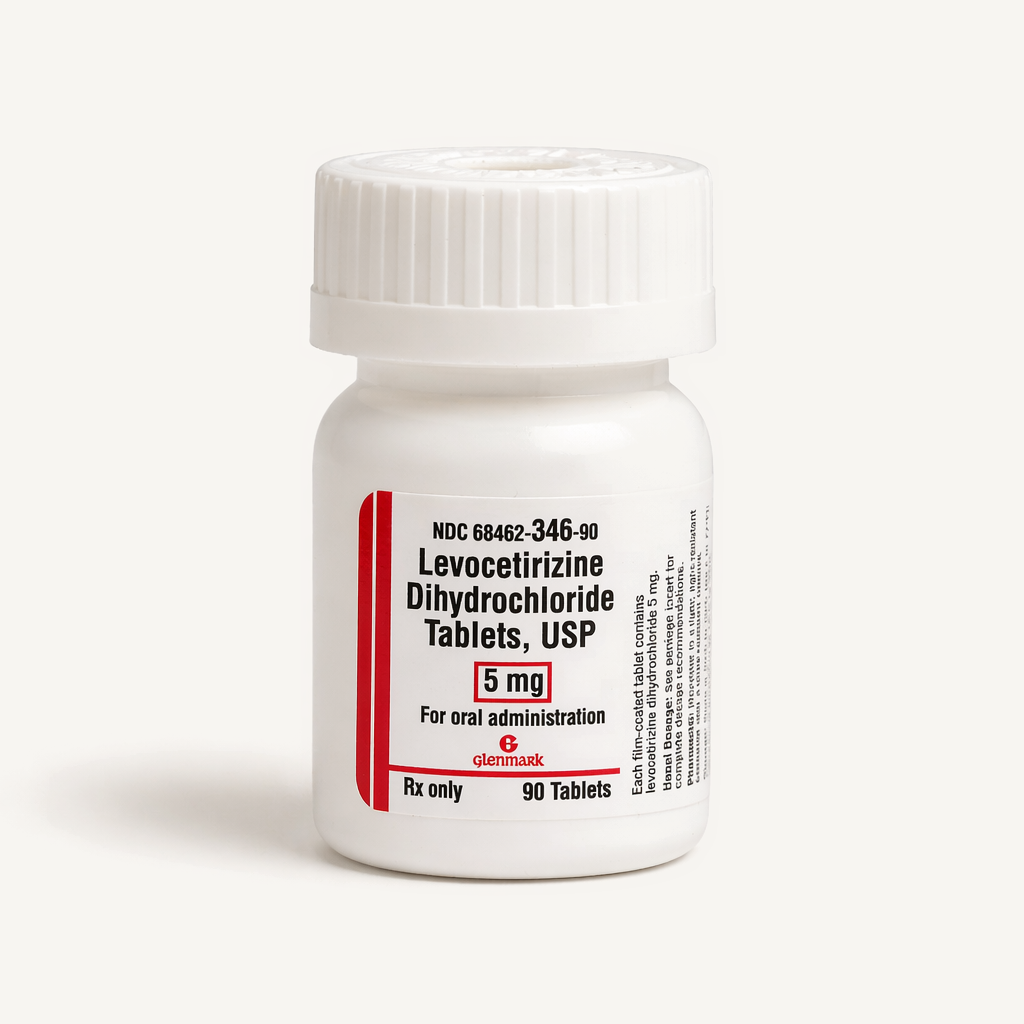
How It Works
When your immune system perceives a threat, chemicals called histamines bind to H1 receptors in the eyes, nose, and skin. This binding causes blood vessels to leak and tissues to swell, resulting in allergy symptoms like sneezing, itching, and congestion. Levocetirizine covers and blocks these receptors before the histamines can, reducing allergy symptoms.
Levocetirizine is a selective medication, meaning it specifically targets H1 receptors in the body, but not in the brain. This helps reduce symptoms of fatigue, though drowsiness can still occur. Levocetirizine’s bond with the receptors is also strong, so the medication can remain effective for up to 24 hours.
| Quick Facts | |
|---|---|
| Common Brands | Xyzal/Xyzal Allergy 24 HR |
| Drug Class | H1 receptor agonist (2nd-generation histamine) |
| Generic Status | Generic version available |
| Availability | Available over the counter and with prescription |
Dosing
Per standard guidelines, levocetirizine is most effective when you take the tablet at the same time each day. This is because the drug is formulated to provide relief for up to 24 hours. Recommended dosage varies by the patient’s age.
- Adults: Providers typically recommend a daily dose of one 5 mg tablet for adults.
- Seniors (65 and older): Since kidney function naturally slows with age, doctors may lower the dosage for older patients.
- Administration: Standard guidelines state that taking the tablet consistently at the same time each day is critical for effective treatment. Those who experience drowsiness as a side effect may prefer taking the medication at night.
Note: Dosing information below is educational only. Your prescribing physician will determine your specific dose based on your individual health needs. Always follow your healthcare provider’s instructions for exact dosing.
Uses
FDA-Approved Uses
Levocetirizine tablets are FDA-approved for the following:
- Relief from symptoms of seasonal allergic rhinitis, including sneezing, runny nose, and itchy or watery eyes caused by outdoor allergens like pollen and mold.
- Management of perennial allergic rhinitis, or year-round allergy symptoms caused by indoor allergens like dust mites and pet dander.
- Treatment of chronic idiopathic urticaria, which causes uncomplicated skin manifestations of chronic hives with no known origin.
Off-Label Uses
You may see levocetirizine tablets prescribed for uses that are not “FDA-approved.” This is a very common and legal practice called “off-label” prescribing, where a doctor uses their clinical judgment to prescribe a drug for a different (but well-researched) purpose.
Common off-label uses for levocetirizine tablets currently found in clinical research and practice include:
- Eosinophilic esophagitis (EoE): Some specialists recommend high-doses of antihistamines like levocetirizine to manage chronic inflammation of the esophagus.
- Allergic asthma adjunct: While levocetirizine is not considered a primary asthma treatment, it may be used to reduce the allergy load that can trigger asthma flare-ups.
- Dermatographism: Levocetirizine can be used to manage the raised, red welts that can occur with this skin condition.
Side Effects
Levocetirizine is formulated to be non-sedating, but individuals react differently to the medication. Avoid driving or operating machinery until you know how levocetirizine affects you.
Common Side Effects
Common side effects from taking levocetirizine tablets include:
- Tiredness and fatigue
- Dry mouth
- Sore throat, cough, and nasopharyngitis
- Gastrointestinal issues
Serious Side Effects
Serious side effects are rare, but it’s important to know what to look for if they do occur. Serious side effects from taking levocetirizine tablets can include:
- Urinary retention: Taking levocetirizine can lead to difficulty emptying the bladder or an inability to urinate. This is more common in patients with enlarged prostates.
- Mood changes: In rare cases, patients who take levocetirizine can experience agitation, aggression, and hallucinations.
- Severe hypersensitivity: Signs of an allergic reaction to the drug itself may include dizziness and swelling of the face, tongue, or throat.
- Kidney impact: In patients with pre-existing kidney disease, levocetirizine can accumulate to toxic levels.
Call your doctor immediately if you experience any concerning or prolonged symptoms.
Pharmacist Tips
Evening Dose May Be Best
Many people find that an evening dose of levocetirizine helps them account for any drowsiness or fatigue that may occur. This can also help morning-after sneezing fits that people may experience with seasonal or year-round allergies.
Food Is Optional
Per standard guidelines, you may take levocetirizine tablets with or without food. However, if you experience gastrointestinal problems after taking the drug on an empty stomach, a light snack timed with your dosage can reduce discomfort.
Avoid Stacking Antihistamines
Standard guidelines for levocetirizine caution against taking the drug alongside other oral antihistamines like diphenhydramine (Benadryl) or cetirizine (Zyrtec). This significantly increases the risk of dangerous side effects like seizures and heart palpitations.
Hydration Is Essential
Since dry mouth is a common side effect of taking levocetirizine, sipping water throughout the day can help ensure you stay properly hydrated.
Maintain Proper Storage
Storing levocetirizine away from high heat and humidity is recommended. Extreme conditions can cause the tablets to break down and lose potency.
Drug Interactions
Levocetirizine primarily interacts with substances that affect the nervous system and kidneys. Known interactions with levocetirizine include:
- Alcohol: Per standard guidelines, drinking alcohol while taking this medication can lead to severe dizziness and impair the patient’s motor skills.
- Central nervous system (CNS) depressants: Combining CNS depressants with levocetirizine can lead to extreme lethargy. These depressants include sleep aids, prescription pain medications like opioids, and anxiety medications like benzodiazepines.
- Ritonavir: This medication can increase levocetirizine levels in your body, potentially increasing its side effects.
- Theophylline: This medication can interfere with your body’s ability to clear levocetirizine and cause it to remain in your system for longer than intended.
Always give your doctor and pharmacist a complete list of all your medications, vitamins, and supplements to check for potential interactions.
FAQs
How long does it usually take for levocetirizine to start relieving allergy symptoms?
People who take levocetirizine typically notice an improvement in their allergy symptoms within 60 minutes. However, it can take a few days for the drug to reach full effect with each dose.
Why do I have to take this medication at night instead of in the morning?
Although levocetirizine is a second-generation antihistamine formulated to be non-sedating, it may still cause drowsiness and fatigue. Taking the tablet in the evening helps ensure these side effects occur during sleep and won’t affect you as much during the day. This also reduces allergy symptom flare-ups upon waking.
What is the difference between levocetirizine (Xyzal) and regular cetirizine (Zyrtec)?
Levocetirizine is often considered stronger than cetirizine (Zyrtec). Levocetirizine also carries a lower risk of side effects for some patients.
Is it safe to take levocetirizine year-round for chronic allergies?
Yes, it is safe to take levocetirizine year-round for chronic allergies if your doctor approves this treatment plan. However, routine kidney screens are recommended for patients who plan on long-term use.
Does this medication cause less drowsiness than other allergy pills?
Levocetirizine is formulated to cause less drowsiness than first-generation antihistamines like diphenhydramine (Benadryl). However, clinical data suggests the drug can still cause sleepiness.
Can I safely take levocetirizine on an empty stomach?
Yes, standard guidelines state levocetirizine tablets can be taken with or without food. If you experience gastrointestinal upset after taking the tablet on an empty stomach, a light meal or snack with your next dosage may mitigate this issue.
Is it safe to cut or split the tablet in half if I feel groggy the next day?
If the tablet is scored with a line down the middle, standard guidelines state it is safe for patients to split it in half for a 2.5 mg dose. However, this can slow down how quickly the medication takes effect.
Can I safely drink a glass of wine before bed while taking levocetirizine?
Standard guidelines caution against mixing alcohol and levocetirizine. Even drinking small amounts can intensify the drug’s side effects and lead to excessive grogginess.
Does levocetirizine interact with blood pressure pills or cholesterol medications?
There are no known major interactions between levocetirizine and common blood pressure or cholesterol drugs. However, it is recommended to confirm with your pharmacist that any drugs you take are safe alongside levocetirizine.
Can I use a steroid nasal spray like Flonase at the same time as levocetirizine?
Yes, standard guidelines state patients can use nasal steroid sprays like Flonase at the same time as levocetirizine tablets. Many providers recommend both as combination treatment for severe allergy symptoms because each medication has different purposes and mechanisms, with Flonase targeting inflammation and levocetirizine providing systemic relief.
What should I do if my allergy symptoms are still not controlled after taking the full dose?
If a full dose of levocetirizine does not control allergy symptoms, patients are advised to consult with their doctor about the next steps. The presence of symptoms may indicate resistance to the medication, or new allergy triggers for the patient, so a change in dosage or new medication may be needed.
Does this medication treat allergic skin rashes or chronic hives?
Yes, levocetirizine treats allergic skin rashes and chronic hives. The medication is FDA-approved to manage both conditions, and is considered first-line treatment for reducing the welts and itchiness associated with hives.
Is it safe to use levocetirizine if I am currently pregnant or actively breastfeeding?
While levocetirizine’s effects on pregnancy and breastfeeding have not been fully established, it is generally considered a safe anti-allergy option, though risk cannot be ruled out. However, providers may prefer older antihistamines that have been studied more extensively. Pregnant or breastfeeding patients should consult with their OB/GYN before taking any new medication.
Does this medication lose its effectiveness if I leave the bottle in the car?
Yes, levocetirizine can lose its effectiveness if you leave the bottle in the car, especially during hot or humid times of the year. Heat can degrade the tablets and decrease their potency. If the tablets have been exposed to temperatures higher than 86° Fahrenheit for an extended period, standard guidelines recommend discarding and replacing the medication.
Comparable Medications
Levocetirizine, Cetirizine, Loratadine, or Promethazine?
Levocetirizine tablets are primarily used to treat symptoms associated with seasonal and year-round allergies, as well as the redness and itchiness of hive outbreaks. Your doctor may recommend an alternative to levocetirizine tablets based on your medical history and the nature of your symptoms. Levocetirizine tablet alternatives include:
Cetirizine Tablets
From $22.99
A second-generation antihistamine sold under the name Zyrtec. Both levocetirizine and cetirizine are considered effective, but levocetirizine is not associated with as much next-day grogginess as standard cetirizine.
Loratadine Tablets
From $22.99
Sold over the counter with the brand name Claritin, loratadine is a non-sedating antihistamine that does not cross the blood-brain barrier. Levocetirizine is stronger, but it can lead to more drowsiness and fatigue.
Promethazine
From $39.99
Promethazine is a first-generation antihistamine associated with extreme drowsiness. It is generally reserved for severe allergic reactions, nausea, and motion sickness. Levocetirizine is considered more practical for day-to-day use due to its lower sedation potential.
We Have Levocetirizine Tablets in Stock. Get Yours Today!
Important: Information on this page is for educational purposes only. Prescribing decisions are made by independent, licensed providers. TelyRx operates technology-enabled pharmacies and a telehealth platform that connects patients with licensed providers. Prescriptions, when provider-approved and issued, are filled and shipped by TelyRx-affiliated pharmacies. We do not employ physicians or make prescribing decisions. Learn more about our editorial standards here.