How It Works
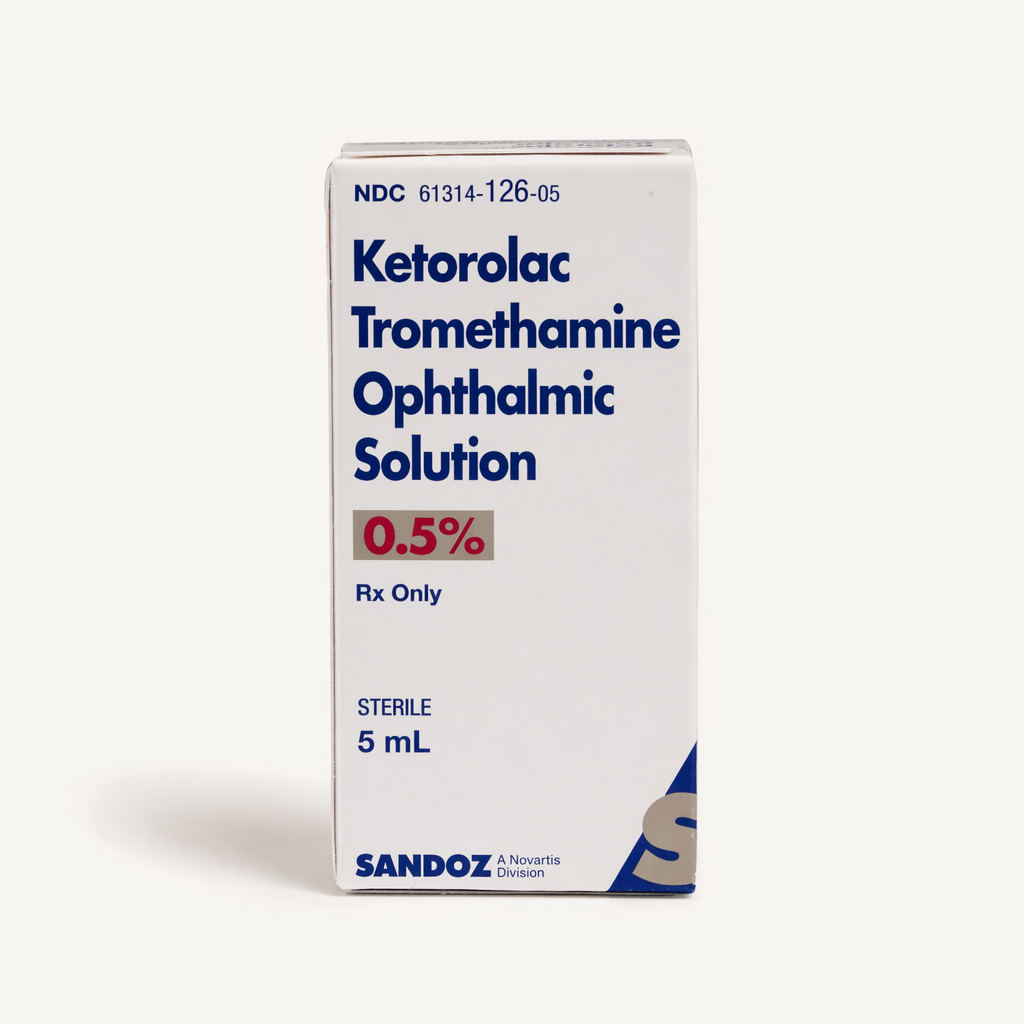
Ketorolac works by inhibiting the production of the protein cyclooxygenase (COX) in the eye. By blocking this protein, the medication prevents the formation of prostaglandins that cause inflammation and pain in response to allergens or surgical procedures.
| Quick Facts | |
|---|---|
| Common Brands | Acular, Acular LS, Acuvail |
| Drug Class | Ophthalmic nonsteroidal anti-inflammatory drug (NSAID) |
| Generic Status | Generic is available |
| Availability | Prescription only |
Dosing
For allergy-related eye symptoms, a common dosage is one drop of ketorolac in the affected eye(s) four times daily as needed
For pain after corneal surgery, the typical dose of ketorolac is 1 drop in the affected eye 4 times a day as needed for up to 4 days after the procedure.
When used for pain or inflammation after cataract surgery, patients may be instructed to apply one drop twice a day starting the day before surgery and continuing for two weeks, or one drop four times a day starting 24 hours after surgery and continuing for two weeks.
Note: Dosing information below is educational only. Your prescribing physician will determine your specific dose based on your individual health needs. Always follow your healthcare provider’s instructions for exact dosing.
Uses
FDA-Approved Uses
Ketorolac eye drops are FDA-approved to treat itchy eyes from seasonal allergies. They are also approved for relieving pain or inflammation following cataract removal or corneal refractive surgery.
Off-Label Uses
You may see ketorolac prescribed for uses that are not “FDA-approved.” This is a common and legal practice called “off-label” prescribing, where a doctor uses their clinical judgment to prescribe a drug for a different (but well-researched) purpose.
- Use before cataract surgery: Some providers may use ketorolac eye drops before cataract surgery to help keep the pupil dilated during the procedure and reduce inflammation caused by the surgery.
Side Effects
Like all medications, ketorolac can cause side effects. Some common side effects may improve over time as you adjust to the medication. Other side effects may be serious and require medical attention.
Common Side Effects
- Temporary stinging or burning
- Eye redness, swelling, or pain
- Headache
- Higher eye pressure after cataract surgery
- Bleeding in the outermost membrane of the eye
- Blurry vision
- Tearing up
- Hazy or cloudy corneas
Serious Side Effects
Serious side effects are rare, but it’s important to know what to look for if they do occur.
- Severe allergic reactions: An allergic reaction can cause wheezing, a racing pulse, swollen lymph nodes, facial swelling, hives, or dizziness. Seek medical attention if you have signs of a serious allergic reaction.
- Bleeding issues: Ketorolac can elevate the risk of bleeding in the eye, particularly around the time of eye surgeries.
- Severe eye problems: Some patients may experience thinning, weakening, or inflammation of the cornea (keratitis), which can cause severe eye pain, persistent blurry vision, or sensitivity to light.
- Delayed healing: Ketorolac may slow the eye’s normal healing process after surgery. The risk of this side effect may be greater if ketorolac is used alongside steroid eye drops.
Call your doctor immediately if you experience any concerning or prolonged symptoms.
Pharmacist Tips
Wash Your Hands
Before applying the eye drops, wash your hands thoroughly to keep germs out of your eyes.
Avoid Touching The Tip
Do your best not to let the dropper tip touch your eye, fingertips, or any surrounding surfaces. This helps keep the ketorolac solution sterile.
Remove Contact Lenses
Take out contact lenses before putting in ketorolac eye drops. Providers may suggest waiting at least 15 minutes before inserting contacts after using ketorolac eye drops.
Sequence Different Eye Drops
If your treatment plan requires multiple eye medications in the same eye, providers recommend spacing out the drops by at least five minutes. This helps your eye absorb each medication fully.
Apply The Drops Correctly
Tilt your head back, look up, pull down your lower eyelid to form a pocket, and squeeze in a drop. Then, close your eye and lightly press one finger to the inner corner of your eye for one minute.
Store At Room Temperature
Keep ketorolac eye drops in the original pharmacy bottle at room temperature.
Drug Interactions
Certain medications and substances can interact with ketorolac eye drops, potentially increasing the risk of side effects or slowing the healing process after eye procedures. Because ketorolac eye drops are applied locally to the eye, systemic interactions are less common than with oral NSAIDs.
- Blood thinners and antiplatelet medications: Taking medications such as warfarin, apixaban, rivaroxaban, heparin, aspirin, or clopidogrel alongside ketorolac eye drops may increase the risk of bleeding in the eye. This is especially important around the time of cataract surgery or other eye procedures because even minor bleeding may affect healing or visibility during surgery.
- Corticosteroid eye drops: Using ketorolac alongside steroid eye drops, such as dexamethasone or prednisolone, may slow corneal healing and delay recovery after eye surgery. The combination may also increase the risk of irritation or damage to the surface of the eye when used for prolonged periods.
Always give your doctor and pharmacist a complete list of all your medications, vitamins, and supplements to check for potential interactions and safety concerns.
FAQs
Why did my doctor warn me to never take this medication for more than 5 days in a row?
The situation, formulation, and dosage determine how long you take ketorolac. While you may use ketorolac eye drops for more than five days, you should always follow your doctor’s prescribed schedule.
What is the difference between eye drops, an injection at the hospital, and the pills I take at home?
As a medication, ketorolac can be administered in different ways, and this affects the risk of certain side effects. The eye drop formulation is prescribed for specific purposes and may not impact the body in the same way as ketorolac injections or pills. These medicines are not interchangeable.
Is it safe to take Advil or Aleve while taking this prescription?
Because ketorolac eye drops have minimal systemic absorption, occasional use of NSAIDs like ibuprofen (Advil) or naproxen (Aleve) is not usually associated with significant interactions, though caution may still be appropriate in patients at higher risk of NSAID-related side effects.
Does taking this medication cause a physical “high” or drowsiness like an opioid does?
Ketorolac is not an opioid or a controlled narcotic, nor is it associated with drowsiness or a physical “high.” Ketorolac is a type of medication called an NSAID that works by reducing inflammation and pain associated with swelling.
Can taking ketorolac cause a dangerous spike in blood pressure?
While the oral and injectable forms of ketorolac have the potential to raise blood pressure, the ophthalmic (eye drop) formulation is generally not associated with systemic blood pressure effects.
Is it safe to drink alcohol or have a beer while taking this medication?
It is currently unknown if drinking alcohol will affect the safety or efficacy of ketorolac eye drops. Ask your doctor for guidance about consuming alcohol while using ketorolac eye drops.
Can I safely take ketorolac if I have a history of kidney disease or stomach ulcers?
Ketorolac eye drops are not specifically contraindicated for people who have a history of kidney disease or stomach ulcers. However, it is best to check with your doctor if you have a history of these conditions or take medications to manage them.
Does this medication actively reduce physical swelling and inflammation?
Ketorolac actively reduces inflammation by blocking specific proteins and chemicals (prostaglandins) that the body releases in response to allergens or surgical trauma. Ketorolac eye drops can reduce pain and inflammation in the eyes.
Is there a risk of addiction or withdrawal symptoms if I stop taking this?
Research to date has not documented a risk of addiction or withdrawal symptoms with ketorolac eye drops.
Comparable Medications
Ketorolac, Bromfenac (Prolensa), Nepafenac (Nevanac/Ilevro), Diclofenac Eye Drops, Prednisolone Eye Drops?
Bromfenac
This is an NSAID eye drop used to reduce inflammation after cataract surgery. It is typically used 1 to 2 times per day and is not commonly prescribed to treat allergy-related eye symptoms.
Nepafenac
Nepafenac is another ophthalmic NSAID commonly used after cataract surgery to reduce pain and inflammation. It penetrates the eye tissue differently than ketorolac and may be preferred in certain surgical settings.
Diclofenac eye drops
Diclofenac eye drops are used to reduce ocular inflammation and pain after eye procedures. Like ketorolac, they belong to the NSAID class and may cause temporary burning or irritation after application.
Prednisolone acetate eye drops
Prednisolone eye drops are corticosteroids used to control inflammation after eye surgery. Unlike ketorolac, steroid eye drops suppress the immune inflammatory response more broadly but may increase the risk of elevated eye pressure or delayed healing with prolonged use.
We Have Ketorolac in Stock. Get Yours Today!
Important: Information on this page is for educational purposes only. Prescribing decisions are made by independent, licensed providers. TelyRx operates technology-enabled pharmacies and a telehealth platform that connects patients with licensed providers. Prescriptions, when provider-approved and issued, are filled and shipped by TelyRx-affiliated pharmacies. We do not employ physicians or make prescribing decisions. Learn more about our editorial standards here.