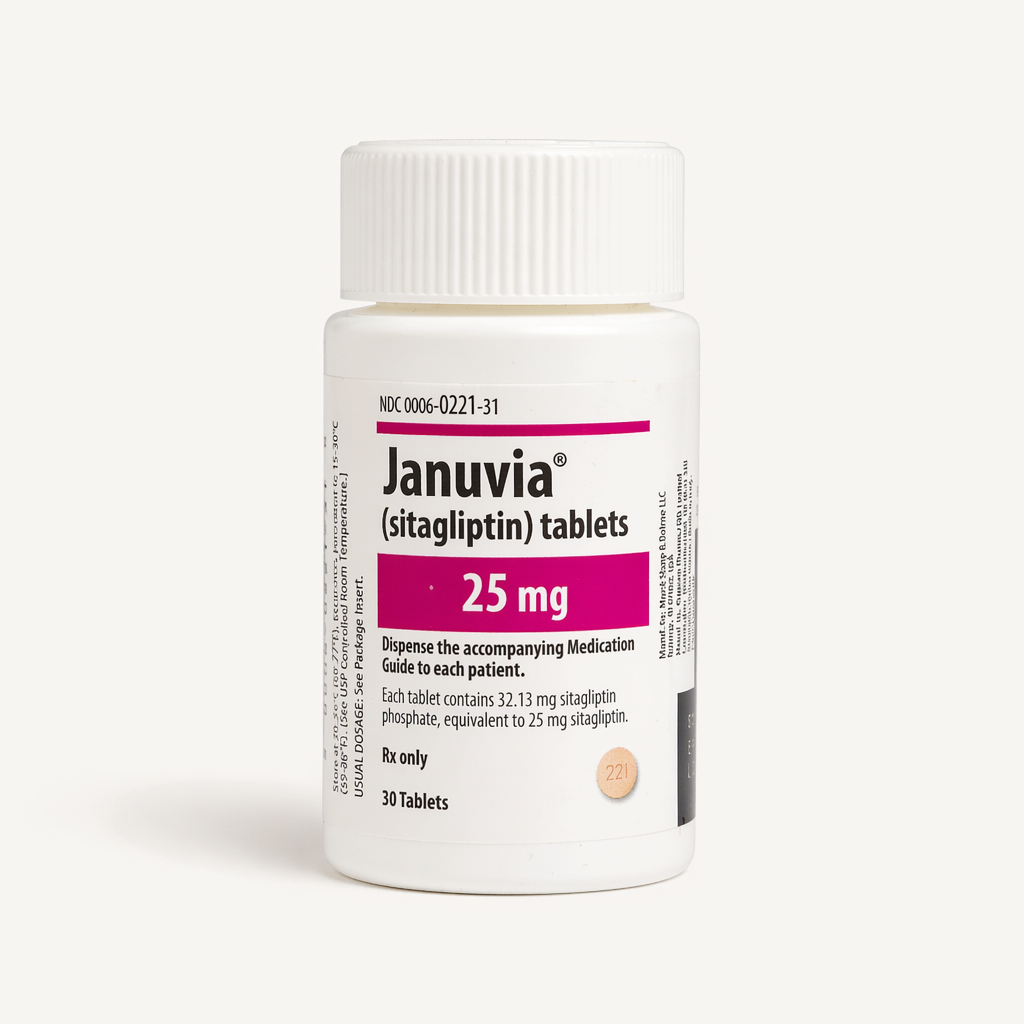
How It Works
Januvia works by inhibiting dipeptidyl peptidase-4 (DPP-4), an enzyme that interferes with hormones that signal the pancreas to release insulin and the liver to stop producing excess sugar. Blocking the DPP-4 allows these hormones to remain active in the bloodstream longer. Januvia also helps lower the amount of sugar the liver pumps into the blood when it isn’t needed.
Januvia helps increase insulin release when blood sugar levels are elevated, such as after meals. Because of this mechanism, Januvia alone has a low risk of causing hypoglycemia (low blood sugar). However, the risk of hypoglycemia may increase when Januvia is taken alongside other diabetes medications that lower blood sugar, such as insulin or sulfonylureas.
| Quick Facts | |
|---|---|
| Common Brands | Januvia |
| Drug Class | Dipeptidyl peptidase-4 (DPP-4) inhibitor |
| Generic Status | Generic version available |
| Availability | Prescription only |
Dosing
Januvia works over a 24-hour cycle and typically requires one daily oral dose.
- Standard dosage: Providers typically prescribe adult patients 100 mg of Januvia per day, taken in one dose.
- Administration: Since Januvia is an extended-release medication, standard guidelines advise to swallow the tablet whole with water. Cutting, crushing, or chewing the medication can interfere with the timing mechanism.
- Kidney considerations: Januvia is cleared through the kidneys, so doctors perform blood work to check renal function before recommending the medication to patients. If the results indicate reduced kidney function, the dose may be lowered to 50 mg or 25 mg per day.
Note: Dosing information below is educational only. Your prescribing physician will determine your specific dose based on your individual health needs. Always follow your healthcare provider’s instructions for exact dosing.
Uses
FDA-Approved Uses
Januvia is FDA-approved to improve glycemic control in adults with type 2 diabetes mellitus. The medication is not indicated for the treatment of type 1 diabetes or diabetic ketoacidosis.
Off-Label Uses
You may see Januvia prescribed for uses that are not “FDA-approved.” This is a very common and legal practice called “off-label” prescribing, where a doctor uses their clinical judgment to prescribe a drug for a different (but well-researched) purpose.
Common off-label uses for Januvia in current clinical practice and research include:
- Polycystic ovary syndrome (PCSO): Although Januvia is not considered a primary PCSO treatment, providers may recommend the medication to manage insulin resistance for patients with this condition who have not responded to metformin.
Side Effects
Patients generally tolerate Januvia well, and many experience few, if any, major side effects. However, it is important to monitor how your body reacts to the medication, especially during the first few weeks of treatment.
Common Side Effects
Common side effects from using Januvia include:
- Runny nose, sore, throat, cough, and other upper respiratory cold-like symptoms
- Mild to moderate headache
- Nausea, diarrhea, or an upset stomach
Serious Side Effects
Serious side effects are rare, but it’s important to know what to look for if they do occur. Serious side effects from using Januvia can include:
- Pancreatitis: Inflammation of the pancreas is a rare but serious risk of taking this medication. Symptoms include upper stomach pain that radiates to the back and vomiting.
- Heart failure: Some studies suggest an increased risk of heart failure from Januvia and other DPP-4 inhibitor drugs. Signs include shortness of breath, sudden weight gain, and swelling of the feet and ankles.
- Severe joint pain: Some people who take Januvia develop intense joint pain that can occur days or even longer after taking the medication. This side effect often resolves when they stop taking the medication.
- Kidney problems: Some people report a sudden change in kidney function after taking Januvia. Providers typically monitor renal activity with routine tests while their patient is on the medication.
- Severe allergic reaction: As with many types of medication, Januvia can trigger anaphylaxis in people who are allergic to one or more of the medication’s ingredients.
Call your doctor immediately if you experience any concerning or prolonged symptoms.
Pharmacist Tips
Consistency Is Key
Per standard guidelines, patients are advised to take Januvia at the same time every day. Januvia operates on a 24-hour release, so consistent timing from day to day helps ensure a steady level of medication in your system at all times.
Be Aware Of Hypoglycemia Risks
Although Januvia rarely causes low blood sugar, this risk increases if you take the medication with insulin or a sulfonylurea medication like glipizide. Patients are recommended to keep a fast-acting sugar source like glucose tablets or fruit juice to mitigate this issue if it occurs after taking Januvia.
Contact Your Doctor If You Get Sick
Stress on the body, including a fever or physical trauma, can change your insulin needs. Standard guidelines advise you to contact your doctor right away if you become sick in order to adjust your Januvia dose if needed.
Stay Hydrated
Proper hydration supports kidney health, which is essential when taking Januvia.
Keep Detailed Records
Monitoring blood sugar levels at home is an accurate gauge of whether or not the medication is working properly. Talk to your doctor if you notice uneven data or need someone to help interpret the results.
Drug Interactions
Januvia has relatively few direct drug interactions compared to many other diabetes medications. However, some medications and substances can affect blood sugar control, kidney function, or the risk of side effects when used alongside Januvia.
- Insulin and sulfonylureas: Combining Januvia with these other medications can cause a significant drop in blood sugar. If you need to take both, your doctor may lower your insulin or sulfonylurea dose.
- Beta-blockers: Beta-blocker heart medications can mask a faster heartbeat and other symptoms of low blood sugar. This can make it harder to notice your blood sugar is dropping.
- Nonsteroidal anti-inflammatory drugs (NSAIDs): Routine use of NSAIDs like ibuprofen and naproxen can affect kidney function, which in turn affects how your body processes Januvia.
- Alcohol: There is no direct interaction between Januvia and alcohol, but drinking alcohol can cause unpredictable shifts in blood sugar and increase the risk of pancreatitis.
Always give your doctor and pharmacist a complete list of all your medications, vitamins, and supplements to check for potential interactions.
FAQs
How long does it typically take for Januvia to lower my daily blood sugar readings?
Januvia begins working within hours of the first dose, but can take several weeks of consistent daily use before you notice a meaningful and stable downward trend in daily glucose readings.
Do I need to take this pill with a meal?
No, standard guidelines state Januvia is effective with or without an accompanying meal. If you have a sensitive stomach, taking the tablet with food can reduce the risk of an upset stomach.
What is the difference between taking Januvia and taking a combination pill like Janumet?
Januvia only contains sitagliptin, whereas Janumet is a combination drug with sitagliptin and metformin. The latter is often prescribed for convenience to reduce daily doses from one to two.
Can I take over-the-counter (OTC) pain relievers like ibuprofen or acetaminophen while on this medication?
Yes, you can take OTC pain relievers like ibuprofen and acetaminophen while on Januvia, but standard guidelines recommend doing so cautiously and under medical supervision, especially with routine NSAID use, since these medications can affect kidney function.
Is it normal to experience a runny nose or cold-like symptoms when first starting this pill?
Yes, cold-like symptoms are a common side effect of taking Januvia. If these side effects persist or become severe, you can talk to your doctor about other medication options.
Can taking this medication cause joint pain over time?
Yes, joint pain over time is a known side effect of taking Januvia. The pain may appear days, weeks, months, or even years after starting Januvia, but this side effect often resolves once the patient stops taking the medication.
Is it safe to drink alcohol while taking Januvia?
Patients are generally advised to limit alcohol consumption while taking Januvia. Although alcohol does not directly interact with Januvia, heavy drinking can cause unpredictable changes in blood sugar levels and may increase the risk of pancreatitis
How does Januvia actually work differently than other diabetes medications like glipizide?
Januvia increases insulin release in a glucose-dependent manner, meaning it works primarily when blood sugar levels are elevated. Medications like glipizide stimulate the pancreas to release insulin regardless of blood sugar levels, which may increase the risk of hypoglycemia.
Will I still need to prick my finger and test my blood sugar every day while on this?
You may not need to prick your finger while taking Januvia, especially if it is your only prescribed diabetes medication, as the drug alone rarely causes low blood sugar. However, patients are recommended to consult with their doctor, as daily monitoring can still help manage type 2 diabetes even with Januvia.
Can I take this pill at the exact same time as my daily metformin tablet?
Yes, standard guidelines state it is safe to take Januvia and metformin pills at the same time every day. There are no known interactions between these two medications, and they are often formulated together for combination medications like Janumet.
Does this medication replace the need for injecting insulin?
No, Januvia is not intended to completely replace insulin injections. Januvia helps manage type 2 diabetes by improving the body’s natural blood sugar regulation, including increasing insulin release when blood sugar levels are elevated. It is often used alongside insulin or other diabetes medications.
Can I split or crush the tablet if I have a hard time swallowing whole pills?
No, standard guidelines advise against crushing or splitting Januvia tablets that are not scored with a line. The tablets are intended to be swallowed whole to ensure the medication is taken properly.
Comparable Medications
Januvia, Metformin, Janumet, Jardiance, or Glipizide/Glimepiride?
Januvia is a prescription-strength oral medication primarily used to optimize the body’s insulin production for people with type 2 diabetes. Based on factors like your medical history and specific symptoms, your doctor may recommend an alternative to Januvia instead. Januvia alternatives include:
Metformin
From $27.99
Metformin makes the body more sensitive to insulin and is often used as first-line treatment for type 2 diabetes. Januvia works differently to optimize insulin production, and the two medications are frequently prescribed together.
Janumet XR®
From $249.99
Janumet is a brand-name combination medication that includes sitagliptin (Januvia) and metformin. Since both of these drugs are commonly prescribed to type 2 diabetes patients, Janumet is a convenient dual-action alternative that allows you to take both doses in a single tablet.
Jardiance®
From $879.99
Jardiance is an SGLT2 inhibitor that helps the kidneys remove excess sugar through the urine. It also provides heart and kidney benefits, while Januvia works differently by improving the body’s natural blood sugar regulation.
Glipizide and Glimepiride
Sulfonylureas like glipizide and glimepiride stimulate the pancreas to release insulin regardless of blood sugar levels. Unlike Januvia, which increases insulin release in a glucose-dependent manner, sulfonylureas are associated with a higher risk of low blood sugar and weight gain. Januvia is considered a more weight-neutral alternative with a lower risk of hypoglycemia.
We Have Januvia in Stock. Get Yours Today!
Important: Information on this page is for educational purposes only. Prescribing decisions are made by independent, licensed providers. TelyRx operates technology-enabled pharmacies and a telehealth platform that connects patients with licensed providers. Prescriptions, when provider-approved and issued, are filled and shipped by TelyRx-affiliated pharmacies. We do not employ physicians or make prescribing decisions. Learn more about our editorial standards here.