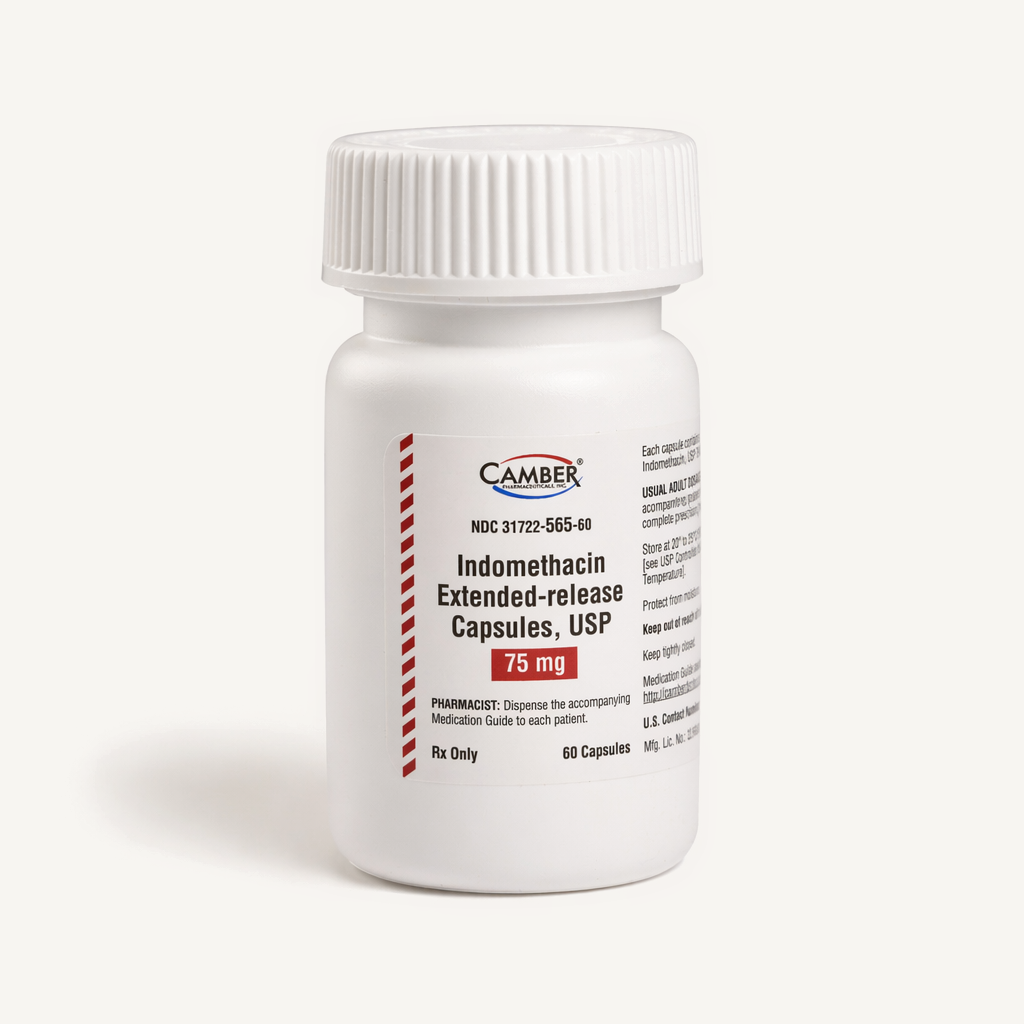
How It Works
Indomethacin blocks the enzymes that produce prostaglandins in response to pain. Prostaglandins cause blood vessels to dilate, leading to redness and swelling. Inhibiting prostaglandin production reduces this reaction.
Patients who take indomethacin typically report a significant reduction in heat, swelling, and the throbbing sensation associated with acute inflammation.
| Quick Facts | |
|---|---|
| Common Brands | Indocin, Indocin SR |
| Drug Class | Nonsteroidal anti-inflammatory drug (NSAID) |
| Generic Status | Generic version available |
| Availability | Prescription only |
Dosing
Dosing for indomethacin depends on the patient’s condition and which formulation their provider has prescribed.
- For acute gout: Standard guidelines recommend taking 50 mg three times daily, then continuing until the pain becomes tolerable. Providers generally advise patients to minimize how long they take higher dosages.
- For chronic arthritis: Providers typically recommend 25–50 mg of indomethacin two or three times daily for chronic arthritis. An extended release capsule is taken once daily.
- Administration: Standard guidelines recommend taking indomethacin with a full meal, milk, or an antacid. This helps create a protective buffer for the stomach lining.
- Measurement: If using the oral liquid suspension, always use a calibrated medical syringe or dose cup. Household spoons can be inaccurate and lead to underdosing or overdosing.
Note: Dosing information below is educational only. Your prescribing physician will determine your specific dose based on your individual health needs. Always follow your healthcare provider’s instructions for exact dosing.
Uses
FDA-Approved Uses
Indomethacin is FDA-approved for the following conditions:
- Moderate to severe rheumatoid arthritis, including acute flares
- Moderate to severe ankylosing spondylitis, or inflammation of the spinal joints
- Moderate to severe osteoarthritis, a degenerative bone disease
- Acute gout and rapid relief of gout flares
- Acute bursitis and tendonitis
Off-Label Uses
You may see indomethacin prescribed for uses that are not “FDA-approved.” This is a very common and legal practice called “off-label” prescribing, where a doctor uses their clinical judgment to prescribe a drug for a different (but well-researched) purpose.
Common off-label uses for indomethacin currently found in clinical research and practice include:
- Migraine and cluster headaches: Migraines and cluster headaches, specifically hemicrania continua headache disorder, have been responsive to indomethacin for some people when the drug is prescribed off-label.
- Pericarditis: Indomethacin can help alleviate inflammation around the heart sac associated with pericarditis.
- Severe backache: Indomethacin may serve as a second-line treatment for severe backaches when standard over-the-counter medication does not provide adequate relief.
Side Effects
Indomethacin is stronger than standard over-the-counter pain relievers. Patients are advised to be vigilant of side effects.
Common Side Effects
Common side effects from taking indomethacin include:
- Pounding or frontal headache
- Dizziness
- Nausea, heartburn, or indigestion
Serious Side Effects
Serious side effects are rare, but it’s important to know what to look for if they do occur. Serious side effects from taking indomethacin can include:
- Stomach bleeding and ulcers: Indomethacin can lead to stomach bleeding and ulcers. Symptoms include black or tarry stools, vomit that resembles coffee grounds, and severe stomach pain.
- Cardiovascular risks: Indomethacin can increase the risk of heart attack or stroke, especially with long-term use. The drug can also lead to a sudden spike in blood pressure.
- Kidney impairment: Indomethacin is excreted through the kidneys, so the drug may lead to renal impairment. Symptoms include reduced urination and swelling of the ankles and feet.
- Liver damage: Indomethacin carries the risk of liver damage. Symptoms include dark urine and yellowing of the skin and eyes (jaundice).
- Severe allergic reaction: Swelling of the face, lips, tongue, or throat, or the appearance of hives and a rash.
Call your doctor immediately if you experience any concerning or prolonged symptoms.
Pharmacist Tips
Protect Your Stomach
Never take indomethacin on an empty stomach. An acid reducer can help protect the gastric lining if you are prone to acid reflux.
Swallow The ER Capsule Whole
Swallow indomethacin extended-release capsules whole. Crushing or chewing the capsule interferes with the 24-hour slow-release mechanism, which can be dangerous.
Monitor Your Blood Pressure
Indomethacin can cause fluid retention and sodium buildup. Regularly monitor your blood pressure at home, especially if you have a history of hypertension.
Stay Hydrated
Maintaining steady fluid intake throughout the day helps your kidneys process the indomethacin.
Take Precautions As Needed
Indomethacin can produce dizziness and brain fog as side effects. If you notice these effects after your first few doses of the drug, take precautions for driving or operating machinery.
Drug Interactions
Indomethacin has a broad interaction profile that requires close medical supervision and careful management. Known interactions with indomethacin include:
- Blood thinners: Taking indomethacin with warfarin or clopidogrel significantly increases your risk of major bleeding.
- Other NSAIDs: Taking aspirin or ibuprofen with indomethacin can lead to double dosing, which increases the risk of stomach bleeding and ulcers.
- Blood pressure medications: Indomethacin can make certain blood pressure medications less effective, including ACE inhibitors such as lisinopril and water pills.
- Lithium and methotrexate: Indomethacin can cause these medications to build up in the bloodstream and reach toxic levels.
- Alcohol: Drinking beer or wine with indomethacin increases the risk of stomach irritation and gastrointestinal bleeding.
Always give your doctor and pharmacist a complete list of all your medications, vitamins, and supplements to check for potential interactions.
FAQs
Why do I have to take indomethacin with a full meal or an antacid?
NSAIDs like indomethacin work by inhibiting COX-1 enzymes, which help maintain the protective mucus lining in your stomach. Taking the drug with food creates a physical barrier to prevent the medication from irritating the wall of your stomach.
Is it normal to get a pounding headache from taking this medicine?
Yes, a pounding headache is a common side effect of indomethacin. If the headache is severe or persistent, you can talk to your provider about adjusting the dosage or other options.
How fast does indomethacin usually stop the throbbing pain of a gout attack?
Patients typically notice a reduction in throbbing and heat from gout within 2 to 4 hours of taking indomethacin. Significant relief typically occurs within 24 to 48 hours of the first dose.
Can taking this medication cause my blood pressure to spike suddenly?
Yes, taking indomethacin can cause a sudden spike in blood pressure. This is a known side effect of NSAIDs in general.
Is it safe to take aspirin at the same time as indomethacin?
Per standard guidelines, taking aspirin and indomethacin at the same time is not recommended. Both medications are NSAIDs, so this can result in double-dosing with an increased risk of side effects.
Can I drink a beer or have a glass of wine while on this?
Standard guidelines caution that drinking beer or wine while taking indomethacin can increase your risk of stomach irritation and gastrointestinal bleeding. Providers generally recommend minimizing or abstaining from alcohol while taking this medication.
How many days in a row is it safe to take this for a gout or arthritis flare-up?
The safe duration for taking indomethacin for gout or arthritis flare-ups depends on your medical history and the specific formulation prescribed. Generally, providers recommend taking the medication daily as directed until the pain resolves.
Is it safe to take an acid reducer like omeprazole to protect my stomach from indomethacin?
Yes, it is considered safe to take an acid reducer like omeprazole to protect your stomach from indomethacin. Proton pump inhibitors are commonly prescribed alongside indomethacin to reduce the risk of stomach ulcers for people who need to take indomethacin for a longer period.
Can I use this medication to treat a migraine or backache?
Although indomethacin is not FDA-approved to treat migraines and backaches, it is commonly prescribed off-label for people with these conditions who have not found relief with other treatments.
Does indomethacin interact with blood thinners?
Yes, indomethacin has a known interaction with blood thinners like warfarin and clopidogrel. Taking indomethacin alongside blood thinners can significantly increase your risk of major bleeding.
Can I cut or crush the extended-release capsules if I have trouble swallowing them?
No, cutting or crushing the extended-release capsules is not recommended, even if you have trouble swallowing. Breaking the capsule can interfere with the 24-hour release mechanism and cause medication to flood your system too quickly. Talk to your doctor about your options if you are unable to swallow the extended-release capsule without discomfort.
Comparable Medications
Indomethacin, Ibuprofen, Colchicine, Allopurinol, or Meloxicam?
Indomethacin is a prescription-strength NSAID primarily used to treat inflammation and other symptoms associated with arthritis and gout. Depending on factors such as your medical history and the severity of your symptoms, your provider may recommend an alternative to indomethacin. Indomethacin alternatives include:
Ibuprofen
Ibuprofen is an over-the-counter NSAID used for mild headaches or muscle strains. In contrast, indomethacin is used for more severe inflammation associated with gout flares.
Colchicine
From $69.59
Colchicine stops the inflammatory response of gout before it starts.
Allopurinol
From $27.99
A long-term maintenance medication taken daily to reduce uric acid production in people with gout. Indomethacin and allopurinol are commonly prescribed together to reduce inflammation and manage uric acid levels after the gout flares subside.
Meloxicam
From $19.99
A long-term maintenance medication for managing osteoarthritis and rheumatoid arthritis. It is gentler on the stomach and taken once per day.
We Have Indomethacin in Stock. Get Yours Today!
Important: Information on this page is for educational purposes only. Prescribing decisions are made by independent, licensed providers. TelyRx operates technology-enabled pharmacies and a telehealth platform that connects patients with licensed providers. Prescriptions, when provider-approved and issued, are filled and shipped by TelyRx-affiliated pharmacies. We do not employ physicians or make prescribing decisions. Learn more about our editorial standards here.