How It Works
Icosapent ethyl functions through the following mechanisms:
- Reducing triglyceride production: It signals the liver to produce fewer triglycerides. By slowing down the source of triglyceride production, less fat enters the bloodstream.
- Increasing removal: It enhances the body’s ability to clear existing triglycerides from the blood.
- Anti-inflammatory effects: It helps reduce inflammation in arterial walls, a major contributor to plaque buildup.
- Plaque stabilization: Some research suggests icosapent ethyl may help stabilize existing arterial plaques, reducing the risk of rupture and heart attack or stroke.
| Quick Facts | |
|---|---|
| Common Brands | Vascepa |
| Drug Class | Lipid-lowering agent / Omega-3 fatty acid |
| Generic Status | Generic version available |
| Availability | Prescription only |
Dosing
To get the most benefit from icosapent ethyl, it’s generally recommended to be taken exactly as directed. The drug’s efficacy depends on maintaining consistent levels in your system.
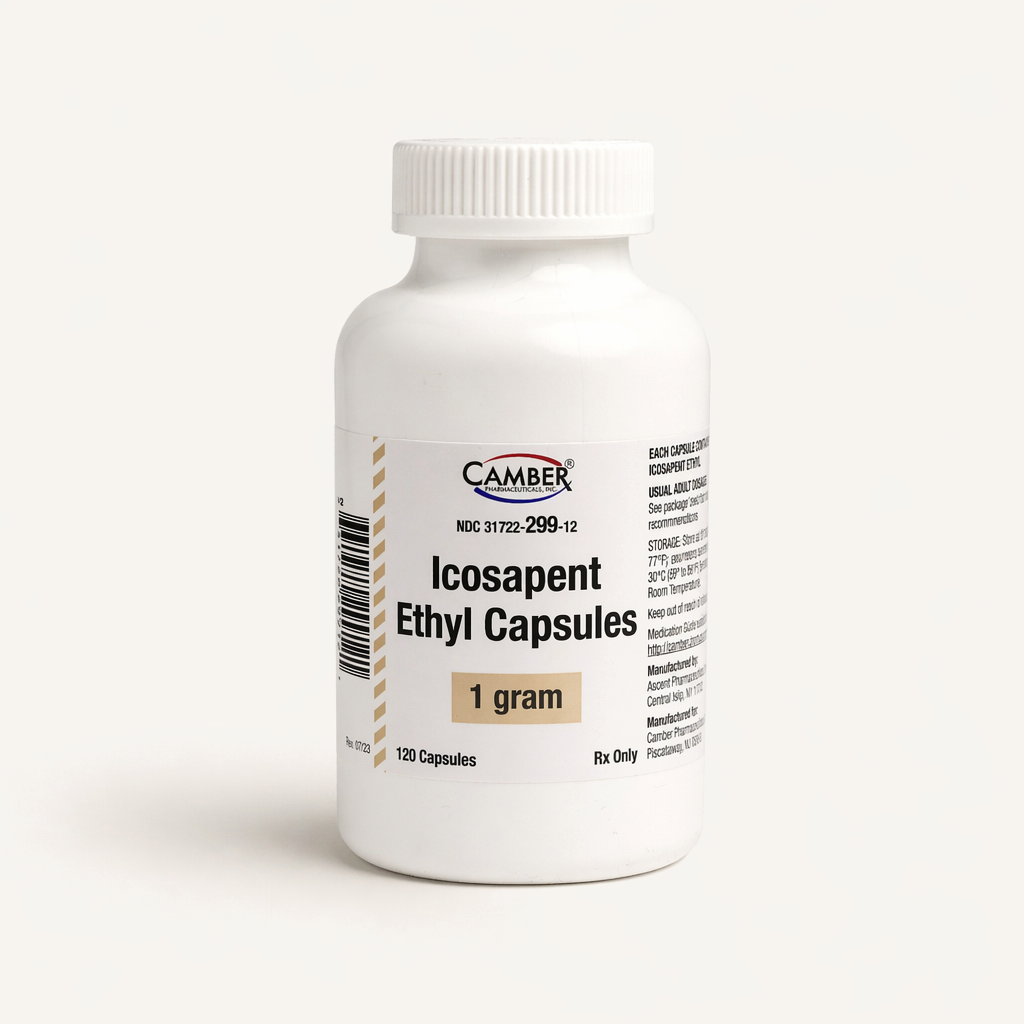
- Typical dose: The standard dose is 4 grams per day. This is usually taken as two 1-gram capsules twice daily.
- Administration: Standard guidelines suggest taking these capsules with or immediately after a meal. Taking them with food helps your body absorb the medication.
- Capsule care: It is generally accepted that capsules should be swallowed whole. Standard guidelines advise against chewing, crushing, popping, or dissolving the capsules, as this can interfere with the release of the medicine.
- Missed doses: If you miss a dose, it’s generally advised to take it as soon as you remember. If it is almost time for your next dose, providers recommend skipping the missed one. It’s generally advised to not take a double dose to make up for a missed dose.
Providers typically recommend continuing a heart-healthy diet and regular exercise routine while taking this medication.
Note: Dosing information below is educational only. Your prescribing physician will determine your specific dose based on your individual health needs. Always follow your healthcare provider’s instructions for exact dosing.
Uses
FDA-Approved Uses
The FDA approves icosapent ethyl for:
- Severe hypertriglyceridemia: To reduce triglyceride levels in people with levels of 500 mg/dL or higher
- Cardiovascular risk reduction: As an add-on to statin therapy to reduce the risk of heart attack, stroke, and certain heart-related hospitalizations in high-risk people with triglyceride levels of 150 mg/dL or higher
Off-Label Uses
You may see icosapent ethyl prescribed for uses that are not FDA-approved. This is a common and legal practice called off-label prescribing, where a doctor uses their clinical judgment to prescribe a drug for a different (but well-researched) purpose.
Icosapent ethyl may be prescribed off-label for the following conditions:
- Non-alcoholic fatty liver disease (NAFLD): Because it helps the liver process fats, some doctors prescribe it to reduce fat buildup in the liver.
- Mild triglyceride elevation: In some cases, providers may use it for patients with triglycerides below 150 mg/dL if they have other significant heart disease risk factors and haven’t responded to other treatments.
Side Effects
While icosapent ethyl is generally well-tolerated, it can cause side effects in some patients. Many of these are mild and may improve over time.
Common Side Effects
- Muscle, bone, or joint pain
- Swelling of the hands, legs, or feet (peripheral edema)
- Constipation
- Gout or increased uric acid levels
- Sore throat or mouth pain
Serious Side Effects
Serious side effects are rare, but it’s important to know what to look for if they do occur.
It’s generally accepted that you stop taking the medication and immediately call the doctor if you experience any of the following symptoms:
- Atrial fibrillation (AFib): Some patients develop an irregular or fast heartbeat. It’s generally advised to seek emergency help if you feel chest pain, dizziness, or shortness of breath.
- Severe bleeding: This drug may increase the risk of bleeding, especially if you take blood thinners. Providers generally advise watching for dark, tarry stools, coughing up blood, or bruising easily.
- Severe allergic reactions: Standard guidelines generally recommend stopping the medication and getting help if you experience hives, swelling of the face or tongue, or difficulty breathing.
Call your doctor immediately if you experience any concerning or prolonged symptoms.
Pharmacist Tips
Take With Food
This is crucial for absorption. If you take it on an empty stomach, you may not get the full heart-protecting benefits.
Don’t Skip Your Statin Medication
Icosapent ethyl is usually designed to work alongside your cholesterol medication (like Lipitor or Crestor), not replace it.
Watch For Joint Pain
If you have a history of gout, be aware that this medication can occasionally trigger a flare-up.
Check For Bleeding
If you notice your gums bleed more than usual when brushing or if small cuts take longer to stop bleeding, it’s generally advised to notify your provider.
Consistency Is Key
Heart protection is a long-term goal. You may not feel different while taking this, but that does not mean it is not working.
Store Properly
It’s generally accepted to keep your capsules at room temperature in a dry place. Providers advise against storing them in the bathroom, where steam can damage them.
Drug Interactions
Icosapent ethyl can interact with other medications, particularly those that affect blood clotting or heart rhythm.
It’s generally recommended to notify your doctor if you take any of the following medications:
- Blood thinners: Medications such as warfarin (Coumadin) or clopidogrel (Plavix) can increase the risk of bleeding when used with icosapent ethyl.
- Aspirin: Taking aspirin or ibuprofen regularly can also increase the risk of bleeding.
- Beta blockers: Certain high-blood-pressure medications may interact with the drug.
- Diuretics: Water pills can sometimes affect how the body handles the uric acid changes caused by this medication.
Always give your doctor and pharmacist a complete list of all your medications, vitamins, and supplements to check for potential interactions.
FAQs
Is icosapent ethyl the same thing as over-the-counter fish oil supplements?
No. Over-the-counter supplements are not regulated like prescription drugs and often contain a mix of different oils, including DHA. Icosapent ethyl is purified EPA and is held to stricter medical standards for purity and effectiveness.
Why must I take icosapent ethyl capsules with food?
The healthy fats in the medication need other dietary fats and stomach acid to be absorbed into your system. Taking it with a meal ensures the maximum amount of medicine reaches your bloodstream.
What is the difference between icosapent ethyl and Lovaza?
Lovaza contains a mixture of both EPA and DHA. Icosapent ethyl contains only EPA. The presence of DHA in Lovaza can sometimes raise LDL (or “bad”) cholesterol levels, whereas icosapent ethyl typically does not.
Is it safe to take this medication if I have a severe allergy to fish or shellfish?
Because the medication is derived from fish, there is a risk of an allergic reaction. Standard guidelines suggest that people with severe fish or shellfish allergies should use this medication with extreme caution or avoid it.
Do I still need to take my daily cholesterol medicine while taking icosapent ethyl?
Yes. Icosapent ethyl is intended to be used in addition to statin medications. It treats a different type of blood fat (triglycerides) than statin medications, which primarily focus on LDL cholesterol.
Can I safely drink alcohol while taking this medication?
It is generally recommended to limit alcohol. Alcohol can significantly raise triglyceride levels, which works against what the medication is targeting.
Why do I have to take so many capsules every single day?
Providing a clinical dose of 4 grams of pure EPA requires a large volume of oil. Current technology requires this to be split into multiple capsules to ensure each is swallowable.
Is it true that this drug can trigger a gout flare-up?
Yes, clinical studies have shown a slight increase in gout cases among people taking this medication. If you have a history of gout, it’s generally recommended to monitor for joint pain and swelling.
Will icosapent ethyl help lower my bad LDL cholesterol as well as my triglycerides?
It is primarily used for triglycerides. While it won’t typically lower your LDL levels, it also will not raise it.
Can I take ibuprofen or aspirin while on this drug?
It’s generally advised to talk to your doctor first. Taking ibuprofen and icosapent ethyl together can increase bleeding risk, which may make it harder for your blood to clot if you are injured.
Do I need to have my liver enzymes checked while taking icosapent ethyl?
In some cases, yes. While rare, changes in liver function can occur. Your doctor may include liver tests in your routine blood work.
Can I pop or chew the capsules if they are too big?
No. The capsules are designed to be swallowed whole. Popping or chewing them can lead to an unpleasant taste and may affect how the medication is absorbed by your body.
Comparable Medications
Lovaza, Fenofibrate, Gemfibrozil, or Statins?
Below are comparison summaries for icosapent ethyl and other common triglyceride treatments:
Lovaza
Like icosapent ethyl, Lovaza is a prescription omega-3. However, Lovaza contains both EPA and DHA. The DHA component in Lovaza can sometimes raise LDL (“bad”) cholesterol, which is why icosapent ethyl (which contains no DHA) is more commonly used for patients who already have high LDL levels.
Fenofibrate
From $24.99
This is a different class of medication called a fibrate. It is effective at lowering triglycerides but can cause side effects, such as muscle pain or changes in liver enzymes. It is often used when omega-3 treatments aren't enough.
Gemfibrozil Tablets
From $29.99
Another fibrate used for high triglycerides. It is generally not taken with statin medications because it significantly increases the risk of muscle damage, whereas icosapent ethyl can be used with statin medications.
Atorvastatin
From $26.99
This is a statin medication. Statin medications have a modest effect on triglycerides. Icosapent ethyl is commonly prescribed to be taken with Lipitor to target both high cholesterol and high triglycerides.
OTC fish oil
These supplements may contain impurities and do not have the same amount of icosapent ethyl as pure icosapent ethyl capsules. You may need to take a large number of OTC capsules to reach the clinical dose of icosapent ethyl.
We Have Icosapent Ethyl in Stock. Get Yours Today!
Important: Information on this page is for educational purposes only. Prescribing decisions are made by independent, licensed providers. TelyRx operates technology-enabled pharmacies and a telehealth platform that connects patients with licensed providers. Prescriptions, when provider-approved and issued, are filled and shipped by TelyRx-affiliated pharmacies. We do not employ physicians or make prescribing decisions. Learn more about our editorial standards here.