How It Works
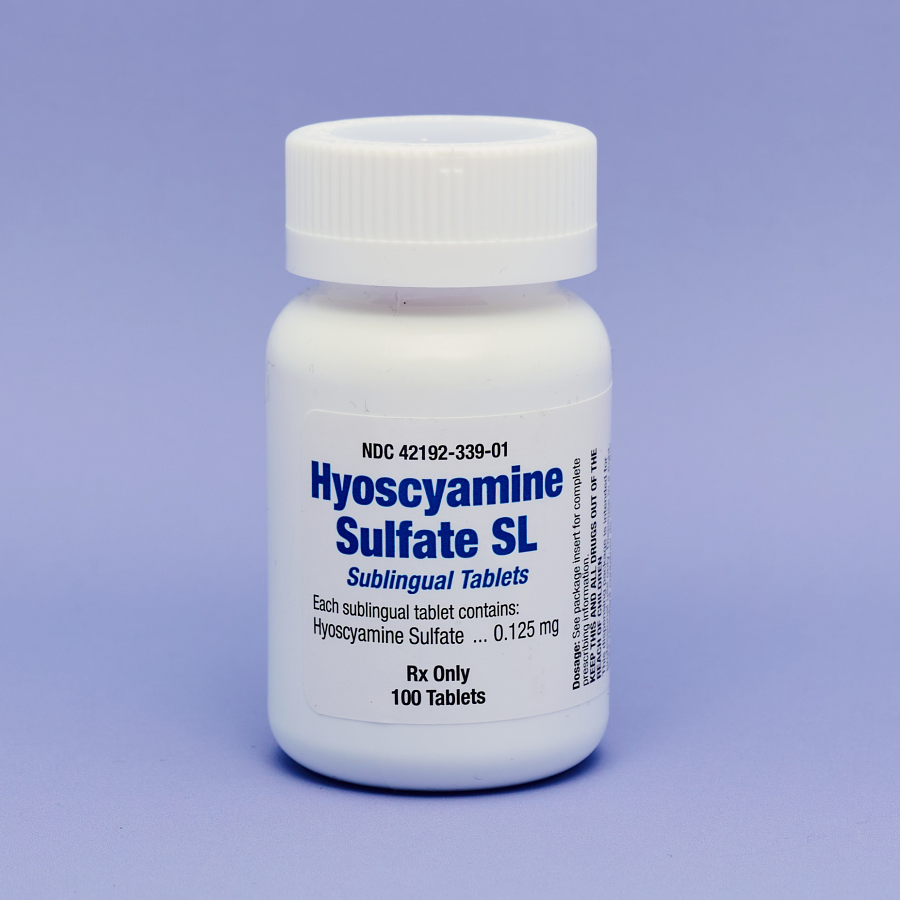
Hyoscyamine works by blocking the action of a chemical called acetylcholine to relax the muscles in the digestive tract and bladder, helping relieve discomfort and muscle spasms. Hyoscyamine also works on the central nervous system and specific glands to decrease the production of various bodily fluids, including sweat, saliva, and stomach acid. It belongs to a group of medications known as anticholinergics or antispasmodics.
| Quick Facts | |
|---|---|
| Common Brands | Anaspaz, Cystospaz, NuLev, Levbid, Levsin, Symax, Hyosyne, Oscimin |
| Drug Class | Anticholinergic, antispasmodic |
| Generic Status | Generic is available |
| Availability | Prescription only |
Dosing
The dosage of hyoscyamine can depend on the specific form you’re taking and what you’re taking it to treat. It is available as immediate-release tablets, extended-release tablets, sublingual tablets, orally disintegrating tablets (ODT), and liquid solutions like elixirs or drops.
Your provider will tell you how to take hyoscyamine. Here are some typical dosing regimens for adults:
- Immediate-release tablets: The recommended dose is 1 to 2 tablets by mouth every 4 hours or as needed. The maximum dose is 12 tablets within 24 hours.
- Extended-release tablets: The recommended dose is 1 to 2 tablets by mouth every 12 hours. The maximum dose is 4 tablets within 24 hours.
- Oral solution drops: The recommended dose is 1 to 2 mL by mouth every 4 hours or as needed. The maximum dose is 12 mL within 24 hours.
- Sublingual tablets: The recommended dose is 1 to 2 tablets by mouth as needed, typically taken before meals.
Note: Dosing information below is educational only. Your prescribing physician will determine your specific dose based on your individual health needs. Always follow your healthcare provider’s instructions for exact dosing.
Uses
FDA-Approved Uses
Hyoscyamine is an FDA-approved prescription medication, although it is an older drug that was introduced before the modern FDA drug approval framework.It is commonly used for:
- Stomach and intestinal issues, including irritable bowel syndrome (IBS), peptic ulcer disease, dysentery, diverticulitis, stomach cramps, inflammation in the small and large intestines (enterocolitis), and excessive movement of food through the stomach (hypermotility)
- Bladder problems, such as neurogenic bladder and bladder inflammation (cystitis)
- Muscle spasms occurring in the large intestine or bladder
- Renal colic caused by kidney stones
- Biliary colic from gallstones
- Parkinson’s disease symptoms, including excessive sweating, drooling, tremors, and stiffness
Get Savings Updates for Hyoscyamine
Join our mailing list for exclusive deals and more.
Side Effects
Like all medications, hyoscyamine can cause side effects. Some common side effects may improve over time as your body adjusts to the medication. Other side effects may be serious and require medical attention.
Common Side Effects
- Dry mouth
- Facial flushing
- Trouble urinating
- Blurred vision
- Dizziness
- Drowsiness
- Decreased sweating
- Fast heartbeat or palpitations
- Dilated pupils
- Headache
- Diarrhea
- Nausea
- Vomiting
- Constipation
- Bloating
- Stomach pain
- Heat intolerance
- Confusion
- Short-term memory loss
Serious Side Effects
Serious side effects are rare, but it’s important to know what to look for if they do occur. Stop using hyoscyamine and call your doctor immediately if you experience:
- Severe allergic reactions: Symptoms include swelling of the face, lips, tongue, or throat; difficulty breathing or swallowing; racing heart; severe rash or itching; fever.
- Heat exhaustion or heatstroke: Because hyoscyamine decreases sweating, it may make it tougher to control your body temperature. This can increase your risk of overheating in hot weather. Symptoms include increased body temperature, decreased sweating, dizziness, tiredness, and nausea.
- Reduced alertness or coordination: Hyoscyamine’s effects on your nervous system may affect your alertness or coordination. It’s recommended to avoid driving or operating heavy machinery until you know how the medication affects you.
- Psychosis or hallucinations: Hyoscyamine can cause psychotic-like behavior, such as seeing or hearing things that aren’t there (hallucinations). Other symptoms include confusion, delusional or disorganized thoughts, agitation or aggressive behavior, memory loss, and a sudden decline in personal hygiene or performance at work or school.
- Bowel blockage: Hyoscyamine may cause a bowel blockage. Symptoms include severe stomach cramps, inability to have a bowel movement or pass gas, loss of appetite, and vomiting.
Call your doctor immediately if you experience any concerning or prolonged symptoms.
Pharmacist Tips
Take With or Without Food
You can take hyoscyamine with or without food. If it upsets your stomach, taking it with food may offer relief.
Let ODT and Sublingual Tablets Dissolve Before Swallowing
Sublingual tablets should be placed under the tongue, while orally disintegrating tablets should be placed on top of the tongue. Allow the tablet to dissolve completely. Do not swallow it whole, and avoid eating, drinking, or smoking while it is dissolving.
Swallow Extended-Release Tablets Whole
Do not chew, split, or crush them, as this can affect how the medication is absorbed. It is normal to occasionally see parts of the tablet in your stool.
Stay Hydrated
Because hyoscyamine reduces saliva and sweat, you may be more likely to overheat and experience dry mouth or thirstiness. Stay hydrated by drinking plenty of water. Avoid prolonged exposure to hot weather to prevent heatstroke.
Wait To See How The Medication Affects You
Hyoscyamine can impair your coordination and focus. Avoid driving, operating heavy machinery, or performing tasks that require your full alertness until you understand how the medication affects you.
Store At Room Temperature
Hyoscyamine should be stored at 68°F to 77°F (20°C to 25°C) in a cool, dry place.
Consider Limiting Alcohol
Drinking alcohol while taking hyoscyamine may increase your risk of dizziness or drowsiness on the medication.
Tell Your Provider If You’re Pregnant Or Breastfeeding
It is not known if hyoscyamine can affect pregnancy or harm an unborn baby, but it does pass into breast milk. Tell your healthcare provider if you are pregnant, breastfeeding, or planning to be, so they can advise whether this medication is safe for you to take.
Try To Avoid Missing A Dose
If you miss a dose of hyoscyamine, take it as soon as you remember, unless it is almost time for your next dose. In that case, skip the missed dose and take your next dose as scheduled. Do not take double or extra doses to make up for a missed one.
Drug Interactions
Certain medications and substances can interact with hyoscyamine, potentially altering how it works or increasing the risk of side effects. For example:
- Antacids: Over-the-counter antacids containing calcium, aluminum, or magnesium can affect how well hyoscyamine is absorbed. If your provider prescribes antacids, it’s best to take hyoscyamine before meals and your antacid after meals.
- Other anticholinergics: Interactions may occur when hyoscyamine is used with other anticholinergics like scopolamine or atropine.
- Antihistamines: Allergy medications like chlorpheniramine or diphenhydramine (Benadryl) can interact with hyoscyamine.
- Tricyclic antidepressants: Medications like amitriptyline, nortriptyline, and protriptyline may interact with hyoscyamine.
- Amantadine: This medication is known to interact with hyoscyamine.
- Monoamine oxidase inhibitors (MAOIs): These medications can interact with hyoscyamine.
- Antipsychotic medications: Drugs like haloperidol and phenothiazines, including chlorpromazine and prochlorperazine, should not be used with hyoscyamine.
- Alcohol: Drinking alcohol while taking hyoscyamine can significantly increase your risk of dizziness and drowsiness.
Always give your doctor and pharmacist a complete list of all your medications, vitamins, and supplements to check for potential interactions.
FAQs
How quickly does the sublingual tablet work for sudden stomach cramps?
Because the sublingual tablet is placed under the tongue, it absorbs into the bloodstream rapidly to provide symptom control.
Does this medication cause difficulty peeing?
Yes, trouble urinating is a known and common side effect of hyoscyamine. The medication should be used with caution in people with prostate issues, as it may worsen the condition.
Can I swallow the sublingual tablets if I don’t like the taste?
No, sublingual tablets are designed to dissolve under the tongue. You should allow the tablet to dissolve entirely without eating or drinking, though you may swallow your saliva during the process.
Is it safe for elderly patients to take hyoscyamine?
People aged 65 and older may be at a higher risk for serious side effects on hyoscyamine, including an increased risk for falls due to dizziness. If prescribed, providers may recommend a lower dose.
Why is this drug forbidden for those with narrow-angle glaucoma?
Hyoscyamine is contraindicated for individuals with glaucoma, meaning it is not safe to use due to the specific health risks it poses to eye pressure.
Can I take over-the-counter antacids at the same time as hyoscyamine?
Standard guidelines suggest avoiding taking them at the exact same time, as antacids can interfere with hyoscyamine absorption. If prescribed together, providers typically recommend taking your hyoscyamine before meals and your antacid after meals.
Is hyoscyamine a narcotic or a controlled substance?
No, hyoscyamine is neither a narcotic nor a controlled substance. It is classified as an anticholinergic.
Why is my heart beating much faster than normal after taking a dose?
A fast heart rate (tachycardia) is a potential side effect of hyoscyamine. If you have a history of heart problems or high blood pressure, this medication can worsen your condition.
Can I drink alcohol while taking hyoscyamine for stomach cramps?
It is highly recommended to limit or avoid alcohol entirely while taking hyoscyamine. Alcohol can worsen drowsiness, dizziness, and other side effects.
Do I need to take this pill every day, or just as needed for sudden pain?
Your healthcare provider will determine the best schedule. Hyoscyamine can be prescribed to be taken daily or only used as needed for symptom relief.
Can I use hyoscyamine to treat an overactive bladder?
Yes, hyoscyamine is used to control muscle spasms in the bladder and treat conditions like neurogenic bladder and bladder inflammation (cystitis).
Can hyoscyamine cause tooth decay?
Hyoscyamine causes the body to produce less saliva, leading to dry mouth. Saliva helps protect the teeth. It’s recommended to stay hydrated while taking hyoscyamine and maintain regular dentist appointments.
Is it safe for pregnant or breastfeeding women to take hyoscyamine?
It is currently unknown if hyoscyamine is safe during pregnancy, as it has not been extensively studied for this group, so risk cannot be ruled out. However, the medication does pass into breast milk. Tell your healthcare provider if you are pregnant, planning to become pregnant, or breastfeeding so they can advise whether hyoscyamine is safe for you to take.
Comparable Medications
Hyoscyamine, dicyclomine (Bentyl), scopolamine (Transderm Scop), atropine, loperamide (Imodium), or oxybutynin (Ditropan)?
There are several medications that your doctor can prescribe in place of hyoscyamine. Here are a few possible alternatives below.
Dicyclomine
From $29.99
An anticholinergic used to treat irritable bowel syndrome (IBS).
Scopolamine Patch
From $24.99
An anticholinergic transdermal patch used to prevent nausea and vomiting.
Atropine
An anticholinergic used to treat slow heart rate (bradycardia) and reduce salivation.
Loperamide
An antidiarrheal used to treat diarrhea, travelers’ diarrhea, and diarrhea due to conditions such as Crohn’s disease.
Oxybutynin ER Tablets
From $32.99
An anticholinergic used to treat overactive bladder.
We Have Hyoscyamine in Stock. Get Yours Today!
Important: Information on this page is for educational purposes only. Prescribing decisions are made by independent, licensed providers. TelyRx operates technology-enabled pharmacies and a telehealth platform that connects patients with board-certified licensed providers. Prescriptions, when provider-approved and issued, are filled and shipped by TelyRx-affiliated pharmacies. We do not employ physicians or make prescribing decisions. Learn more about our editorial standards here.