How It Works
Febuxostat works by blocking an enzyme in the body called xanthine oxidase. This enzyme makes uric acid, so by blocking it, febuxostat helps lower uric acid levels. Keeping uric acid levels consistently low helps prevent future gout attacks and the formation of kidney stones.
| Quick Facts | |
|---|---|
| Common Brands | Uloric |
| Drug Class | Antigout agent, xanthine oxidase inhibitor |
| Generic Status | Generic is available |
| Availability | Prescription only |
Dosing
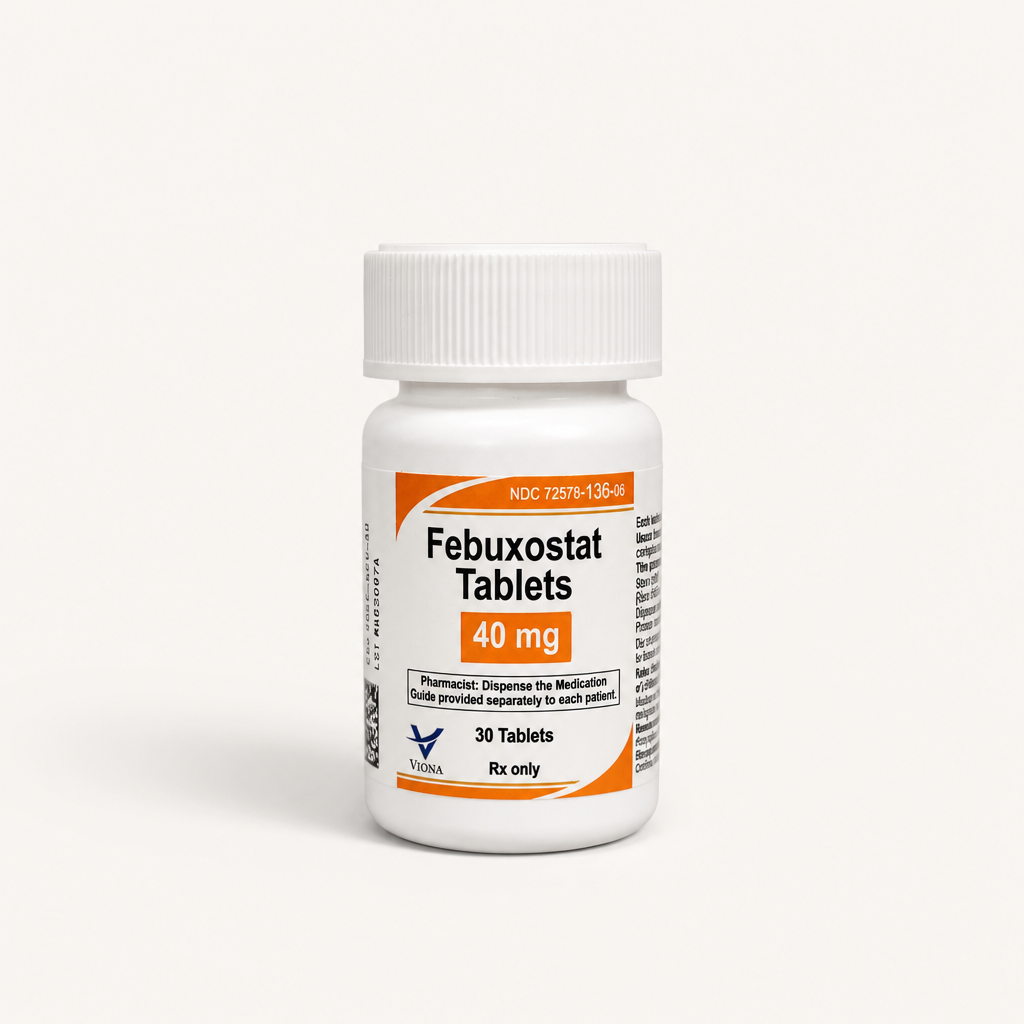
Febuxostat tablets come in dosage strengths of 40 mg and 80 mg.
The recommended starting dose is 40 mg taken by mouth once daily. If your uric acid levels are still too high after a couple of weeks, your healthcare provider may increase the dose to 80 mg once daily. The maximum dosage is 80 mg per day.
Note: Dosing information below is educational only. Your prescribing physician will determine your specific dose based on your individual health needs. Always follow your healthcare provider’s instructions for exact dosing.
Uses
FDA-Approved Uses
Febuxostat tablets are FDA-approved for long-term management of hyperuricemia (high uric acid levels) in people with gout who either cannot take or who have not responded well to allopurinol (another anti- gout medication).
Off-Label Uses
You may see febuxostat tablets prescribed for uses that are not “FDA-approved.” This is a common and legal practice called “off-label” prescribing, where a doctor uses their clinical judgment to prescribe a drug for a different (but well-researched) purpose.
There are currently no common off-label uses for febuxostat tablets.
Side Effects
Like all medications, febuxostat tablets can cause side effects. Some common side effects may improve over time as your body adjusts to the medication. Other side effects may be serious and require medical attention.
Common Side Effects
- Nausea
- Headache
- Elevated liver enzymes
- Dizziness
- Joint pain
- Skin rash
Serious Side Effects
Serious side effects are rare, but it’s important to know what to look for if they do occur. Stop using febuxostat and call your doctor immediately if you experience:
- Severe allergic reactions: Symptoms include swelling of the face, lips, tongue, or throat; difficulty breathing or swallowing; racing heart; severe rash or itching; and/or fever.
- Heart-related death: Febuxostat can increase the risk of heart-related death when compared to allopurinol, especially in people with heart disease. Symptoms include chest pain, fast or abnormal heartbeat, difficulty breathing, sudden numbness on one side of the body, slurred speech, blurry vision, severe headache, sweating, vomiting, or dizziness.
- Increased gout flares: People may experience more gout attacks for weeks or months before the body adjusts to shifting uric acid levels and febuxostat starts to improve symptoms.
- Severe skin reactions: Febuxostat tablets can cause Stevens-Johnson syndrome (SJS) or toxic epidermal necrolysis (TEN), which can be life-threatening. Symptoms include painful red or purple skin that peels, flat rash or blisters, and red or watery eyes.
- Liver damage (hepatoxicity): Liver damage can occur when taking febuxostat. Symptoms include yellowing of the skin or eyes (jaundice), stomach pain, nausea, vomiting, fever, loss of appetite, dark urine, light-colored stools, weakness, and itching.
Call your doctor immediately if you experience any concerning or prolonged symptoms.
Pharmacist Tips
Take Your Dose at the Same Time Every Day
It’s recommended to take febuxostat at roughly the same time every day to maintain steady levels in your bloodstream.
Take With or Without Food
Febuxostat can be taken with or without food. If it upsets your stomach, taking it with food may help.
Keep Up With Blood Work
Get regular blood tests as recommended by your doctor. These tests help them monitor your uric acid levels and liver function.
Store at Room Temperature
Febuxostat tablets should be stored at 68°F to 77°F (20°C to 25°C) in a cool, dry place away from light.
Manage Active Flares
Do not be discouraged if your gout attacks increase when you first begin treatment. This can happen as your body adjusts to the medication and changing uric acid levels. Continue taking your daily dose and use pain relievers as prescribed by your provider to manage the temporary flares.
Tell Your Provider if You’re Pregnant or Breastfeeding
It is not known if febuxostat can affect pregnancy or pass into breast milk. Tell your healthcare provider if you are pregnant, breastfeeding, or planning to be, so they can advise whether this medication is safe for you to take.
Try to Avoid Missing a Dose
If you miss a dose of febuxostat, take it as soon as you remember, unless it is almost time for your next dose. In that case, skip the missed dose and take your next dose as scheduled. Do not take double or extra doses to make up for a missed one.
Drug Interactions
Certain medications and substances can interact with febuxostat, potentially altering how it works or increasing the risk of side effects. For example:
- Azathioprine: This immunosuppressant should not be used with febuxostat.
- Mercaptopurine: This immunosuppressant and chemotherapy medication should not be used with febuxostat.
- Theophylline: Taking this medication alongside febuxostat may require a dose adjustment by a healthcare provider.
Always give your doctor and pharmacist a complete list of all your medications, vitamins, and supplements to check for potential interactions.
FAQs
Why did my gout get worse right after I started taking this pill?
It is common to experience an increase in gout attacks during the first few weeks or months of treatment. As febuxostat begins lowering uric acid levels in the blood, the body compensates by moving stored uric acid out of the tissues and joints. This shifting process can temporarily trigger gout flares before symptoms improve.
What is the difference between febuxostat and allopurinol?
Both medications are used to prevent gout flares by lowering uric acid levels in the body. Allopurinol is typically the first-choice treatment. Febuxostat is usually prescribed as a second option for people who either do not respond well to allopurinol, or who cannot take it due to severe kidney problems or allergies. Clinical trials have shown a higher risk of heart-related death with febuxostat compared to allopurinol.
Why did my doctor prescribe an NSAID to take alongside febuxostat?
Because gout flares often increase during the initial months of febuxostat treatment, providers typically prescribe a separate anti-inflammatory medication (like an NSAID or colchicine) to help manage pain and inflammation.
Should I stop taking febuxostat during an active gout attack, or keep taking it?
You should continue to take your febuxostat daily, even if you are experiencing an active gout attack. Stopping the medication can disrupt the process of lowering your uric acid levels. You can manage the active attack by using the specific painkiller or anti-gout medication (e.g. colchicine) prescribed by your healthcare provider. Do not stop taking febuxostat unless directed by your healthcare provider.
How long does it take for this medication to lower my blood uric acid levels?
Febuxostat begins working within a few hours to actively lower the levels of uric acid circulating in your blood. However, because it takes time to dissolve existing crystals, it may take several months of continuous use before you notice a significant reduction in your actual gout flares.
Is it safe to drink alcohol or beer while taking febuxostat?
It is unknown if consuming alcohol or beer has a direct interaction with the way febuxostat is processed in the body. Your doctor can advise whether it is safe for you to drink while taking this medication.
Does this medication cure gout entirely, or just manage the symptoms?
Febuxostat does not cure gout. Rather, it is a long-term management medication that controls the underlying cause of the condition by keeping uric acid levels low, which in turn can help prevent future flare-ups and joint damage.
Can I stop taking the pill once the swelling goes down?
Febuxostat is generally intended for long-term use and should not be discontinued abruptly without the direct guidance of a physician. Stopping the medication early allows uric acid levels to rise again, which will likely result in the return of gout flares.
Do I need to take febuxostat with food to prevent an upset stomach?
Febuxostat can be taken with or without food. However, if you notice that it tends to upset your stomach, taking your dose with a meal may help minimize discomfort.
Does febuxostat cause severe water retention?
Swelling can be a less common side effect of febuxostat. If you experience unexplained swelling, it is important to contact a healthcare provider to be sure it’s not a sign of something more serious.
What should I do if I completely miss a daily dose?
If you miss a dose of febuxostat, you should take it as soon as you remember unless it is almost time for your next dose. If it is almost time for your next scheduled dose, skip the missed dose and resume your normal dosing schedule. Do not take double or extra doses to make up for a missed one.
Can women take febuxostat, or is it exclusively for men?
Febuxostat is not exclusively for men and can be prescribed to anyone requiring gout management. However, its safety during pregnancy remains undetermined, as there have not been sufficient studies to confirm its effects on an unborn baby. Women who are pregnant, planning to become pregnant, or breastfeeding should discuss the risks and benefits with their healthcare provider.
Does febuxostat interact with blood pressure or heart medications?
It might, so it’s best to check with your healthcare provider to avoid any interactions. Febuxostat carries a boxed warning because it may increase the risk of heart-related death, especially in people with a history of heart problems. Share a full list of medications and medical conditions with your provider before you start taking febuxostat.
Comparable Medications
Febuxostat, allopurinol (Zyloprim), colchicine (Colcrys), or pegloticase (Krystexxa)?
There are several medications that your doctor can prescribe in place of febuxostat tablets. Here are a few possible alternatives below.
Allopurinol
From $27.99
A xanthine oxidase inhibitor used for preventing gout flares.
Colchicine
From $69.59
An anti-gout medicine used for preventing and treating gout attacks, as well as treating familial Mediterranean fever.
Pegloticase
A pegylated, recombinant uricase used for preventing gout flares when other gout medicines have not worked.
We Have Febuxostat in Stock. Get Yours Today!
Important: Information on this page is for educational purposes only. Prescribing decisions are made by independent, licensed providers. TelyRx operates technology-enabled pharmacies and a telehealth platform that connects patients with licensed providers. Prescriptions, when provider-approved and issued, are filled and shipped by TelyRx-affiliated pharmacies. We do not employ physicians or make prescribing decisions. Learn more about our editorial standards here.