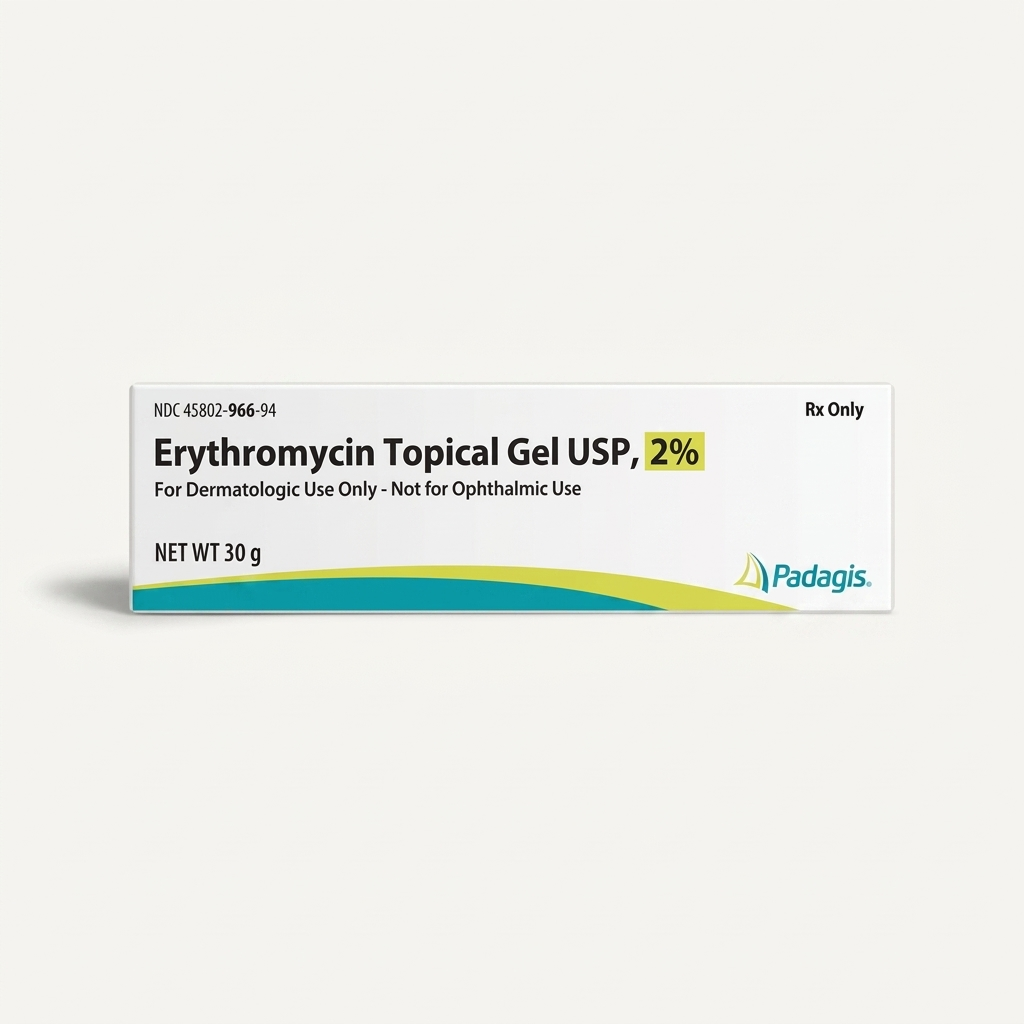
How It Works
Topical erythromycin gel works by targeting the growth of bacteria associated with acne. It also helps decrease the levels of fatty acids that may irritate the skin’s oil glands and clog pores. The medication’s high alcohol content also acts as a drying agent to help remove excess oils from the surface of the skin.
| Quick Facts | |
|---|---|
| Common Brands | Ery, Erygel |
| Drug Class | Topical macrolide antibiotic |
| Generic Status | Generic is available |
| Availability | Prescription only |
Dosing
Cleanse the skin thoroughly with warm water and pat it dry before applying erythromycin gel. It’s recommended to apply a thin layer of the medication on the affected area of skin.
Providers typically recommend using the gel once or twice daily, ideally around the same time(s) each day.
Note: The dosing information below is for educational purposes only. Your prescribing physician will determine your specific dose based on your individual health needs. Always follow your healthcare provider’s instructions for exact dosing.
Uses
FDA-Approved Uses
Erythromycin gel is FDA-approved to treat acne vulgaris.
Off-Label Uses
You may see erythromycin gel prescribed for uses that are not “FDA-approved.” This is a very common and legal practice called “off-label” prescribing, where a doctor uses their clinical judgment to prescribe a drug for a different (but well-researched) purpose.
Erythromycin gel may be used off-label to treat rosacea and other skin conditions.
Side Effects
Like all medications, erythromycin gel can cause side effects. Most common side effects are localized to the area of skin where you apply erythromycin. They may improve over time as your body adjusts to the medication. Other side effects may be serious and require medical attention.
Common Side Effects
- Skin irritation
- Redness
- Dryness
- Peeling
- Itching
- Tenderness
- Burning sensation
Serious Side Effects
Serious side effects are rare, but it’s important to know what to look for if they do occur. Stop using erythromycin gel and call your doctor immediately if you experience:
- Severe allergic reactions: Symptoms include swelling of the face, lips, tongue, or throat; difficulty breathing or swallowing; racing heart; severe rash or itching; and/or fever.
- Antibiotic-associated diarrhea: Some types of antibiotics, including topical erythromycin, can cause an overgrowth of Clostridioides difficile (C. diff) in the gut. This condition can occur up to two months after stopping the medication. Symptoms include watery or persistent diarrhea, blood in the stool, severe stomach cramps, and a fever that begins after starting or finishing the medicine.
Call your doctor immediately if you experience any concerning or prolonged symptoms.
Pharmacist Tips
Wash Your Hands
It’s recommended to wash your hands with soap and water before and after applying the medication.
Avoid Sensitive Areas
Erythromycin gel is for external use only. Avoid getting the medication in your eyes, on your lips, or inside your mouth, nose, or vagina. If accidental exposure occurs, rinse the area thoroughly with cool water.
Avoid Heat And Flames
Erythromycin gel is a flammable product. Standard guidelines suggest keeping the medication away and applying the medication away from heat and open flames.
Do Not Apply To Broken Skin
Avoid applying the gel to severely irritated or broken skin unless instructed by a healthcare provider. If your skin becomes excessively dry, peeling, or irritated while using erythromycin gel, your provider may suggest using the medicine less frequently.
Apply Consistently
It may take weeks of regular use before you notice results with erythromycin gel. Continued, consistent use of the medication helps prevent bacterial resistance.
Store At Room Temperature
Erythromycin gel should be stored at 68°F to 77°F (20°C to 25°C) in a cool, dry place.
Tell Your Provider If You’re Pregnant Or Breastfeeding
It is not known if erythromycin gel can affect pregnancy or pass into breast milk, so risk cannot be ruled out. Tell your healthcare provider if you are pregnant, breastfeeding, or planning to become pregnant.
Try To Avoid Missing A Dose
If you miss a dose of erythromycin gel, use it as soon as you remember, unless it is almost time for your next dose. In that case, skip the missed dose and apply your next dose as scheduled. Do not apply double or extra doses to make up for a missed one.
Drug Interactions
Certain medications and substances can interact with erythromycin gel, potentially altering how it works or increasing the risk of side effects. For example:
- Other acne or skin products: Erythromycin gel may interact with other skin or acne products.
- Clindamycin: Other antibiotics can interact with this medication.
- Corticosteroids: Erythromycin gel may interact with topical corticosteroids, including medications like dexamethasone, hydrocortisone, and prednisolone.
- Warfarin: Interactions can occur when you use erythromycin with warfarin.
Always give your doctor and pharmacist a complete list of all your medications, vitamins, and supplements to check for potential interactions.
FAQs
Does erythromycin gel unclog your pores?
Yes, indirectly. Erythromycin gel works by reducing the levels of fatty acids that may contribute to inflammation and clogged pores.
Must I use benzoyl peroxide face wash while using this prescription?
Your provider can recommend an appropriate skincare regimen for use with erythromycin gel. However, benzoyl peroxide face wash is often recommended for use with erythromycin gel to help kill acne-causing bacteria.
How long does it take to see a reduction in pimples?
It typically takes several weeks of consistent, regular use before people notice improvements in their pimples and breakouts.
Is it normal for my skin to become incredibly dry and flaky during the first week?
Yes, it is common to experience mild skin dryness, peeling, flaking, and irritation, especially when you first start using erythromycin gel.
Should I apply erythromycin gel to individual pimples (spot treatment) or over my entire face?
Standard guidelines suggest applying a thin layer to clean, dry skin on the affected area, or as directed by a healthcare provider.
Can I use a moisturizer immediately after putting on the erythromycin gel?
Topical erythromycin can interact with other skin or acne products, so it’s best to ask your healthcare provider about layering specific moisturizers.
Why did my doctor prescribe erythromycin gel for my rosacea?
A healthcare provider may use their clinical judgment to prescribe topical erythromycin for other conditions as they determine appropriate, including rosacea. This is a common practice known as off-label prescribing.
Is it safe to use this topical antibiotic if I am pregnant or breastfeeding?
It is not known whether topical erythromycin gel affects pregnancy or the fetus, or whether it passes into breast milk. Tell your provider if you are pregnant, planning to become pregnant, or breastfeeding so they can determine if this medication is right for you.
Can I still use my retinol or tretinoin cream?
Topical erythromycin gel may interact with other skin or acne products. Always tell your healthcare provider about all your over-the-counter and prescription medications, as well as current skincare regimen. They can recommend whether you need to make any changes to your skincare routine.
What happens if I accidentally get the gel too close to my eyes?
If you accidentally get erythromycin gel into or near your eyes, rinse the area thoroughly with cool water.
Why is my acne coming back with erythromycin gel?
Stopping treatment before completing the full course can cause the infection to return or become harder to treat. Regular, consistent use helps prevent bacterial resistance.
Is there a difference between the gel, the topical liquid, and the ointment?
Topical erythromycin for acne comes as a gel, a pad, and a liquid solution applied to the skin. Manufacturers also formulate erythromycin as an eye ointment specifically to treat and prevent bacterial eye infections.
Can I use a tanning bed while using this medication?
The topical erythromycin gel formulation is flammable, so the safest approach would be to keep it away from heat and flames. Speak with your doctor about what precautions you may need to take to use a tanning bed.
Will erythromycin gel help fade dark spots and scars left behind by old pimples?
Erythromycin gel stops the growth of germs and bacteria associated with acne breakouts and inflammation. Your dermatologist can recommend a different medication if you want to treat dark spots or acne scars.
Should I leave it on my skin all day?
Yes, providers typically recommend applying a thin layer of erythromycin gel once or twice daily at the same times each day, and leaving it on to maintain consistent therapeutic levels.
Does erythromycin gel need to be kept in the refrigerator?
No, the gel should generally be stored in a cool, dry place at room temperature (68°F to 77°F, or 20°C to 25°C). Refer to your prescribing label, medication packaging, or doctor’s instructions for specific storage instructions.
Can I apply makeup on top of the dried gel?
Erythromycin gel can interact with other skin products. It is best to check with your provider regarding specific makeup products.
Can I use this on body acne as well as my face?
Yes. Acne vulgaris frequently appears on the chest, shoulders, and back. Doctors commonly prescribe topical erythromycin to treat all of these areas as well as the face.
Comparable Medications
Erythromycin gel, Clindamycin (Cleocin T), Benzamycin (erythromycin 3% + benzoyl peroxide 5%), BenzaClin / Duac (clindamycin + benzoyl peroxide), dapsone (Aczone), metronidazole (MetroGel), or tretinoin (Retin-A)?
There are several medications that your doctor can prescribe in place of erythromycin gel. Here are a few possible alternatives below.
Clindamycin Gel
From $29.99
A topical antibiotic used to treat acne vulgaris.
Benzamycin
A topical combination antibiotic used to treat acne vulgaris.
BenzaClin / Duac
A topical combination antibiotic used to treat acne vulgaris.
Dapsone Gel
From $149.99
A topical antibiotic used to treat acne vulgaris.
Metronidazole
From $22.99
A topical antibiotic used to treat rosacea.
Tretinoin
From $47.99
A topical retinoid used to treat acne.
We Have Erythromycin Gel in Stock. Get Yours Today!
Important: Information on this page is for educational purposes only. Prescribing decisions are made by independent, licensed providers. TelyRx operates technology-enabled pharmacies and a telehealth platform that connects patients with licensed providers. Prescriptions, when provider-approved and issued, are filled and shipped by TelyRx-affiliated pharmacies. We do not employ physicians or make prescribing decisions. Learn more about our editorial standards here.