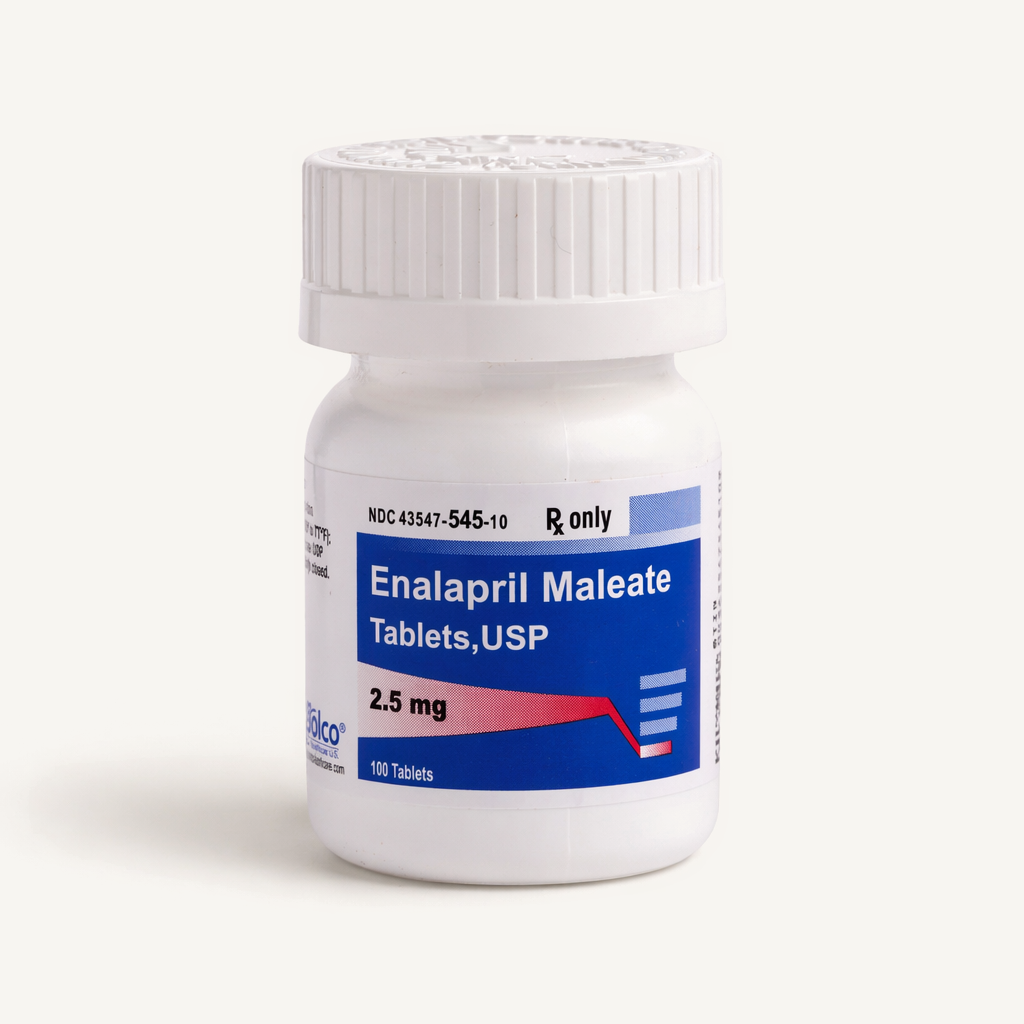
How It Works
Enalapril blocks the body’s angiotensin-converting enzyme from producing a hormone called angiotensin II.
Normally, angiotensin II causes the smooth muscle surrounding blood vessels to contract, or “squeeze.” This narrowing raises blood pressure. By preventing the formation of this hormone, the blood vessels relax and widen.
Additionally, enalapril reduces aldosterone secretion, a hormone that causes your body to retain salt and water. The combined effect of relaxed vessels and reduced fluid volume lowers overall blood pressure, allowing the cardiovascular system to operate with less strain.
| Quick Facts | |
|---|---|
| Common Brands | Vasotec, Epaned |
| Drug Class | Angiotensin-converting enzyme (ACE) inhibitor |
| Generic Status | Generic version available |
| Availability | Prescription only |
Dosing
Enalapril is an oral medication that can be taken once or twice daily. Standard guidelines suggest taking the medication at the same time each day to maintain steady levels.
Enalapril comes in several dosage strengths:
- 2.5 mg
- 5 mg
- 10 mg
- 20 mg
For adults with high blood pressure, doctors typically recommend a starting dose of 5 to 10 mg by mouth once daily. If you are managing heart failure, providers usually suggest a starting dose of 2.5 mg twice daily.
Your healthcare provider may adjust this dosage over several weeks based on your blood pressure readings and kidney function tests. You should not exceed the maximum recommended dose of 40 mg daily.
Note: Dosing information below is educational only. Your prescribing physician will determine your specific dose based on your individual health needs. Always follow your healthcare provider’s instructions for exact dosing.
Uses
FDA-Approved Uses
Enalapril is FDA-approved for the following conditions:
- Treatment of high blood pressure (hypertension) in adults with aims to lower the risk of cardiovascular events.
- Management of symptomatic heart failure to improve symptoms, increase survival and decrease the frequency for hospitalization.
- Treatment of asymptomatic left ventricular dysfunction to reduce the risk of developing overt heart failure.
Off-Label Uses
You may see enalapril prescribed for uses that are not “FDA-approved.” This is a very common and legal practice called “off-label” prescribing, where a doctor uses their clinical judgment to prescribe a drug for a different (but well-researched) purpose.
- Kidney protection (nephropathy): Providers commonly use enalapril to slow the progression of kidney disease in patients with diabetes, even if blood pressure is normal.
- Post-heart attack recovery: The medication is sometimes used to prevent further heart muscle damage following a heart attack (myocardial infarction).
- Protein in urine (proteinuria): The drug may be prescribed to reduce the amount of protein leaked into the urine, which is generally a sign of kidney strain.
Side Effects
Like all medications, enalapril can cause side effects as the body adjusts to the treatment. While many people tolerate the medication well, it is important to monitor how you feel and report any persistent issues to a healthcare professional. These symptoms often diminish as the body grows accustomed to the drug.
Common Side Effects
- Dizziness
- Headache
- Fatigue
- Dry, persistent cough
- Nausea
- Low blood pressure
- Blurred vision
- Diarrhea
Serious Side Effects
Serious side effects are rare, but it’s important to know what to look for if they do occur.
- Severe allergic reactions: Symptoms include swelling of the face, lips, tongue, or throat; difficulty breathing or swallowing; racing heart; severe rash or itching; and/or fever.
- Severe swelling (angioedema): Intense swelling of the face, lips, tongue, or throat can cause difficulty breathing or swallowing.
- High potassium levels (hyperkalemia): Symptoms may include muscle weakness, an irregular heartbeat, or a slow pulse.
- Kidney injury (nephrotoxicity): This may be noticed through a significant decrease in urination or swelling in the legs and ankles.
- Liver damage (hepatotoxicity): Symptoms may include yellowing of the skin or eyes (jaundice), dark urine, or pain in the upper right stomach area.
- Low white blood cell count (neutropenia): This condition can increase the risk of infection and may present as a fever, chills, or a sore throat.
Call your doctor immediately if you experience any concerning or prolonged symptoms.
Pharmacist Tips
Stand Up Slowly
Moving carefully from a sitting or lying position is recommended to prevent dizziness or fainting as your body adjusts to lower blood pressure.
Monitor Your Cough
Report dry, hacking coughs to a provider, as this is a specific side effect of ACE inhibitors may require a medication change.
Stay Hydrated
Drinking plenty of water is essential, especially in hot weather or during exercise, to prevent blood pressure from dropping too low.
Check Salt Substitutes
Avoid salt substitutes that contain potassium, as they can raise potassium levels too high while taking enalapril.
Be Consistent
Take your dose at the same time every day to help the medication work most effectively to protect your heart.
Avoid NSAIDs
Consult a provider before taking ibuprofen or naproxen, as these pain relievers can interfere with blood pressure control and strain the kidneys.
Track Blood Pressure
Keep a daily log of blood pressure readings at home.
Manage Stomach Upset
While the drug can be taken on an empty stomach, taking it with a meal or snack may help ease side effects of nausea or abdominal discomfort.
Drug Interactions
Enalapril can interact with several types of medications, which may affect how well the drug works or increase the risk of side effects.
- Potassium supplements: Taking enalapril with potassium supplements or potassium-sparing diuretics can lead to dangerously high blood potassium levels.
- Pain medications (NSAIDs): Drugs like ibuprofen and naproxen can reduce the blood pressure-lowering effects of enalapril and increase the risk of kidney problems.
- Lithium: Enalapril may increase the levels of lithium in the body, which can lead to toxicity when paired with medications containing lithium.
- Other heart medications: Combining enalapril with other ACE inhibitors or angiotensin II receptor blockers (ARBs) is generally not recommended and can increase the risk of low blood pressure.
- Sacubitril/Valsartan (Entresto): Taking these medications together is strictly avoided due to the high risk of severe swelling (angioedema).
- Alcohol: Drinking alcohol may increase the risk of dizziness or fainting.
Always give your doctor and pharmacist a complete list of all your medications, vitamins, and supplements to check for potential interactions.
FAQs
How long does it usually take for enalapril to lower my blood pressure?
While you may notice a drop in blood pressure within one hour of taking your first dose, it typically takes several weeks to see the full benefits. Providers usually wait a few weeks before making dose adjustments to see how your body responds.
Is it safe to take ibuprofen or naproxen while on this pill?
Standard guidelines suggest avoiding non-steroidal anti-inflammatory drugs (NSAIDs) like ibuprofen and naproxen while taking enalapril. These medications can make enalapril less effective and may increase the risk of kidney strain.
Can taking this medication cause my potassium levels to be dangerously high?
Yes, enalapril can cause the body to retain potassium. While this is often manageable, it can become a concern if you also take potassium supplements. Your doctor will likely order periodic blood tests to monitor potassium levels.
Do I need to take enalapril with a full meal?
You can take enalapril with or without food. If you find that the medication causes an upset stomach or nausea, taking it with a meal may help improve comfort.
Can enalapril cause persistent bloating?
While bloating is not a common side effect, some patients may experience digestive changes. If bloating is accompanied by facial swelling or abdominal pain, contact a provider immediately, as this could be a sign of a serious reaction.
Are generic enalapril tablets as effective as the original brand name Vasotec?
The FDA requires generic medications to have the same active ingredient and strength as the brand-name version. Generic enalapril is considered therapeutically equivalent to Vasotec and provides the same blood pressure-lowering benefits.
Will I experience a rebound spike in blood pressure if I run out of pills and stop taking this?
Discontinuing use of enalapril suddenly can cause blood pressure to rise quickly. If you run out of medication, contact your pharmacy or provider as soon as possible to ensure you do not miss doses, as consistent treatment is vital for heart health.
Comparable Medications
Enalapril vs Lisinopril (Prinivil / Zestril), Losartan (Cozaar), Valsartan (Diovan), Sacubitril/Valsartan (Entresto), or Amlodipine (Norvasc)?
Lisinopril
From $24.99
Both Prinivil and Zestrilare are ACE inhibitors that work similarly to relax blood vessels. Lisinopril is FDA-approved to improve survival following a heart attack.
Losartan
From $24.99
Losartan belongs to the angiotensin II receptor blocker (ARB) class, which blocks the receptors for the hormone that constricts blood vessels. Losartan is commonly prescribed for patients who develop a dry cough while taking ACE inhibitors like enalapril.
Valsartan
From $24.99
Like losartan, this medication belongs to the ARB (angiotensin II receptor blocker) class. It is used to treat heart failure and hypertension. It is less likely to cause the persistent dry cough that people often associate with ACE inhibitors.
Sacubitril / Valsartan Tablets
From $79.99
This is a combination medication used for certain types of heart failure. You cannot take it concurrently with enalapril. A 36-hour "washout" period is required when switching between the two.
Amlodipine
From $27.99
Amlodipine is a calcium channel blocker, a different class of medication that prevents calcium from entering muscle cells. While both lower blood pressure, amlodipine does not affect the same hormone system and does not carry a risk of a dry cough.
We Have Enalapril in Stock. Get Yours Today!
Important: Information on this page is for educational purposes only. Prescribing decisions are made by independent, licensed providers. TelyRx operates technology-enabled pharmacies and a telehealth platform that connects patients with licensed providers. Prescriptions, when provider-approved and issued, are filled and shipped by TelyRx-affiliated pharmacies. We do not employ physicians or make prescribing decisions. Learn more about our editorial standards here.