How It Works
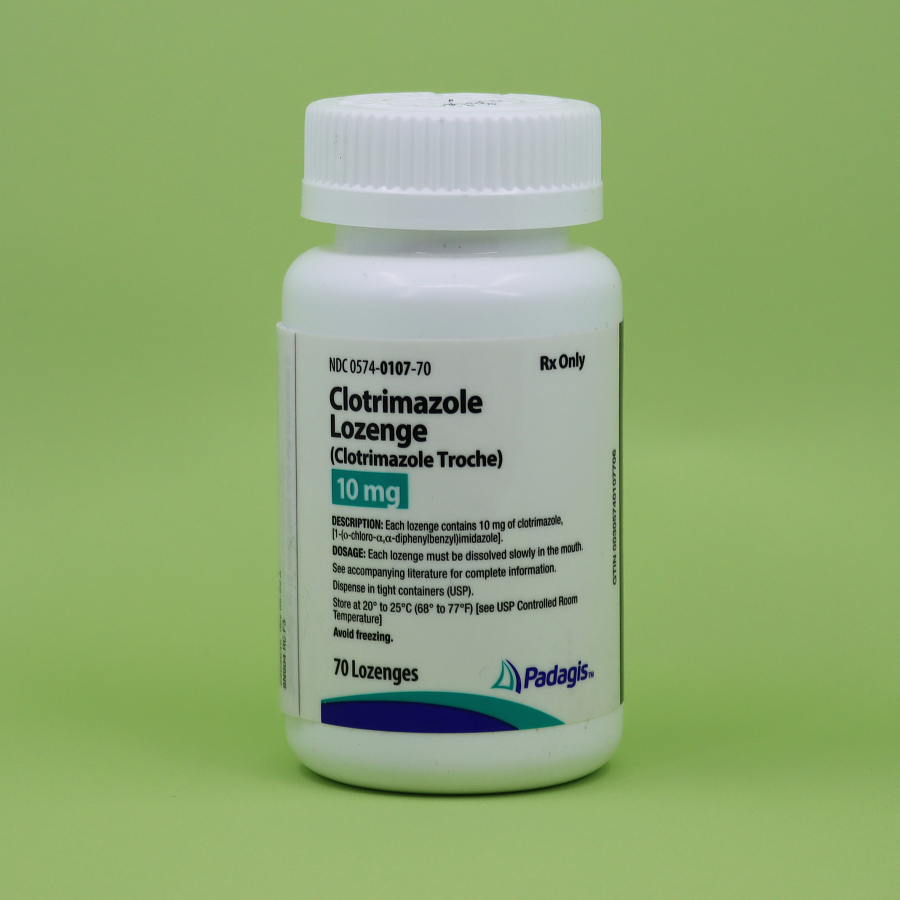
Clotrimazole works by disrupting the fungus’s structural integrity. Every fungal cell depends on a specific substance called ergosterol to maintain its outer protective covering, or cell membrane.
When you allow a clotrimazole troche to dissolve in your mouth, the medication begins to inhibit the production of ergosterol. This slows the fungus’s growth and kills the fungal cells.
The troche dissolves slowly, keeping the medicine in contact with the oral mucosa for an extended period to create an unfavorable environment for the yeast.
| Quick Facts | |
|---|---|
| Common Brands | Mycelex |
| Drug Class | Imidazole Antifungal |
| Generic Status | Generic version of Mycelex |
| Availability | Prescription only |
Dosing
The dosing of clotrimazole generally depends on the affected areas in your mouth.
- Standard dose: Most providers prescribe one 10 mg troche to be used five times daily.
- Dissolution time: It is generally accepted that the lozenge should take 15-30 minutes to dissolve completely.
- Treatment length: For an active infection, a standard course typically lasts 14 consecutive days. If used for prevention, your provider will determine a longer-term schedule based on your risk factors.
- Technique: It’s generally recommended that the troche be moved around the mouth with the tongue to ensure all surfaces are coated. Avoid chewing or swallowing the lozenge whole, as this prevents the medication from working topically in the mouth.
Note: Dosing information below is educational only. Your prescribing physician will determine your specific dose based on your individual health needs. Always follow your healthcare provider’s instructions for exact dosing.
Uses
FDA-Approved Uses
Clotrimazole troches are FDA-approved for the following:
- Treatment of oropharyngeal candidiasis: To eliminate active oral thrush infections
- Prophylaxis (prevention): To reduce the incidence of oral thrush in patients whose immune systems are suppressed by chemotherapy, radiation, or immunosuppressive drugs
Off-Label Uses
You may see clotrimazole troches prescribed for uses that are not “FDA-approved.” This is a common and legal practice called “off-label” prescribing, where a doctor uses their clinical judgment to prescribe a drug for a different (but well-researched) purpose.
Clotrimazole troches may be prescribed for the following off-label uses:
- Esophageal candidiasis: In mild cases where the fungal infection has moved slightly into the upper throat, a clotrimazole lozenge may be used. Systemic medications are generally preferred for deeper infections.
- Denture stomatitis: Treating inflammation of the mouth caused by yeast trapped under dental appliances
- Angular cheilitis: While usually treated with creams, some providers use troches to address the internal fungal load contributing to cracks at the corners of the mouth.
Get Savings Updates for Clotrimazole Troches/Lozenges
Join our mailing list for exclusive deals and more.
Side Effects
Most side effects associated with clotrimazole troches are localized to the mouth or digestive system.
Common Side Effects
- Unpleasant mouth sensations
- Nausea
- Vomiting
- Itching
- Elevated liver enzymes
Serious Side Effects
Serious side effects are rare, but it’s important to know what to look for if they do occur.
It’s generally accepted to stop the medication and contact your doctor immediately if you experience any of the following:
- Severe allergic reactions: Symptoms include swelling of the face, lips, or throat, hives, or difficulty breathing.
- Liver dysfunction: Signs of more significant liver impact include yellowing of the skin or eyes (jaundice), dark urine, and persistent nausea.
- Severe GI distress: Intense abdominal cramping or persistent vomiting.
Call your doctor immediately if you experience any concerning or prolonged symptoms.
Pharmacist Tips
Be Patient
Avoid chewing the lozenge. A 15-30 minute dissolution time is generally required for the medication to penetrate the tissues where the fungus lives.
Follow the “Clean Mouth” Rule
Avoid eating or drinking while the troche is dissolving and for at least 30 minutes after it has finished. Rinsing your mouth or drinking water too soon can flush the medication before it has a chance to take effect.
Dose Five Times a Day
It can be difficult to remember five doses. A helpful strategy is to take one after breakfast, one in the mid-morning, one after lunch, one in the mid-afternoon, and one before bed.
Finish the Full Course
Even if your mouth looks clear after three days, the fungus may still be present. Complete the full 14 days (or as prescribed) to prevent the infection from returning immediately.
Maintain Oral Hygiene
Clean your toothbrush regularly during treatment and, if you wear dentures, ensure they are cleaned thoroughly every night to prevent re-infection.
Drug Interactions
Because clotrimazole troches work topically and involve minimal systemic absorption, they have fewer drug interactions than antifungal pills. However, certain considerations still apply. Notify your doctor if you take:
- Liver-processed medications: Since clotrimazole can occasionally affect liver enzymes, your provider should monitor you if you are on other medications that put a heavy load on the liver.
- Other oral products: Standard guidelines don’t recommend using medicated mouthwashes or other oral treatments at the same time as the troche unless specifically directed by your doctor.
- Alcohol: There are no known direct interactions between alcohol and clotrimazole troches, but alcohol can irritate the sensitive tissues already inflamed by a thrush infection.
Always give your doctor and pharmacist a complete list of all your medications, vitamins, and supplements to check for potential interactions.
FAQs
Why does this medication take so long to dissolve?
The slow dissolution is intentional. Clotrimazole troches are not meant to be absorbed by your stomach; they are meant to treat the lining of your mouth. The longer the lozenge takes to dissolve, the longer the antifungal medicine stays in contact with the yeast.
Can I chew or swallow the lozenge whole?
Standard guidelines suggest that chewing or swallowing the troche whole will significantly reduce its effectiveness. Swallowing the pill prevents the topical “coating” action required to kill oral fungi.
Why do I have to take clotrimazole troches 5 times a day?
The medication needs to be present in your saliva at a certain concentration throughout the day. Because saliva is constantly being produced and swallowed, the “antifungal coating” is gradually washed away, requiring frequent reapplications to keep the fungus from growing.
Can I eat or drink immediately after the lozenge dissolves?
It is generally accepted that you should wait at least 30 minutes after the lozenge has dissolved before eating or drinking. This allows the medicine to remain on the oral tissues as long as possible.
Does clotrimazole work for thrush in the throat?
Clotrimazole troches are effective for the oropharyngeal area, which includes the back of the mouth and the top of the throat. For infections deeper in the esophagus, a provider may recommend a systemic pill like fluconazole.
Is clotrimazole safe to use during pregnancy?
The safety of clotrimazole troches during pregnancy has not been definitively established, so risk can not be ruled out. Because very little of the medication is absorbed into the bloodstream, many providers consider it lower risk, but discuss your case with your OB-GYN.
Does clotrimazole leave a bad taste in your mouth?
Some patients report a slightly bitter or chalky aftertaste. This is a common side effect of the medication’s active ingredients and the carrier material of the troche.
Can I use clotrimazole troches for a yeast infection on my skin?
No. Troches are specifically formulated for the mouth’s moist environment. For skin infections such as athlete’s foot or ringworm, providers recommend clotrimazole in topical cream or powder form.
Is this medication safer than taking a pill like Diflucan?
Troches stay mostly in the mouth so they can carry a lower risk of systemic side effects and drug interactions than fluconazole (Diflucan) pills. However, for severe or deep infections, pills may be more effective.
Does clotrimazole contain sugar?
Most formulations of clotrimazole troches are sugar-free to prevent feeding the yeast (which thrives on sugar), but they may contain other sweeteners or binding agents. Standard guidelines recommend checking with your pharmacist if you have specific dietary restrictions.
Can I drink alcohol while taking clotrimazole troches?
Providers typically recommend avoiding alcohol during the treatment of oral thrush. For the best results, it is generally accepted to wait until your 14-day course of treatment is finished and your symptoms have fully resolved before consuming alcohol.
Does this medication work for “burning mouth syndrome”?
Clotrimazole only treats “burning mouth syndrome” if the cause is an underlying fungal infection. If nerve issues or nutritional deficiencies cause the burning, an antifungal will not provide relief.
Comparable Medications
Clotrimazole Troches, Nystatin, Fluconazole, or Ketoconazole?
Your doctor can prescribe other medications in place of clotrimazole troches. Here are a few potential alternatives:
Nystatin Powder
From $29.99
A liquid "swish and swallow" antifungal often used for thrush. It is effective but generally has a shorter contact time with the mouth tissues compared to a slow-dissolving troche.
Fluconazole
A systemic pill taken once daily that treats the infection through the bloodstream. It is more convenient but carries a higher risk of systemic side effects and drug interactions.
Ketoconazole
An oral antifungal used for more severe or resistant infections. It is less commonly used for simple thrush due to a higher risk of liver toxicity compared to localized troches.
We Have Clotrimazole Troches/Lozenges in Stock. Get Yours Today!
Important: Information on this page is for educational purposes only. Prescribing decisions are made by independent, licensed providers. TelyRx operates technology-enabled pharmacies and a telehealth platform that connects patients with board-certified licensed providers. Prescriptions, when provider-approved and issued, are filled and shipped by TelyRx-affiliated pharmacies. We do not employ physicians or make prescribing decisions. Learn more about our editorial standards here.