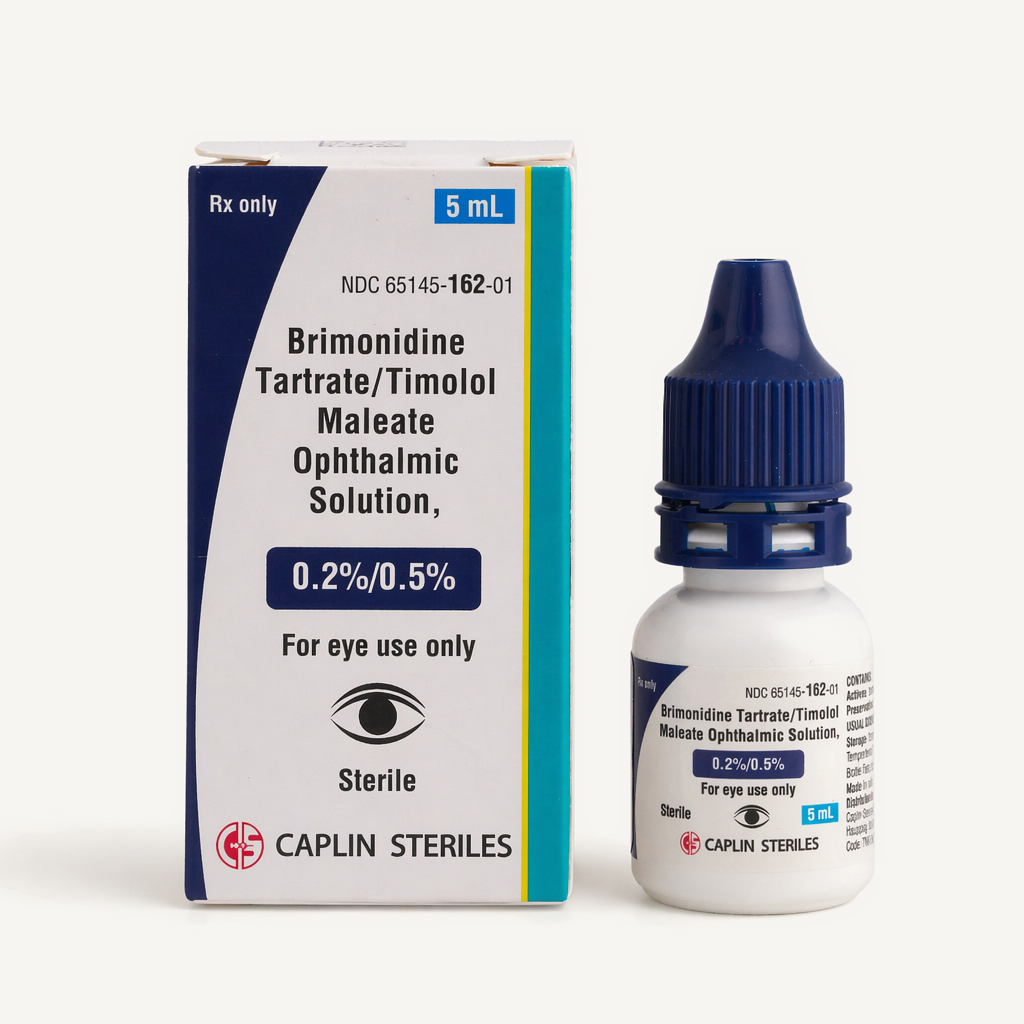
How It Works
Brimonidine-timolol eye drops work by decreasing the production of aqueous humor fluid in the eye while simultaneously increasing its drainage. Timolol, a beta-blocker, and brimonidine, an alpha agonist, both signal the eyes to produce less fluid. Brimonidine also opens up drainage pathways in the eye, allowing existing fluid to exit more efficiently.
By reducing aqueous humor inflow and optimizing outflow, brimonidine-timolol reduces intraocular pressure more than either active ingredient alone can.
| Quick Facts | |
|---|---|
| Common Brands | Combigan |
| Drug Class | Alpha-2 adrenergic agonist/beta-adrenergic blocker |
| Generic Status | Generic version available |
| Availability | Prescription only |
Dosing
Brimonidine-timolol is designed for long-term use. To maintain consistent eye pressure, standard guidelines recommend applying the medication at regular intervals as recommended by a provider.
- Standard frequency: Providers typically recommend applying 1 drop of the solution to the affected eye(s) twice a day, spaced roughly 12 hours apart.
- Application: Providers often recommend punctual occlusion, or lightly pressing on the inside corner of the eye for about 1 minute after applying the drop. This helps ensure the medication stays in place and reduces its absorption into the bloodstream.
- Capacity: Standard-size bottles of brimonidine-timolol contain 5 mL of eye drop solution. When drops are applied twice daily to both eyes, one bottle lasts about 25 to 30 days.
Note: The dosing information below is for educational purposes only. Your prescribing physician will determine your specific dose based on your individual health needs. Always follow your healthcare provider’s instructions for exact dosing.
Uses
FDA-Approved Uses
Brimonidine-timonol eye drops are FDA-approved to reduce elevated intraocular pressure in people with the following conditions:
- Open-angle glaucoma: This is a chronic buildup of eye fluid due to reduced drainage that leads to gradual pressure buildup
- Ocular hypertension: This is a condition that causes higher eye pressure than normal without optic nerve damage
Off-Label Uses
You may see brimonidine-timolol eye drops prescribed for uses that are not “FDA-approved.” This is a very common and legal practice called “off-label” prescribing, where a doctor uses their clinical judgment to prescribe a drug for a different (but well-researched) purpose.
Common off-label uses for brimonidine-timolol eye drops currently found in clinical research and practice include:
- Pressure spike prevention: Eye surgeons may use brimonidine-timolol eye drops to prevent temporary spikes in pressure that can occur after laser eye surgery.
- Normal-tension glaucoma: Some providers prescribe brimonidine-timolol to people with optic nerve damage, even if their intraocular pressure readings are within the normal range.
Side Effects
Brimonidine-timolol side effects are usually localized to the eye, but the medication may enter the bloodstream in small amounts and cause systemic effects.
Common Side Effects
Common side effects from brimonidine-timolol eye drops include:
- Eye redness
- Itchiness and irritation
- Stinging or burning
- Allergic conjunctivitis
- Drowsiness and fatigue
Serious Side Effects
Serious side effects are rare, but it’s important to know what to look for if they do occur. Serious side effects of using brimonidine-timolol eye drops can include:
- Cardiac problems: Since timolol is a beta-blocker, using the eye drops can occasionally lead to a slow or irregular heartbeat, or worsen heart failure.
- Respiratory distress: In patients with a history of asthma or chronic obstructive pulmonary disease, using the eye drops can lead to bronchospasm or difficulty breathing.
- Severe allergic reaction: As with any medication, brimonidine-timolol eye drops can cause an anaphylactic reaction in people allergic to one or more of the medication’s ingredients.
- Mental status and motor skill changes: Drowsiness and fatigue are known side effects of brimonidine. Since this is an active ingredient in the eye drops, the medication can interfere with mental status and motor skills.
Call your doctor immediately if you experience any concerning or prolonged symptoms.
Pharmacist Tips
Follow The 5-Minute Rule
Per standard guidelines, people who use other eye drops in addition to brimonidine-timolol are advised to space applications apart by at least 5 minutes. This prevents the second drop from washing out the first before it can be fully absorbed.
Take Out Your Contacts
If you wear soft contact lenses, standard guidelines recommend removing them before using the eye drops. Brimonidine-timolol solution contains preservatives that the lenses can absorb. It is advised to wait at least 15 minutes after applying the eye drops before putting the lenses back in.
Apply The Drops Carefully
Patients are cautioned never to let the dropper tip touch their eyes, eyelashes, or any other surface. This prevents bacteria from entering the bottle, contaminating the solution, and significantly increasing the risk of an eye infection.
Proper Storage Is Crucial
Standard guidelines advise storing the solution bottle out of direct sunlight at a temperature between 59 and 77 degrees. Improper storage conditions can compromise the solution and interfere with its potency.
Plan For The Blur
Blurry vision immediately after application is a known side effect of brimonidine-timolol. Patients are advised to keep this in mind for driving or operating machinery after using the eye drops.
Drug Interactions
Although brimonidine-timolol primarily works within the eye, it can interact with certain oral medications. Known interactions with brimonidine-timolol include:
- Oral beta-blockers: Taking oral beta-blockers like atenolol or metoprolol alongside brimonidine-timolol eye drops can produce an additive effect, causing blood pressure or heart rate to drop excessively.
- Blood pressure medications: Digoxin and calcium channel blockers, both used to treat high blood pressure, can increase the risk of heart rhythm issues when taken alongside brimonidine-timolol.
- Antidepressants: Certain selective serotonin reuptake inhibitors and tricyclic antidepressants can interfere with how the body processes timolol, potentially increasing the side effects of these eye drops.
- Alcohol and anti-anxiety medications: The brimonidine in these eye drops can intensify the sedative effect of alcohol and certain anti-anxiety drugs, potentially leading to side effects like severe drowsiness and fatigue.
Always give your doctor and pharmacist a complete list of all your medications, vitamins, and supplements to check for potential interactions.
FAQs
How exactly should I apply these drops?
To apply brimonidine-timolol eye drops, standard guidelines suggest tilting your head back, pulling down the lower eyelid to create a pocket, and squeezing one drop into the eye. After application, close the eye and gently press the inner corner for one minute to help ensure the medication is properly absorbed.
Why are my eyes becoming red and itchy after starting brimonidine-timolol?
Redness and itchiness in the eyes are known side effects of brimonidine-timolol eye drops. If swelling accompanies the redness, the patient may be experiencing an allergic reaction and is advised to immediately contact their doctor or eye specialist.
How long should I wait before putting my soft contact lenses back in after using the drops?
Per standard guidelines, people who use brimonidine-timolol eye drops are advised to wait at least 15 minutes after the drops have been applied to put their soft contact lenses back in. The solution contains preservatives that the lenses can absorb, and this can increase health risks.
Should I store this medication in the refrigerator, or is it okay to keep it at room temperature?
According to standard guidelines, brimonidine-timolol does not need to be refrigerated unless the prescription explicitly states otherwise. Storing the bottle at room temperature away from direct sunlight is considered the best practice.
How long do I need to wait between using brimonidine-timolol and my glaucoma drops?
If you use glaucoma drops or other eye drops in addition to brimonidine-timolol solution, standard guidelines recommend waiting at least 5 minutes between applications for each drop. This helps ensure a second drop won’t wash out the first drop before it has been fully absorbed.
What should I do if I miss my morning dose?
Patients who miss their morning dose of brimonidine-timnolol eye drops are advised to skip that dose and wait until the next scheduled dose to resume treatment. Doubling the dose to make up for a missed dose is not recommended, as this can increase the risk of side effects without improving efficacy.
How long does a standard 5mL bottle usually last if I use it twice a day?
If you use brimonidine-timololeye drops twice daily, a standard 5-mL bottle of solution should last 25 to 30 days depending on the size of drops you use.
Can I use over-the-counter artificial tears for dry eyes while using brimonidine-timolol?
Yes, artificial tears for dry eyes are considered safe while using brimonidine-timolol eye drops. However, patients are advised to wait at least 5 minutes between applying the different drops to help ensure the first drop is fully absorbed before the second drop washes it out.
Why does this medication sometimes leave a metallic taste in the back of my throat?
Due to tear ducts located at the back of the nose and throat, you may taste the medication after applying the drops. Pressing down on the inner corner of your eye for up to 1 minute after application can minimize the metallic taste, which comes from the medication.
Is it safe to use these drops if I am currently pregnant or breastfeeding?
Timolol is known to pass into breast milk, and its effects on pregnancy have not been fully established. Patients are advised to discuss risks and benefits of using the eye drops while pregnant or breastfeeding with their provider or OB/GYN.
Does brimonidine-timolol cure my high eye pressure?
No, brimonidine-timolol does not cure high eye pressure, but the eye drops can help manage this condition. Both glaucoma and ocular hypertension are chronic disorders. If you stop using the eye drops, eye pressure will likely return to its higher pre-treatment levels..
Can I take daily beta-blocker pills while using these eye drops?
Oral beta-blockers like atenolol or metoprolol also lower blood pressure and heart rate, so taking them alongside brimonidine-timolol eye drops can compound these effects and increase your risk of severe side effects. Patients are advised to speak to their doctor about how to safely take these medications at the same time, as close monitoring may be required.
Is generic Brimonidine timolol as effective as brand name Combigan?
Yes, generic brimonidine-timolol is as effective as brand-name Combigan eye drops. Per FDA standards, generic medications must meet the same criteria for safety, strength, and efficacy as their brand-name counterparts.
Comparable Medications
Brimonidine-Timolol Eye Drops, Latanoprost, Bimatoprost, Dorzolamide-Timolol, or Brinzolamide-Brimonidine?
Brimonidine-timolol eye drops are primarily used to reduce eye pressure for people with chronic medical conditions like open-angle glaucoma and ocular hypertension. Based on factors like your medical history and severity of symptoms, your provider may recommend an alternative to brimonidine-timolol eye drops instead. Brimonidine-timolol alternatives include:
Latanoprost
From $29.99
Sold under the brand name Xalatan, latanoprost is a prostaglandin analog eye drop medication primarily used to relieve eye pressure. It is often recommended as first-line treatment for eye pressure issues, but lacks the dual-action mechanism of brimonidine-timolol. Providers may recommend the latter if latanoprost's single-pathway action is not effective.
Bimatoprost
From $129.99
Like latanoprost, bimatoprost is a prostaglandin analog eye drop medication primarily used to reduce high eye pressure. It has been shown to decrease more pressure than brimonidine-timolol with a single dose. However, brimonidine-timolol improves eye fluid drainage better than bimatoprost.
Dorzolamide-Timolol
From $49.95
Sold under the brand name Cosopt, this combination eye drop medication pairs timolol with dorzolamide, a carbonic anhydrase inhibitor that uses a different pathway than brimonidine. Both eye drops are considered comparable in terms of efficacy, but patients may find one more effective than the other at alleviating their specific eye pressure symptoms.
Brinzolamide-brimonidine
This combination eye drop medication is sold under the brand name Simbrinza, and it does not contain a beta-blocker component. This makes it a gentler alternative to brimonidine-timolol for patients with asthma or pre-existing heart conditions who want to reduce eye pressure but cannot tolerate beta-blockers like timolol.
We Have Brimonidine in Stock. Get Yours Today!
Important: Information on this page is for educational purposes only. Prescribing decisions are made by independent, licensed providers. TelyRx operates technology-enabled pharmacies and a telehealth platform that connects patients with licensed providers. Prescriptions, when provider-approved and issued, are filled and shipped by TelyRx-affiliated pharmacies. We do not employ physicians or make prescribing decisions. Learn more about our editorial standards here.