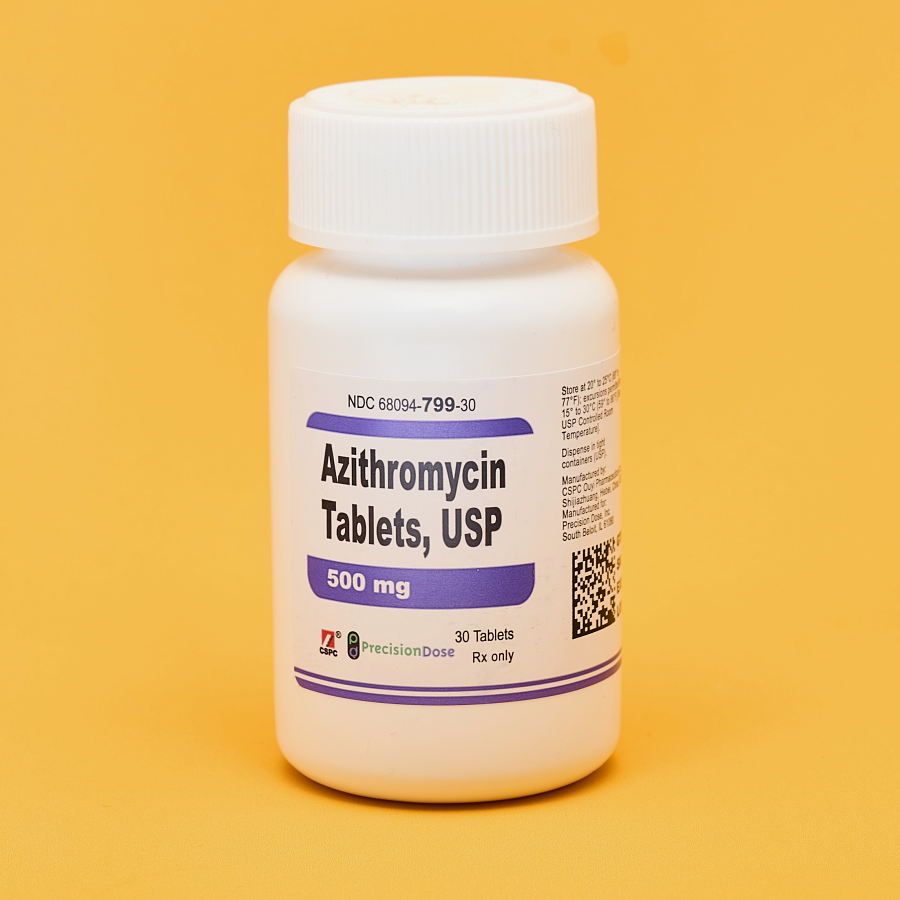
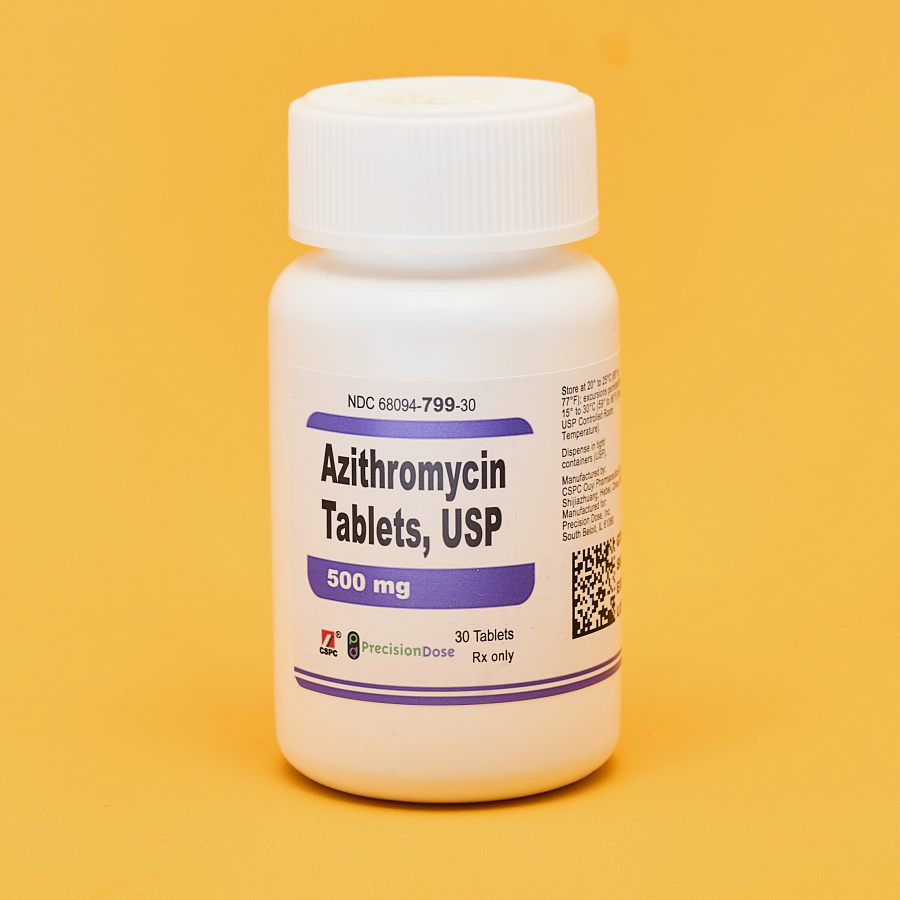
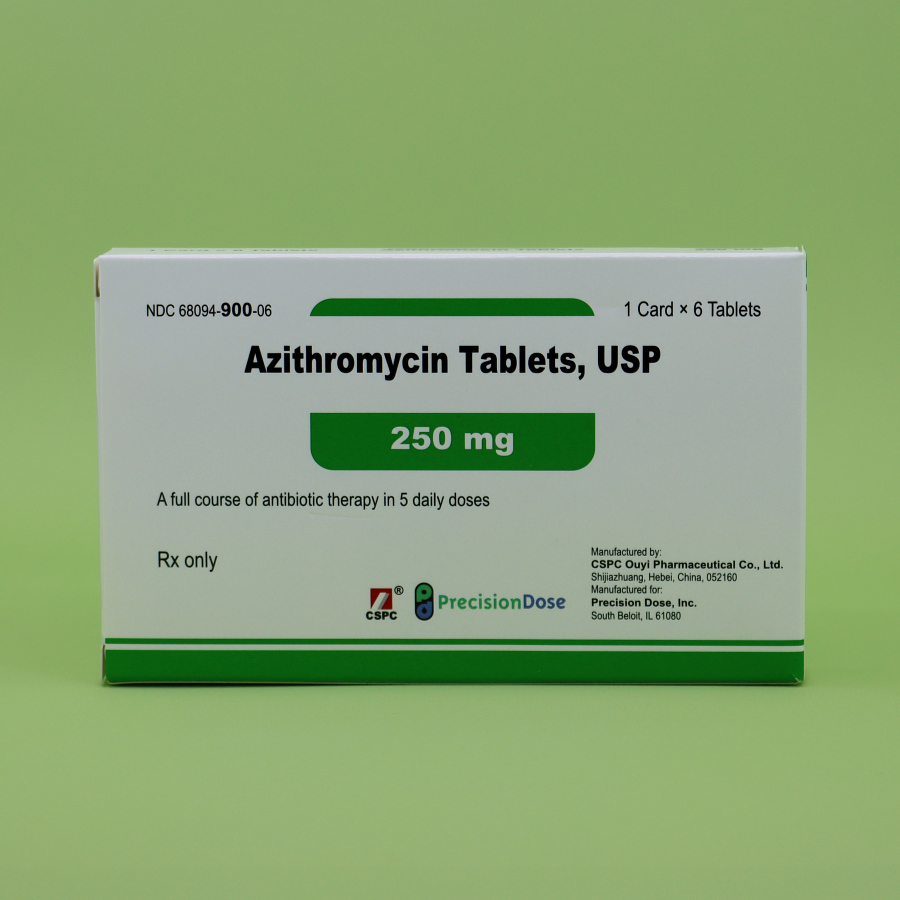
How It Works
Azithromycin is a “macrolide” antibiotic. It works by targeting the bacteria’s ribosomes, which are the tiny “factories” that build proteins. By attaching to these ribosomes, azithromycin stops the bacteria from making the proteins they need to grow, multiply, and function.
This doesn’t always kill the bacteria outright, but it stops their spread, giving your body’s immune system the chance to take over and eliminate the infection.
| Quick Facts | |
|---|---|
| Common Brands | Zithromax |
| Drug Class | Macrolide Antibiotic |
| Generic Status | Generic version of Zithromax |
| Availability | Prescription only |
Dosing
- Chlamydia (single-dose): The standard treatment is a single, one-time dose of 1 gram (1,000 mg).
Always follow your healthcare provider’s instructions for exact dosing.
Note: Dosing information is educational only. Your prescribing physician will determine your specific dose based on your individual health needs. Always follow your healthcare provider’s instructions for exact dosing.
Uses
FDA-Approved Uses
Azithromycin is FDA-approved to treat a variety of common bacterial infections, including:
- Respiratory Infections – Certain types of community-acquired pneumonia, bronchitis, and sinus infections (sinusitis).
- Strep Throat & Tonsillitis – Pharyngitis/tonsillitis.
- Ear Infections – Acute otitis media.
- Skin Infections – Uncomplicated skin and skin structure infections.
- Sexually Transmitted Infections (STIs) – Uncomplicated chlamydia and genital ulcer disease (chancroid).
- Pelvic Inflammatory Disease (PID).
- COPD Exacerbations – Sudden worsening of chronic obstructive pulmonary disease.
Off-Label Uses
You may see azithromycin prescribed for uses that are not “FDA-approved.” This is a prevalent and legal practice called “off-label” prescribing, where a doctor uses their clinical judgment to prescribe a drug for a different (but well-researched) purpose. Azithromycin is commonly prescribed for:
- Traveler’s diarrhea: It is sometimes prescribed for the treatment of severe traveler’s diarrhea.
- Acne: Lower doses may be used long-term for their anti-inflammatory effects in treating acne.
Get Savings Updates for Azithromycin
Join our mailing list for exclusive deals and more.
Side Effects
Common Side Effects
- Diarrhea
- Nausea
- Vomiting
- Stomach pain or cramping
- Gas
Serious Side Effects
While rare, azithromycin can cause serious side effects. Stop taking the medication and contact your doctor immediately if you experience any of the following:
- Serious allergic reaction: Hives, swelling of the face, lips, or tongue, difficulty breathing or swallowing (angioedema), or severe skin reactions (blistering, peeling).
- Irregular heart rhythm (QT prolongation): This is a rare but dangerous heart rhythm change. Seek immediate medical help if you feel faint, dizzy, or have a fast, pounding, or irregular heartbeat.
- Liver problems: Stop taking the medication and call your doctor if you notice yellowing of the skin or eyes (jaundice), severe fatigue, dark urine, or right-sided stomach pain.
- Severe diarrhea (C. difficile): Any antibiotic can cause an overgrowth of a bacteria called C. difficile, leading to severe, watery, or bloody diarrhea (often with fever and stomach cramps). This can happen during or even weeks after finishing the antibiotic.
Call your doctor immediately if you experience any concerning or prolonged symptoms.
Pharmacist Tips
Finish the Full Course
This is the most important tip. Even if you feel 100% better, you must finish the entire course of antibiotics. Stopping early can allow the bacteria to rebound and become resistant to the antibiotic.
Take With or Without Food
You can take azithromycin tablets with or without food. If it upsets your stomach, try taking it with a small meal or snack.
Antacids
Do not take aluminum or magnesium-containing antacids (like Maalox or Mylanta) at the same time as azithromycin. Take the antacid at least 2 hours before or 2 hours after your antibiotic dose.
Managing Diarrhea
Mild diarrhea is common. If your doctor approves, taking a probiotic (separated by at least 2 hours from your antibiotic) may help. If the diarrhea is severe, watery, or contains blood, call your doctor immediately.
Check for Interactions
Azithromycin can interact with blood thinners (like warfarin), heart rhythm medications, and some seizure medications. Always give your doctor and pharmacist a full list of your medications.
Drug Interactions
Azithromycin can have significant interactions. Be sure your doctor knows if you take:
- Antacids (aluminum/magnesium): Can decrease absorption.
- Heart rhythm medications (amiodarone, sotalol): Increases risk of QT prolongation.
- Blood thinners (warfarin): Can increase bleeding risk.
- Statins (atorvastatin): May have an increased risk of muscle problems.
- Colchicine
- Digoxin
- Phenytoin
Always give your doctor and pharmacist a complete list of all your medications, vitamins, and supplements to check for potential interactions.
FAQs
Is azithromycin a type of penicillin?
No. Azithromycin is in the “macrolide” class of antibiotics. It is a completely different class from penicillin. It is often prescribed specifically for people who are allergic to penicillin.
What’s the difference between azithromycin and amoxicillin?
They are in different antibiotic classes and kill bacteria differently. Amoxicillin (a penicillin) is often the first choice for infections like strep throat or ear infections. Azithromycin is a good alternative for those with penicillin allergies or for “atypical” bacteria that amoxicillin doesn’t cover (like in some types of pneumonia).
Can I drink alcohol while taking azithromycin?
It’s generally best to avoid alcohol. While there is no direct, dangerous interaction known, alcohol can increase stomach side effects like nausea and dizziness. It can also weaken your immune system, making it harder for your body to fight the infection.
How long does azithromycin take to work?
You may start to feel better within 1 to 2 days, but the medication continues to work in your body for several days even after you finish your last dose.
Will azithromycin cure the flu or a cold?
Azithromycin is an antibiotic, which means it only works against bacterial infections. The common cold and the flu are caused by viruses. Taking an antibiotic for a viral infection will not make you better, won’t help your symptoms, and can contribute to antibiotic resistance.
How long after taking azithromycin for chlamydia should I wait to have sex?
The CDC recommends abstaining from all sexual activity for 7 days after taking a dose of azithromycin. This gives the medication time to fully clear the infection and prevents you from transmitting it to a partner.
Does azithromycin interact with birth control pills?
Azithromycin itself does not have a direct, proven interaction that makes hormonal birth control (like the pill, patch, or ring) less effective. However, if the antibiotic causes severe vomiting or diarrhea, your body may not absorb your oral birth control pill properly, which could increase your risk of pregnancy.
Comparable Medications
Azithromycin
From $28.99
A macrolide antibiotic with a unique dosing schedule (1-5 days) and good coverage for "atypical" bacteria.
Azithromycin
From $28.99
Also called a "Z Pak." A specific, convenient 5-day pre-packaged course of azithromycin with tapered dosing (2 pills on day 1, 1 pill on days 2-5).
Amoxicillin Capsules
From $28.99
A penicillin antibiotic that is often a first-line choice for strep and ear infections, but typically requires a 7- to 10-day course.
Doxycycline Hyclate
From $28.99
A tetracycline antibiotic that is also a first-line choice for chlamydia (as a 7-day course) and is used for respiratory and skin infections.
Clarithromycin (Biaxin)
Another macrolide antibiotic similar to azithromycin, but it often requires a 7- to 14-day course and has more drug interactions.
Levofloxacin (Levaquin)
A fluoroquinolone antibiotic used for more severe infections (like pneumonia), but it has a higher risk of serious side effects (tendon rupture).
We Have Azithromycin in Stock. Get Yours Today!
Important: Information on this page is for educational purposes only. Prescribing decisions are made by independent, licensed providers. TelyRx operates technology-enabled pharmacies and a telehealth platform that connects patients with board-certified licensed providers. Prescriptions, when provider-approved and issued, are filled and shipped by TelyRx-affiliated pharmacies. We do not employ physicians or make prescribing decisions. Learn more about our editorial standards here.