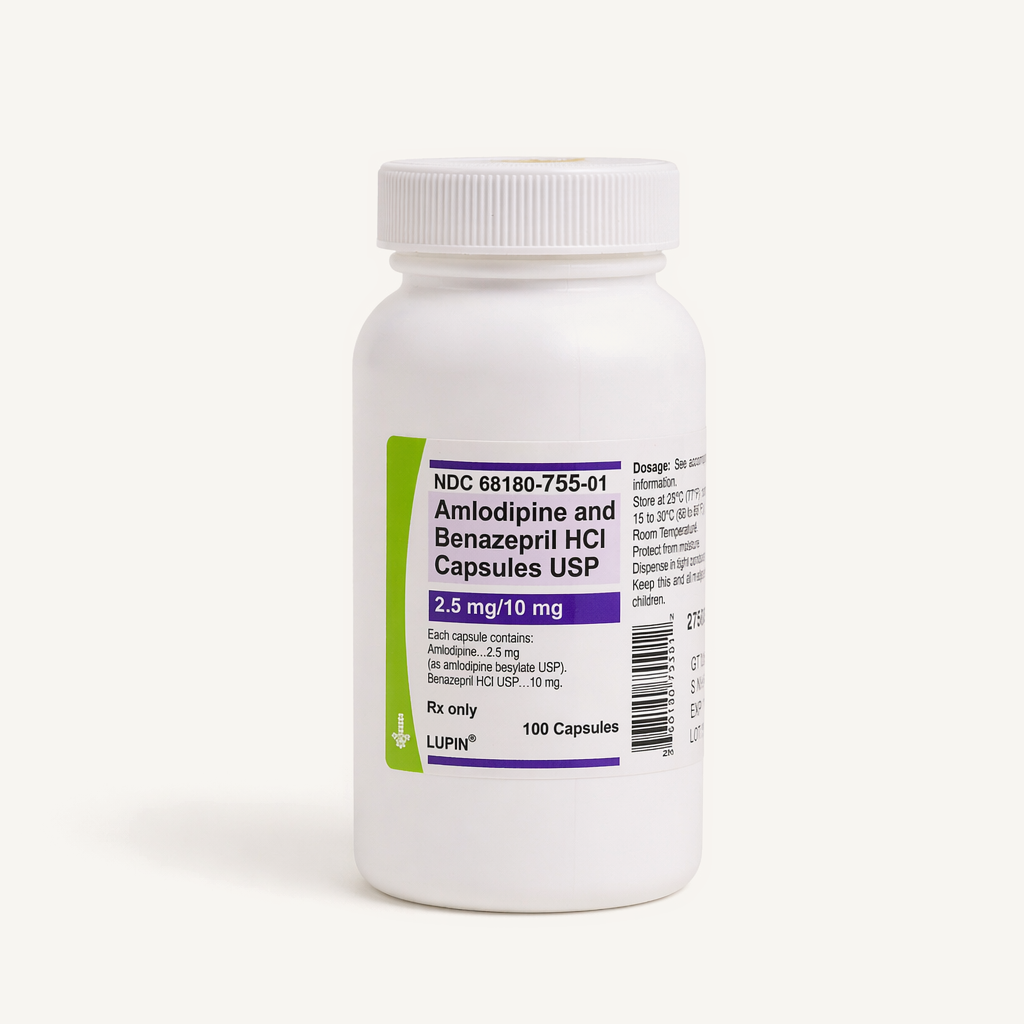
How It Works
Amlodipine-benazepril uses a dual-action strategy to relax the vascular system and reduce the heart’s workload:
- Amlodipine: This drug blocks the calcium channels needed for blood vessels to contract. Arteries widen, and blood flows with significantly less resistance.
- Benazepril: This drug blocks the enzyme that produces angiotensin II, a chemical that acts as a vasoconstrictor. By inhibiting the angiotensin II chemicals, benazepril helps the blood vessels stay relaxed and enables your kidneys to flush out excess fluid.
| Quick Facts | |
|---|---|
| Common Brands | Lotrel |
| Drug Class | Calcium channel blocker/angiotensin-converting enzyme (ACE) inhibitor |
| Generic Status | Generic version available |
| Availability | Prescription only |
Dosing
Per standard guidelines, patients typically take one amlodipine-benazepril capsule per day. The medication comes in titrated strengths. Common dosages include:
- 2.5 mg amlodipine/10 mg benazepril
- 5 mg amlodipine/10 mg benazepril
- 10 mg amlodipine/20 mg benazepril
- 10 mg amlodipine/40 mg benazepril
Providers generally recommend taking the capsule at the same time every day to maintain consistent levels of medication in your body.
Note: Dosing information below is educational only. Your prescribing physician will determine your specific dose based on your individual health needs. Always follow your healthcare provider’s instructions for exact dosing.
Uses
FDA-Approved Uses
Amlodipine-benazepril is FDA-approved for the treatment of hypertension, or high blood pressure. Specifically, this medication is approved for the treatment of hypertension and may be used when a healthcare provider determines combination therapy is appropriate.
Off-Label Uses
You may see amlodipine-benazepril prescribed for uses that are not “FDA-approved.” This is a very common and legal practice called “off-label” prescribing, where a doctor uses their clinical judgment to prescribe a drug for a different (but well-researched) purpose.
Common off-label uses for amlodipine-benazepril currently found in clinical research and practice include:
- Chronic kidney disease: ACE inhibitors like benazepril are often prescribed to protect kidney function in patients experiencing proteinuria, or protein in their urine.
- Coronary artery disease: Amlodipine-benazepril can be used to reduce the heart’s workload in patients with stable angina or a history of heart problems.
- Left ventricular hypertrophy: This medication can be used to reduce the thickness of heart muscles that occurs due to long-term pressure.
Side Effects
People generally tolerate amlodipine-benazepril well, but the combination of two different drugs means patients need to monitor for two distinct sets of side effects.
Common Side Effects
Common side effects from taking amlodipine-benazepril include:
- Dry, persistent, non-productive cough
- Swelling of the hands, ankles, and feet (peripheral edema)
- Dizziness or lightheadedness
- Mild headache
Serious Side Effects
Serious side effects are rare, but it’s important to know what to look for if they do occur. Serious side effects from taking amlodipine-benazepril can include:
- Angioedema: Amlodipine-benazepril has been linked to this rare but life-threatening allergic reaction that causes severe swelling of the face, lips, tongue, and throat, which can lead to airway obstruction.
- Hyperkalemia: Taking this medication can lead to elevated potassium levels in the blood and altered heart rhythms.
- Kidney or liver issues: Signs your medication is causing kidney or liver problems may include dark urine, yellowing of the eyes (jaundice), and a sudden decrease in urination.
- Hypotension: As amlodipine-benazepril is used to treat high blood pressure, the medication can cause blood pressure levels to drop too low and increase the risk of fainting.
Call your doctor immediately if you experience any concerning or prolonged symptoms.
Pharmacist Tips
Sit For The First Dose
Your initial dose of amlodipine-benazepril can cause a sudden drop in blood pressure and dizziness. Standard guidelines suggest sitting on the edge of your bed when taking the capsule for the first time. This is also recommended for patients with newly adjusted amlodipine-benazepril dosages.
Check Your Potassium Levels
Benazepril can cause your body to retain too much potassium, which can lead to conditions like hyperkalemia. While taking this medication, avoid potassium-containing salt substitutes and large quantities of high-potassium foods like bananas or spinach unless your provider directs you otherwise.
Watch For Ankle Swelling
Amlodipine-benazepril can cause swelling of the ankles and feet, which may affect how comfortably your shoes fit. Try elevating your feet above heart level at night, and speak with your doctor if the swelling becomes severe or appears suddenly.
Avoid NSAIDs
Common NSAID pain relievers like ibuprofen and naproxen can reduce the effectiveness of blood pressure medications like amlodipine-benazepril. It can also put extra pressure on the kidneys. Providers usually recommend acetaminophen for over-the-counter pain relief while taking this medication.
Drug Interactions
Amlodipine-benazepril interacts with a wide range of other medications and substances. Known interactions with amlodipine-benazepril include:
- Nonsteroidal anti-inflammatory drugs (NSAIDs): NSAIDs can impair kidney function and increase blood pressure, so doctors generally don’t recommend taking these drugs alongside amlodipine-benazepril. Providers usually prefer acetaminophen as a pain reliever for patients taking this medication.
- Simvastatin: Amlodipine can increase the levels of this cholesterol medication in your body, so patients often need dose adjustments if they’ve been prescribed simvastatin and amlodipine-benazepril.
- Lithium: Benazepril can cause levels of this medication to increase, potentially reaching toxic levels if left unchecked.
- Potassium supplements: Taking potassium supplements alongside amlodipine-benazepril can cause potassium levels in the blood to become excessively high, putting patients at elevated risk for hyperkalemia.
- Alcohol: Drinking alcohol while taking amlodipine-benazepril can intensify the medication’s blood-pressure-lowering effects and lead to severe dizziness or fainting.
Always give your doctor and pharmacist a complete list of all your medications, vitamins, and supplements to check for potential interactions.
FAQs
Do I need to take amlodipine-benazepril with a full meal?
No, standard guidelines do not state you need to take amlodipine-benazepril with a meal. However, if you experience an upset stomach taking your capsule on an empty stomach, it is advised to time your dosage with a light meal or snack to help ease the discomfort.
Can I open the capsule if I have a hard time swallowing pills?
Per standard guidelines, patients are advised to swallow their amlodipine-benazepril pill whole because opening the capsule can affect how their body absorbs the medication. If you struggle with swallowing, it is recommended to talk to your provider about switching formulations.
Is it safe to take ibuprofen or naproxen while taking amlodipine-benazepril?
No, standard guidelines do not recommend taking ibuprofen or naproxen alongside amlodipine-benazepril. These NSAIDs can impair kidney function and increase blood pressure. Providers generally favor acetaminophen as an over-the-counter pain reliever for people who take amlodipine-benazepril.
What is the difference between taking this combination pill versus taking amlodipine and benazepril separately?
The main difference between taking amlodipine-benazepril as a combination drug or taking both medications separately comes down to convenience. Taking one pill instead of two may lower the risk of missing a dose.
Can taking amlodipine-benazepril cause weight gain or a sudden lack of energy during workouts?
True weight gain is not a common side effect of amlodipine-benazepril, but the medication can lead to fluid retention. A lack of energy, or fatigue, can occur as your body adapts to the new medication.
Does taking a daily calcium channel blocker alongside an ACE inhibitor cause constipation or severe stomach upset?
Yes, taking a daily calcium blocker can cause constipation or stomach upset, and these risks increase when an ACE inhibitor is added. Symptoms often resolve as your body adjusts, but it is recommended to contact your provider if you experience severe gastrointestinal issues.
Why should you take your very first dose while sitting on the edge of the bed instead of standing up in the kitchen?
Sitting on the edge of your bed is recommended for your initial dose of amlodipine-benazepril because the medication can cause severe dizziness the first time you take it. Being close to your bed helps reduce injury risk if you fall.
Comparable Medications
Amlodipine-Benazepril, Amlodipine, Benazepril, Exforge, Exforge HCT, or Tenoretic?
Amlodipine-benazepril is a combination drug primarily used to lower blood pressure for people with hypertension. Depending on factors like your medical history and severity of symptoms, your doctor may recommend a single-drug treatment or different combination medication. Alternatives to amlodipine-benazepril include:
Amlodipine
From $27.99
Many patients begin treating hypertension by taking amlodipine on its own. Adding benazepril can help balance the calcium channel blocker's side effects, including swelling of the ankles. Your provider may also recommend the combination drug if amlodipine alone is not sufficient for helping you reach your blood pressure goals.
Benazepril Tablets
From $29.99
Doctors may prescribe benazepril alone for people with hypertension, but the combination of amlodipine and benazepril may help some patients achieve blood pressure goals when a single medication is not sufficient.
Amlodipine/Valsartan Tablets
From $27.99
Exforge is a combination medication containing valsartan, an angiotensin receptor blocker (ARB), along with amlodipine. Doctors may recommend Exforge to patients who struggle with the dry, persistent cough that often occurs from taking benazepril and other ACE inhibitors.
Amlodipine / Valsartan / HCTZ Tablets
From $289.99
Exforge HCT is a triple-combination drug that contains amlodipine, valsartan, and HCTZ. It is typically used for severe hypertension.
Tenoretic
This combination drug contains atenolol and chlorthalidone. Amlodipine-benazepril and Tenoretic both lower blood pressure, but the latter also slows heart rate.
We Have Amlodipine in Stock. Get Yours Today!
Important: Information on this page is for educational purposes only. Prescribing decisions are made by independent, licensed providers. TelyRx operates technology-enabled pharmacies and a telehealth platform that connects patients with licensed providers. Prescriptions, when provider-approved and issued, are filled and shipped by TelyRx-affiliated pharmacies. We do not employ physicians or make prescribing decisions. Learn more about our editorial standards here.