How It Works
For women who have gone through menopause, hormonal changes naturally cause a decline in bone density. Ibandronate works by slowing down the natural breakdown of bones. This helps preserve bone structure and lowers the risk of fractures.
| Quick Facts | |
|---|---|
| Common Brands | Boniva |
| Drug Class | Bisphosphonate |
| Generic Status | Generic is available |
| Availability | Prescription only |
Dosing
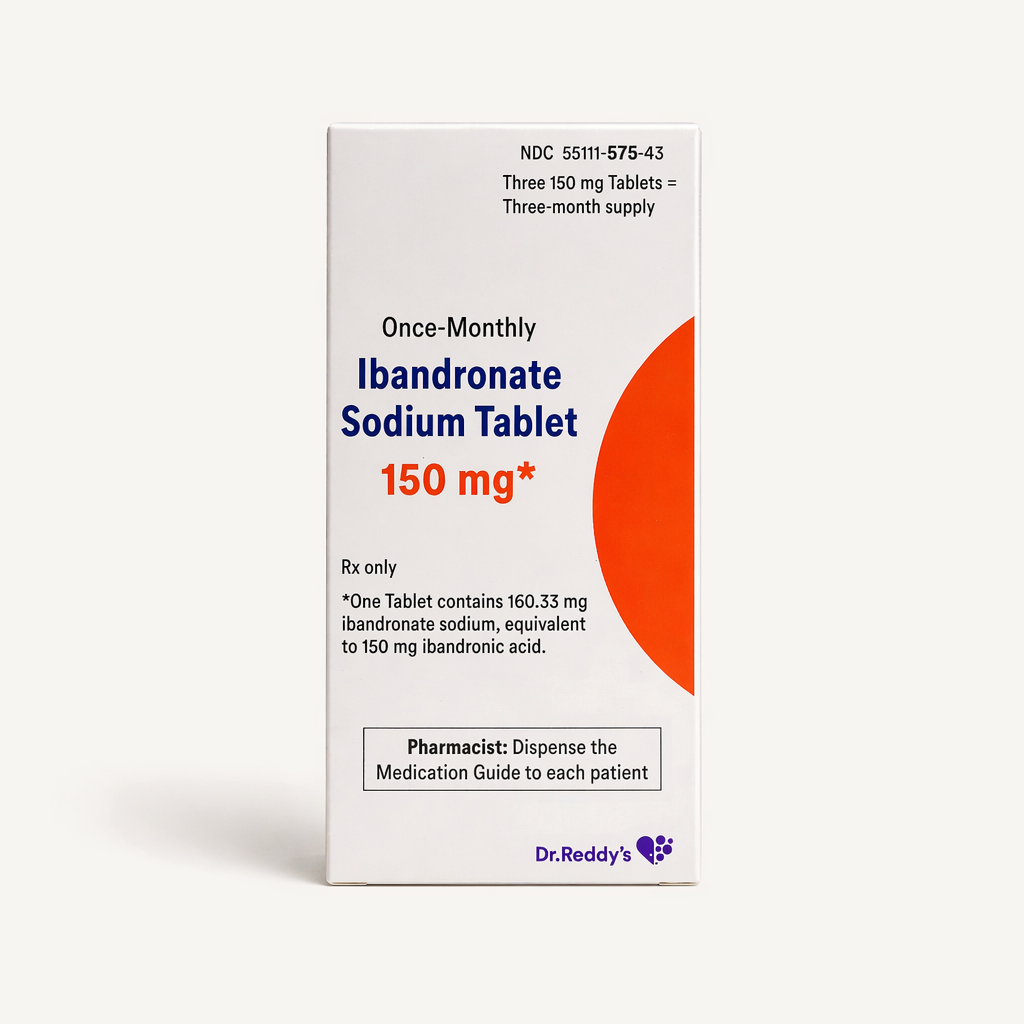
Ibandronate comes in a 150 mg oral tablet that is taken by mouth once a month. The tablet should be swallowed whole first thing in the morning with water on an empty stomach. Wait at least 60 minutes before consuming any food, drinks, or other medications.
Alternatively, for those who experience severe stomach issues with the oral tablet, ibandronate may also be administered as an intravenous (IV) infusion. A healthcare provider gives this infusion once every three months.
Note: Dosing information below is educational only. Your prescribing physician will determine your specific dose based on your individual health needs. Always follow your healthcare provider’s instructions for exact dosing.
Uses
FDA-Approved Uses
Ibandronate is FDA-approved for the treatment and prevention of osteoporosis in postmenopausal women.
Off-Label Uses
You may see ibandronate prescribed for uses that are not “FDA-approved.” This is a very common and legal practice called “off-label” prescribing, where a doctor uses their clinical judgment to prescribe a drug for a different (but well-researched) purpose.
There are currently no common off-label uses for ibandronate.
Side Effects
Like all medications, ibandronate can cause side effects. Some common side effects may improve over time as your body adjusts to the medication. Other side effects may be serious and require medical attention.
Common Side Effects
- Back pain
- Joint or muscle pain
- Headache
- Indigestion
- Diarrhea
- Flu-like symptoms
- Stomach pain
- Nausea
- Pain in the arms or legs
Serious Side Effects
Serious side effects are rare, but it’s important to know what to look for if they do occur. Stop using ibandronate and call your doctor immediately if you experience:
- Severe allergic reactions: Symptoms include swelling of the face, lips, tongue, or throat; difficulty breathing or swallowing; racing heart; severe rash or itching; and/or fever.
- Esophagus and stomach problems: Oral ibandronate may irritate the upper gastrointestinal tract and esophagus, potentially causing inflammation, ulcers, or bleeding. Symptoms include trouble or pain when swallowing, chest pain, or new or worsening heartburn.
- Severe jawbone breakdown (osteonecrosis): In rare cases, ibandronate can cause severe damage to the jawbone. The risk may be higher with poor oral health, cancer, or invasive dental procedures like extractions or implants. Symptoms include jaw pain, loose teeth, or mouth sores.
- Low blood calcium (hypocalcemia): Ibandronate may lower blood calcium levels, which can lead to dangerous heart rhythm problems. Symptoms include fast or skipping heartbeat, fainting, seizures, muscle spasms or twitching, and numbness in the arms, feet, or face.
- Unusual thigh bone fractures: Ibandronate may cause an increased risk of thigh bone fractures, even with minimal force. Symptoms include new, dull, or unusual pain in the hip, thigh, or groin.
- Severe musculoskeletal pain: Ibandronate may cause severe and sometimes incapacitating pain in the bones, joints, or muscles.
- Kidney damage: Injectable ibandronate may cause kidney issues. Symptoms include reduced urination, fatigue, nausea, confusion, chest pain or pressure, seizures, or swelling in the feet, ankles, or legs.
Call your doctor immediately if you experience any concerning or prolonged symptoms.
Pharmacist Tips
Take Ibandronate On An Empty Stomach
The oral tablet should be taken first thing in the morning on an empty stomach, with a full 6 to 8-ounce glass of plain water. Do not chew or suck on the tablet, which can increase the risk of irritating the esophagus.
Stay Upright For 1 Hour After Your Dose
Sit upright or stand for at least 60 minutes after taking your dose. Do not lie down, as this can increase the risk of irritating the esophagus.
Do Not Consume Anything Else For 1 Hour
Avoid eating food, taking other medications or supplements, or drinking anything besides plain water (including coffee, tea, soda, or mineral water) for at least 60 minutes after taking your dose. Doing so can block the medication from being absorbed properly.
Schedule Your Dose
Oral ibandronate should be taken once a month on the same date each month. Consider marking a calendar or creating a reminder on your smartphone so you never miss a dose.
Maintain Good Dental Care
Providers typically recommend routine dental exams before starting treatment and practicing good oral hygiene to lower the risk of jawbone complications.
Ask Your Provider About Calcium And Vitamin D Supplements
It’s important to get enough calcium and vitamin D while taking ibandronate to support bone strength and prevent low calcium levels.
Store At Room Temperature
Ibandronate should be stored at 68°F to 77°F (20°C to 25°C) in a cool, dry place away from light.
Tell Your Provider If You’re Pregnant Or Breastfeeding
It is not known if ibandronate can affect pregnancy or pass into breast milk, so risk cannot be ruled out. Tell your healthcare provider if you are pregnant, breastfeeding, or planning to be, so they can advise whether this medication is safe for you to use.
Try To Avoid Missing A Dose
If you miss a dose of ibandronate and your next scheduled dose is more than 7 days away, you may take the pill the morning of the next day on an empty stomach. However, if your next dose is less than 7 days away, wait until your next scheduled date. Consult a healthcare provider for specific directions.
Drug Interactions
Certain medications and substances can interact with ibandronate, potentially altering how it works or increasing the risk of side effects. For example:
- Foods and beverages: Consuming any food or beverages other than plain water within 60 minutes of dosing can decrease the medication’s absorption.
- Antacids, supplements, or vitamins containing calcium, aluminum, magnesium, or iron: Products containing these minerals can interfere with ibandronate and should not be taken within the 60-minute window following a dose.
- Nonsteroidal anti-inflammatory drugs (NSAIDs): Medications like aspirin, ibuprofen, and naproxen can increase the risk of stomach or esophageal irritation on ibandronate.
- Corticosteroids: Taking these at the same time as ibandronate can increase the risk of jawbone breakdown.
- Cancer treatments: Undergoing chemotherapy or radiation therapy may elevate the risk of jawbone breakdown while taking ibandronate.
Always give your doctor and pharmacist a complete list of all your medications, vitamins, and supplements to check for potential interactions.
FAQs
Why do I have to wait 60 minutes before lying down or eating on ibandronate?
Remaining upright for at least 60 minutes lowers the risk of the medication causing irritation, inflammation, or ulcers in your esophagus. Waiting 60 minutes before eating or drinking anything other than plain water also ensures the body properly absorbs the medication.
Can I take my morning ibandronate with a cup of coffee instead of plain water?
No. Coffee, tea, and even mineral water can decrease the amount of medication your body absorbs, making it less effective. Ibandronate should be swallowed whole with a glass of plain water only.
What happens if I bend over or lie down after swallowing this?
Lying down or bending over shortly after taking the tablet increases the likelihood that the medication will travel back up into the esophagus, which may lead to severe irritation, sores, or ulcers.
Can I take Vitamin D supplements at the same time as ibandronate?
It is advised to wait at least 1 hour after your ibandronate dose before you take any other medications or supplements, including vitamin D or calcium. Taking supplements at the exact same time may interfere with your body’s absorption of ibandronate.
What should I do if I completely forget to take my pill on the same day each month? Do I take it the next day?
If you forget your dose and your next scheduled dose is more than 7 days away, you may take the pill the morning of the next day. However, if your next dose is 7 days away or less, wait until your next scheduled date. Consult your healthcare provider for specific directions.
Does taking ibandronate frequently cause acid reflux?
Heartburn and indigestion are common side effects of ibandronate. Staying upright for at least 1 hour after taking your dose may reduce these side effects.
Will this medication build new bone?
Yes, indirectly. By slowing down the natural breakdown of existing bone, ibandronate allows the body’s natural bone-building processes to create new strong bone.
Does the quarterly injection of ibandronate cause less side effects than the monthly pill?
The IV infusion may be used if patients experience too many gastrointestinal problems with the oral tablet. However, the injectable form carries specific risks of its own, including an increased risk of kidney damage.
Why do my bones, muscles, and joints ache the day after I take my monthly pill?
Bone, joint, and muscle pain are known side effects that can occur after taking bisphosphonates like ibandronate. While mild pain is common, severe or incapacitating musculoskeletal pain should be reported to a healthcare provider.
Can I take ibuprofen for my joint pain?
Taking NSAIDs like ibuprofen or naproxen alongside ibandronate may increase the risk of severe stomach and esophageal irritation. It is generally recommended to discuss other pain relief options with a provider.
Does this medication interact with thyroid medications, like Synthroid or levothyroxine?
Ibandronate is not known to interact with thyroid medications like Synthroid or levothyroxine. However, since both must be taken on an empty stomach first thing in the morning, it’s best to ask your doctor about the best way to time your doses.
Do I have to avoid anything while taking ibandronate?
Yes, for the first 60 minutes after taking ibandronate, it’s recommended to avoid lying down, eating or drinking anything other than plain water, and taking other medications or supplements.
Comparable Medications
Ibandronate, alendronate (Fosamax), zoledronic acid (Reclast), teriparatide (Forteo), or denosumab (Prolia)?
There are several medications that your doctor can prescribe in place of ibandronate. Here are a few possible alternatives below.
Alendronate Tablets
From $29.99
A daily or weekly oral prescription used to treat osteoporosis in postmenopausal women, men, and other people with an increased risk of bone loss or fractures.
Zoledronic Acid
A prescription injection administered once or every 1–2 years by a healthcare provider to treat osteoporosis in postmenopausal women, men, and other people with an increased risk of bone loss or fractures.
Teriparatide
A daily prescription self-injection used to treat osteoporosis in postmenopausal women, men, and other people with an increased risk of bone loss or fractures.
Denosumab
A prescription injection administered every 6 months by a healthcare provider to treat osteoporosis in postmenopausal women, men, and other people with an increased risk of bone loss or fractures.
We Have Ibandronate in Stock. Get Yours Today!
Important: Information on this page is for educational purposes only. Prescribing decisions are made by independent, licensed providers. TelyRx operates technology-enabled pharmacies and a telehealth platform that connects patients with licensed providers. Prescriptions, when provider-approved and issued, are filled and shipped by TelyRx-affiliated pharmacies. We do not employ physicians or make prescribing decisions. Learn more about our editorial standards here.