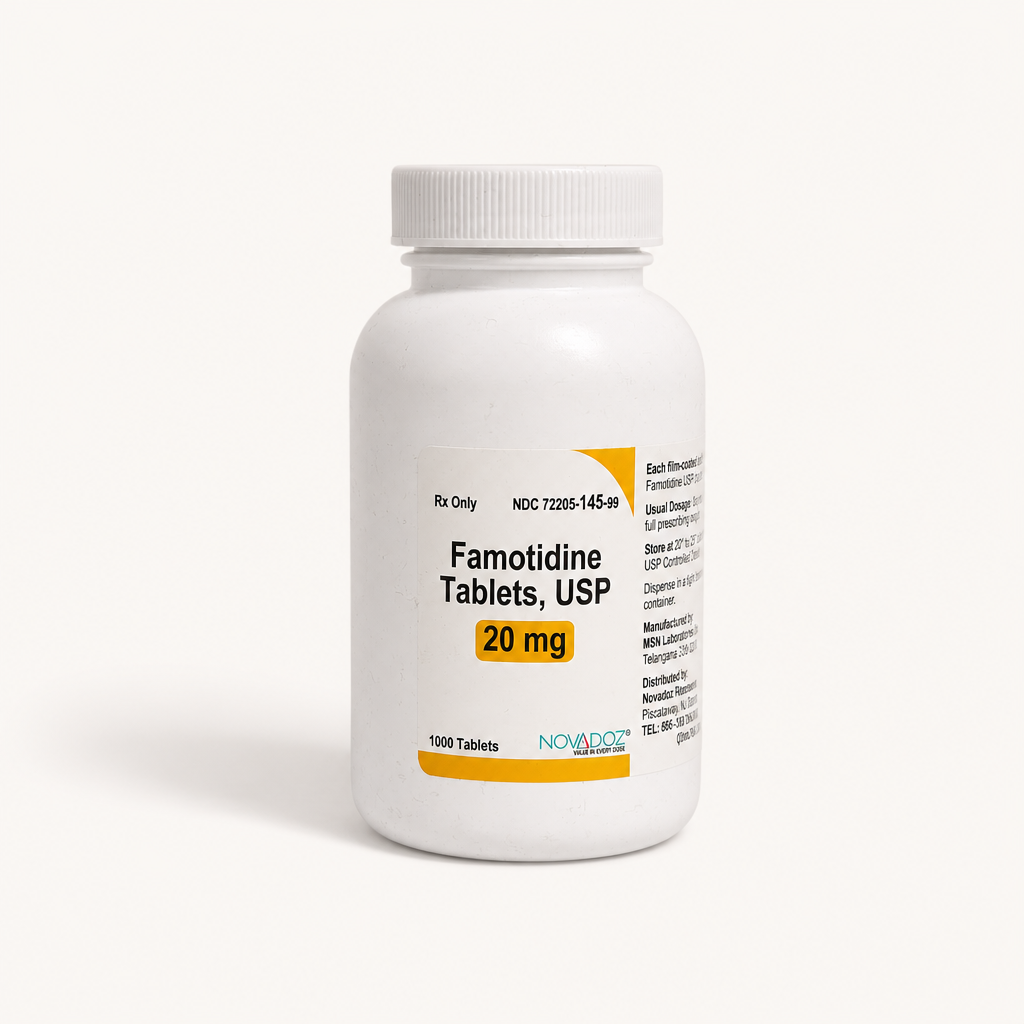
How It Works
Famotidine is a type of medication known as a histamine-2 (H2) receptor blocker. It works by binding to histamine receptors located in the stomach lining. By blocking these receptors, the medication decreases the volume of acid the stomach produces. This may relieve digestive discomfort and help prevent damage to the stomach and esophagus.
| Quick Facts | |
|---|---|
| Common Brands | Pepcid, Pepcid AC |
| Drug Class | Histamine H2 antagonist (acid reducer) |
| Generic Status | Generic is available |
| Availability | Prescription and over-the-counter (OTC) |
Dosing
Generally, famotidine is administered once or twice daily, either on a set schedule or as needed based on symptoms.
For adults using the over-the-counter formulation to prevent heartburn, famotidine is typically taken 10 to 60 minutes before consuming foods or beverages that might trigger symptoms.
The standard prescription duration for treating conditions such as ulcers or gastroesophageal reflux disease (GERD) ranges from 6 to 12 weeks, depending on the severity of the condition.
For patients with impaired kidney function, providers commonly advise taking the lowest effective dose and reducing the dosing frequency to every other day.
Note: Dosing information below is educational only. Your prescribing physician will determine your specific dose based on your individual health needs. Always follow your healthcare provider’s instructions for exact dosing.
Uses
FDA-Approved Uses
Famotidine is FDA-approved to prevent and treat heartburn and gastroesophageal reflux disease (GERD). It is also indicated for treating stomach and intestinal ulcers, managing erosive esophagitis resulting from acid reflux, and treating hypersecretory conditions such as Zollinger-Ellison syndrome.
Off-Label Uses
You may see famotidine prescribed for uses that are not “FDA-approved.” This is a common and legal practice called “off-label” prescribing, where a doctor uses their clinical judgment to prescribe a drug for a different (but well-researched) purpose.
For example, some providers may prescribe famotidine off-label as a treatment for certain allergies, acute allergic reactions, and/or anaphylaxis.
Side Effects
Like all medications, famotidine can cause side effects. Some common side effects may improve over time as your body adjusts to the medication. Other side effects may be serious and require medical attention.
Common Side Effects
- Headache
- Dizziness
- Constipation
- Diarrhea
- Nausea
- Vomiting
- Gas
- Dry mouth
Serious Side Effects
Serious side effects are rare, but it’s important to know what to look for if they do occur.
- Severe allergic reactions: Symptoms may include breathing problems, wheezing, a racing heart, fever, swollen lymph nodes, or swelling of the face, lips, tongue, or throat. Seek medical attention immediately if you have signs of a famotidine allergy.
- Central nervous system effects: Famotidine may cause issues like confusion, delirium, agitation, hallucinations, and seizures. These side effects are more likely to affect older adults or individuals with kidney problems.
- Abnormal heartbeat: In rare cases, patients may experience changes in heart rate or rhythm, such as a fast, pounding, or skipping heartbeat.
Call your doctor immediately if you experience any concerning or prolonged symptoms.
Pharmacist Tips
Dietary Considerations
Standard guidelines indicate that this medication can be taken with or without food. However, for heartburn prevention, providers recommend taking famotidine 10 to 60 minutes before a meal. They recommend against taking famotidine with highly acidic beverages like certain sodas or juices.
Liquid Formulations
If taking the oral liquid suspension, shake the bottle vigorously for 5 to 10 seconds before each use to ensure proper mixing. Store the liquid at room temperature and discard any unused portion after 30 days.
Duration of Use
Unless advised otherwise by a health professional, over-the-counter use of famotidine should generally not exceed 14 consecutive days.
Specialized Dosing
Older individuals and those with compromised kidney function are at a higher risk for certain side effects and may require dosing adjustments from their provider.
Drug Interactions
Certain medications and substances can interact with famotidine, potentially altering how it works or increasing the risk of side effects.
- Muscle relaxants: Famotidine may interact with muscle-relaxing medications such as tizanidine, increasing blood concentrations and increasing risk for side effects.
- Antifungal medications: Drugs such as itraconazole and ketoconazole may have reduced absorption when taken alongside famotidine, which may decrease their effectiveness.
- HIV/AIDS and Hepatitis C treatments: Some medications like delavirdine or fosamprenavir may interact with famotidine. By reducing stomach acid, famotidine can decrease the absorption of these medications, which may make them less effective.
- Cancer medications: Famotidine can reduce the absorption of some cancer treatment medications (e.g., dasatinib, erlotinib, and nilotinib). Concomitant use may not be recommended or may require spacing between doses.
Always give your doctor and pharmacist a complete list of all your medications, vitamins, and supplements to check for potential interactions.
FAQs
How fast does famotidine work for heartburn?
Famotidine typically begins working within an hour of taking it. The medication’s full effect is typically reached within 1 to 3 hours.
What is the real difference between famotidine (Pepcid) and omeprazole (Prilosec)?
Famotidine belongs to a class of drugs called H2 blockers, which are generally recognized to provide short-term relief within a few hours after taking the medication. Omeprazole is a proton pump inhibitor (PPI) that can take several days to reach its full effect and is commonly used for prolonged treatment.
Is famotidine the same thing as Zantac?
The modern formulation known as Zantac 360 uses famotidine as its active ingredient. The original Zantac formulation contained a different active ingredient called ranitidine.
Can I take Tums with famotidine?
Antacids like calcium carbonate (Tums) can be used alongside famotidine for immediate relief while famotidine takes full effect. Your doctor or pharmacist can offer specific guidance about using other medications based on your symptoms and famotidine dosage.
Is it safe to take a daily famotidine pill indefinitely?
The over-the-counter version of famotidine is not intended for long-term use without medical supervision. If symptoms persist beyond 14 days, you should see your doctor for further evaluation.
Does taking famotidine every day cause memory loss or dementia?
Research data does not indicate that famotidine causes dementia. However, a potential side effect of famotidine is central nervous system disruption, such as confusion, delirium, or hallucinations. These are not common side effects, but they are more likely to occur in older adults and people with kidney problems.
Can I safely drink coffee or alcohol while trying to heal my stomach with famotidine?
Consult with your doctor about how to most effectively prevent symptoms and side effects. Certain foods or drinks, such as alcohol, can exacerbate stomach symptoms and increase the risk of nausea, vomiting, and heartburn.
Why do I sometimes get a headache after taking famotidine?
Headaches are one of the most common side effects associated with famotidine. Headaches may resolve as the body adjusts to the medication.
Is it safe to use famotidine if I am currently pregnant?
Famotidine is classified as “probably safe” for pregnant individuals, but more data is needed to understand the potential effects fully. If you are pregnant, planning to become pregnant, or breastfeeding, consult your healthcare provider before using famotidine.
What is the difference between regular Pepcid AC and Maximum Strength Pepcid?
Regular-strength formulations of famotidine generally contain 10 mg of the active ingredient, while Maximum Strength versions typically contain 20 mg.
Can I take my daily allergy pill at the same time as famotidine?
Famotidine is a histamine H2-receptor blocker and is occasionally used off-label to treat allergies. However, patients should consult a pharmacist or doctor before combining famotidine with other medications to ensure they can be taken safely together.
Can you take famotidine on an empty stomach?
Famotidine can be taken with or without food.
Comparable Medications
Famotidine, Omeprazole (Prilosec), Esomeprazole (Nexium), Ranitidine (Zantac), Cimetidine (Tagamet)?
Omeprazole
From $19.99
Omeprazole is a proton pump inhibitor (PPI) that decreases stomach acid. It can take longer to work, but it may be recommended for persistent heartburn and ulcers.
Esomeprazole
From $34.99
This is another proton pump inhibitor (PPI) that may be used for severe or chronic acid reflux and erosive esophagitis.
Ranitidine
Ranitidine is another H2-receptor blocker that works similarly to famotidine, though it is less commonly used today.
Cimetidine
Cimetidine is an older H2-receptor blocker that works similarly to famotidine but has a higher potential for drug interactions.
We Have Famotidine in Stock. Get Yours Today!
Important: Information on this page is for educational purposes only. Prescribing decisions are made by independent, licensed providers. TelyRx operates technology-enabled pharmacies and a telehealth platform that connects patients with licensed providers. Prescriptions, when provider-approved and issued, are filled and shipped by TelyRx-affiliated pharmacies. We do not employ physicians or make prescribing decisions. Learn more about our editorial standards here.