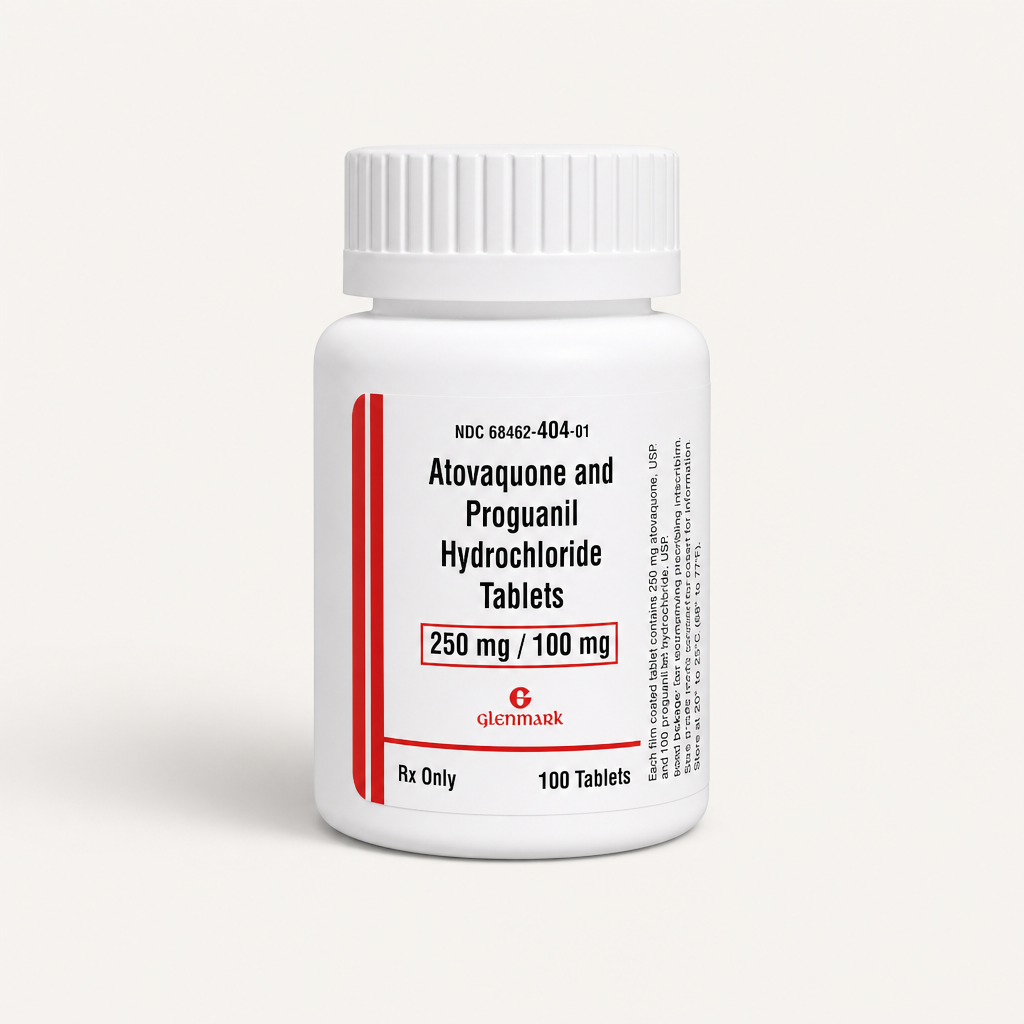
How It Works
Atovaquone / proguanil tablets contain two active ingredients that work together to prevent and treat malaria infections caused by the Plasmodium falciparum parasite:
- Atovaquone inhibits the parasite’s ability to produce the energy it needs to survive, causing parasite death
- Proguanil amplifies the effects of atovaquone
| Quick Facts | |
|---|---|
| Common Brands | Malarone |
| Drug Class | Antimalarial, antiprotozoal agent |
| Generic Status | Generic is available |
| Availability | Prescription only |
Dosing
Note: Dosing information below is educational only. Your prescribing physician will determine your specific dose based on your individual health needs.
Each tablet of atovaquone / proguanil contains 250 mg of atovaquone and 100 mg of proguanil. The dosing regimen depends on whether you’re taking it to prevent or treat malaria.
- Prevention of malaria: Providers typically recommend starting treatment with atovaquone / proguanil 1 to 2 days prior to entering the area with malaria, taking it daily during the trip, and continuing treatment for 7 days after leaving the area. The recommended dose is one tablet per day.
- Treatment of an active malaria infection: The recommended dose is 4 tablets taken by mouth daily for three days.
Always follow your healthcare provider’s instructions for exact dosing.
Uses
FDA-Approved Uses
Atovaquone / proguanil is FDA-approved to:
- Prevent malaria caused by the Plasmodium falciparum parasite
- Treat active malaria infections caused by the Plasmodium falciparum parasite
Off-Label Uses
You may see atovaquone / proguanil prescribed for uses that are not “FDA-approved.” This is a common and legal practice called “off-label” prescribing, where a doctor uses their clinical judgment to prescribe a drug for a different (but well-researched) purpose.
Side Effects
Like all medications, atovaquone / proguanil can cause side effects. Some common side effects may improve over time as your body adjusts to the medication. Other side effects may be serious and require medical attention.
Common Side Effects
- Headache
- Cough
- Stomach pain
- Vomiting
- Nausea
- Diarrhea
- Mouth sores
- Unusual weakness or tiredness
- Loss of appetite
- Dizziness
- Itching
Serious Side Effects
Serious side effects are rare, but it’s important to know what to look for if they do occur. Stop using atovaquone / proguanil and call your doctor immediately if you experience:
- Severe allergic reactions: Symptoms include swelling of the face, lips, tongue, or throat; difficulty breathing or swallowing; racing heart; severe rash or itching; and/or fever.
- Liver damage (hepatotoxicity): Atovaquone / proguanil may cause liver damage. Symptoms include yellowing of the skin or eyes (jaundice), dark-colored urine, light-colored stool, stomach pain, nausea, vomiting, fever, unusual tiredness, itching, or loss of appetite.
- Severe skin reactions: This medication may cause a potentially life-threatening skin condition called Stevens-Johnson syndrome. Symptoms include painful red or purple skin that looks burned and peels off; flat rash or blisters on the skin, mouth, nose, or genitals; or painful, red, or watery eyes.
- Severe vomiting or diarrhea: Persistent or severe vomiting or diarrhea while taking atovaquone / proguanil may prevent the medication from being fully absorbed by the body. Your healthcare provider may switch you to a different medication or prescribe medicine to reduce these side effects.
Call your doctor immediately if you experience any concerning or prolonged symptoms.
Pharmacist Tips
Take Your Dose With Food Or Milk
To improve absorption and minimize stomach upset, providers typically recommend taking atovaquone / proguanil with a meal or a milk-based beverage.
Tablets May Be Crushed If Needed
If it’s difficult to swallow the tablets, you can crush the tablet and mix it with condensed milk and take it immediately.
Pay Attention To Vomiting Or Diarrhea
If you vomit within one hour of taking a dose, it is generally advised to take a repeat dose. If your vomiting or diarrhea does not go away, contact your healthcare provider as you may need to take a different medication.
Finish the Course
It is essential to finish the entire prescribed course of treatment, even if you feel healthy. Stopping atovaquone / proguanil early may increase your risk of the infection returning or developing resistance to similar medicines.
Take Other Measures To Prevent Infection
Medication alone is not fully guaranteed to prevent malaria. It is strongly advised to combine it with other preventative measures, such as wearing long-sleeved clothing and using mosquito repellents and nets.
Limit Alcohol
Atovaquone / proguanil does not interact with alcohol, but heavy drinking is discouraged since it can weaken the immune system and make it more difficult for your body to fight off infections.
Contact Your Provider If New Symptoms Occur
If flu-like symptoms or fever arise during or after travel, seek prompt medical attention, even if you’ve already taken the full course of atovaquone / proguanil.
Tell Your Provider If You’re Pregnant Or Breastfeeding
It is not known if this medication can affect an unborn baby or pass into breast milk, so risk cannot be ruled out. Tell your healthcare provider if you are pregnant or breastfeeding so they can advise whether this medication is safe for you to take.
Store At Room Temperature
Atovaquone / proguanil should be kept at room temperature between 68°F and 77°F (20°C to 25°C). Store the medication in a cool, dry place.
Try To Avoid Missing Doses
If you miss a dose of atovaquone / proguanil, take it as soon as you remember, unless it is almost time for your next dose. In that case, skip the missed dose and take your next dose as scheduled. Do not take double or extra doses to make up for a missed one.
Drug Interactions
Certain medications and substances can interact with atovaquone / proguanil, potentially altering how it works or increasing the risk of side effects. For example:
- Rifampin: This tuberculosis medication may lower the effectiveness of atovaquone / proguanil and should not be taken at the same time.
- Rifabutin: This medicine for Mycobacterium avium complex infection may lower the effectiveness of atovaquone / proguanil and should not be taken at the same time.
- Tetracycline: This antibiotic may affect the absorption of atovaquone.
- Blood thinners: Atovaquone / proguanil may interact with medications like warfarin or dicumarol.
- Metoclopramide: This anti-nausea medication can affect the body’s absorption of atovaquone.
- Indinavir: This antiretroviral medication for HIV may interact with atovaquone / proguanil.
Always give your doctor and pharmacist a complete list of all your medications, vitamins, and supplements to check for potential interactions.
FAQs
Why must I take this medication with food?
Taking this medication with food, particularly high-fat foods like peanut butter or milk-based drinks, can improve how well the medicine is absorbed into your body.
Why do I have to keep taking it for a full 7 days after I leave the malaria risk area?
It is recommended to continue the medication for 7 days after returning to ensure that any parasites that may have entered your bloodstream just before you left are killed.
How is Malarone different from taking doxycycline to prevent malaria?
While both can prevent malaria, Malarone is typically taken for 7 days after leaving a malaria-endemic area, whereas doxycycline often requires a longer post-travel regimen of 4 weeks.
Can I crush the tablet and mix it with food if I cannot swallow pills?
Yes, the tablets can be crushed and mixed with condensed milk for easier swallowing. The dose should be swallowed right away after you prepare it.
Can I take this medication if I am pregnant or breastfeeding?
It is unknown if this medication is safe for an unborn baby or if it passes into breast milk, so risk cannot be ruled out. It’s also recommended that pregnant people avoid travel to malaria-endemic areas if possible.
Can I safely drink alcohol while taking this medication on vacation?
There are no known direct interactions between this medication and alcohol, so drinking in moderation is generally fine. However, providers typically recommend against heavy drinking, as it can suppress your immune response and make your body more vulnerable to infections.
What happens if I forget to take a dose one morning?
If you miss a dose of atovaquone / proguanil, take it as soon as you remember. However, if it is almost time for your next scheduled dose, skip the missed dose and take the next dose at the usual time. Do not double up on extra doses to make up for a missed one.
Does this medication interact with blood thinners?
Yes, atovaquone / proguanil interacts with blood thinners like warfarin and dicumarol. Taking them together may require your doctor to adjust your dose or monitor you more closely, as it can increase the risk of certain side effects.
Is this drug used to treat malaria if I catch it, or just to prevent it?
Atovaquone / proguanil is FDA-approved for both the prevention and treatment of malaria caused by the Plasmodium falciparum parasite. However, the dosing regimen differs depending on whether it is being used for prevention or treatment.
Can I take this if I have severe kidney disease?
Providers typically recommend against using this medication for the prevention of malaria in people with severe kidney problems, as it carries a risk of causing a dangerous drop in blood cell counts.
Will this pill protect me from all types of malaria parasites?
Atovaquone and proguanil is used to prevent malaria caused by the Plasmodium falciparum parasite. However, it may not be effective against other strains of malaria, especially in geographic locations where parasites have developed resistance to these specific active ingredients.
Do I still need to use bug spray and mosquito nets if I am taking these pills?
Yes. No medication is guaranteed to be 100% effective at preventing malaria. It is highly recommended to combine the medication with physical and chemical barriers, such as long-sleeved clothing, mosquito nets, and bug sprays, to reduce your risk as much as possible.
Comparable Medications
Atovaquone / Proguanil, Malarone (atovaquone 250 mg / proguanil 100 mg), doxycycline (Vibramycin), or chloroquine (Aralen)?
There are several medications that your doctor can prescribe in place of atovaquone / proguanil. Here are a few possible alternatives below.
Malarone
This is the brand-name version of atovaquone / proguanil.
Doxycycline Hyclate Tablets
From $28.99
A tetracycline antibiotic used to prevent malaria and treat various conditions, including acne, chlamydia, syphilis, gonorrhea, and Lyme disease.
Chloroquine
A sulfonamide used to prevent and treat malaria.
We Have Atovaquone / Proguanil in Stock. Get Yours Today!
Important: Information on this page is for educational purposes only. Prescribing decisions are made by independent, licensed providers. TelyRx operates technology-enabled pharmacies and a telehealth platform that connects patients with licensed providers. Prescriptions, when provider-approved and issued, are filled and shipped by TelyRx-affiliated pharmacies. We do not employ physicians or make prescribing decisions. Learn more about our editorial standards here.