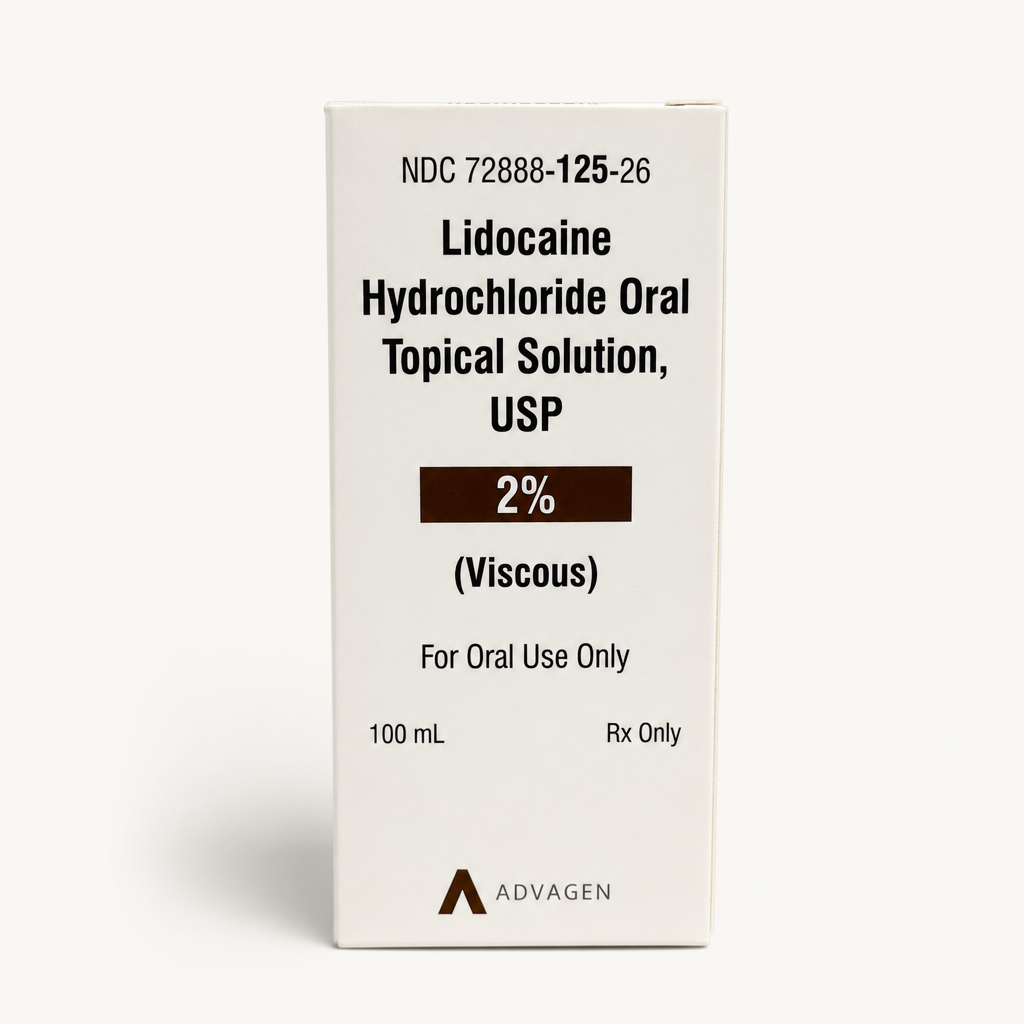
How It Works
To understand how lidocaine provides relief, it is helpful to look at how your body sends pain signals.
When the lining of your mouth or throat is injured or irritated, nerves in that area send electrical signals to your brain, which you perceive as pain.
Lidocaine works by:
- Blocking sodium channels: The medication enters the nerve endings in the mucous membranes and blocks sodium from entering the nerve cells.
- Stopping electrical signals: Because sodium is required for nerves to send electrical impulses, blocking these channels prevents the pain signal from starting.
- Temporary numbing: By blocking nerve signals in the treated area, lidocaine creates a temporary numbing effect.
The onset of relief is typically fast, usually occurring within 3 to 5 minutes of application. The effect is localized, meaning the tissues in contact with the liquid will become numb.
| Quick Facts | |
|---|---|
| Common Brands | Glydo (Xylocaine brand is no longer available in the US) |
| Drug Class | Topical anesthetic (Amide-type) |
| Generic Status | Generic version available |
| Availability | Prescription only |
Dosing
Correct dosing is vital to prevent too much medication from being absorbed into your system. Providers typically recommend the following:
- Standard dose: Use 15 mL (about one tablespoon) of the solution.
- Application frequency: Doses are usually spaced at least 3 hours apart.
- Maximum limit: It is generally accepted that you should not use more than 8 doses in a 24-hour period.
- For mouth pain: Providers recommend swishing the solution around the mouth for 15 to 30 seconds, then spitting it out.
- For throat pain: It’s generally advised that you gargle the solution at the back of the throat. You may be told to swallow the liquid only if your doctor instructs you to do so for throat pain relief.
Standard guidelines suggest using an accurate measuring device, such as a medicine cup or oral syringe. A household spoon is not an accurate measuring device and may cause you to take the wrong dose.
Note: Dosing information below is educational only. Your prescribing physician will determine your specific dose based on your individual health needs. Always follow your healthcare provider’s instructions for exact dosing.
Uses
FDA-Approved Uses
The FDA approves lidocaine viscous 2% for:
- Topical anesthesia: Numbing the mucous membranes of the mouth and throat.
- Pain relief: Reducing discomfort from irritated or inflamed oral tissues.
- Procedure preparation: Reducing the gag reflex during dental impressions or X-rays.
Off-Label Uses
Note: You may see lidocaine prescribed for uses that are not FDA-approved. This is a common and legal practice called off-label prescribing, where a doctor uses their clinical judgment to prescribe a drug for a different (but well-researched) purpose.
Lidocaine may be prescribed off-label for the following conditions:
- Compound mouthwash: Lidocaine is a common primary ingredient in compounded rinses used to treat oral mucositis (mouth sores) caused by chemotherapy or radiation.
- Esophagitis relief: Lidocaine is sometimes used to numb the esophagus in cases of severe acid reflux or irritation, usually under strict medical supervision.
Side Effects
While lidocaine is generally well-tolerated when used as directed, it can cause some side effects as the body reacts to the anesthetic.
Common Side Effects
- Temporary redness or swelling at the application site
- A mild burning or stinging sensation when first applied
- Changes in taste or a numb sensation that lasts after the liquid is gone
- Dizziness or lightheadedness if too much is absorbed
Serious Side Effects
Serious side effects are rare, but it’s important to know what to look for if they do occur.
It’s generally accepted that you stop taking the medication and immediately call the doctor if you experience any of the following symptoms:
- Methemoglobinemia: This is a rare blood disorder in which the blood cannot carry enough oxygen. Symptoms include pale or blue-colored skin, headache, fast heartbeat, and shortness of breath.
- Systemic toxicity: If too much lidocaine enters the bloodstream, it can cause confusion, tremors, seizures, or a slow heart rate.
- Severe allergic reactions: Providers advise watching for hives, swelling of the face or throat, and difficulty breathing.
- Aspiration risk: Because the throat becomes numb, patients have an increased risk of choking on food or liquids.
Call your doctor immediately if you experience any concerning or prolonged symptoms.
Pharmacist Tips
Wait to Eat
It’s generally advised not to eat or chew gum for at least 60 minutes after using this medication. Numbness in the mouth and throat makes swallowing difficult and increases the risk of biting your tongue or choking.
Shake the Bottle
Before measuring your dose, providers recommend gently shaking the bottle to ensure the lidocaine is evenly mixed throughout the thick liquid.
Target Specific Sores
If you have one or two specific canker sores, you can apply the liquid directly to them with a Q-tip or cotton swab, rather than swishing the whole amount.
Store Safely
Store lidocaine at room temperature.
Check the Expiration
Standard guidelines state that the liquid should not be used if it has expired. While it does not need to be refrigerated, it’s best to keep it in a cool, dry place.
Drug Interactions
Lidocaine can interact with other medications, especially those that affect your heart rhythm or blood oxygen levels.
Let your doctor know if you take:
- Heart medications: Use caution if you take antiarrhythmics (medications for irregular heartbeat) or blood pressure pills, such as beta-blockers.
- Nitrates: Medications like nitroglycerin may increase the risk of methemoglobinemia when used with lidocaine.
- Other anesthetics: Using other numbing products (like benzocaine) at the same time can increase the risk of side effects.
Always give your doctor and pharmacist a complete list of all your medications, vitamins, and supplements to check for potential interactions.
FAQs
Why should I not eat or drink for at least 60 minutes after using this liquid?
Lidocaine numbs the gag reflex and the muscles used for swallowing. If you eat while numb, you may not be able to clear food from your airway properly, which can lead to choking. Additionally, you may accidentally bite your cheek or tongue because you cannot feel them.
Is it safe to swallow lidocaine, or must I spit it out?
It’s generally accepted that you only swallow lidocaine if your doctor has instructed you to do so to treat a painful throat. For mouth sores, it is generally recommended to swish and spit to minimize the amount of medication absorbed into your bloodstream.
How long does the numbing effect actually last after I swish?
The numbing effect usually begins within a few minutes and typically lasts for about 30 to 60 minutes.
Can I use this liquid lidocaine on a sunburn, bug bite, or open scrape on my skin?
No. This formulation is used for the wet tissues (mucous membranes) of the mouth and throat. It’s generally accepted that it should not be used on large areas of the skin or on open wounds, as this can lead to dangerous levels of the drug being absorbed into your system.
Is it safe to use this medication if I am pregnant or breastfeeding?
It is not known if lidocaine can harm an unborn baby, so risk cannot be ruled out. If you are pregnant or breastfeeding, discuss the risks and benefits with your doctor before use.
How many times a day can I safely use the lidocaine solution without risking an overdose?
Providers advise not exceeding 8 doses in a 24-hour period. Using it more frequently than every 3 hours can cause the medication to build up in your body, increasing the risk of heart and brain side effects.
Does this liquid expire, and does it need to be kept in the refrigerator?
Lidocaine oral solution does expire. Standard guidelines recommend checking the date printed on the bottle or prescription label. It should be stored at room temperature, not in the refrigerator.
Can I apply the liquid directly to a cold sore with a Q-tip instead of swishing it?
Yes. For localized sores, using a Q-tip helps deliver the medication exactly where it is needed and reduces the total amount of drug your body absorbs.
Can I use this solution for a severe toothache or gum infection?
Lidocaine may temporarily numb the surface of the gums, but it will not reach the source of pain inside a tooth. It also does not treat infections. It’s generally advised that you see a dentist for these conditions.
Can I use this liquid to numb my skin before getting a shot or a tattoo?
Standard guidelines advise against this. Viscous lidocaine is not designed to penetrate the outer layer of the skin effectively and is only meant for the lining of the mouth.
Does this medication interact with blood pressure pills?
Lidocaine can interact with certain heart and blood pressure medications, such as propranolol or metoprolol. These drugs can slow down how your liver processes lidocaine, potentially leading to higher levels in your blood.
Comparable Medications
Lidocaine 4%, Xylocaine 10%, Benzocaine 20%, Chlorhexidine, or Dexamethasone?
If side effects or drug interactions are a concern, your healthcare provider may recommend one of the following alternatives:
Lidocaine 4% solution
A thinner and more concentrated liquid commonly used as a spray by doctors before medical procedures. The 2% viscous form is typically preferred for home use because its thickness helps it coat the mouth.
Xylocaine 10% oral spray
A highly concentrated spray used primarily in dental or surgical settings to provide rapid numbing before a procedure.
Chlorhexidine Oral Rinse
From $35.99
An antibacterial mouthwash used to treat gum disease. It does not provide numbing or pain relief but targets the underlying bacterial cause of certain types of mouth irritation.
Dexamethasone oral rinse
A prescription steroid liquid used to reduce inflammation and swelling of mouth sores.
We Have Lidocaine in Stock. Get Yours Today!
Important: Information on this page is for educational purposes only. Prescribing decisions are made by independent, licensed providers. TelyRx operates technology-enabled pharmacies and a telehealth platform that connects patients with licensed providers. Prescriptions, when provider-approved and issued, are filled and shipped by TelyRx-affiliated pharmacies. We do not employ physicians or make prescribing decisions. Learn more about our editorial standards here.