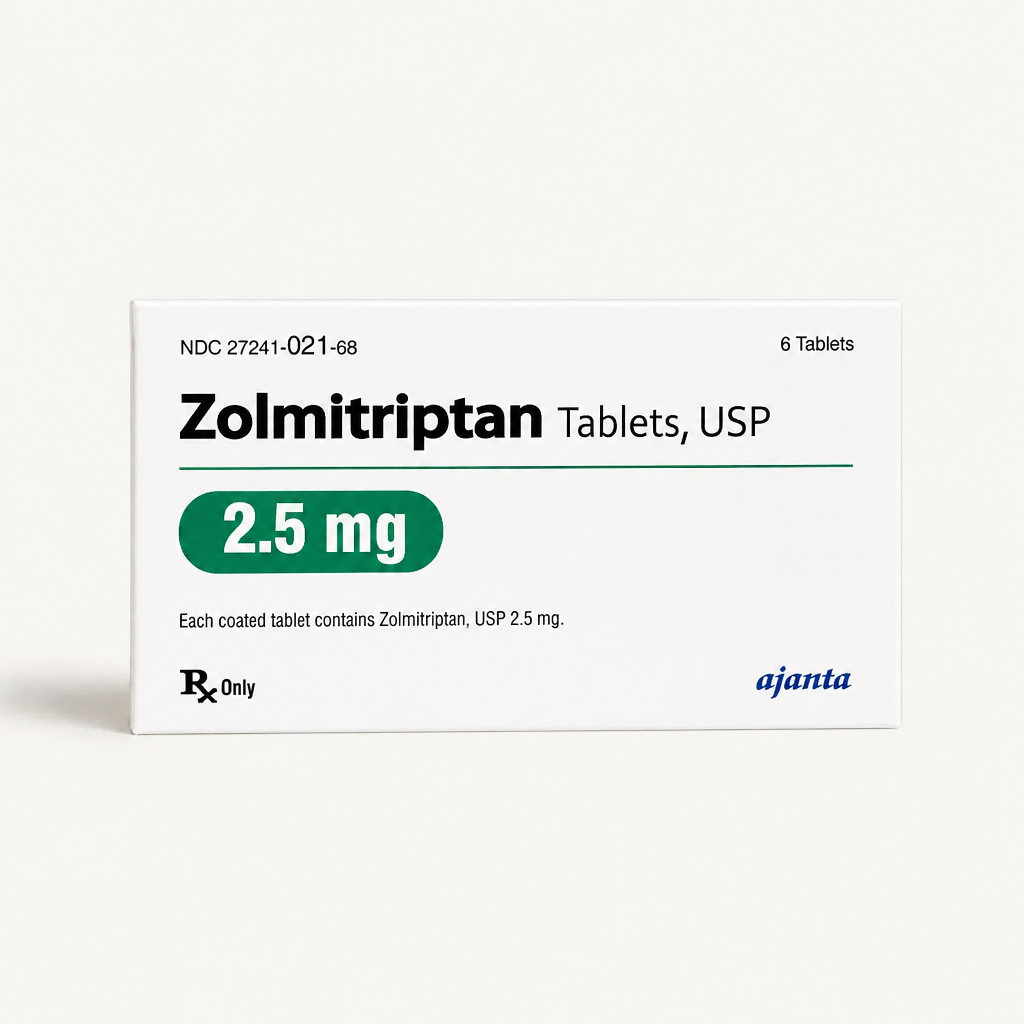
How It Works
During a migraine, blood vessels in the brain tend to widen and become inflamed. This change, combined with the release of certain natural chemicals, sends pain signals to the brain and causes symptoms like nausea and light sensitivity.
Zolmitriptan works by narrowing these swollen blood vessels back to a normal size.
Zolmitriptan blocks pain signals by:
- Stimulating serotonin receptors: It binds to specific receptors (5-HT1B and 5-HT1D) on the blood vessels and nerves in the brain.
- Reducing inflammation: By activating these receptors, the medication reduces the inflammation around the nerves that transmit pain.
- Constricting blood vessels: It causes the blood vessels that have widened during a migraine to narrow, easing throbbing pressure.
- Interrupting nerve signals: It stops the brain from receiving pain messages and blocks the release of chemicals that cause nausea and other migraine symptoms.
| Quick Facts | |
|---|---|
| Common Brands | Zomig, Zomig-ZMT, Zomig Nasal Spray |
| Drug Class | Serotonin (5-HT) receptor agonist (Triptan) |
| Generic Status | Generic version available |
| Availability | Prescription only |
Dosing
Zolmitriptan is most effective when taken at the first sign of a migraine. It is generally accepted that the starting dose is 1.25 mg or 2.5 mg.
- Oral tablets: Standard guidelines recommend taking one tablet with a full glass of water.
- Orally disintegrating tablets (ZMT): Providers advise placing the tablet on your tongue and allowing it to dissolve. It’s generally accepted that you do not need water to take this form.
- Nasal spray: Typically, one spray (2.5 mg or 5 mg) is administered into one nostril.
- Second doses: If the migraine does not resolve or recurs after initial relief, a second dose may be taken. Providers typically recommend waiting at least two hours after the first dose before taking a second one.
- Maximum dose: Standard guidelines suggest not exceeding 10 mg of zolmitriptan in any 24-hour period.
Note: Dosing information below is educational only. Your prescribing physician will determine your specific dose based on your individual health needs. Always follow your healthcare provider’s instructions for exact dosing.
Uses
FDA-Approved Uses
Zolmitriptan is FDA-approved for managing migraine attacks with or without aura in adults.
Off-Label Uses
You may see zolmitriptan prescribed for uses that are not “FDA-approved.” This is a common and legal practice called “off-label” prescribing, where a doctor uses their clinical judgment to prescribe a drug for a different (but well-researched) purpose.
Zolmitriptan may be prescribed off-label for the following conditions:
- Cluster headaches: Some doctors prescribe zolmitriptan nasal spray to help manage the intense pain of cluster headache cycles.
- Menstrual migraines: Providers may recommend a specific dosing schedule around the menstrual cycle for those who experience predictable, hormone-triggered migraines.
Side Effects
While zolmitriptan is usually well-tolerated, it can cause some side effects as the medication affects blood flow and nerve signals.
Common Side Effects
- Dizziness or lightheadedness
- Drowsiness or a general feeling of tiredness
- Dry mouth
- Nausea
- Tingling, burning, or a pins and needles sensation in the skin
- Pain, pressure, or heaviness in the neck, throat, or jaw
- Unusual taste in the mouth (common with the nasal spray)
Serious Side Effects
Serious side effects are rare, but it’s important to know what to look for if they do occur. It’s generally advised to stop taking the medication and immediately call the doctor if you experience any of the following:
- Heart attack symptoms: Providers advise seeking emergency care for chest pain, shortness of breath, or cold sweats.
- Stroke signs: Standard guidelines recommend seeking immediate medical attention if you experience sudden weakness on one side of the body, slurred speech, or vision changes.
- Serotonin syndrome: This is a rare, life-threatening condition caused by too much serotonin. Symptoms include high fever, rapid heart rate, muscle stiffness, and confusion.
- Blood vessel spasms: This can cause severe stomach pain, bloody diarrhea, or changes in color/feeling in the fingers and toes (Raynaud’s syndrome).
- Severe allergic reaction: It’s generally accepted that you should seek help for hives, swelling of the face or throat, or trouble breathing.
Call your doctor immediately if you experience any concerning or prolonged symptoms.
Pharmacist Tips
Act Quickly
Providers advise taking zolmitriptan as soon as you feel a migraine starting. It usually works better the earlier it is taken.
Be Careful With ODTs
When using the orally disintegrating tablet, standard guidelines recommend peeling back the foil with dry hands. It’s generally advised not to push the tablet through the foil, as the tablet is fragile and may break.
Don’t Prime the Spray
The nasal spray is a single-use device. It’s generally accepted not to test-fire or press the plunger before putting it in your nose, or you may lose the entire dose.
Track Your Usage
Providers recommend keeping a headache diary. This can help you and your doctor see if the medication is working and ensure you aren’t taking it too often.
Avoid Rebound Headaches
Taking zolmitriptan more than nine days a month can make your headaches worse or more frequent.
Check for Drowsiness
Because this medication can make you sleepy or dizzy, it’s generally advised that you do not drive or use heavy machinery until you know how it affects you.
Drug Interactions
Zolmitriptan can interact with several other medications. These interactions can increase the risk of side effects like serotonin syndrome.
Let your doctor know if you take:
- Other triptans or ergotamines: It’s generally advised that you do not use zolmitriptan within 24 hours of taking another migraine medication like sumatriptan (Imitrex) or ergotamine (Migranal).
- Antidepressants: Using zolmitriptan with SSRIs (like Prozac or Zoloft) or SNRIs (like Cymbalta) can increase the risk of serotonin syndrome.
- Monoamine oxidase inhibitors (MAOIs): Standard guidelines do not recommend taking zolmitriptan if you have used a MAOI (for conditions like depression or Parkinson’s) in the last two weeks.
- Cimetidine: This heartburn medication can double the levels of zolmitriptan in your blood.
Always give your doctor and pharmacist a complete list of all your medications, vitamins, and supplements to check for potential interactions.
FAQs
Is zolmitriptan a painkiller or does it work differently?
It works differently from standard painkillers like ibuprofen. While ibuprofen reduces general pain and inflammation, zolmitriptan specifically targets the blood vessels and serotonin receptors in the brain.
Why does the nasal spray leave such a bad taste in the back of my throat?
Because the nose and throat are connected, some of the liquid from the spray can drain down the back of your throat. This is a common side effect and is not harmful.
Can I take a second dose if the migraine comes back?
Yes. If your migraine returns, you may take a second dose. However, standard guidelines recommend waiting at least two hours after your first dose before taking another one.
What is the difference between the regular tablet and the “ZMT” tablet?
The regular tablet is swallowed with water. The “ZMT” tablet is an orally disintegrating tablet that melts on your tongue. Both contain the same amount of medication and work in the same way.
Can I take zolmitriptan if I am already taking an antidepressant?
It is possible to safely take both, but there is a rare risk of serotonin syndrome. Your doctor will determine if the combination is safe for you based on your specific medications.
Does zolmitriptan prevent migraines from happening in the future?
No. Zolmitriptan is only used to treat a migraine that has already started. It does not reduce the number of headaches you get over time.
Can I drive after taking this medication?
It’s generally advised that you should wait to see how you feel. Zolmitriptan can cause dizziness and sleepiness. If you experience these side effects, standard guidelines do not recommend driving.
Is zolmitriptan safe to take during pregnancy?
The safety of taking zolmitriptan during pregnancy is not fully known, so risks cannot be ruled out. Discuss zolmitriptan with your doctor if you are pregnant or planning to become pregnant.
How long does it take for the nasal spray to work compared to the pill?
The nasal spray is absorbed directly into the nasal lining, often providing relief faster than a pill, which must be digested.
Can I split the tablets in half?
Regular tablets can often be split if scored. However, providers advise against splitting the orally disintegrating tablets, as they will crumble and not provide the correct dose.
Why shouldn’t I push the disintegrating tablet (ODT) through the foil pack?
The orally disintegrating tablets are fragile. Pushing them through the foil like a regular pill can cause them to break or crumble. Standard guidelines recommend peeling back the foil packaging with dry hands to safely remove the tablet.
Can I take ibuprofen or naproxen at the same time as zolmitriptan?
Generally, yes. Providers may recommend this combination to treat migraine from two angles.
Does this medication cause “rebound headaches”?
Yes. If you take zolmitriptan or other migraine medications too often, your body can develop a medication-overuse headache, also called a rebound headache. To avoid this, providers typically recommend using this medication no more than nine days per month.
Is it safe to take zolmitriptan with Excedrin Migraine?
Excedrin Migraine contains aspirin and caffeine, which can affect blood vessels. Mixing multiple migraine treatments can increase side effects. It’s best to consult your doctor before combining them.
Can I drink alcohol while taking zolmitriptan?
Alcohol can trigger migraines in some people and can increase the dizziness or drowsiness caused by the medication. It is usually recommended to avoid alcohol during a migraine attack.
Why is there a limit to how many tablets I can take in a month?
The limit is in place to prevent rebound headaches and because the safety of frequent triptan use has not been fully established. If you need medication more than a few times a week, your doctor may suggest a daily preventive treatment instead.
Does zolmitriptan treat tension headaches?
No. It is specifically designed for migraines and does not work for tension-type headaches or other general pains.
Comparable Medications
Sumatriptan, Rizatriptan, Naratriptan, or Butalbital?
Here are some possible alternatives to zolmitriptan:
Sumatriptan
From $29.99
It comes in many forms, including injections, but some people find zolmitriptan stays in their system slightly longer.
Rizatriptan ODT
From $42.99
A fast-acting triptan with a melt-in-the-mouth tablet option. It is used for rapid relief, while zolmitriptan offers an additional nasal spray option.
Naratriptan Tablets
From $74.99
A slower-acting medication that can stay in the body longer. It is typically used for migraines lasting several days.
Butalbital
A combination sedative and pain reliever. Unlike zolmitriptan, it does not treat the cause of the migraine and has a higher risk for addiction and rebound headaches.
We Have Zolmitriptan in Stock. Get Yours Today!
Important: Information on this page is for educational purposes only. Prescribing decisions are made by independent, licensed providers. TelyRx operates technology-enabled pharmacies and a telehealth platform that connects patients with licensed providers. Prescriptions, when provider-approved and issued, are filled and shipped by TelyRx-affiliated pharmacies. We do not employ physicians or make prescribing decisions. Learn more about our editorial standards here.