

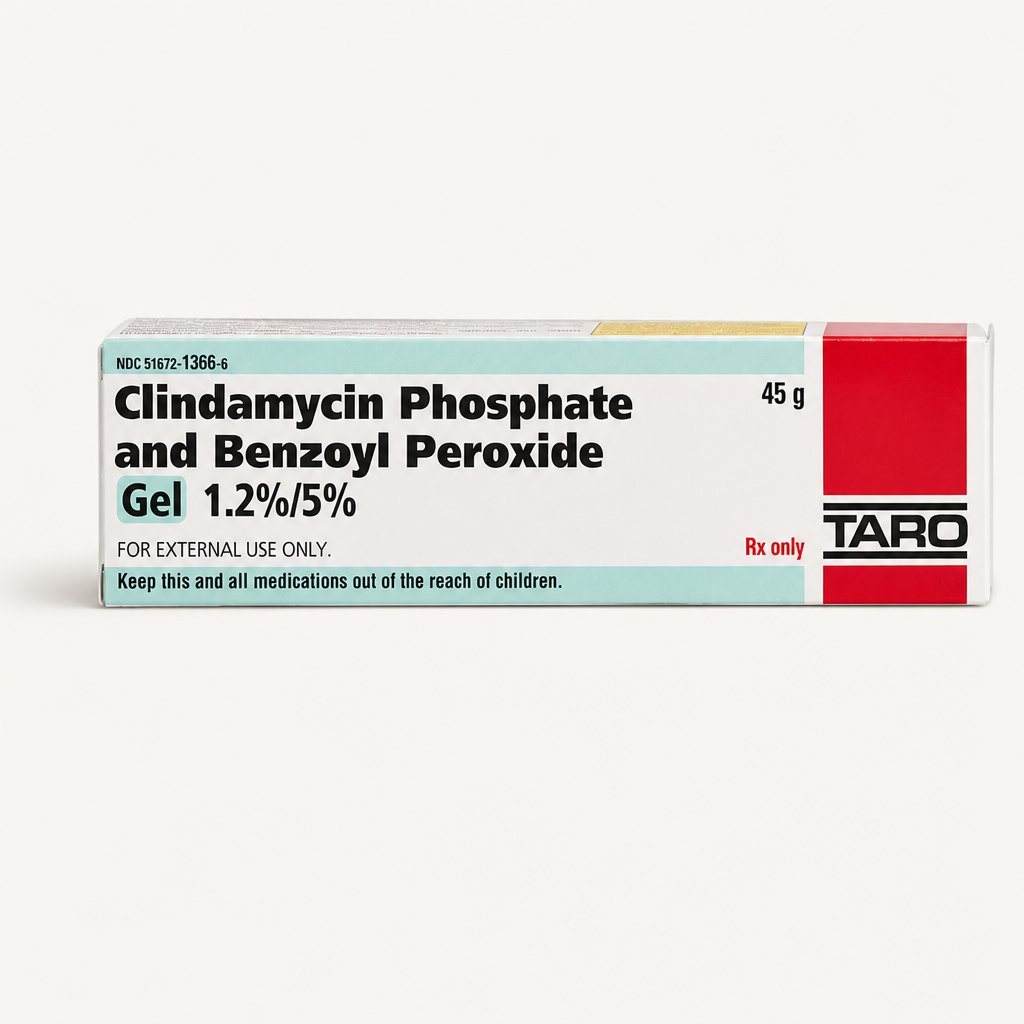
How It Works
Clindamycin works by inhibiting bacterial protein synthesis. Specifically, it targets Cutibacterium acnes (formerly P. acnes), the primary bacteria responsible for acne flare-ups.
Benzoyl peroxide works by introducing oxygen into the pores. Additionally, it acts as a “peeling agent,” helping to shed dead skin cells and clear out excess oil that may otherwise clog pores.
| Quick Facts | |
|---|---|
| Common Brands | Duac, Acanya, Onexton, Benzaclin, Neuac |
| Drug Class | Topical acne agent / combination antibiotic-antiseptic |
| Generic Status | Generic for Duac, Acanya, Onexton, Benzaclin, Neuac |
| Availability | Prescription only |
Dosing
The specific concentration of clindamycin and benzoyl peroxide can vary. For example, 1.2%/5% or 1%/5%. Your provider will select the strength based on the severity of your acne and your skin’s sensitivity level.
Note: Dosing information is educational only. Your prescribing physician will determine your specific dose based on your individual health needs. Always follow your healthcare provider’s instructions for exact dosing.
Uses
FDA-Approved Uses
The FDA has cleared clindamycin/benzoyl peroxide for the treatment of acne vulgaris. It is used for treating papules (red bumps) and pustules (bumps with pus).
Off-Label Uses
You may see clindamycin and benzoyl peroxide prescribed for uses that are not “FDA-approved.” This is a common and legal practice called “off-label” prescribing, where a doctor uses their clinical judgment to prescribe a drug for a different (but well-researched) purpose.
Clindamycin and benzoyl peroxide may be prescribed for the following off-label uses:
- Hidradenitis suppurativa (HS): Providers may recommend this combination to help manage the painful, recurring bumps associated with this chronic inflammatory skin condition.
- Folliculitis: It is sometimes used to treat inflammation of the hair follicles caused by bacterial overgrowth.
- Back and chest acne: Benzoyl peroxide can be used for body acne due to its antiseptic properties.
Side Effects
As your skin adjusts to the ingredients in clindamycin and benzoyl peroxide gel, you may experience some changes in skin texture and comfort.
Common Side Effects
- Dryness and peeling: Occurs in about 15-17% of users during skin renewal.
- Redness (erythema): A common response as the antiseptic increases blood flow to the surface.
- Itching or stinging: A mild “pins and needles” sensation shortly after application is common.
- Photosensitivity: Increased sensitivity to sunlight, making you more prone to UV damage.
Serious Side Effects
Serious side effects are rare, but it’s important to know what to look for if they do occur. Please call your doctor immediately if you experience any of the following:
- Severe allergic reaction: Watch for hives, swelling of the face, lips, or tongue, and difficulty breathing.
- Antibiotic-associated colitis: Though rare with topical use, some antibiotics can be absorbed into the bloodstream. If you experience severe, watery, or bloody diarrhea and intense stomach cramps, this could indicate a serious gut issue.
- Severe contact dermatitis: Watch for intense swelling, blistering, or oozing of the skin where the gel was applied.
Call your doctor immediately if you experience any concerning or prolonged symptoms.
Pharmacist Tips
Moisturize Strategically
To address the common side effect of dryness, standard guidelines suggest using a non-comedogenic moisturizer. You can apply this after the gel has dried.
Sun Protection Is Essential
Because this medication thins the outer layer of the skin, you are more vulnerable to UV damage. Use a daily SPF 30+ and limit your exposure to the sun.
Wait Before Applying Makeup
If you wear makeup, providers recommend waiting until the gel is fully absorbed before applying other products to avoid pilling or reduced efficacy.
Beware of Bleaching
Benzoyl peroxide is a bleaching agent that can permanently discolor hair, towels, pillowcases, and clothing. Using white towels and pillowcases during treatment can minimize discoloration.
Storage Matters
Depending on the specific brand (e.g., Duac), some formulations require refrigeration before dispensing but can be stored at room temperature for a limited time (typically 60 days). Providers advise that you check the expiration date provided by the pharmacy.
Consistency Is Key
It can take 2 to 6 weeks to see an initial change and up to 12 weeks for the full clinical effect. Standard guidelines recommend against stopping early if you don’t see immediate results.
Drug Interactions
While interactions with oral medications are not common, topical interactions may occur. Be sure your provider knows if you take:
- Erythromycin: Using clindamycin alongside other topical antibiotics, such as erythromycin, is generally not recommended, as they may compete for the same binding sites on bacteria, reducing their effectiveness.
- Dapsone (Aczone): Using these together can cause a temporary orange or yellow discoloration of the skin and facial hair.
- Harsh cleansers or toners: Standard guidelines suggest avoiding “medicated” soaps or toners containing high concentrations of alcohol, salicylic acid, or sulfur unless directed, as they can lead to excessive skin “burning” and irritation.
- Neuromuscular blocking agents: If you are undergoing surgery, it’s generally recommended that you inform your surgeon that you use clindamycin, as it may affect how muscle relaxants work during anesthesia.
Always give your doctor and pharmacist a complete list of all your medications, vitamins, and supplements to check for potential interactions.
FAQs
Can I use a moisturizer before applying clindamycin/benzoyl peroxide?
Standard guidelines suggest applying the medication to clean, dry skin first to ensure maximum penetration. Once the gel has dried (usually after a few minutes), you can apply a moisturizer on top to help manage dryness.
Does clindamycin/benzoyl peroxide work for cystic acne?
While this medication is for inflammatory papules and pustules, deep cystic acne may require more intensive treatment, such as oral antibiotics or isotretinoin. However, providers may use this gel as part of a larger regimen to manage the surface bacteria associated with cysts.
Can I stop using clindamycin/benzoyl peroxide once my acne clears up?
Acne is a chronic condition. If you stop treatment immediately upon clearing, bacteria and oil buildup may return. Most providers suggest a maintenance phase or slowly tapering off the medication.
Is it safe to use salicylic acid or glycolic acid (AHA/BHA) toners with this medication?
Using these acids alongside benzoyl peroxide may cause extreme dryness and irritation. If you wish to use them, standard guidelines suggest using the acid wash in the morning and the combination gel at night, or using them on alternate days.
Why does my face feel warm or sting immediately after applying it?
This is a common reaction to benzoyl peroxide as it oxygenates the pores. If the stinging is mild and disappears quickly, it is usually not a cause for concern. If it persists or causes swelling, consult your provider.
Can I use clindamycin/benzoyl peroxide if I am pregnant or breastfeeding?
The safety of using this medication during pregnancy has not been fully established. It is generally recommended to discuss usage with a healthcare provider.
How long does it take to see results?
It is generally accepted that you may see initial improvements in skin texture and a reduction in redness within 2 to 4 weeks. However, standard guidelines indicate that the full effect of the medication typically requires 8 to 12 weeks of consistent daily use. In this time, the skin’s cycle should have adjusted to the medication and deep-seated bacteria brought under control.
Can I use this as a spot treatment for a single pimple?
It is not recommended as a spot treatment. Because it works by preventing new clogs and killing bacteria before they cause blemishes, providers recommend applying it to the entire area where you typically break out.
What is the difference between Duac and Onexton?
The main difference is the concentration of the ingredients and the “vehicle” (the gel base). Duac typically contains 1% clindamycin and 5% benzoyl peroxide, while Onexton typically contains 1.2% clindamycin and 3.75% benzoyl peroxide.
Can I wear makeup over clindamycin/benzoyl peroxide?
Yes, you can wear makeup. Providers typically recommend applying a thin layer of the gel to clean skin first, allowing it to dry completely (about 3 to 5 minutes), and then applying a non-comedogenic moisturizer. Once that barrier is set, you can apply your makeup. Choosing “oil-free” or “mineral-based” makeup is often suggested to avoid clogging the pores you are trying to clear.
Does this medication help with acne scars?
While it can help prevent new scars from forming by controlling current breakouts, it does not typically treat deep “pitted” or “ice-pick” scars. However, because benzoyl peroxide helps shed dead skin cells, it may slightly improve the appearance of post-inflammatory hyperpigmentation (the flat red or brown spots left behind after a pimple heals).
Can I use a retinol (like tretinoin) at the same time as clindamycin/benzoyl peroxide?
Yes, but timing is everything. Benzoyl peroxide can sometimes degrade certain retinoids if applied at the same time. Providers typically suggest using the combination gel in the morning and the retinol at night to maximize the benefits of both while minimizing irritation.
Is clindamycin/benzoyl peroxide an antibiotic?
It is a combination product that contains an antibiotic. Clindamycin is the antibiotic component that stops bacterial growth, while benzoyl peroxide is an antiseptic that kills bacteria on contact. Dermatologists strongly favor this combination because the antiseptic prevents bacterial resistance to the antibiotic.
Does clindamycin/benzoyl peroxide expire quickly?
Once mixed or opened, these gels have a limited shelf life (usually 60 to 90 days). Using expired gel may cause benzoyl peroxide to lose potency or the antibiotic to become unstable.
Comparable Medications
Benzaclin, Cleocin T, PanOxyl, Epiduo, Doxycycline, or Isotretinoin?
Here are some possible alternative medications to clindamycin and benzoyl peroxide:
Clindamycin and Benzoyl Peroxide
From $29.99
Benzaclin is the brand-name version of the 1%/5% combination. The primary difference between Benzaclin and other brands often lies in the gel consistency and storage requirements.
Clindamycin Gel
From $29.99
Also known as the brand name Cleocin T. This contains only the antibiotic. Without benzoyl peroxide, the risk of bacterial resistance may increase over time.
Benzoyl Peroxide Topical Wash
From $34.99
These are over-the-counter options. They lack the prescription antibiotic component, making them suitable for mild acne but less effective for significant inflammation.
Adapalene and Benzoyl Peroxide
From $32.99
Also known as the brand name Epiduo. This combines a retinoid with benzoyl peroxide. It focuses more on "turning over" skin cells, whereas clindamycin/benzoyl peroxide focuses more on killing bacteria.
Doxycycline IR-DR Capsules
From $229.99
An oral antibiotic. While clindamycin/benzoyl peroxide works on the surface, doxycycline works from the inside out and is usually reserved for severe or widespread cases.
Isotretinoin (Accutane)
A powerful oral medication for severe, scarring acne. Clindamycin/benzoyl peroxide is often the "first line" treatment tried before moving to a systemic option like isotretinoin.
We Have Clindamycin and Benzoyl Peroxide in Stock. Get Yours Today!
Important: Information on this page is for educational purposes only. Prescribing decisions are made by independent, licensed providers. TelyRx operates technology-enabled pharmacies and a telehealth platform that connects patients with licensed providers. Prescriptions, when provider-approved and issued, are filled and shipped by TelyRx-affiliated pharmacies. We do not employ physicians or make prescribing decisions. Learn more about our editorial standards here.