How It Works
Scopolamine works by blocking the activity of a chemical messenger called acetylcholine. Acetylcholine attaches to receptors in the brain that trigger nausea and vomiting. By blocking this chemical, scopolamine prevents these signals from being processed.
Scopolamine also affects the digestive tract. It helps reduce the volume of fluids produced by the stomach and slows down the natural movements (motility) of the gut.
| Quick Facts | |
|---|---|
| Common Brands | Transderm Scōp |
| Drug Class | Anticholinergic, antiemetic |
| Generic Status | Generic for Transderm Scōp |
| Availability | Prescription only |
Dosing
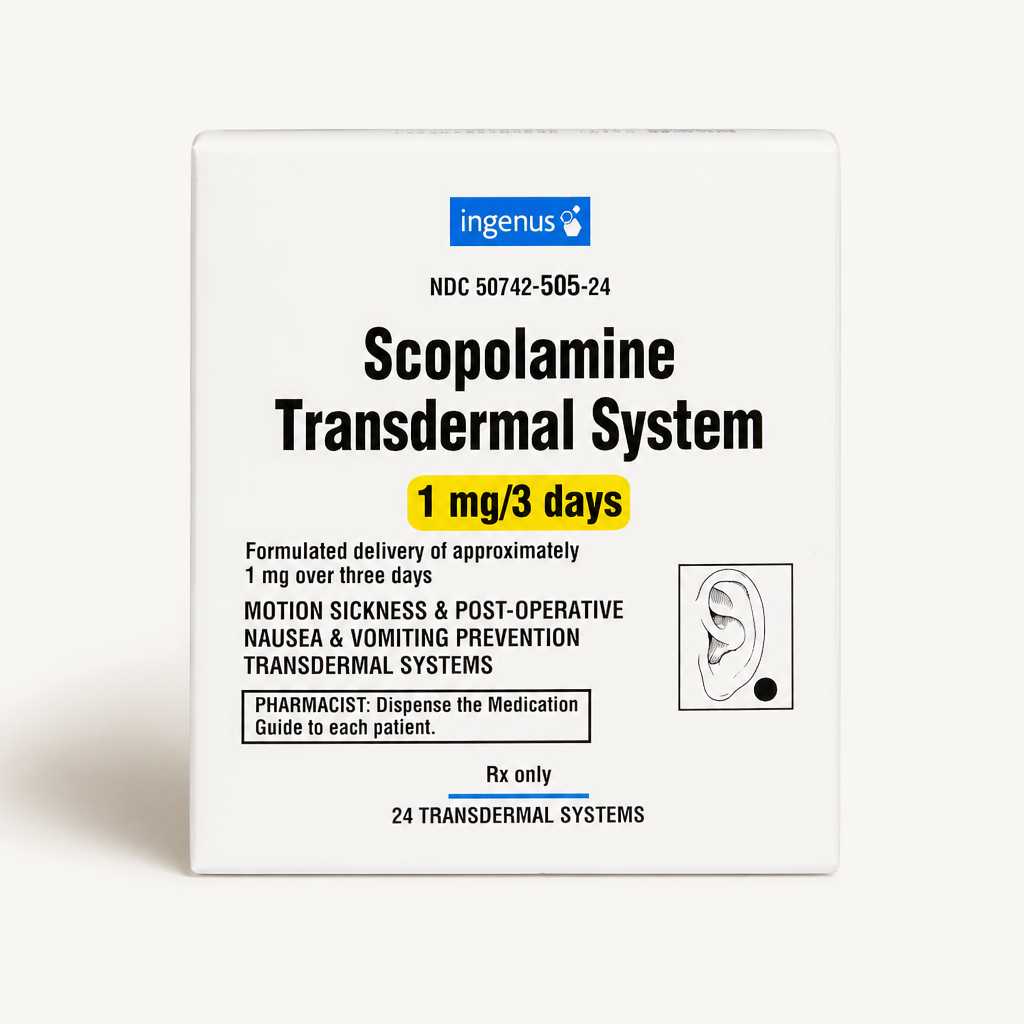
The scopolamine patch is designed for external use only and should be handled with care. It is applied to the hairless area of skin behind the ear. The timing and duration of application depends on why you’re using the scopolamine patch.
- Motion sickness: It’s recommended to apply one patch at least 4 hours prior to the nausea-causing activity, such as sea, car, or air travel. For some, applying it 8 to 12 hours before travel may be recommended. Each patch is designed to be worn for up to 3 days (72 hours). If required for longer than 3 days, the old patch should be removed and discarded properly, and a new patch should be placed behind the other ear.
- Nausea and vomiting associated With surgery: It’s recommended to apply the patch the night before the scheduled surgery and remove it 24 hours following the procedure.
Note: Dosing information is educational only. Your prescribing physician will determine your specific dose based on your individual health needs. Always follow your healthcare provider’s instructions for exact dosing.
Uses
FDA-Approved Uses
The scopolamine patch is FDA-approved to prevent:
- Nausea and vomiting associated with motion sickness
- Post-operative nausea and vomiting (PONV) associated with recovery from anesthesia or surgery
Off-Label Uses
You may see the scopolamine patch prescribed for uses that are not “FDA approved.” This is a common and legal practice called “off-label” prescribing, where a doctor uses their clinical judgment to prescribe a drug for a different, but well-researched, purpose.
There are no common off-label uses for the scopolamine patch.
Side Effects
Like all medications, the scopolamine patch can cause side effects. Some common side effects may improve over time as your body adjusts to the medication. Other side effects may be serious and require medical attention.
Common Side Effects
- Dry mouth
- Dizziness
- Drowsiness
- Blurred vision
- Agitation or restlessness
- Sore throat
Serious Side Effects
Serious side effects are rare, but it’s important to know what to look for if they do occur. Stop using the scopolamine patch and call your doctor immediately if you experience:
- Severe allergic reactions: Symptoms include swelling of the face, lips, tongue, or throat; difficulty breathing or swallowing; racing heart; severe rash or itching; and/or fever.
- Mental health changes: Scopolamine can cause confusion, hallucinations (seeing or hearing things that are not there), paranoia, delusions, or other psychotic-like behaviors.
- Seizures: Seizures may occur when using the scopolamine patch. Symptoms include muscle twitching or shaking, stiffening of the arms and legs, anxiety, lightheadedness, or loss of consciousness. The risk may be higher in pregnant people with preeclampsia.
- Acute angle-closure glaucoma: This medication can increase pressure in the eye. Symptoms include eye pain, red eyes, or seeing halos around lights.
- Blurred vision: If scopolamine gets into contact with the eyes, it can cause blurry vision.
- Urinary retention: Scopalmine can make it difficult to empty the bladder, especially in people with existing blockages. Symptoms include trouble peeing.
- Gastrointestinal blockage: Scopolamine can lead to a bowel obstruction. Symptoms include severe stomach pain, nausea, vomiting, appetite loss, and an inability to pass gas.
- Withdrawal symptoms: Stopping the medication suddenly after several days of use can lead to withdrawal symptoms such as dizziness, nausea, vomiting, headache, muscle weakness, and balance problems. These symptoms may start 24 hours after removal and last for several days.
Call your doctor immediately if you experience any concerning or prolonged symptoms.
Pharmacist Tips
Wash Your Hands
Always wash your hands thoroughly with soap and water immediately after applying or removing the patch. If medication residue on your fingers comes into contact with your eyes, it can dilate the pupils or cause blurred vision.
Avoid Contact With Hair
Apply the patch to clean, dry, hairless skin behind the ear. If you have long hair, tie it back to prevent the patch from sticking to it. Press firmly for a few seconds to ensure it adheres well.
Limit Water Exposure
While you canl bathe or swim wearing the scopolamine patch, prolonged water exposure can cause the patch to loosen. Be careful not to wash it off during these activities.
Avoid Alcohol
It’s recommended to avoid drinking alcohol while using the scopolamine patch, as it can worsen drowsiness, dizziness, and confusion.
Remove the Patch For MRI Safety
You must remove the patch before undergoing an MRI scan. The patch contains aluminum, which can overheat and burn the skin during the procedure.
Do Not Alter the Patch
Never cut the patch. Doing so can damage the delivery system and affect how the medication is released.
Only Use One Patch At A Time
Never wear more than one scopolamine patch at a time. If you need to replace a patch that has fallen off or expired, remove the old one first.
Practice Safe Disposal
When you’re done using the patch, fold it in half with the sticky sides together and put it in a trash can that children and pets can’t access. The used patch may still contain some medication residue, which can be dangerous for children and pets.
Be Careful Driving
Because scopolamine can cause drowsiness, dizziness, and confusion, it’s recommended to avoid driving or operating heavy machinery until you know how the drug affects you.
Some May Avoid Use During Pregnancy
It’s not known whether scopolamine can harm an unborn baby, but it can worsen preeclampsia, so it’s recommended to avoid using it when pregnant.
Drug Interactions
Certain medications and substances can interact with scopolamine, potentially altering how it works or increasing the risk of side effects. For example:
- Alcohol: Alcohol can worsen drowsiness, dizziness, and confusion when combined with scopolamine.
- Sedatives and sleep aids: Medications for anxiety, sleep, or seizures (such as benzodiazepines or phenobarbital) can have additive sedating effects when combined with scopolamine.
- Opioid pain medications: Combining opioids with scopolamine can increase sedating effects.
- Other anticholinergics: Taking other drugs with similar mechanisms, such as those for overactive bladder (oxybutynin) or Parkinson’s disease, can intensify side effects.
- Antihistamines: Common allergy and cold medications (like diphenhydramine) also have anticholinergic properties and can increase the risk of dry mouth and urinary retention.
- Antidepressants: Certain antidepressants can interact with scopolamine.
- Muscle relaxants: Drugs used to relax muscles for surgery or pain (like cyclobenzaprine) may interact with scopolamine.
Always give your doctor and pharmacist a complete list of all your medications, vitamins, and supplements to check for potential interactions.
FAQs
How many hours before travel must I apply the scopolamine patch?
It’s recommended to apply the patch at least 4 hours before you need it. Some studies suggest applying it 8-12 hours in advance may be even more effective.
How long does one scopolamine patch last?
A single scopolamine patch is designed to deliver medication continuously for up to 3 days (72 hours).
Why must I wash my hands after handling the patch?
The medication can cause your pupils to dilate if it gets into your eyes, leading to blurry vision and light sensitivity. Washing your hands with soap and water prevents accidental transfer of the drug to your eyes.
Can I cut the scopolamine patch in half to get a lower dose?
No. You should never cut or alter the scopolamine patch. Cutting it can damage the membrane that controls the release of the medicine, potentially leading to incorrect dosing or skin burns.
Can I shower, swim, or bathe while wearing the patch?
Yes, you can shower, swim, and bathe while wearing the scopolamine patch. However, you should limit prolonged contact with water and be careful not to scrub the area, as this may cause the patch to fall off.
Can I drink alcohol while wearing a scopolamine patch?
It is recommended to avoid alcohol while wearing a scopolamine patch. Drinking alcohol can intensify the drowsiness, dizziness, and confusion caused by the drug.
Do I need to remove the patch before an MRI scan?
Yes. The scopolamine patch contains aluminum, which can heat up during an MRI and cause skin burns. Alert your healthcare team so they can instruct you on when to remove it and apply a new one after the scan.
Does scopolamine help if I am already feeling sick, or is it only for prevention?
Scopolamine is designed for prevention. It does not treat nausea and vomiting that is already happening. It should be applied hours before the trigger event.
Can I wear two patches at the same time for severe motion sickness?
No, you should only wear one scopolamine patch at a time. Using more than one increases the risk of serious side effects and overdose.
Can I take Dramamine or Bonine while wearing the patch?
You should consult your doctor before combining these medications. Taking other antihistamines like Dramamine with scopolamine can increase drowsiness and dry mouth. However, some providers may prescribe meclizine specifically to ease withdrawal symptoms after removing the patch.
Is scopolamine safe to use during pregnancy?
Research is limited, but it is generally not recommended unless the benefit outweighs the risk. It is specifically advised against in cases of severe preeclampsia due to a risk of seizures. Always consult your OBGYN.
Can I drive while wearing a scopolamine patch?
You should avoid driving or operating heavy machinery until you know how the patch affects you. Common side effects like dizziness, drowsiness, and blurred vision can make driving dangerous.
What should I do if the patch falls off before 3 days are up?
If the scopolamine patch falls off early, discard it properly and apply a new patch to the hairless area behind the other ear.
Where exactly should I place the patch?
Place the patch on a clean, dry, hairless area of skin directly behind your ear. Avoid skin that is cut, irritated, or tender.
Comparable Medications
Scopolamine Patch, Dimenhydrinate (Dramamine), Meclizine (Bonine), Ondansetron (Zofran), or Promethazine (Phenergan)?
There are several medications that your doctor can prescribe in place of scopolamine patch. Here are a few possible alternatives below.
Dimenhydrinate (Dramamine)
An over-the-counter antihistamine used to prevent and treat motion sickness.
Meclizine (Bonine)
An over-the-counter antiemetic used to prevent and treat motion sickness.
Ondansetron
From $44.99
A prescription antiemetic used to prevent nausea and vomiting caused by chemotherapy, radiation, or surgery.
Promethazine
From $39.99
A prescription antihistamine used for allergies, motion sickness, sedation before or after surgery, and nausea and vomiting caused by anesthesia or chemotherapy.
We Have a Scopolamine Patch in Stock. Get Yours Today!
Important: Information on this page is for educational purposes only. Prescribing decisions are made by independent, licensed providers. TelyRx operates technology-enabled pharmacies and a telehealth platform that connects patients with licensed providers. Prescriptions, when provider-approved and issued, are filled and shipped by TelyRx-affiliated pharmacies. We do not employ physicians or make prescribing decisions. Learn more about our editorial standards here.