

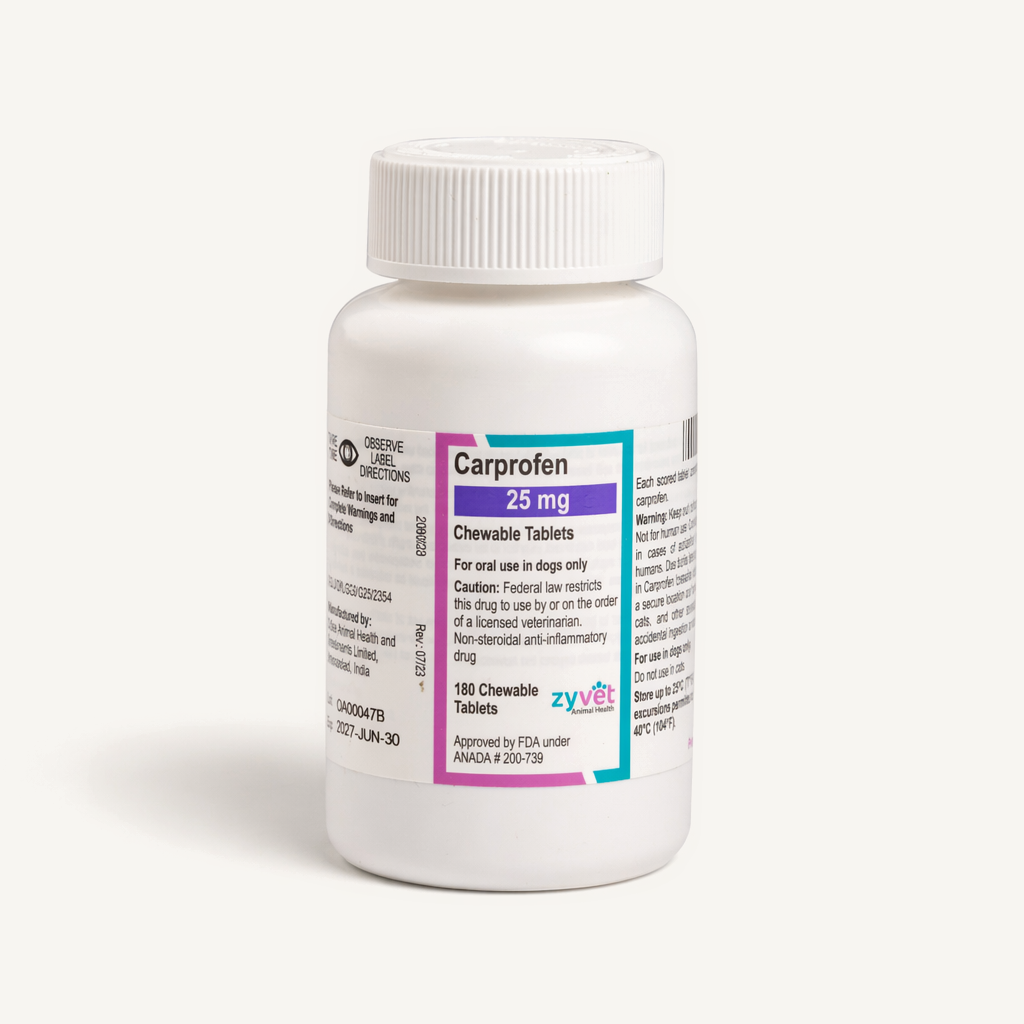
How It Works
Carprofen tablets work by inhibiting a specific enzyme called cyclooxygenase (COX). This enzyme is responsible for the production of prostaglandins, which are natural chemicals in the body that trigger inflammation, pain, and fever. By blocking these pathways, the medication effectively lowers levels of inflammatory chemicals in the system, leading to reduced swelling and pain.
In a laboratory study using dog cells, carprofen inhibited COX-2 more than COX-1. In theory, this could reduce inflammation while having less impact on the COX-1 pathway, which helps protect the stomach lining and support kidney function. However, it has not been shown that this laboratory finding translates into fewer side effects in dogs. Therefore, carprofen can still affect the stomach, kidneys, and liver.
| Quick Facts | |
|---|---|
| Common Brands | Rimadyl, Novox, Vetprofen, Carprovet, Quellin |
| Drug Class | Non-steroidal anti-inflammatory drug (NSAID) |
| Generic Status | Generic version of Rimadyl |
| Availability | Prescription only |
Dosing
The FDA-approved dose is 2 mg per pound (4.4 mg/kg) of body weight daily. The total daily dose may be administered once every 24 hours or divided into 2 equal parts given every 12 hours. For example, a dog may receive the full amount in the morning or a half-dose in both the morning and the evening. Your veterinarian will choose the schedule that suits your dog.
Carprofen may be given with or without food. Placing the caplet or tablet in a small amount of food or a treat may improve stomach tolerance. For the control of pain after surgery, the first dose may be administered approximately 2 hours before the procedure to help ensure the medication is active in the system during recovery.
Try to ensure that your dog consumes the entire dose. If your dog spits out part of a dose, or a dose is missed, ask your veterinarian what to do before giving any extra doses.
Note: The dosing information below is for educational purposes only. Your vet will determine your pet’s specific dose based on its individual health needs. Always follow your vet’s instructions for exact dosing.
Uses
FDA-Approved Uses
Carprofen tablets are FDA-approved for the relief of pain and inflammation associated with osteoarthritis and for the control of postoperative pain associated with soft-tissue and orthopedic surgeries in dogs.
Off-Label Uses
A veterinarian may prescribe carprofen for a use that is not listed on its FDA-approved label when veterinary prescribing requirements are met. This is called off-label or extralabel use. The evidence supporting each of these uses varies.
- Management of tendon and ligament injuries: A veterinarian may recommend this medication to reduce swelling and pain in dogs recovering from strains or sprains.
- Comfort during cancer care: A veterinarian may include carprofen in a plan to keep a dog comfortable. Its role depends on the type of cancer and the rest of the treatment plan.
- Fever: Carprofen can bring down a fever, so a veterinarian may prescribe it for that reason. It is not a treatment for overheating or heat stroke, which need immediate veterinary care.
Side Effects
Most dogs tolerate this medication well. However, like all NSAIDs, carprofen can affect the gastrointestinal system, liver, and kidneys.
Before starting treatment, tell your veterinarian if your dog has ever reacted badly to carprofen or another pain medicine, has kidney, liver, heart or digestive disease, is dehydrated, has a bleeding disorder, or takes a water pill or a steroid. Also mention pregnancy, nursing, planned breeding, or age if your dog is a very young puppy. Do not give carprofen to a dog that has had an allergic reaction to carprofen, to aspirin, or to another NSAID such as deracoxib, etodolac, firocoxib, meloxicam, phenylbutazone, or tepoxalin. Signs of an allergic reaction include hives, facial swelling, and red or itchy skin.
Common Side Effects
- Vomiting
- Diarrhea or loose stools
- Loss of appetite or decreased interest in food
- Lethargy or weakness
- Changes in behavior
- Constipation
If you think your dog is experiencing a side effect, stop carprofen and contact your veterinarian immediately.
Serious Side Effects
Serious side effects are rare, but it’s important to know what to look for if they do occur.
- Gastrointestinal ulcers and bleeding: Signs include vomiting, bloody stools, or dark, tar-like stools (melena).
- Liver toxicity: It can cause yellowing of the eyes, gums, or skin (jaundice). It may also lead to elevations in liver enzymes.
- Kidney dysfunction: Changes in drinking habits, such as increased thirst or altered frequency and amount of urination, can indicate kidney dysfunction.
- Neurological changes: A lack of coordination (ataxia), seizures, aggression, or other unusual changes in behavior have been reported.
- Allergic reactions: Signs can include facial swelling, hives, skin redness, or intense itching.
Stop giving carprofen and contact your veterinarian immediately if you notice any of these signs. Do not wait to see whether they get worse or last longer.
Pharmacist Tips
Administer With Food
While carprofen can be given on an empty stomach, giving it with a meal can help prevent stomach upset.
Store in A Secure Place
Because chewable tablets are often flavored to be palatable, dogs may try to eat all the pills in a bottle if it is left within reach. Keep the medication in a secure location that pets can’t access. If your dog consumes more than the prescribed amount, or another pet gets into the bottle, contact a veterinarian immediately.
Monitor Blood Work
Your veterinarian should examine your dog before treatment starts, and may recommend blood and urine tests before the first dose and at intervals during treatment, especially for long-term use. Monitoring can proactively help identify certain problems before they become serious.
Avoid Human NSAIDs
Never substitute this medication with any human pain reliever, such as ibuprofen or naproxen. Human NSAIDs can be highly toxic to dogs.
Adhere to “Washout” Periods
If your dog is switching from a steroid or a different NSAID, your veterinarian should tell you how long to wait before starting carprofen. The wait is often around 1 week, but it may need to be longer after a long-acting steroid. A break lowers the risk of a dangerous interaction but does not completely remove it.
Read the Client Information Sheet
A Client Information Sheet should come with your dog’s prescription. It lists the signs to watch for and what to do if you see them. Keep it somewhere you can find it, and ask your veterinarian or pharmacy if you did not receive one.
Drug Interactions
Certain medications and supplements can interact with carprofen, affecting treatment or increasing the risk of adverse effects.
- Corticosteroids: Using steroids (such as prednisone) while a dog is taking carprofen can increase the risk of serious gastrointestinal side effects, including stomach ulcers and bleeding.
- Other NSAIDs: Carprofen should not be used with other NSAIDs, including aspirin, unless specifically directed by a veterinarian, because this can increase the risk of gastrointestinal ulcers, bleeding, and kidney problems.
- ACE Inhibitors: Medications used to treat heart disease or high blood pressure, such as enalapril or benazepril, need extra care alongside carprofen. Your veterinarian will decide whether the combination is appropriate and what monitoring your dog needs.
- Anticoagulants: Medications that reduce blood clotting may increase the risk of bleeding when used with carprofen.
- Diuretics: Dogs taking a water pill such as furosemide have a higher risk of kidney injury with an NSAID. Tell your veterinarian if your dog takes one, because this combination may need to be avoided.
Always give your veterinarian a complete list of your dog’s medications, vitamins, and supplements, including anything recently stopped, so they can check for interactions.
FAQs
What is carprofen actually used for in dogs?
This medication is used to reduce the pain and swelling caused by osteoarthritis or to manage discomfort following a surgical procedure. By reducing pain and inflammation, carprofen may help dogs with osteoarthritis move more comfortably.
Is carprofen basically the “dog version” of ibuprofen?
Both are NSAIDs, but carprofen has been tested and approved for use in dogs at doses worked out for dogs. Human medicines like ibuprofen behave differently in a dog’s body, so they should never be used as a substitute.
What are the most common side effects to watch for when giving my dog carprofen?
Common side effects of carprofen can include vomiting, diarrhea, decreased appetite, and changes in activity and behavior. If you think your dog is experiencing a side effect, stop carprofen and contact your veterinarian immediately.
How long does it usually take for carprofen to help my dog’s arthritis pain?
How quickly your dog responds varies. Some dogs seem more comfortable the same day, and for arthritis the fuller benefit often becomes clear over the first several days. Ask your veterinarian when to check back on how your dog is doing.
Is it safe to give carprofen to my cat for pain?
No. Do not give your dog’s carprofen tablets to a cat. The label for these tablets says they are for use in dogs only. Cats are especially sensitive to this type of medication. If your cat swallows one, contact a veterinarian right away.
Should I give the carprofen pill with a meal?
This medication can be given with or without food. However, giving the pill or tablet with food may reduce the risk of an upset stomach.
Can I give my dog carprofen at the same time as their joint supplements?
Some joint supplements, such as glucosamine or omega-3 fatty acids, are commonly given alongside carprofen. Check the specific product and dose with your veterinarian before giving them together.
Is there a difference between name-brand and generic carprofen?
Generic carprofen contains the same active ingredient as the brand-name version (Rimadyl) and meets the same safety and effectiveness standards. The main difference is often the cost and inactive ingredients, such as the specific flavoring used in chewable forms.
Can my dog take carprofen while also taking a steroid for their allergies?
Carprofen generally should not be given with corticosteroids such as prednisone because using them together can increase the risk of adverse effects, including gastrointestinal ulcers and bleeding. When switching from a corticosteroid to carprofen, your veterinarian may recommend an appropriate washout period.
Is it safe to use carprofen alongside other pain meds like gabapentin or tramadol?
A veterinarian may add another pain medicine alongside carprofen, and the choice depends on the type of pain and your dog’s health. Do not add gabapentin, tramadol, or any other pain medicine without specific veterinary instructions.
Comparable Medications
Carprofen tablets vs. Rimadyl, Galliprant, gabapentin, prednisone, or ibuprofen?
Rimadyl
This is the original brand-name version of carprofen. Both medications contain the same active ingredient and work in the same way by blocking COX enzymes. The choice between them is typically based on price, a dog's preference for the specific flavor of the chewable tablet, or what’s available.
Galliprant Tablets
From $47.99
Unlike carprofen, which blocks the COX enzyme, Galliprant is a first-in-class medication that specifically targets a single prostaglandin receptor (the EP4 receptor). It is another option for osteoarthritis pain. It still carries stomach, kidney and liver risks, and a dog that has reacted to one NSAID may react to another, so your veterinarian decides whether it suits your dog.
Gabapentin
Gabapentin is not an anti-inflammatory medication. It may be prescribed for chronic or nerve-related pain in dogs. It works by reducing certain pain signals in the nervous system and may be used alongside carprofen because the two medications work in different ways.
Prednisolone
From $59.99
This is a corticosteroid used to treat inflammatory and immune-related issues.
Ibuprofen
This is an NSAID meant only for human use because it is highly toxic to other animals. It should not be administered to a pet.
We Have Carprofen Tablets in Stock. Get Yours Today!
Important: Information on this page is for educational purposes only. Prescribing decisions are made by independent, licensed providers. TelyRx operates technology-enabled pharmacies and a telehealth platform that connects patients with licensed providers. Prescriptions, when provider-approved and issued, are filled and shipped by TelyRx-affiliated pharmacies. We do not employ physicians or make prescribing decisions. Learn more about our editorial standards here.